# Best Office Chairs for Good Posture 2026 | Top Picks
Quick Answer
If you spend 8+ hours a day sitting, a good ergonomic office chair isn’t a luxury—it’s a health investment. The best chairs for posture combine lumbar support, adjustable seat height, armrests, and breathable materials to keep your spine aligned and your body comfortable. Look for chairs with lumbar curves that match your natural spine shape, not flat backs that force you into slouching.
Top pick for most people: Herman Miller Aeron or Steelcase Leap (premium, proven durability) Best budget option: Autonomous Ergo Chair [CHECK PRICE] (adjustable, supportive, under $500)
—
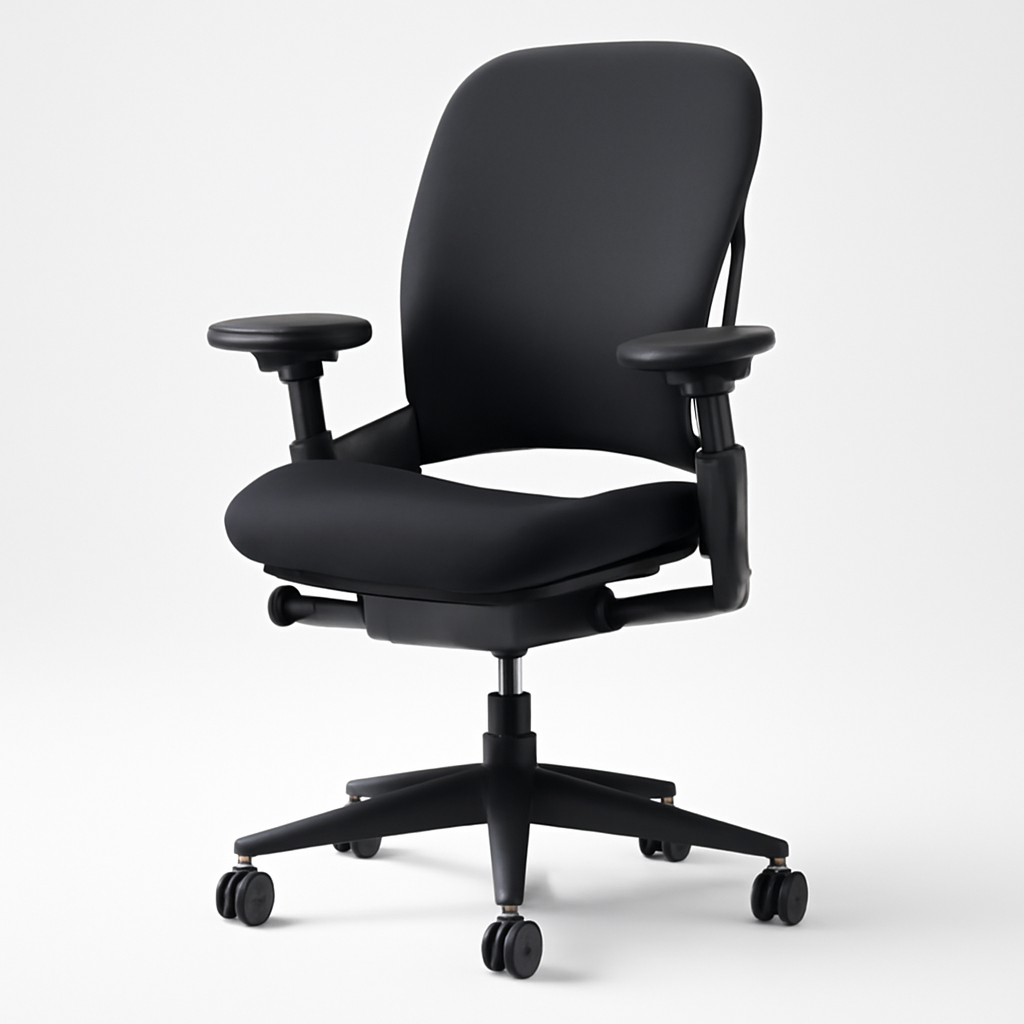
Why Posture Matters: Health Benefits of Ergonomic Office Chairs
You probably know sitting all day is bad for you. But the real damage happens because of how you sit.
Poor posture while sitting creates a cascade of problems:
– Neck and shoulder pain from rounded shoulders and forward head position
– Lower back pain from unsupported lumbar curves (the most common office complaint)
– Digestive issues from compression of your core while hunched
– Reduced circulation to legs and glutes, leading to DVT risk on long work days
– Reduced productivity — studies show discomfort reduces focus by up to 30%
– Chronic issues that follow you out of the office (migraines, postural dysfunction)
A truly ergonomic chair supports your natural spine curves instead of fighting them. It redistributes pressure away from your lower back, reduces muscle tension in your neck and shoulders, and helps maintain alignment without constant muscular effort.
The difference between sitting in a bad chair for 8 hours vs. a good one? Your back knows immediately. But your future self—free from chronic pain—will thank you even more.
—
Key Features of the Best Office Chairs for Good Posture
Not all ergonomic office chairs are created equal. Here’s what actually matters:
Lumbar Support (Non-Negotiable)
Your lumbar spine has a natural inward curve (called lordosis). A good office chair has a firm, curved backrest that mirrors this shape. This is the single most important feature for posture.
– Look for adjustable lumbar support (height + depth) so you can dial in YOUR curve
– Fixed lumbar support is cheap but works for maybe 60% of people
– Avoid flat backs that force you into C-curve slouching
Seat Height Adjustment
Your feet should rest flat on the floor with your knees at roughly 90 degrees.
– Seat height range should cover 17-21 inches for most people
– Gas cylinders are standard (pneumatic adjustment is smooth and reliable)
– Avoid chairs where you have to fully unhook something to adjust height
Backrest Angle and Recline
You shouldn’t be stuck at 90 degrees all day. Good chairs offer:
– Reclining backrest (15-30 degree range) for posture variation
– Tension control so the chair doesn’t flop backward unexpectedly
– Seat depth around 16-18 inches (too deep = pressure behind knees, too shallow = unsupported thighs)
Armrests
Your shoulders carry tension from unsupported arms. Quality matters here:
– Adjustable in height AND width (T-shaped armrests adjust both)
– Positioned so elbows stay at 90 degrees when your feet are on the floor
– Some chairs have drop-down armrests for desk clearance under tables
– Avoid fixed-height armrests that force your shoulders up or down
Seat Material and Breathability
8-hour comfort depends on heat dissipation:
– Mesh backs are standard for airflow (vs. solid backs that trap heat)
– Fabric seat cushions with memory foam feel better than plastic-covered cushions
– Look for sweat-wicking materials if you’re in a warm climate
– Leather looks professional but traps heat and sweat
Base and Mobility
A chair is only as stable as its foundation:
– 5-point base spreads weight better than 4-point (safety + stability)
– Heavy-duty casters handle different floor types without resistance
– Swivel and tilt without sticking or squeaking
—
Top Office Chair Recommendations for 2026
Premium Tier: Best Overall Support
#### Herman Miller Aeron [CHECK PRICE]
The industry standard that’s been refined since 1994. Still the best if budget allows.
Why it’s great for posture:
– Perfectly adjustable lumbar support (height + depth)
– Seat and backrest adjust independently
– Iconic PostureFit feature supports lower spine naturally
– 8Z Pellicle seat material prevents overheating
– 12-year warranty (indicates durability confidence)
Best for: Anyone willing to invest $1,400+ for a chair that lasts 10+ years and comes with proven ergonomic engineering
Pros & Cons:
| Pros | Cons |
| Legendary durability and support | High initial cost ($1,300-1,500) |
| Fully adjustable lumbar support | Steep learning curve for adjustments |
| Excellent breathability | Overkill features for casual office users |
| Resale value holds well | Requires proper setup to feel right |
—
#### Steelcase Leap [CHECK PRICE]
Herman Miller’s closest competitor with slightly different ergonomic philosophy. Excellent choice if Aeron feels too aggressive.
Why it’s great for posture:
– LiveBack technology mimics natural spine movement during recline
– Lumbar support adjusts with seat depth automatically
– Flexible seat that responds to weight shifts
– Cleaner aesthetic than Aeron
– Similarly strong warranty (12 years)
Best for: People who find Aeron’s PostureFit too rigid; those who want chair response during the day
Pros & Cons:
| Pros | Cons |
| More forgiving lumbar curve than Aeron | Similar price ($1,300-1,500) |
| Better for people with lower back sensitivity | Requires adjustment time |
| Flexible movement response | Slightly less precise lumbar targeting |
| Excellent arm/back adjustment | Heavy (harder to move) |
—
Mid-Range: Best Value With Real Support
#### Autonomous Ergo Chair [CHECK PRICE]
The best-value ergonomic chair for budget-conscious buyers who won’t compromise on support.
Why it’s great for posture:
– Contoured lumbar support with height adjustment
– Padded armrests adjustable in height and width
– Seat depth and backrest angle both adjustable
– Breathable mesh back and fabric seat
– Built-in tilt lock with tension control
– Comes with lumbar pillow adjustment guide
Best for: Home office workers, budget-conscious buyers, people wanting 80% of premium performance at 33% of the cost
Pros & Cons:
| Pros | Cons |
| $400-500 price point (3x cheaper than Aeron) | Less precise lumbar adjustment than Aeron |
| Good lumbar support and arm adjustment | Don’t expect 10+ year durability |
| Lightweight and easy to move | Gas cylinder may soften after 5-7 years |
| Money left over for desk accessories | Warranty is 3-5 years (shorter) |
—
#### SIDIZ T50 [CHECK PRICE]
Korean ergonomics company that often gets overlooked in North America. High-quality build at mid-range pricing.
Why it’s great for posture:
– 3D lumbar support (height, depth, AND angle adjustment)
– Smart backrest that adjusts based on recline angle
– Synchronized seat-back tilt for natural movement
– Available in multiple sizes (S/M/L) for different heights
– European testing standards compliance
Best for: Taller or heavier people who need better customization; those sensitive to lumbar positioning
—
Budget-Friendly: Best for Basic Needs
#### IKEA MARKUS or Hon Ignition [CHECK PRICE]
If your budget is under $300, these are your realistic options for some postural support.
Why they work:
– Basic lumbar curve (not adjustable, but existent)
– Seat height adjustment
– Armrests at least prevent shoulder strain
– Won’t collapse after a few months
What you’re sacrificing:
– No lumbar adjustment means the curve may not match your back
– Less durable materials
– Minimal recline options
– Limited adjustment range
Best for: Students, occasional home office use, temporary setups
—
Product Comparison at a Glance
| Product | Best For | Lumbar Support | Arm Adjustment | Price Range |
| Herman Miller Aeron | Long-term investment, perfect support | Fully adjustable (height + depth) | Full T-adjustment | $1,300-1,500 |
| Steelcase Leap | Movement-focused, sensitive backs | Auto-responsive + manual | Full T-adjustment | $1,300-1,500 |
| Autonomous Ergo Chair | Budget buyers, home offices | Adjustable height + depth | Height + width | $400-500 |
| SIDIZ T50 | Customization seekers, larger people | 3D adjustable | Full T-adjustment | $600-800 |
| IKEA MARKUS | Tight budget, basic support | Fixed curve | Fixed height | $150-250 |
—
Lumbar Support vs. Adjustability: What You Really Need
Here’s the conversation you’ll have with yourself:
“Should I get the premium chair with perfect adjustability?”
Real talk: If you’re going to spend 8+ hours daily in this chair for the next 5+ years, yes. Herman Miller or Steelcase justified.
“Can I make a cheaper chair work with a lumbar pillow?”
Partially. A quality lumbar pillow adds support but doesn’t replace chair design. It’s a band-aid, not a solution.
“Is a fixed lumbar curve really that bad?”
Depends on your back. If you have typical lumbar curves, a well-designed fixed support works fine. If you have flat back syndrome or exaggerated curves, you need adjustability.
The sweet spot for most people: Mid-range chair ($400-800) with adjustable lumbar support + height/depth seat adjustment. You get 85% of ergonomic benefit at 50% of premium pricing.
—
How to Set Up Your Chair for Optimal Posture
Even the best chair won’t help if it’s set up wrong. Follow this 5-minute process:
Step 1: Seat Height
– Sit normally
– Adjust height until your feet rest flat on the floor, knees at 90 degrees
– Your thighs should be parallel to the ground (not angled down or up)
Step 2: Lumbar Support
– Feel the curve in your lower back
– Adjust lumbar support (height first) until it supports the deepest part of your curve
– If adjustable depth, push it forward until you feel gentle support (not pressure)
Step 3: Backrest Angle
– Recline slightly (usually 10-20 degrees from 90 degrees feels right)
– Lock tilt tension so it doesn’t flop back unexpectedly
– Your head should rest naturally without reaching
Step 4: Armrests
– Lower them until your elbows rest naturally at 90 degrees
– Adjust width so they’re just inside your ribcage (not pushing shoulders up)
– You should feel 30-50% of arm weight supported (not 100%)
Step 5: Monitor Position
– Top of monitor at eye level, 20-30 inches away
– (Your chair supports posture, but screen height completes the setup)
—
Budget-Friendly vs. Premium: Finding Your Best Value
When Premium Chairs Make Sense
✅ You work from home full-time (8+ hours daily)
✅ You have chronic back pain or pre-existing conditions
✅ You’ll use the chair for 7+ years (Herman Miller’s sweet spot)
✅ You have the budget and won’t resent it
Math check: A $1,400 Aeron over 10 years = $140/year. A $300 chair replaced every 2 years = $150/year plus 5x more hassle.
When Budget Chairs Are Smart
✅ You use the office chair 2-4 hours daily
✅ You rotate between home and office (multiple setups)
✅ You’re still figuring out what you need (don’t lock in yet)
✅ Budget is tight and a $500 chair solves the immediate problem
Real talk: A $400 Autonomous chair with good lumbar support beats a $1,500 premium chair that’s adjusted wrong. Proper setup matters more than price above a baseline ($350+).
The Middle Ground (Best for Most)
Spend $500-800 on:
– Adjustable lumbar support
– Full arm adjustment
– Good materials (won’t degrade in 3 years)
– 5-7 year realistic lifespan
Then reinvest every 5-7 years. You get 80% of premium performance without the luxury tax.
—
Common Posture Mistakes and How the Right Chair Fixes Them
Mistake #1: Slouching Forward (C-Curve Sitting)
The problem: Your chair back is too vertical or lacks lumbar support, so your spine collapses into a C-curve. Your chest compresses, shoulders round, neck juts forward.
How a good chair fixes it:
– Proper lumbar curve prevents your lower back from flattening
– You automatically sit more upright because it’s easier than slouching
– Forward head position becomes uncomfortable (chair “trains” better posture)
—
Mistake #2: Sinking Into the Seat
The problem: Soft, unsupported seat causes your hips to drop below your knees, rotating your pelvis backward and flattening your lumbar curve.
How a good chair fixes it:
– Firm seat bottom (not rock-hard, but supportive) maintains hip height
– Seat depth matches your thigh length, so pelvis stays neutral
– You maintain natural spine curves without muscular effort
—
Mistake #3: Shoulders Hunched Up
The problem: Armrests too high, or no armrests so arms hang. Your traps and shoulders tense up trying to support arm weight.
How a good chair fixes it:
– Adjustable armrests support 30-50% of arm weight
– Shoulders stay relaxed and down, not shrugged
– Neck tension decreases because shoulder position improves
—
Mistake #4: Legs Dangling or Compressed
The problem: Wrong seat height causes feet to dangle (cutting off circulation) or knees to compress against seat (pressure points). Your lower body can’t relax.
How a good chair fixes it:
– Precise height adjustment = feet flat on floor
– Your full leg is supported (hip to knee), not just upper thigh
– Circulation flows normally, no cramping or numbness
—
Mistake #5: Twisting and Rotation
The problem: Chair doesn’t recline or tilt, so you shift positions constantly. Your spine rotates sideways, creating strain on discs and muscles.
How a good chair fixes it:
– Reclining backrest lets you vary position throughout the day
– Seat and back move together (synchronized tilt) maintaining alignment
– Your spine stays neutral even when leaned back
—
FAQ: Office Chair Posture Questions
Q: Can a cheap chair with a lumbar pillow work?
A: Partially. The pillow helps, but a chair designed for poor posture fights you all day. Lumbar pillows are supplements, not substitutes.
Q: How do I know if my chair is adjusted correctly?
A: Your ears, shoulders, and hips should form a straight vertical line when viewed from the side. If your head juts forward or shoulders hunch, adjustment is needed.
Q: Should I get a standing desk instead?
A: Not either/or—both. Even standing desks require good posture, and alternating between sitting and standing is ideal. A good office chair is still the foundation.
Q: Do gaming chairs work for office posture?
A: Rarely. Most gaming chairs prioritize looks over ergonomics and have poor lumbar support. They’re acceptable for 2-4 hour gaming sessions, not 8-hour work days.
Q: How often should I replace my office chair?
A: Budget chairs (gas cylinder reliability): 4-5 years. Mid-range: 6-8 years. Premium (Herman Miller, Steelcase): 10+ years.
—
Our Verdict
If you work from home or spend most of your day sitting, an ergonomic office chair is one of the highest-ROI purchases you can make. The cost of chronic back pain, lost productivity, and poor health far exceeds the price of a good chair.
**For most