Tired of a wire dog crate that looks like a cage dropped into your living room? You’re not alone. Dog crate furniture solves the eyesore problem by wrapping a functional den inside a piece that doubles as an end table, sideboard, or nightstand. This guide walks you through what to look for, how to size it right, which materials survive real dogs, and our top picks for 2026.
Quick Answer
If you want the short version: for most people, the New Age Pet ecoFLEX Habitat ‘n’ Home is the best all-around choice thanks to its moisture-proof, chew-resistant recycled composite build. If you’re on a budget, the Casual Home Wooden Pet Crate End Table delivers the furniture look for less. Have a determined chewer or a large breed? Step up to a heavy-duty or metal-reinforced option instead of solid wood.
Now let’s get into the details so you buy once and buy right.
What Is Dog Crate Furniture and Who Is It For?
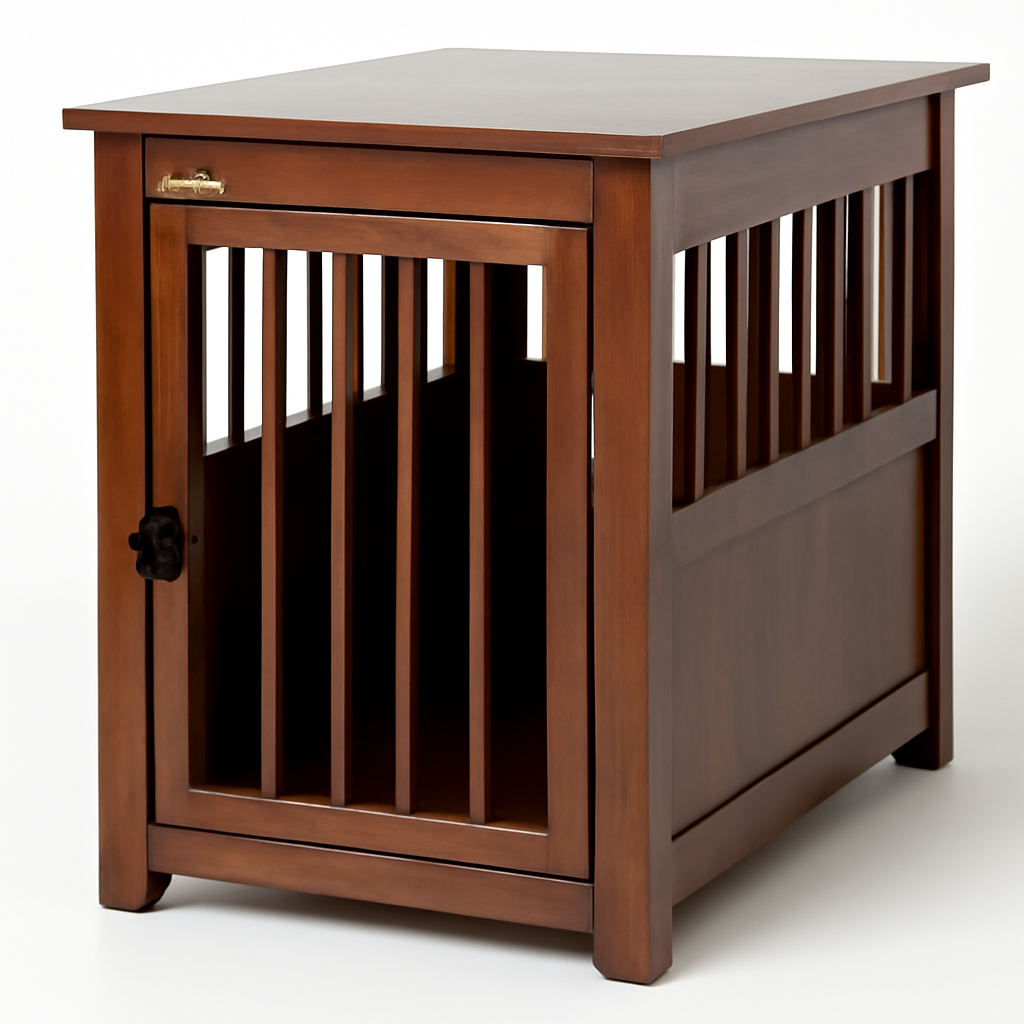
Dog crate furniture is exactly what it sounds like: a dog crate built to look like a real piece of home furniture. Instead of powder-coated wire, you get a wood, rattan, or composite enclosure with a flat, usable top surface. The dog gets a cozy den; you get a functional table.
This is a great fit if you:
– Want your dog’s space to blend into your décor instead of dominating a corner
– Live in an apartment or open-concept home where the crate is always visible
– Have a house-trained, reasonably calm dog who uses the crate as a resting spot
– Want to reclaim floor space by making the crate do double duty as a table
It may not be the right fit if you:
– Have a young puppy still in heavy potty-training and chewing phases (start with an easy-to-clean wire crate first)
– Own a powerful, anxious escape artist who could damage wood panels
– Need to frequently collapse and travel with the crate — furniture crates are heavy and stay put
Think of crate furniture as the “graduation” crate: the piece you move to once your dog is past the destructive puppy stage and ready for a permanent, attractive home base.
Key Features to Look for Before You Buy
Not all crate furniture is created equal. Here are the features that actually matter.
Ventilation
Your dog needs airflow. Look for slatted sides or spindle-style panels on at least two or three sides. Fully enclosed cabinets with only a front door can get stuffy and hot.
Door Design and Latches
– Single vs. double door: Double-door models give you flexible placement in a room.
– Latch quality: A cheap magnetic catch won’t hold a motivated dog. Look for metal slide-bolt or barrel latches.
– Swing clearance: Make sure the door can open fully where you plan to place it.
Weight Capacity of the Top
If you’re going to set a lamp, plants, or a TV on top, check the stated top load. Solid-surface tops handle more than slatted ones.
Floor Protection and Cleanability
A removable tray or sealed base makes accidents survivable. Bare, unsealed MDF will swell and stink the first time it gets wet.
Assembly and Access
Some units ship flat-pack with a dozen panels; others are semi-assembled. Also consider how easy it is to reach inside to clean — a wide double door beats a narrow single one.
Choosing the Right Size and Style for Your Dog
Sizing is where most buyers go wrong. Too small is cruel; too big undermines the den instinct and can slow potty training.
The rule: Your dog should be able to stand up without ducking, turn around fully, and lie down stretched out. Measure your dog from nose to base of tail, then add 2–4 inches for length. Measure from floor to top of head (sitting) and add 2–4 inches for height.
| Dog Size | Approx. Weight | Typical Crate Interior |
| Small | Up to 25 lbs | ~24″ length |
| Medium | 25–40 lbs | ~30″ length |
| Large | 40–70 lbs | ~36–42″ length |
| X-Large | 70+ lbs | ~42–48″ length |
A quick note on style: crate furniture generally comes as end tables (small footprint, one dog), console/credenza styles (longer, work as TV stands or entryway pieces), and nightstand or side-table designs. Match the silhouette to the room where it’ll live, then confirm the interior dimensions fit your dog — don’t shop by the outside look alone.
Best Materials: Wood, Rattan, and Durability vs. Chewers
Material choice is the single biggest factor in how long your crate furniture lasts.
Solid Wood
Looks premium and feels sturdy. The downside: it stains and swells if urine soaks in, and a dedicated chewer can gnaw corners. Best for calm, trained adult dogs. Always look for a sealed or lacquered finish.
Engineered Wood / MDF
Most budget furniture crates use MDF with a wood-grain laminate. It looks good on day one but is the most vulnerable to moisture damage and chewing. Fine for small, gentle dogs; risky for anyone else.
Rattan and Wicker
Beautiful, airy, and on-trend for 2026 boho and coastal interiors. But rattan is essentially a chew toy for a bored dog — reserve it for small breeds who don’t chew.
Recycled Composite (ecoFLEX and similar)
This is the sweet spot for durability. Composite polymer-and-wood-fiber panels won’t absorb moisture, won’t warp, and resist chewing far better than MDF. They wipe clean and often carry longer warranties. You pay more, but for chewers and larger dogs it’s worth it.
Metal-Reinforced
For serious escape artists, some furniture-style crates add steel bars or reinforced doors behind a wood façade. Heavier and pricier, but nearly indestructible.
Bottom line for chewers: skip solid MDF and rattan. Go composite or metal-reinforced.
Top Dog Crate Furniture Picks for 2026
Here are our recommended picks across budgets and needs. Prices shift often, so check the current listing rather than trusting a number that may be stale.
Top Picks at a Glance
| Product | Best For | Price Range |
| New Age Pet ecoFLEX Habitat ‘n’ Home | Chewers & durability | |
| Casual Home Wooden Pet Crate End Table | Budget buyers | |
| Merry Products Cage End Table / Decorative Crate | Style-forward small homes | |
| Unipaws Wooden Wire Pet Crate | Ventilation & mid-range value | |
| DenHaus TownHaus | Premium design lovers |
1. New Age Pet ecoFLEX Habitat ‘n’ Home — Best Overall
The New Age Pet ecoFLEX Habitat ‘n’ Home is our top overall pick because it sidesteps the two biggest failure points of crate furniture: moisture and chewing. Its ecoFLEX composite panels won’t warp, crack, or absorb odors, and they hold up to gnawing far better than laminated MDF. It comes in multiple sizes and finishes, so it scales from medium dogs to large breeds.
Pros
– Moisture-proof, won’t warp or swell
– Chew- and scratch-resistant composite
– Available in several sizes and colors
– Easy to wipe clean
Cons
– Pricier than MDF alternatives
– Heavy once assembled
2. Casual Home Wooden Pet Crate End Table — Best Budget
The Casual Home Wooden Pet Crate End Table gives you the furniture-crate look without the premium price. It’s a slatted wooden design that ventilates well and works as a genuine end table. The trade-off is that it uses more vulnerable wood/MDF construction, so it’s best suited to calm, trained dogs who don’t chew.
Pros
– Affordable entry into crate furniture
– Good ventilation from slatted sides
– Attractive as a real end table
– Multiple size options
Cons
– Less chew- and moisture-resistant
– Latch is basic; not for escape artists
3. Merry Products Decorative Dog Crate — Best for Small, Stylish Spaces
The Merry Products Cage End Table leans into design, with clean lines and finishes that suit apartments and smaller rooms. It’s a solid middle-ground pick for small to medium dogs where looks matter as much as function.
Pros
– Handsome, décor-friendly design
– Good footprint for smaller rooms
Cons
– Best for smaller, gentler dogs
– Engineered-wood construction needs care around moisture
Two More Worth Considering
The Unipaws Wooden Wire Pet Crate combines a wood frame with wire side panels, giving you excellent airflow and better durability than all-wood budget options — a smart mid-range compromise. And if budget is no object, the DenHaus TownHaus is the design-lover’s splurge, with a modern architectural look that genuinely reads as high-end furniture.
Matching Crate Furniture to Your Home Decor
The whole point of crate furniture is that it disappears into your home. A few quick styling tips:
– Match the wood tone, not the exact piece. Aim for a finish in the same family (warm walnut, cool gray, crisp white) as your existing furniture. It doesn’t need to be an exact match to look intentional.
– Use it where a table already belongs. Beside the sofa, at the end of a bed, or in an entryway — placing the crate where a table would naturally go sells the illusion.
– Style the top lightly. A lamp, a small plant, or a stack of books makes it read as furniture. Don’t overload it or block the ventilation.
– Coordinate the interior. A washable crate pad or blanket that matches your throw pillows ties the whole thing together.
– Rattan for boho, composite in matte black or white for modern. Let the material echo your room’s overall vibe.
Care, Cleaning, and Long-Term Maintenance Tips
A crate that looks great on day one should still look great in year three. Here’s how to get there.
Protect the base from moisture. Add a removable, washable liner or a waterproof tray inside. This is your single best defense against odor and swelling, especially on wood and MDF units.
Wipe spills immediately. For wood and MDF, standing liquid is the enemy. Blot, then dry. Composite crates are far more forgiving but still benefit from a quick wipe.
Clean with dog-safe products. Use a mild, pet-safe cleaner rather than harsh chemicals that can irritate paws and noses. An enzymatic cleaner handles accident odors best.
Tighten hardware periodically. Furniture crates take daily bumps as your dog enters and exits. Check screws and latches every few months and snug them up.
Address chewing early. If you spot gnawing at a corner, redirect with chew toys and consider a bitter deterrent spray on the target spot before real damage sets in.
Protect your floors. Felt pads under the feet prevent scratches and make it easy to slide the piece out for deep cleaning.
Our Verdict
Dog crate furniture is one of the easiest upgrades you can make for a home where the crate is always in view. For most buyers, the New Age Pet ecoFLEX Habitat ‘n’ Home is the smartest long-term buy — its moisture-proof, chew-resistant composite outlasts cheaper MDF and saves you from replacing a swollen, scratched crate in a year. If you’re watching your budget and your dog is calm and trained, the Casual Home Wooden Pet Crate End Table gets you the look for less. Chewers and large breeds should lean toward composite or metal-reinforced builds, while small-dog owners who prioritize style can happily consider the Merry Products or a rattan design.
Measure your dog first, match the material to your dog’s chewing habits second, and match the finish to your décor third. Nail those three, and you’ll end up with a piece that serves your dog and your living room equally well.
Prices change frequently — always confirm the current price and available sizes before you buy.