TITLE: Top 5 Automatic Litter Boxes of 2026: Tested & Ranked
—
Quick Answer: If you want the most reliable self-cleaning litter box in 2026, the Litter-Robot 4 is still the one to beat — it’s the quietest, has the best cat-detection safety system, and handles multi-cat homes without jamming. If that price makes you wince, the PetSafe ScoopFree Smart does the job for a fraction of the cost, and the Neakasa M1 is the best pick if your cat is large or refuses to step into an enclosed globe.
—
Scooping a litter box is the single worst part of owning a cat. It’s a daily chore that smells bad, gets worse if you skip it, and somehow always needs doing when you’re already late for something. Automatic litter boxes promise to delete that chore entirely — but they range from genuinely life-changing to expensive plastic that jams every third cycle and terrifies your cat into peeing on the rug.
This guide covers what actually works in 2026, who each box is right for, and the failure modes nobody mentions in the marketing copy.
Why Switch to an Automatic Litter Box in 2026?
The obvious reason is time. A self-cleaning box turns a twice-daily task into a once-a-week trash bag swap. But there are a few less obvious reasons the category has gotten genuinely good in the last two years:
Odor control is dramatically better. The real source of litter box smell isn’t the litter — it’s waste sitting in the litter. An automatic box sifts within minutes of your cat leaving, sealing clumps into a carbon-filtered drawer before ammonia has a chance to build. This is the single biggest quality-of-life upgrade for anyone with a litter box in a small apartment.
Health tracking is now standard, not a gimmick. Most 2026 models weigh your cat on every visit and log frequency and duration. Changes in urination patterns are one of the earliest signals of feline UTIs, kidney disease, and diabetes — conditions that are cheap to treat early and brutally expensive late. Several owners on the vet forums credit their box’s app with catching a blockage days before symptoms were visible.
Multi-cat households finally work. Older automatic boxes couldn’t tell cats apart and would cycle mid-use. Current-generation weight sensors plus app-based cat profiles mean a three-cat home can get per-cat data from a single unit.
Cats accept them more readily than they used to. Manufacturers widened entryways, slowed cycle motors, and added longer post-exit delays. The horror stories about cats permanently boycotting the box are mostly from the 2018–2021 generation of hardware.
The honest counterpoint: these are still $200–$800 appliances with motors, sensors, and moving parts that will eventually fail. You’re trading a chore for a maintenance obligation and a warranty relationship. For most people that’s a great trade. For someone with one cat and a tight budget, it may not be.
How We Tested and Ranked These Litter Boxes
We evaluated each unit on six criteria, weighted toward the things that actually cause people to return these products:
1. Reliability of the cycle. How often does it jam, throw an error, or fail to complete a rake/rotation? This is the #1 driver of negative reviews across every brand.
2. Cat acceptance. Entry height, interior floor area, noise level during cycling, and how skittish cats responded over a two-week transition period.
3. Safety systems. Redundant sensors matter here. We looked for boxes using both weight sensing and infrared/optical detection, not just one.
4. Odor containment. Sealed waste drawer, carbon filter quality, and how the unit smelled at day 7 of a full drawer.
5. Cleaning burden. Every automatic box eventually needs a full teardown wash. We timed disassembly and noted how many crevices trap litter dust.
6. Ongoing cost. Proprietary cartridges versus standard litter, and whether waste bags are locked to the brand.
We deliberately did not rank on app feature count. A slick app doesn’t matter if the box jams, and several of the flashiest apps in this category are attached to mediocre hardware.
The Top 5 Automatic Litter Boxes of 2026
Top Picks at a Glance
| Product | Best For | Price Range |
| Litter-Robot 4 | Overall best; multi-cat homes | $$$$ |
| PetSafe ScoopFree Smart | Budget buyers, single cat | $ |
| Neakasa M1 | Large cats and enclosure-averse cats | $$$ |
| Petkit Purobot Ultra | Health monitoring and app data | $$$ |
| CatLink Scooper Pro | Best value in the mid-tier | $$ |
—
1. Litter-Robot 4 — Best Overall
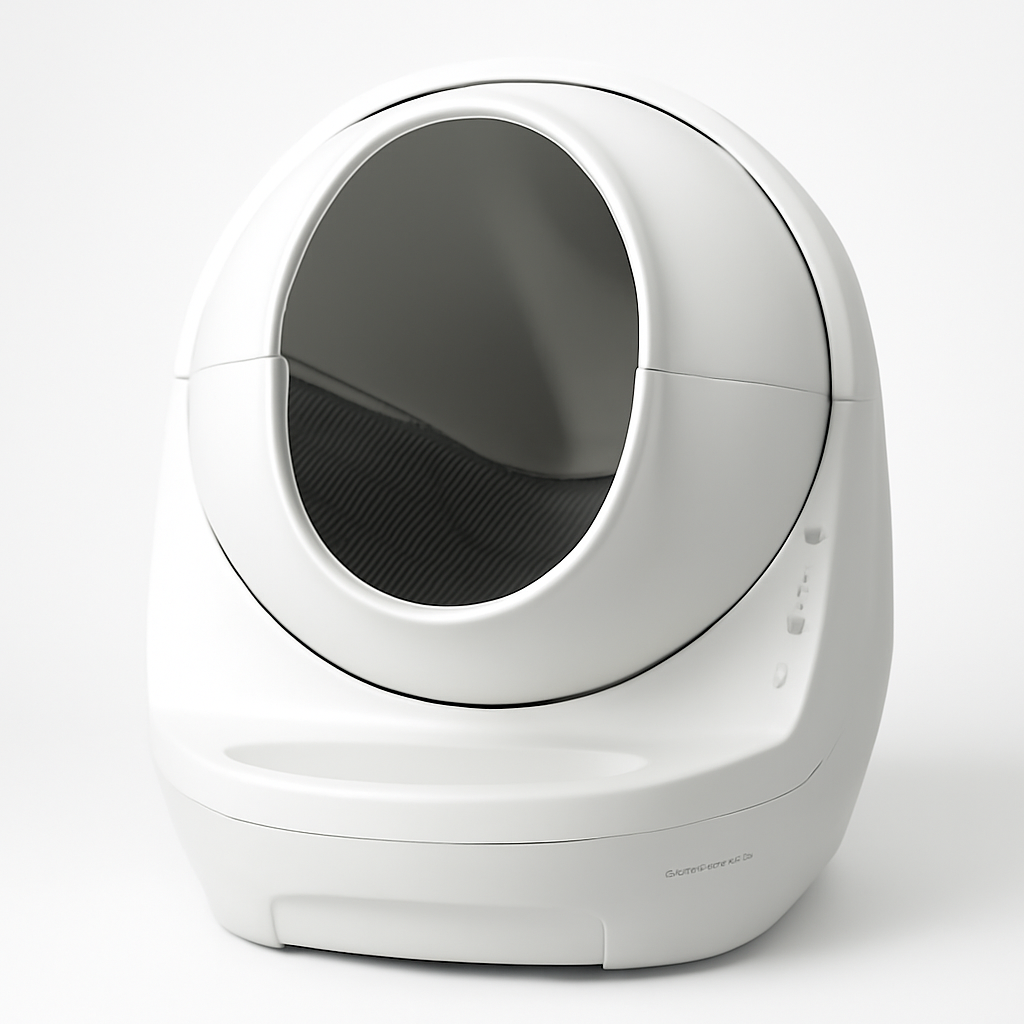
Whisker’s Litter-Robot 4 has held the top spot for three product generations, and the reason is boring: it just works more consistently than anything else. The globe rotation sifts clumps into a sealed carbon-filtered drawer, and the OmniSense detection system combines weight sensing with a laser array — meaning if the scale drifts out of calibration, the optical sensor still catches your cat.
It’s also the quietest premium unit we’ve used. The redesigned motor makes the rotation a low hum rather than the grinding whir that older Litter-Robots were known for. That matters a lot if the box lives in a bedroom or a studio apartment.
For multi-cat homes, the per-cat weight profiling is the most accurate of the group, and the waste drawer capacity means a two-cat household can genuinely go a week between emptyings.
Pros:
– Most reliable cycle in the category — very low jam rate
– Redundant safety sensors (weight + laser), the best implementation available
– Sealed drawer with carbon filter; excellent odor containment
– Works with any clumping clay litter — no proprietary cartridges
– Strong warranty and the best customer support in the category
– Genuinely quiet operation
Cons:
– The most expensive option here by a wide margin
– Large footprint — measure your space before buying
– The globe entry is enclosed; some cats need a longer adjustment period
– Full teardown cleaning is fiddly around the globe seal
– Some features are gated behind the app
Buy it if: You have two or more cats, you want the lowest-maintenance option available, and the price is within reach.
—
2. PetSafe ScoopFree Smart — Best Budget Pick
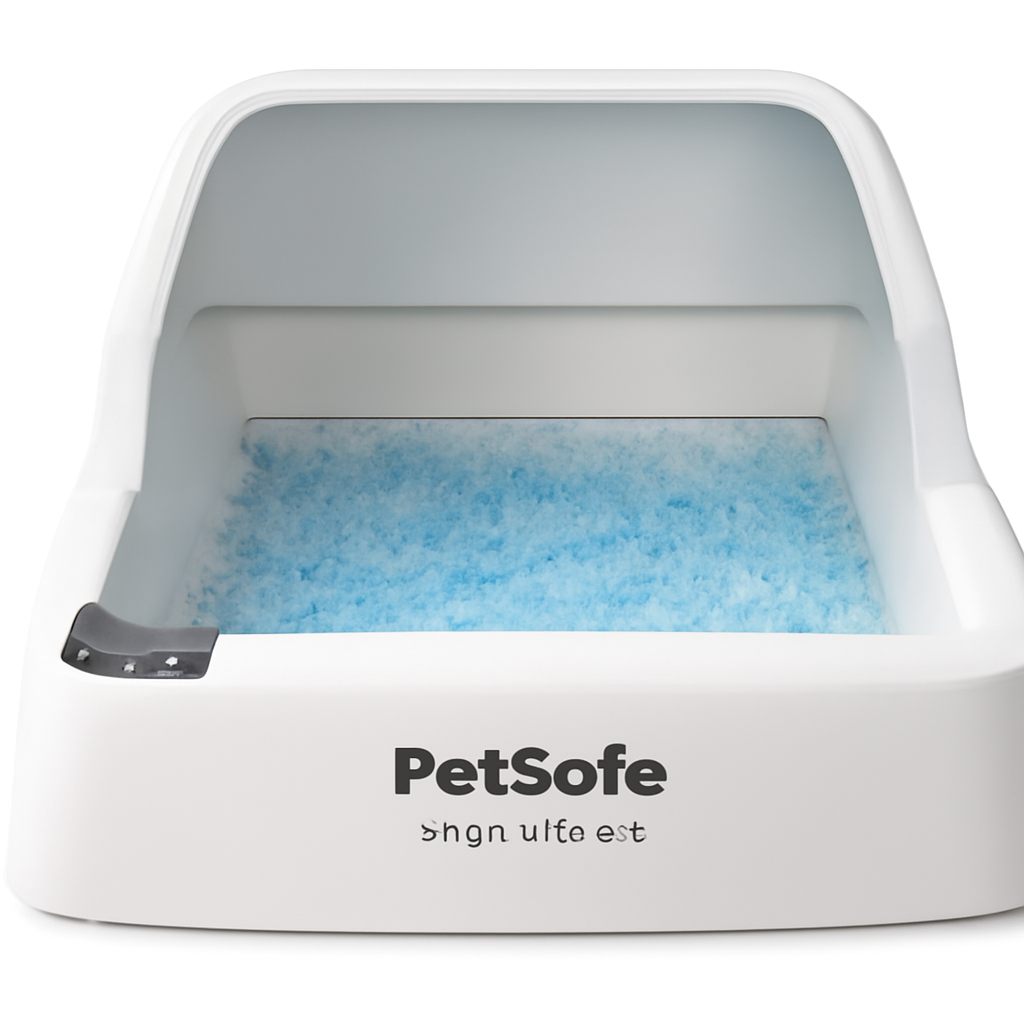
The PetSafe ScoopFree Smart takes a completely different approach: instead of a rotating globe, a rake sweeps waste into a covered trap at one end of a flat tray. It’s mechanically simpler, which means fewer things to go wrong, and it’s a fraction of the price of the premium units.
The tradeoff is the crystal litter system. Crystal litter absorbs urine and dehydrates solid waste rather than clumping it, and the trays are designed to be swapped out wholesale. That’s convenient but it’s an ongoing subscription-shaped cost, and it’s the main reason this box isn’t higher on the list.
Pros:
– By far the lowest entry price
– Open, low-walled design — cats accept it almost immediately
– Simple rake mechanism with few failure points
– Genuinely excellent at controlling urine odor
– Small footprint
Cons:
– Ongoing tray/crystal litter cost adds up significantly over a year
– Crystal litter tracks and some cats dislike the texture
– Solid waste sits in the covered trap and can smell by end of cycle
– Not ideal for more than one cat
– Basic app compared to premium competitors
Buy it if: You have one cat, you want out of daily scooping without a big upfront hit, and you don’t mind a recurring supply cost.
—
3. Neakasa M1 — Best for Large Cats
The Neakasa M1 is an open-top design that sifts by tilting the litter bed rather than enclosing your cat in a drum. That makes it the standout choice for two groups: large-breed cats (Maine Coons, Ragdolls, Norwegian Forest cats) who physically don’t fit comfortably in a globe, and cats who flatly refuse enclosed boxes.
The interior floor area is the largest here, and the low, open entry means near-zero transition anxiety. Build quality is a step above what the price suggests.
Pros:
– Largest usable interior — comfortable for big cats
– Open design; the easiest transition for skittish cats
– Very quiet tilting mechanism
– Straightforward disassembly for deep cleaning
– Works with standard clumping litter
Cons:
– Open top means less odor containment than sealed units
– Litter scatter is higher; you’ll want a mat underneath
– App is functional but less polished than Petkit’s
Buy it if: Your cat is big, nervous, or has already rejected an enclosed automatic box.
—
4. Petkit Purobot Ultra — Best Health Monitoring
The Petkit Purobot Ultra is the data nerd’s pick. It uses onboard camera-based cat recognition to identify individual cats — no guessing from weight alone — and logs visit duration, frequency, and weight trends per animal. If you have a cat with a known kidney or urinary condition, this level of tracking is legitimately clinically useful.
Hardware-wise it’s solid mid-to-upper tier: sealed drawer, decent odor control, reasonable noise. It doesn’t quite match the Litter-Robot 4 on cycle reliability, but it’s close.
Buy it if: You’re managing a cat’s chronic health condition, or you have several cats and want per-cat data without buying multiple units.
—
5. CatLink Scooper Pro — Best Mid-Tier Value
The CatLink Scooper Pro sits in the sweet spot between budget and premium. It’s a rotating-drum design like the Litter-Robot, with a sealed waste bin, standard clumping litter compatibility, and app control — at a meaningfully lower price than the top-tier units.
You give up some polish: the motor is louder, the app is clunkier, and the safety sensor system is single-mode rather than redundant. But the core function is sound, and it delivers most of the premium experience for noticeably less.
Buy it if: You want a globe-style box with standard litter and can’t justify the flagship price.
What to Look For: Size, Sensors, and Safety Features
Interior floor area, not exterior dimensions. Marketing copy loves quoting huge exterior measurements. What matters is whether your cat can turn around comfortably inside. A good rule: usable interior length should be at least 1.5× your cat’s body length, nose to tail base.
Redundant safety sensors. This is the specification that matters most and gets discussed least. A box with only a weight sensor is one calibration drift away from cycling with a cat inside. Look for units combining weight sensing with infrared or optical detection. Also check the post-exit delay — the gap between your cat leaving and the cycle starting. Anything under five minutes is too aggressive; seven to fifteen minutes is the safe range, and it should be adjustable.
Entry height. Kittens under six months, senior cats with arthritis, and cats recovering from surgery all struggle with high step-ups. Several manufacturers sell ramp accessories; check whether one exists for the model you’re considering.
Litter compatibility. Proprietary litter is the hidden cost of this category. Boxes that accept any standard clumping clay litter give you the freedom to buy on sale. Boxes requiring branded crystal trays or specific cartridges lock you into the manufacturer’s pricing indefinitely.
Waste drawer seal and capacity. A carbon filter is table stakes; what matters is whether the drawer actually seals. Larger drawers mean fewer emptyings, but they also mean waste sits longer — so seal quality becomes more important as capacity grows.
Power reliability. Nearly all of these are mains-powered with no battery backup. If your area has frequent outages, check whether the unit recovers gracefully or needs a manual reset.
Automatic Litter Box Costs: Upfront Price vs. Ongoing Refills
The sticker price is only part of the story. Here’s how the real cost breaks down over a typical three-year ownership period:
| Cost Component | What to Expect |
| Unit purchase | The one-time hit — ranges from budget to premium |
| Litter | Standard clumping clay is cheapest; proprietary crystal trays cost significantly more per month |
| Waste bags/liners | Some units require branded liners; others accept standard kitchen bags |
| Carbon filters | Replaced every 1–3 months on most sealed units |
| Replacement parts | Rake combs, seals, and motors after year two on heavier-use units |
The counterintuitive result: a more expensive box with standard-litter compatibility often costs less over three years than a cheap box with proprietary refills. Run the math on monthly consumables before you decide the budget option is actually the budget option.
One more cost worth naming: extended warranties in this category are unusually worth considering, because the failure mode is a motor or sensor going out at month 14 — just past standard coverage.
Common Problems (and How to Avoid Them)
Your cat refuses to use it. The most common issue, and almost always a transition problem rather than a product problem. Fix: place the new box next to the old one, leave the old one available, and run the new unit unplugged for the first several days so it’s just a normal box. Transfer a scoop of used litter into it to carry the scent. Only plug it in once your cat is using it regularly. Rushing this step is how people end up with a $600 box and a cat peeing on the bathmat.
Frequent jams and error codes. Usually overfilling. Every model has a max-fill line and people ignore it. Too much litter increases the load on the rake or drum motor and causes clumps to bridge instead of sifting. Fill to the line, not above it.
Clumps sticking to the sifting surface. This means the litter isn’t clumping hard enough. Cheap clumping litter with high dust content is the usual culprit. Switch to a harder-clumping formula and the problem typically disappears in one cycle.
Odor despite the filter. The filter isn’t the issue — the drawer seal is. Check for litter dust in the gasket channel and wipe it clean. Also replace carbon filters on schedule; a saturated filter does nothing.
Litter tracking everywhere. Not a defect, just physics. A large trapping mat under and in front of the unit solves most of it. Open-top designs track more than enclosed ones.
The unit stops mid-cycle repeatedly. Check that it’s on a genuinely level surface. These units use weight sensors, and a tilted floor throws calibration off, which reads as a cat still present.
Frequently Asked Questions About Automatic Litter Boxes
Are automatic litter boxes safe for cats?
Modern units from established brands are, provided they use sensor-based detection and a post-exit delay. The safety incidents that circulate online overwhelmingly involve older or off-brand units with a single sensor and no delay. Buy from a brand with a real warranty and redundant detection, and set the delay to at least seven minutes.
How many cats can share one automatic litter box?
The standard veterinary guidance is one box per cat plus one. Automatic boxes compress that somewhat because they’re always clean, but two cats per unit is a realistic ceiling, and three is pushing it. Beyond that, waste drawer capacity becomes the binding constraint regardless of what the marketing claims.
Can kittens use automatic litter boxes?
Not until they’re around six months old and above the unit’s minimum weight threshold — usually a few pounds. Below that weight the sensors may not register them at all, which is exactly the scenario the safety systems are supposed to prevent. Use a standard open box until they’re big enough.
Do they work with any litter?
Depends entirely on the model. Globe and rake units that use clumping clay work with most standard brands, though they perform best with hard-clumping, low-dust formulas. Crystal-based systems like the ScoopFree require the manufacturer’s trays. Avoid pine, paper, and most walnut litters in automatic units unless the manual explicitly approves them — they don’t clump firmly enough to sift.
How often do I actually have to clean it?
Empty the waste drawer weekly for one cat, every three to four days for two. Top off litter as it depletes. A full teardown and wash is a monthly job for most units — skip it and the mechanism gums up over time.
What happens during a power outage?
Most units simply stop and remain usable as a normal litter box until power returns. Some resume automatically; others need a reset. Check the manual for your model if outages are common where you live.
Is the app subscription required?
On every model here, no — the box functions without it. But some features (per-cat health history, remote cycling, detailed logs) are app-dependent, and a few brands have moved advanced analytics behind a subscription. Verify current terms before buying if the data is why you’re buying.
Our Verdict
For most people, the Litter-Robot 4 is the right purchase. It’s expensive, and there’s no way around that — but it’s the most reliable unit in the category, it has the best safety implementation, it works with any clumping litter so you’re not locked into refills, and it’s the only one we’d confidently recommend for a multi-cat household. If you’re going to spend real money on solving this problem permanently, spend it here.
If that’s out of budget, the PetSafe ScoopFree Smart is a genuinely good product for a single cat. Just go in clear-eyed about the ongoing tray cost — over three years it narrows the gap with premium units more than you’d expect.
And if your cat is large, elderly, or has already rejected an enclosed box, buy the Neakasa M1 instead of trying to force a globe design to work. The best automatic litter box is the one your cat will actually use, and no amount of engineering fixes a cat that won’t step inside.
Prices and availability change frequently — check current pricing before purchasing.