Quick Answer
Phone stands in 2026 range from $8-$200+, depending on features and materials. You can find solid basic stands under $15, reliable mid-range options between $15-$50, and premium ergonomic or multi-device stands above $50. For most people, spending $20-$35 gets you a durable stand that works well for phones, tablets, and video calls.
How Much Does a Phone Stand Cost in 2026?
The phone stand market has become incredibly diverse. Whether you need something for your desk, car, or bedside, there’s a stand at nearly every price point.
Here’s the honest breakdown:
– Budget tier ($8-$15): Basic plastic or lightweight metal stands. Good for occasional use.
– Mid-range ($15-$50): Adjustable, durable, often with better materials. Sweet spot for most buyers.
– Premium ($50-$200+): Specialized designs, multi-device support, premium materials, integrated features.
The price you pay usually reflects durability, adjustability, materials, and how many devices it supports. A $10 stand might work fine for light use, but if you’re propping your phone up 8 hours a day for video calls, you’ll appreciate the $35 stand more.
Budget Phone Stands Under $15
If you just need something functional and aren’t picky about aesthetics, these options deliver.
What to Expect at This Price Point
Budget stands typically use:
– Plastic construction or thin aluminum
– Limited adjustability (fixed angles or basic pivots)
– Single-device support
– Basic grip mechanisms
They work, but they might feel wobbly or flimsy with heavier phones.
Best Budget Options
A no-frills but surprisingly sturdy plastic stand that’s been popular for years. It holds most phones securely, has a simple foldable design, and takes up minimal space. It’s not adjustable beyond tilting, but it’s reliable for basic desk use.
Best for: Occasional use, travel, minimal desk space
AmazonBasics Phone Stand
The definition of functional simplicity. Lightweight aluminum with a rubber grip, basic angle adjustment. No fancy features, just does the job. Many people buy multiple for different rooms.
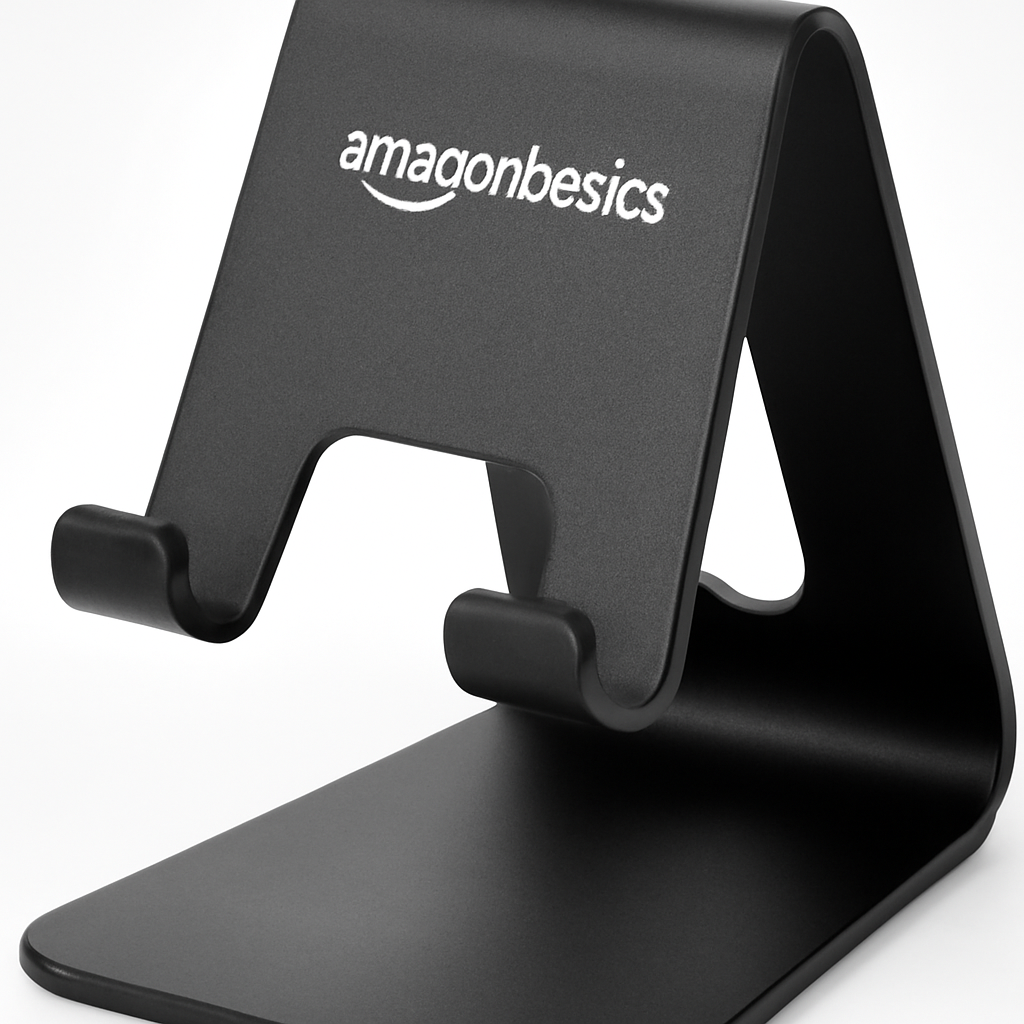
Best for: Budget-conscious buyers, backup stands, dorm rooms
Anker Phone Stand
Slightly sturdier than most in this price range. Aluminum construction with wider stability base. The grip is decent even for Plus-sized phones.
Best for: Everyday desk use without bells and whistles
Pros and Cons of Budget Stands
| Aspect | Pros | Cons |
| Price | Extremely affordable, impulse-buy friendly | Can feel cheap |
| Durability | Good enough for occasional use | May loosen over time |
| Adjustability | Some models offer basic tilt | Usually fixed or limited angles |
| Material Quality | Acceptable for the price | Plastic can wear or crack |
| Portability | Often lightweight and compact | Less stability when lightweight |
Mid-Range Options: $15-$50
This is where most people find their “just right” phone stand. You get real durability, better adjustability, and often multi-device support.
What Changes at This Price Point
– Sturdier materials (aluminum, stronger plastic)
– 360-degree rotation or multiple pivot points
– Better grip pads (rubber, silicone, or padded)
– Wider compatibility (tablets, different phone sizes)
– Aesthetic improvements
Top Mid-Range Picks
Spigen FlexARK Phone Stand
Genuinely one of the best values in 2026. Aluminum construction, adjustable to virtually any angle, and the grip system works with thick cases. Can hold tablets too. The build quality feels premium despite the mid-range price.
Best for: Most people—this is the sweet spot
Moft Phone Stand
Ultra-thin, adhesive-backed design that sticks to the back of your phone or case. It’s surprisingly stable and portable. Different from traditional stands, but excellent if you move between locations frequently or travel.
Best for: Mobile professionals, travel, minimalist setups
Twelve South Compass Pro
More of a luxury mid-range option. Premium aluminum, ball-joint design for perfect positioning, weighted base for stability. Looks like it belongs in an Apple store.
Best for: Design-conscious people, visible desk setups, premium mid-range budget
Lamicall Adjustable Stand
Not to be confused with their budget model. This one has real adjustability—multiple pivots, wider base, can angle up to 60 degrees. Excellent for video calls or recipes on the counter.
Best for: Video conferencing, kitchen use, tablet support
Comparison Table: Mid-Range Favorites
| Product | Best For | Price Range | Key Feature |
| Spigen FlexARK | Everyday desk use | $20-$30 | 360° adjustability |
| Moft Stand | Travel & mobile users | $15-$25 | Adhesive design |
| Twelve South Compass Pro | Premium aesthetics | $35-$45 | Ball-joint system |
| Lamicall Adjustable | Video calls, cooking | $25-$35 | 60° angle range |
Pros and Cons of Mid-Range Stands
| Aspect | Pros | Cons |
| Build Quality | Noticeably better than budget | Still budget-friendly |
| Adjustability | Most offer multiple angles | Some limits on positioning |
| Design | More attractive options | More variety = harder to choose |
| Durability | 2-3+ years typical lifespan | Hinges may loosen eventually |
| Value | Best bang for buck for most | Not “investment-level” |
Premium Phone Stands $50+
Premium stands often target specific use cases: professional setups, multi-device configurations, or high-end aesthetics.
Why Premium Stands Cost More
– Materials: Machined aluminum, stainless steel, premium plastics
– Engineering: Complex pivot systems, weighted bases, precision engineering
– Features: Often support 2+ devices, integrated charging, cable management
– Aesthetics: Designed for visible, professional environments
– Warranty/Support: Better customer service and durability guarantees
Premium Options Worth the Investment
Elago P4 Stand
A luxury option that’s minimalist but beautifully designed. Vertical orientation only, but the build quality and stability are exceptional. Premium materials throughout.
Best for: Photographers, minimalist desk setups, people who value design
Rain Design mStand
Professional-grade aluminum construction. Designed for desktop work. Better ergonomics than basic stands, elevated positioning, excellent heat dissipation if you work with your phone/tablet extensively.
Best for: Remote workers, content creators, long work sessions
Stands with Charging Integration
Several premium brands now include wireless charging in the stand itself (like some Belkin and Anker Pro models). You’re paying $60-$120, but you eliminate cable clutter and maintain a single charging solution.
Best for: Wireless charging enthusiasts, nightstands, decluttered desks
When to Buy Premium
Honestly? Most people don’t need to spend over $50. Consider premium stands if you:
– Work 8+ hours daily with your phone propped up (ergonomics matter)
– Need to support multiple devices simultaneously
– Have a visible, professional desk setup (design matters)
– Want something that lasts 5+ years without issues
– Appreciate materials and craftsmanship
Factors That Affect Phone Stand Pricing
Understanding what drives cost helps you choose wisely.
Material Quality
Budget: Plastic, thin aluminum
– Cost savings: 50-70% cheaper than premium
– Longevity: 1-2 years before loosening or cracking
Mid-Range: Aluminum, reinforced plastic
– Better durability (3-4 years typical)
– Slightly more elegant appearance
Premium: Machined aluminum, stainless steel, wood
– Looks professional
– Lasts 5+ years
– Weight and stability are superior
Adjustability
More pivot points = more engineering = higher cost.
– Fixed angle: $8-$12 (no adjustment)
– 2-3 pivot points: $15-$30 (good range)
– Ball-joint systems: $35-$60 (any angle)
– Motorized/Smart adjustability: $100-$200+ (rare, niche market)
Device Compatibility
Single phone support is cheapest. Multi-device stands cost more:
– Single phone: $10-$25
– Phone + tablet: $20-$45
– Phone + tablet + smartwatch: $40-$80+
Brand Premium
Yes, you pay extra for brand names.
– Trusted brands (Spigen, Anker, Twelve South): 20-30% markup
– Luxury brands (Elago, Rain Design): 40-60% markup for aesthetics/engineering
– Generic/newer brands: Often $5-$10 cheaper for similar specs
Special Features
These push prices up:
– Integrated charging: +$20-$50
– Cable management: +$5-$15
– Rotating base: +$10-$20
– Weighted stability: +$5-$15
– Premium grip materials: +$3-$10
Best Value Phone Stands by Category
Best Overall Value
Spigen FlexARK [$20-$30]
Honestly, this is the stand most people should buy. Great build, adjustable, reasonable price, works with cases and tablets. No gimmicks, no overpaying for brand name.
Pros:
– Truly adjustable to any angle
– Aluminum construction feels premium
– Secure grip even with large phones
– Under $30
Cons:
– Not as minimal/elegant as premium options
– Doesn’t support 2+ devices simultaneously
– Base could be slightly wider
Best Budget Pick
AmazonBasics Phone Stand [$8-$12]
If you need multiple stands (bedroom, car, office), or are buying for a kid/teen, this is smart spending. It works fine, and you’re not risking much money.
Pros:
– Incredibly cheap
– Takes up minimal space
– Lightweight and portable
– Functions perfectly for casual use
Cons:
– Feels plastic-y
– Angle adjustment is basic
– Less stable with heavier phones
Best for Travel
Moft Phone Stand [$15-$25]
Sticks to your phone, weighs almost nothing, and solves the “where do I put my phone” problem anywhere. Different philosophy than traditional stands.
Pros:
– Incredibly portable
– Works in any orientation
– Thin profile
– Supports various weights
Cons:
– Adhesive may not stick forever
– Not ideal if you move your phone between cases often
– Learning curve on positioning
Best Premium Option
Twelve South Compass Pro [$35-$45]
If you’re willing to spend more but don’t need crazy features, this is it. Beautiful design, excellent stability, premium feel without the $100+ price tag.
Pros:
– Premium aluminum construction
– Ball-joint allows any angle
– Aesthetic value (looks good in photos)
– Weighted base is very stable
– Good warranty
Cons:
– Doesn’t support tablets
– Single device only
– You’re paying partly for design
Best for Multi-Device Setup
Tablet-specific stands [$30-$60]
Many tablets stands also hold phones well. Look for models specifically designed for iPad + iPhone compatibility, like the Logitech tablet stands or specialized iPad stand models.
Pros:
– Often work for both tablets and phones
– More robust engineering
– Better angle options
Cons:
– Overkill if you only need a phone stand
– Takes up more desk space
Where to Buy Phone Stands at the Best Price
Price Comparison Reality Check
Prices vary seasonally, and 2026 online retail has gotten more competitive.
Expected price variance by retailer:
– Amazon: Baseline pricing, Prime shipping, easy returns (good if returning)
– Best Buy: Often matches Amazon, instant pickup if in-store
– Walmart: Sometimes undercuts by $2-$5 on budget models
– Target: Usually matches Amazon, RedCard saves 5%
– Brand direct sites: Occasionally cheaper, sometimes more expensive
– eBay: Older models might be discounted, but use caution on fakes
Timing Your Purchase
– Holiday sales (Nov-Dec): 20-30% discounts common
– Summer sales (June-July): 15-25% off, less crowded than holiday
– Back to school (Aug): 10-20% off
– Random: Amazon/Walmart often have flash sales on trending products
How to Avoid Fake Products
Counterfeits are more common in 2026. Buy from:
✓ Official Amazon stores (brand verified)
✓ Brand official websites
✓ Authorized retailers (Best Buy, Target)
✓ Newer sellers with few reviews
✗ Avoid: Heavy discounts from unknown sellers, prices “too good to be true”
Our Verdict
For most people: Spend $20-$35 on a mid-range stand like the Spigen FlexARK.
You’ll get excellent durability, adjustability, and stability without overpaying for premium aesthetics or features you won’t use. This price range represents the sweet spot of value in 2026.
If you’re on a tight budget: The AmazonBasics stand under $12 works fine for casual use. You’re not wasting money, and it solves the basic problem.
If you’re a professional or spend 8+ hours daily with your phone propped up: Spend the $35-$45 on a Twelve South Compass Pro or similar premium option. The ergonomics and durability will matter over time.
If you travel frequently: The Moft adhesive stand ($15-$25) is genuinely innovative and solves the portability problem in a way traditional stands can’t.
Avoid: Stands under $5 (they fail quickly) and anything over $100 unless you have a specific need like integrated charging or multi-device support.
The phone stand market in 2026 is mature and competitive. You’re unlikely to go wrong with any option in the $15-$50 range. The question is mostly about adjustability, materials, and aesthetics—not quality. Even budget options work; they just don’t feel as good or last as long.
Start with what fits your budget, and don’t overthink it. A $25 stand will serve you better than wasting time researching a $100 option you don’t need.