Quick answer: If your dog panics during thunderstorms, freaks out when you leave, or shakes at the vet, the fastest-acting fix is usually a calming supplement or chew (like Zesty Paws Calming Bites or VetriScience Composure) paired with an environmental aid like a ThunderShirt compression vest or an Adaptil pheromone diffuser. Most dogs respond best to a combination rather than a single product. Severe, persistent anxiety warrants a vet visit — the products below help mild-to-moderate cases, not clinical disorders.
Let’s break down what’s actually causing your dog’s stress, how each type of calming product works, and which ones are worth your money in 2026.
—
What Causes Dog Anxiety (and Signs to Watch For)
Before you buy anything, it helps to know what you’re treating. Dog anxiety usually falls into a few buckets:
– Separation anxiety — distress when left alone (the most common reason owners buy calming products)
– Noise phobia — thunderstorms, fireworks, vacuum cleaners, construction
– Situational stress — vet visits, car rides, grooming, travel
– Social/environmental anxiety — new people, other dogs, unfamiliar places
– Age-related anxiety — cognitive decline in senior dogs
Signs your dog is anxious
Some are obvious, others sneaky. Watch for:
– Excessive barking, whining, or howling
– Pacing, panting, or trembling when nothing’s physically wrong
– Destructive chewing or scratching (especially near doors/windows)
– Accidents indoors despite being house-trained
– Hiding, cowering, or tucked tail
– Excessive licking or grooming (sometimes to the point of bald spots)
– Loss of appetite or refusing treats they normally love
If you’re seeing several of these regularly, calming products can genuinely help. If they’re severe or escalating, skip to the “When to See a Vet” section first.
—
How Calming Products Work: Types & What to Look For
Calming products fall into three broad categories, and they work through completely different mechanisms:
1. Ingestible (treats, chews, supplements) — These deliver calming compounds into your dog’s system. Look for research-backed ingredients:
– L-Theanine — an amino acid that promotes relaxation without sedation
– L-Tryptophan — a serotonin precursor
– Chamomile & Valerian root — mild natural sedatives
– Melatonin — helpful for sleep and noise events
– Hemp / CBD — increasingly popular, though quality varies wildly (buy from brands with third-party lab results)
2. Physical/compression (vests, wraps, beds) — These apply gentle, constant pressure — the same principle as swaddling a baby or a weighted blanket for humans. It triggers a calming response through the nervous system.
3. Environmental (pheromones, sprays, collars) — These mimic the natural “appeasing pheromone” a mother dog releases to comfort her puppies. Dogs detect it through a special organ; humans can’t smell it at all.
What to look for regardless of type:
– Clear ingredient lists (no vague “proprietary blends” hiding dosages)
– Third-party testing, especially for anything hemp-based
– Appropriate sizing/dosing for your dog’s weight
– No harsh sedatives marketed as “natural”
—
Calming Treats, Chews & Supplements Compared
This is where most people start, because it’s easy and dogs treat it like a snack. Here are four widely trusted options.
Top Picks at a Glance
| Product | Best For | Price Range |
| Zesty Paws Calming Bites | Everyday mild anxiety & daily use | $ |
| VetriScience Composure | Fast-acting situational stress (vet, storms) | $$ |
| Purina Pro Plan Calming Care | Long-term, probiotic-based support | $$ |
| ThunderShirt | Non-ingestible, storm & travel anxiety | $$ |
| Adaptil Diffuser | Whole-room, drug-free environment | $$ |
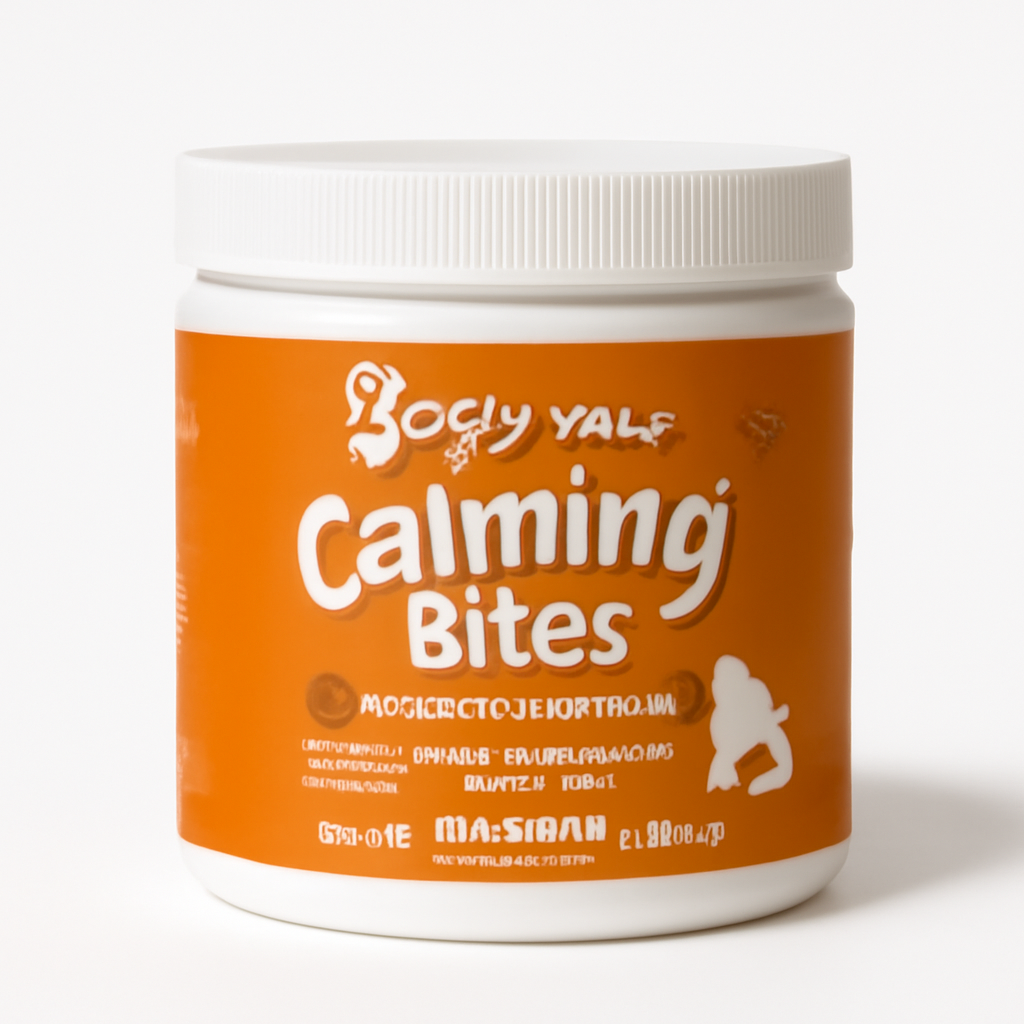
Zesty Paws Calming Bites
A popular daily chew using L-Theanine, chamomile, and hemp/valerian blends. Formulated as a soft chew that most dogs happily eat as a treat.
Pros:
– Palatable — dogs generally take it without a fight
– Good for consistent, everyday low-level anxiety
– Widely available and reasonably priced
Cons:
– Daily-use product; not the fastest for sudden events
– Effectiveness is gradual, not instant
– Some formulas contain multiple actives, so introduce slowly
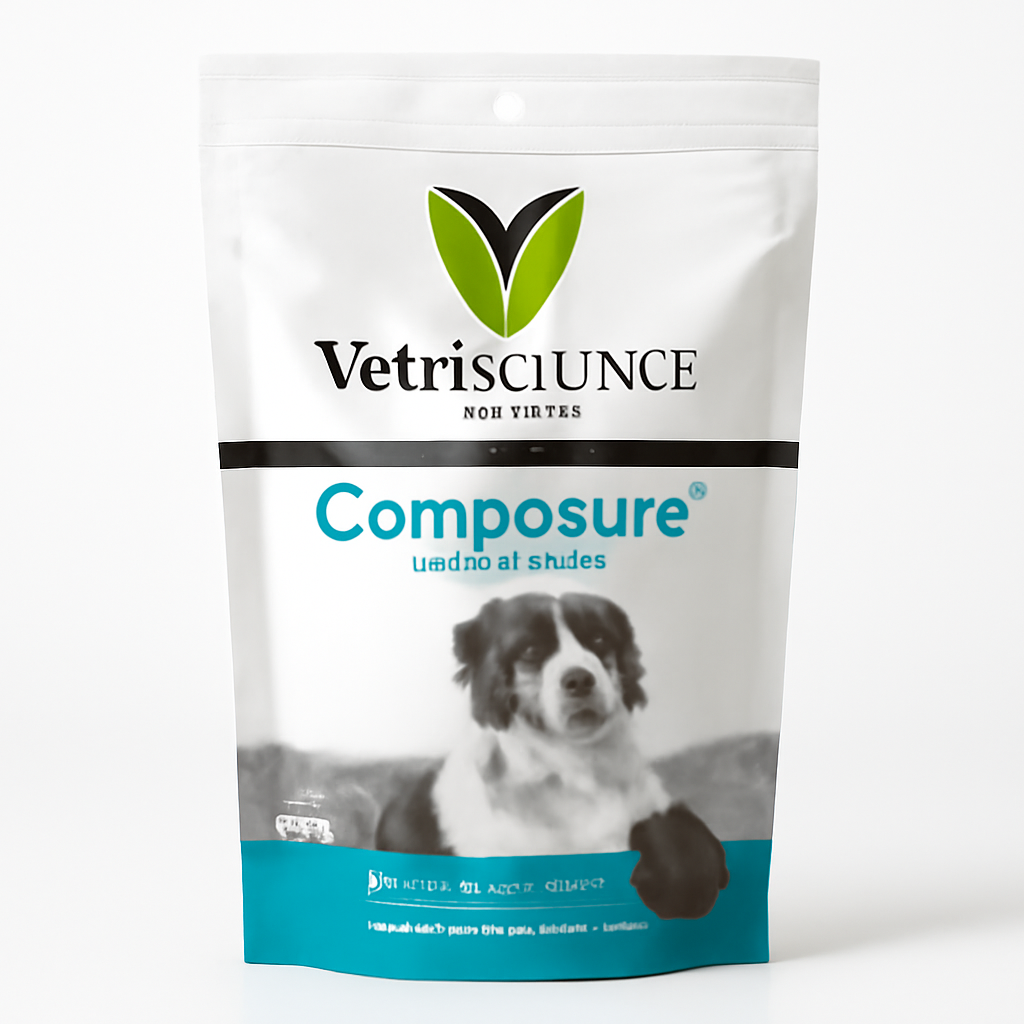
VetriScience Composure
Often recommended by vets for situational stress because it works relatively quickly. Uses a colostrum-based ingredient (C3), L-Theanine, and thiamine. Many owners give it 30–60 minutes before a known trigger like a car ride or fireworks.
Pros:
– Faster onset than most daily supplements — good “as needed” option
– Vet-recommended and well-studied ingredient profile
– Won’t sedate or knock your dog out
Cons:
– Costs more per chew than basic daily options
– You need to time it before the stressful event
– Not every dog loves the taste
Purina Pro Plan Calming Care
A different approach — this is a probiotic supplement (BL999 strain) that supports calm behavior through the gut-brain axis over time. It’s a powder you sprinkle on food.
Pros:
– Backed by an established brand with research behind the strain
– Doubles as digestive support
– Good for dogs with ongoing baseline anxiety
Cons:
– Takes weeks to build up — not for acute events
– Powder format is less convenient than a chew
– More of a long-game solution
—
Anxiety Vests, Beds & Compression Wraps
If your dog’s anxiety spikes during specific events — storms, fireworks, car rides — compression gear is one of the most cost-effective, drug-free tools available.
ThunderShirt Classic
The category leader. It’s a snug wrap that applies gentle, constant pressure around your dog’s torso. Many owners report visible calming during thunderstorms and travel. It’s reusable, washable, and requires zero dosing.
Pros:
– No ingredients, no side effects — safe to combine with supplements
– One-time purchase, lasts for years
– Works within minutes for many dogs
Cons:
– Doesn’t work for every dog (roughly a majority respond, not all)
– Needs correct sizing to be effective
– Some dogs resist wearing it at first — introduce gradually
Calming Donut Beds
Round, bolstered “donut” or “cuddler” beds (from brands like Best Friends by Sheri) create a nest-like space with raised edges dogs can lean into. The self-warming, enclosed feel mimics curling up against littermates. Great as a permanent safe-space anchor in the home, especially for anxious sleepers and senior dogs.
Pair a calming bed with a consistent “retreat” location and your dog gains a spot they associate with safety — which pays off during stressful events.
—
Pheromone Diffusers, Sprays & Calming Collars
Pheromone products are the “set it and forget it” option. They mimic the dog-appeasing pheromone (DAP) that a nursing mother emits to reassure her puppies.
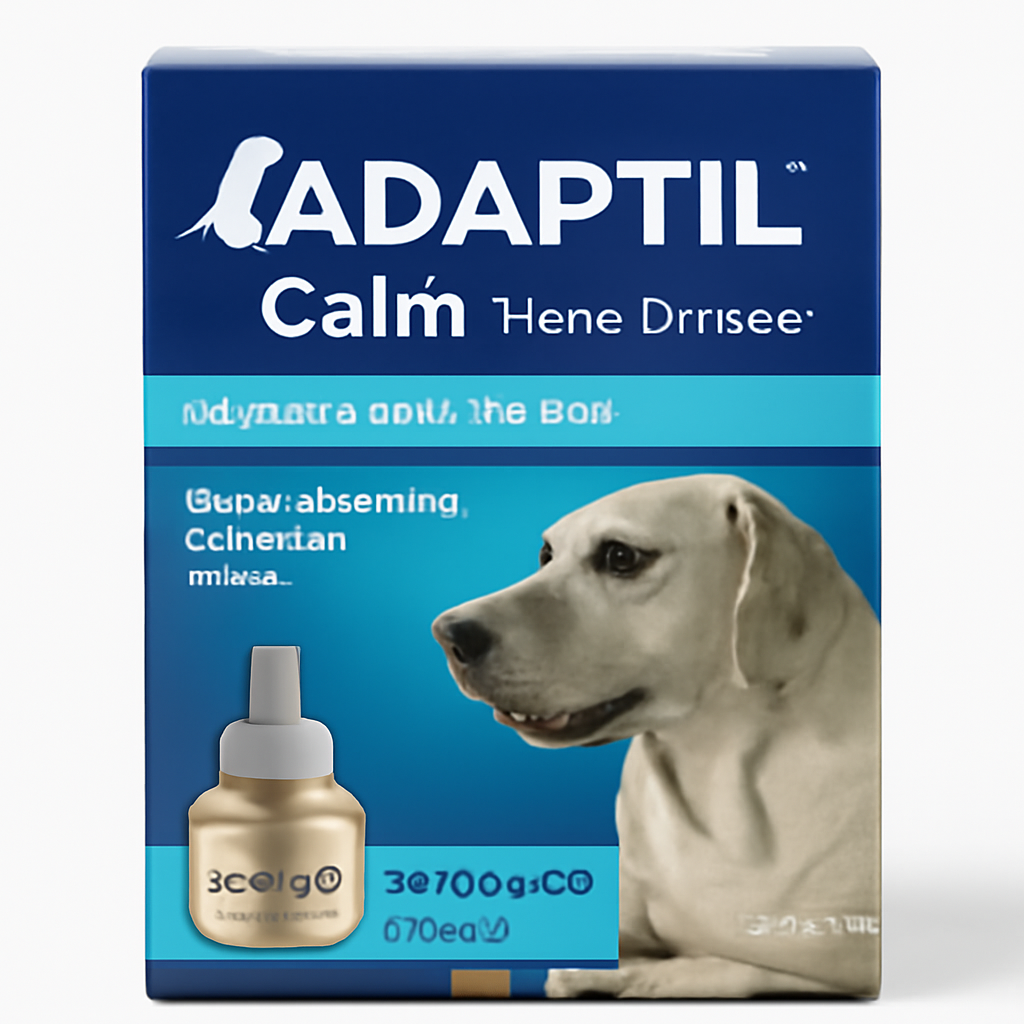
Adaptil Diffuser
The best-known name here. You plug it into an outlet and it releases odorless (to humans) calming pheromones into the room for about 30 days per refill. Ideal for whole-home baseline anxiety, new-puppy adjustment, or multi-dog households.
Pros:
– Completely passive — no dosing, nothing your dog has to wear or eat
– Drug-free and safe alongside every other product here
– Good for covering a specific room (crate area, living room)
Cons:
– Covers a limited area — one diffuser per room
– Ongoing refill cost
– Subtle effect; works best as part of a combination
Adaptil also makes:
– A spray version — great for spot use on bedding, in the car, or inside a crate before travel
– A calming collar — travels with your dog, useful for walks, vet trips, and boarding where a plug-in won’t reach
Collars are the most portable pheromone option, so if your dog’s anxiety is mobile (vet, park, car) rather than home-based, start there.
—
How to Choose the Right Calming Solution for Your Dog
There’s no single “best” — it depends on when and why your dog gets anxious. Use this quick decision guide:
If the trigger is predictable (storms, fireworks, vet visits):
→ Fast-acting chew like VetriScience Composure + a ThunderShirt, given/put on before the event.
If it’s constant, low-level baseline anxiety:
→ Daily supplement like Zesty Paws Calming Bites or Purina Pro Plan Calming Care, plus an Adaptil Diffuser in their main room.
If it’s separation anxiety:
→ Diffuser + calming bed as a safe space, daily supplement, and ideally behavioral training (products help, but training addresses the root).
If your dog travels or leaves the house a lot:
→ Portable options: Adaptil collar + a chew timed before departure.
General rules of thumb:
– Combine categories. Ingestible + environmental + compression stack well because they work through different pathways.
– Introduce one product at a time so you can tell what’s actually helping.
– Give supplements a fair trial — daily formulas may need 2–4 weeks.
– Size and dose correctly. Under-dosing is the #1 reason people think a product “doesn’t work.”
—
When to See a Vet vs. Try Calming Products
Calming products are excellent for mild-to-moderate anxiety and predictable stress events. But they are not a substitute for veterinary care in these situations:
See a vet if your dog:
– Is self-harming (chewing skin raw, breaking teeth on crates, injuring itself trying to escape)
– Has sudden-onset anxiety with no clear trigger (can signal pain or illness)
– Shows aggression driven by fear
– Doesn’t improve at all after several weeks of consistent product use
– Has severe separation anxiety that’s escalating
A vet can rule out underlying medical causes (thyroid issues, pain, cognitive decline in seniors), prescribe anti-anxiety medication when warranted, and refer you to a certified behaviorist. For genuine clinical anxiety, medication + behavior modification is the gold standard — the products in this guide are complementary support, not a replacement.
A good approach: Start with over-the-counter calming products for mild cases. If you see no meaningful improvement in 3–4 weeks, or if symptoms are severe from the start, book the vet.
—
Our Verdict
For most dogs with everyday, manageable anxiety, the best value in 2026 is a combination approach: a daily calming chew plus one environmental aid.
– Best overall daily pick: Zesty Paws Calming Bites — affordable, palatable, and easy to keep up consistently.
– Best for sudden stress events: VetriScience Composure — faster-acting and vet-trusted for storms, travel, and vet visits.
– Best drug-free tool: the ThunderShirt — a one-time buy that keeps working for years with zero side effects.
– Best passive whole-home option: the Adaptil Diffuser — quietly lowers the baseline stress in your dog’s space.
Start with one ingestible and one non-ingestible, size and dose them properly, and give it a few weeks. If your dog’s anxiety is severe, self-harming, or not improving, that’s your cue to loop in a vet rather than buying a fifth product.
Your dog can’t tell you what’s wrong — but with the right calming tools (and a little patience), you can help them feel safe again.
This guide is for informational purposes and isn’t a substitute for veterinary advice. Always consult your vet before starting a new supplement, especially if your dog takes medication or has a health condition.