Quick Answer
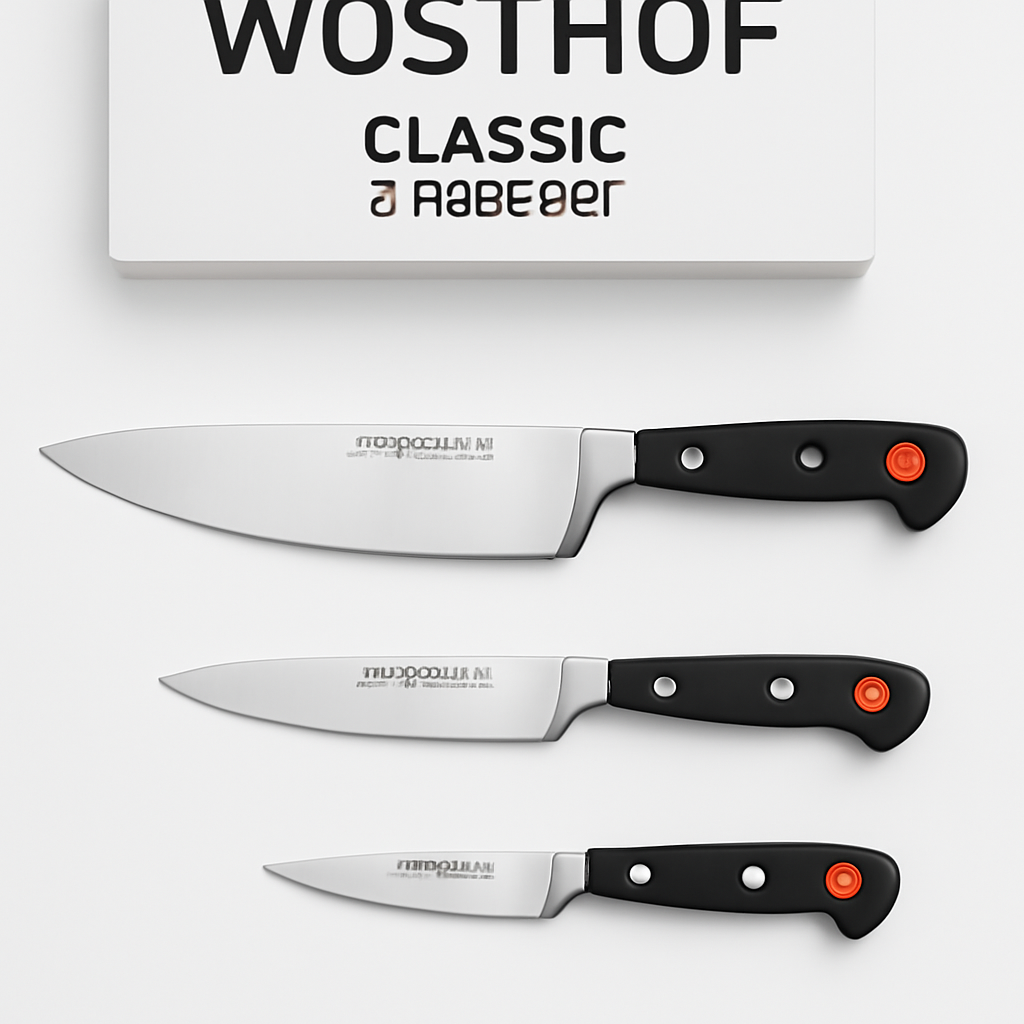
A quality knife set should include an 8-inch chef’s knife, paring knife, and bread knife with sharp stainless or carbon steel blades, comfortable handles, and reasonable durability. The Wüsthof Classic 3-Piece Set Victorinox Fibrox Pro delivers excellent value under $100. Budget another $50-150 for proper storage and maintenance tools.
—
What Makes a Quality Knife Set?
Before you invest in a knife set, let’s talk about what actually separates a kitchen knife that feels great to use from one that frustrates you every time you reach for it.
Blade Quality
The blade is everything. You want steel that holds an edge long enough to be practical but isn’t so hard it shatters if you accidentally bang it against a cutting board. German-style blades (thicker, slightly softer) are more forgiving. Japanese-style blades (thinner, harder) hold edges longer but require more careful handling. Most home cooks find German-style blades easier to maintain.
Handle Comfort and Safety
A good handle prevents hand fatigue and reduces the chance of slipping. Look for knives where the handle is textured (not smooth plastic), extends slightly past your knuckles, and feels balanced when you hold it. If a knife feels front-heavy or awkward in your hand, it doesn’t matter how sharp it is—you won’t enjoy using it.
Balance Between Blade and Handle
When you hold a knife horizontally, it should feel evenly balanced. A well-balanced knife reduces fatigue during extended chopping sessions and gives you better control. Most quality knives have a bolster (the thick band between blade and handle) that provides both balance and hand protection.
Steel Type and Edge Retention
Stainless steel is corrosion-resistant and low-maintenance but requires more frequent sharpening. Carbon steel holds an edge longer but can rust and needs more care. High-carbon stainless blends both advantages. In 2026, most mid-range sets use this hybrid approach.
Full Tang vs. Partial Tang
A “full tang” knife has steel running all the way through the handle for durability. This is standard on quality sets. Cheaper sets sometimes use partial tang, which can wobble or break under pressure.
—
Best Overall Knife Sets for Home Cooks
Wüsthof Classic 3-Piece Starter Set
If you want to buy once and use for decades, Wüsthof is the gold standard. This German manufacturer has been making knives since 1814, and it shows. The Classic 3-Piece includes an 8-inch chef’s knife, 3.5-inch paring knife, and 10-inch bread knife—essentially everything you need for 95% of kitchen tasks.
Why it works: The chef’s knife is the real workhorse here. It’s heavy enough to give you leverage for chopping, yet maneuverable enough for delicate work. The curved blade naturally rocks across a cutting board, which feels intuitive for most people. Wüsthof knives are forged rather than stamped, meaning the steel is worked during manufacturing to create density and strength.
Pros:
– Excellent edge retention; sharpening every 2-3 months is typical
– Gorgeous, comfortable handles with superior grip
– Dishwasher safe (though hand washing is recommended)
– Warranty covers manufacturing defects
Cons:
– Price is the barrier—this is an investment
– Requires honing steel between sharpenings
– Heavier than Japanese alternatives (some prefer this, some don’t)
—
Victorinox Fibrox Pro 3-Piece Set
Victorinox is the Swiss Army knife maker, literally—they’ve been making pocket knives since 1884. Their kitchen knife division uses the same precision manufacturing. The Fibrox line is their most popular, and it’s easy to understand why.
For the money, there’s nothing that comes close to Victorinox. You’re looking at roughly 1/4 the price of Wüsthof but with 80% of the performance. The blade is high-carbon stainless steel (not German-forged, but stamped from steel stock), and it sharpens easily. The Fibrox handle is a textured plastic designed to prevent slipping.
Why it works: These knives are workhorse tools. Professional kitchens, culinary schools, and home cooks who want sharp knives without premium prices all gravitate here. The 8-inch chef’s knife is thin and nimble, making it faster for repetitive chopping than heavier German blades.
Pros:
– Outstanding value; hard to beat for the price
– Lightweight and quick-feeling in the hand
– Easy to sharpen with any basic sharpener
– Professional kitchens stock these (tells you something)
Cons:
– Doesn’t hold an edge quite as long as Wüsthof
– Plastic handles (though very durable) feel less premium
– Fewer style options and colors
—
Zwilling J.A. Henckels Twin Professional
German brand, built with Asian-inspired design. The Twin Professional series is Zwilling’s mainstream line (their expensive ZwillingJ.A. Henkel line sits above it). This is a good middle ground between investment-level and budget options.
The 3-piece starter set includes the essentials, but what makes this interesting is the blade geometry: slightly thinner than Wüsthof but with more edge retention than Victorinox. The handles are more ergonomic than Wüsthof (more curved, less angular).
Pros:
– Good edge retention without being difficult to sharpen
– More comfortable for extended use than Wüsthof for many people
– Modern handle design
– Good value for the quality
Cons:
– Not as durable long-term as higher Zwilling lines
– Slightly less “prestige” than Wüsthof (though this shouldn’t matter practically)
—
Professional-Grade Knife Sets on a Budget
Not everyone needs to spend $300+ on knives. Some of the best steel in the world is in budget-friendly packages if you know where to look.
Mercer Culinary Genesis 3-Piece Set
Mercer supplies professional kitchens and culinary schools worldwide. Their Genesis line is designed to be affordable without cutting corners. High-carbon stainless blade, ergonomic handle, and the kind of edge that holds up through a busy dinner service.
The Genesis knives are slightly thinner than Victorinox, giving them a faster feel during rocking motions. Many professional cooks prefer them to more expensive options because the blade geometry is just slightly optimized for speed.
Why consider this: If you do a lot of chopping (meal prep, cooking for large groups), the Genesis knives reward technique. They won’t do the work for you like a heavier knife might, but they respond beautifully to good knife skills.
—
Knife Set Materials & Blade Types Explained
Understanding blade materials helps you make a choice that actually matches your habits.
Stainless Steel vs. Carbon Steel vs. High-Carbon Stainless
| Material | Edge Retention | Rust Resistance | Ease of Sharpening | Best For |
| Stainless Steel | Good (not great) | Excellent | Easy | Beginners, dishwashers, low maintenance |
| Carbon Steel | Excellent | Poor (requires care) | Easy | Professionals, careful users, sharp-obsessed |
| High-Carbon Stainless | Very Good | Very Good | Moderate | Most home cooks; best overall balance |
Most quality knife sets in 2026 use high-carbon stainless. It’s the Goldilocks option—sharp enough to stay useful between sharpenings, corrosion-resistant enough for normal kitchen work, and easy enough to sharpen at home.
German-Style vs. Japanese-Style Blades
German-Style: Thicker spine, curved blade, wider profile. Good for rocking motions. More forgiving if you hit the board at an angle. Slightly easier to maintain. Think Wüsthof.
Japanese-Style: Thinner blade, straighter profile, sharper edge angle. Requires proper technique—you push/pull rather than rock. Holds edge longer. Requires more care. Think Tojiro or Victorinox at the Japanese end of the spectrum.
Hybrid: Many modern brands now blend both approaches. Mercer and Zwilling do this well—they’re not as thick as Wüsthof but not as delicate as pure Japanese knives.
—
How to Choose the Right Knife Set for Your Needs
Consider Your Cooking Volume
Light cooking (a few meals per week): A basic 3-piece set is plenty. You won’t go through knife maintenance frequently enough to justify larger sets.
Regular home cooking (most home cooks): 3-5 pieces. The 3 essentials (chef’s, paring, bread) plus maybe a utility knife and kitchen shears.
Heavy cooking or entertaining: 6+ pieces, possibly including boning knife, filleting knife, etc. But honestly, most home cooks buy more knives than they actually use.
Your Maintenance Comfort Level
How often do you want to sharpen?
– Low maintenance: Buy a more expensive set that holds edges longer (Wüsthof). Or buy a budget set you don’t mind replacing (Victorinox). In between? You’re committing to regular sharpening.
– Willing to sharpen monthly: Budget sets are actually a great choice. Victorinox sharpens beautifully and quickly.
– Want professional maintenance: Some cities have knife services. Check before buying expensive knives if this appeals to you.
Space Constraints
Do you have room for a knife block? Are you going with a magnetic strip? A drawer solution?
– Knife blocks: Take counter/drawer space but keep knives accessible. Magnetic strips are similar. Wüsthof and many premium brands sell beautiful blocks; budget sets often include basic ones.
– Drawer storage: Knives need blade guards or a blade guard roll to avoid damage and safety issues.
– Minimal space: Magnetic strip on the wall is the most compact option.
Budget Reality in 2026
– Under $100: Victorinox Fibrox Pro, Mercer Genesis, Dexter-Russell basics
– $100-300: Zwilling Twin Professional, mid-range Henckels, lower Wüsthof lines
– $300+: Wüsthof Classic, high-end Shun, custom/artisanal brands
There’s a massive quality jump from $50 to $150. The jump from $150 to $300 is smaller. The jump from $300+ is often aesthetic or brand prestige rather than actual performance.
—
Maintenance Tips to Keep Your Knives Sharp
A sharp knife is safer and more enjoyable to use. Dull knives require more pressure, leading to slips.
Honing vs. Sharpening (They’re Different!)
Honing uses a honing steel to realign the blade edge between sharpenings. Do this every couple of weeks if you cook frequently. It takes 30 seconds and keeps your knives feeling sharp without removing steel.
Sharpening actually removes steel to create a new edge. Do this every 2-6 months depending on use and blade quality. Most home cooks can learn basic sharpening with a whetstone or use an affordable electric sharpener.
Sharpening Methods
– Whetstone (manual): Most effective, requires practice, $30-100 for quality
– Pull-through sharpeners: Fast, less effective than whetstones, around $20-50, good for maintenance
– Electric sharpeners: Convenient, can remove too much steel if overused, $40-150
– Professional service: If available in your area, $5-10 per knife, no equipment investment
Daily Care
– Hand wash, don’t dishwash (even if the manufacturer says it’s okay—heat and rubbing damages the edge)
– Dry immediately to prevent water spots and corrosion on carbon steel
– Store safely—blade guards, magnetic strips, or blocks; never loose in drawers
– Hone regularly (every 2-3 weeks with frequent use)
– Avoid misuse—don’t use as can openers, bone-breakers, or prying tools
—
Top Knife Set Brands Compared
Quick Comparison Table
| Brand | Style | Price Point | Best For | Durability |
| Wüsthof | German, forged, thick | $$$$ | Investment buyers, professionals | 20-30+ years |
| Victorinox | German-inspired, stamped, thin | $$ | Budget-conscious, regular cooks | 10-15 years |
| Zwilling | German-Japanese hybrid | $$$ | Those wanting balance | 15-20+ years |
| Mercer | Hybrid, pro-grade | $$ | Professional cooks on budget | 10-15 years |
| Shun | Japanese, high-end | $$$-$$$$ | Those wanting sharpness & prestige | 15-20 years |
Brand Personalities
Wüsthof: The Rolex of kitchen knives. Premium pricing, German precision, genuinely better edge retention. Best for people who want to buy once.
Victorinox: The practical choice. Used in professional kitchens worldwide. Best for those who want sharp knives without the investment.
Zwilling: Trying to bridge the gap between Wüsthof and Victorinox. More polished than Victorinox, more affordable than Wüsthof. Best for those with moderate budgets and aesthetic preferences.
Mercer: Professional supply company quality at reasonable prices. Best for those who cook seriously but don’t want premium pricing.
—
Top Picks at a Glance
| Product | Best For | Price Range |
| Wüsthof Classic 3-Piece | Long-term investment, premium quality | |
| Victorinox Fibrox Pro 3-Piece | Budget-friendly, everyday use | |
| Zwilling J.A. Henkel Twin Professional | Middle ground, modern design | |
| Mercer Culinary Genesis | Professional cooks, frequent use |
—
Our Verdict
For most home cooks in 2026: Start with the Victorinox Fibrox Pro 3-Piece Set. Spend the money you save on a decent honing steel and learn to sharpen on a whetstone. You’ll have sharp, reliable knives for a fraction of premium prices, and you’ll learn proper knife skills in the process.
If you cook heavily or want a lifetime set: Invest in the Wüsthof Classic 3-Piece. The edge retention is noticeably better. The handles are more comfortable during extended use. Yes, it’s more money upfront, but spread over 20+ years of use, it’s actually economical.
If you want the best of both worlds: The Zwilling J.A. Henkel Twin Professional sits in the sweet spot. Better edge retention than Victorinox, more affordable than Wüsthof, genuinely good ergonomics, and modern design.
For professional or near-professional cooking: The Mercer Culinary Genesis punches above its price point. Professional kitchens use these for a reason.
The bottom line: Don’t overthink this. A $100 knife set with basic care will serve you better than a $400 set you never sharpen and mistreat. Buy what fits your budget, learn proper maintenance, and develop the habit of regular honing. That’s what separates people who love their knives from those who don’t.