Quick answer: For most medium dogs (30–60 lbs), a well-padded dual-clip harness is the best all-around choice. Our top pick for 2026 is the Ruffwear Front Range for its balance of comfort, durability, and no-pull control. If your dog pulls hard, the 2 Hounds Design Freedom No-Pull is the escape-resistant upgrade. On a budget, the Rabbitgoo No-Pull Harness delivers surprising quality for the price.
Below, we’ll walk through how to measure your dog, the harness types that actually matter, and the specific features worth paying for — plus honest pros and cons on our favorites.
—
Why Medium Dogs Need a Harness (Not Just a Collar)
If your medium dog pulls on walks — and most do at least some of the time — a flat collar puts all that force directly on their throat. That’s not just uncomfortable; it can compress the trachea, strain the neck, and worsen conditions like collapsed trachea over time.
Medium breeds (think Border Collies, Beagles, Cocker Spaniels, Australian Shepherds, and mixed breeds in the 30–60 lb range) are strong enough to hurt themselves against a collar but not so large that you can’t physically redirect them. That makes a harness the sweet spot: it spreads pressure across the chest and shoulders, gives you better steering, and reduces the risk of your dog backing out and bolting.
A few concrete reasons to switch:
– Throat protection — pressure moves off the neck and onto the sternum and chest.
– Better control — you can guide, not just yank.
– Escape prevention — a properly fitted harness is much harder to slip out of than a collar.
– Training leverage — front-clip designs discourage pulling without pain or correction.
Keep the collar for ID tags. Use the harness for walking.
—
How to Measure Your Medium Dog for the Right Fit
Sizing is where most harness purchases go wrong. Breed labels (“medium”) mean nothing to a manufacturer’s size chart — chest girth is what matters.
You’ll need a soft measuring tape (or a string and a ruler).
The three measurements that matter
1. Chest/girth — the most important number. Measure around the widest part of the ribcage, just behind the front legs. Keep the tape snug but not tight.
2. Neck/base of neck — measure around the base of the neck where a harness collar would sit (lower than a flat collar).
3. Weight — useful as a secondary check against the manufacturer’s chart.
How to read the size chart
– Always size by girth first, then confirm with weight.
– If your dog falls between two sizes, size up — you can tighten straps, but you can’t add material.
– The two-finger rule: once fitted, you should be able to slide two fingers flat under any strap. Tighter risks chafing; looser risks escape.
Measure again after a grooming appointment or a seasonal coat change — a thick winter coat can add a full size’s worth of girth.
—
Types of Dog Harnesses: Back-Clip, Front-Clip & Dual-Clip
The clip location changes how the harness behaves on a walk. This is the single biggest decision you’ll make.
Back-Clip Harnesses
The leash attaches to a ring between the shoulder blades. These are comfortable, easy to put on, and great for calm walkers, small-to-medium dogs, and dogs already trained not to pull. The downside: for a puller, a back clip can actually encourage pulling (the same “opposition reflex” that makes sled dogs pull into a harness).
Best for: relaxed walkers, casual outings, dogs who don’t pull.
Front-Clip Harnesses
The leash attaches at the center of the chest. When the dog pulls, the leash gently turns them back toward you, killing forward momentum. This is the best design for training a puller and for owners who want more control.
Best for: pullers, leash-training, reactive dogs.
Dual-Clip Harnesses
These offer both a front and back attachment point, letting you switch based on the situation — front clip for training walks, back clip for relaxed strolls or once your dog is trained. For most medium-dog owners, dual-clip is the most versatile and future-proof choice.
Best for: most owners who want one harness that does everything.
—
Top Features to Look For (No-Pull, Padding, Reflectivity)
Not all harnesses are built the same. Here’s what actually earns its keep:
– No-pull front clip — as covered above, essential if your dog pulls.
– Padding — a padded chest and belly panel prevents chafing on longer walks. Look for breathable foam or air-mesh.
– Reflectivity — reflective stitching or trim is a genuine safety feature for early-morning and evening walks.
– Adjustability — at least four adjustment points give you a precise fit around chest and neck.
– A sturdy handle — a top handle lets you grab your dog quickly near traffic or lift them over obstacles.
– Durable hardware — aluminum V-rings and metal buckles outlast plastic on a strong medium dog.
– Easy on/off — step-in or over-the-head designs each have fans; pick what your dog tolerates.
– Washability — mud happens. Machine-washable materials save you.
Don’t overpay for features you won’t use — but padding, a solid front clip, and metal leash rings are worth the money for a medium, active dog.
—
Our Top Picks: Best Medium Dog Harnesses of 2026
Top Picks at a Glance
| Product | Best For | Price Range |
| Ruffwear Front Range | Best overall / all-day comfort | $$ |
| 2 Hounds Design Freedom No-Pull | Strong pullers / escape-proofing | $$$ |
| Rabbitgoo No-Pull Harness | Best value | $ |
| PetSafe Easy Walk | Simple no-pull training | $ |
| Kurgo Tru-Fit Smart | Car travel / adventure | $$ |
| Julius-K9 IDC Powerharness | Rugged everyday use | $$ |
—
1. Ruffwear Front Range — Best Overall
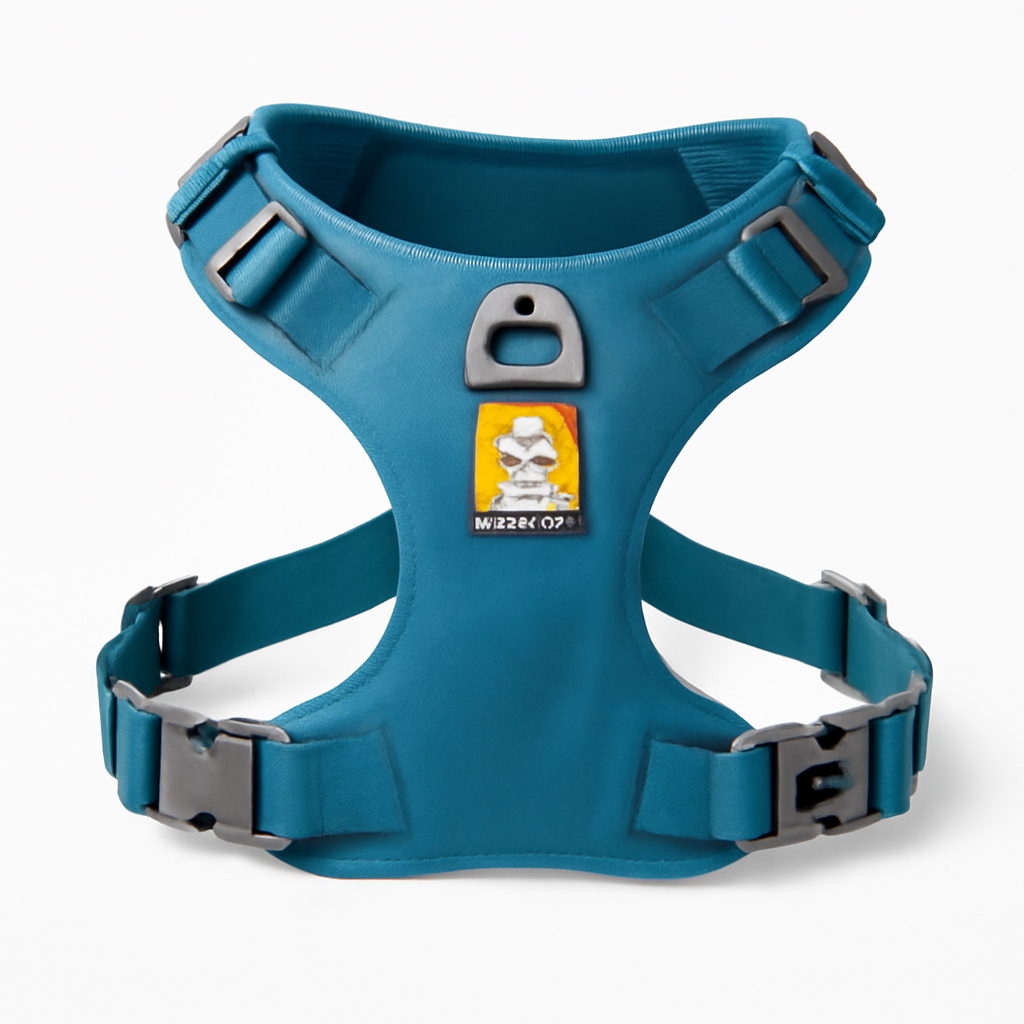
The Ruffwear Front Range is the harness we recommend to most medium-dog owners. It’s a dual-clip design with a padded chest and belly panel, four points of adjustment, reflective trim, and a small pocket for an ID tag. It’s comfortable enough for all-day trail use but streamlined enough for around-the-block walks.
Pros
– Excellent padding — comfortable for long wear
– Dual clip (front for training, back for casual)
– Reflective trim and a tag pocket
– Durable, holds up to active medium dogs
Cons
– Pricier than budget options
– No top handle on the standard model (see Ruffwear’s Web Master for that)
—
2. 2 Hounds Design Freedom No-Pull — Best for Pullers & Escape Artists
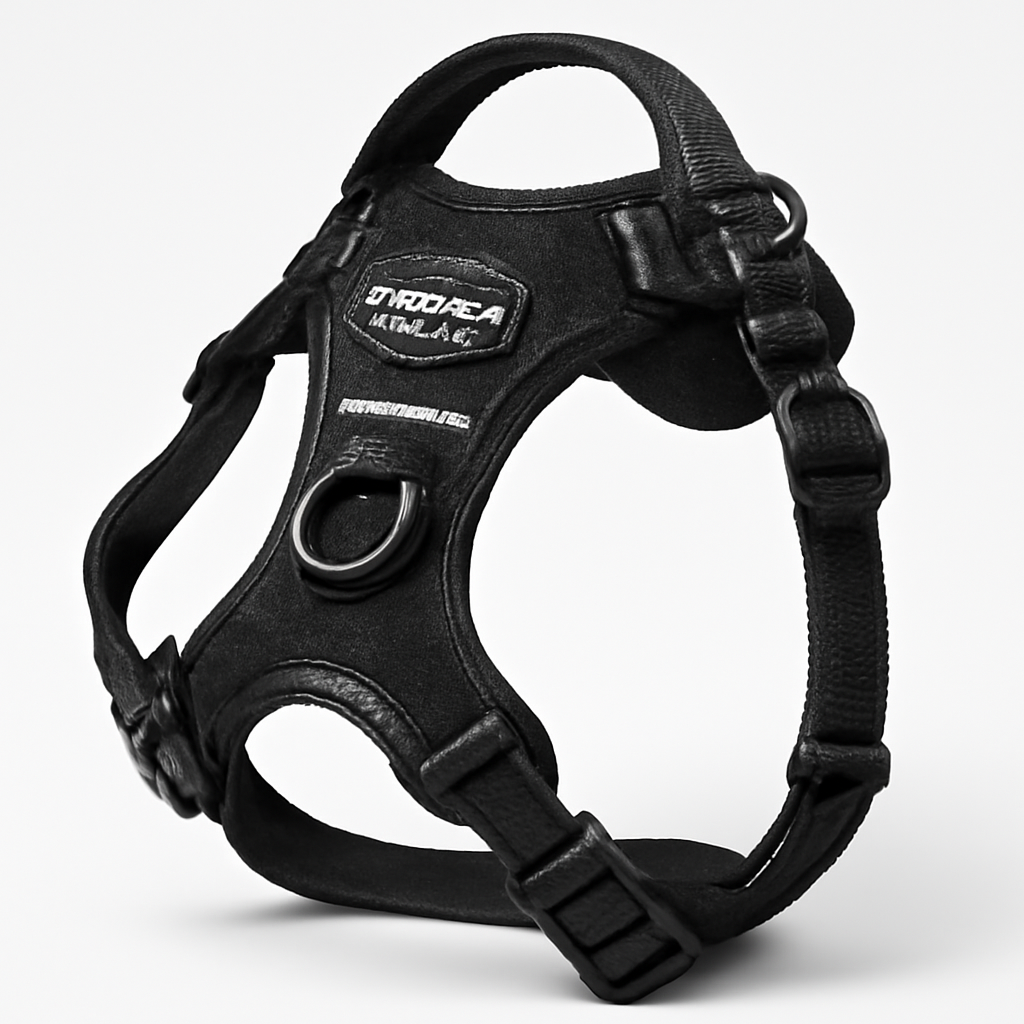
If your dog leans into the leash or has slipped out of harnesses before, the 2 Hounds Design Freedom No-Pull is built for you. Its signature feature is a martingale-style loop on the back that gently tightens when the dog pulls, plus a velvet-lined chest strap that resists chafing. The dual-clip setup and dedicated control loop make it one of the most effective anti-pull designs on the market.
Pros
– Highly effective no-pull action
– Velvet lining reduces chafing and rubbing
– Very difficult for a dog to escape
– Dual-clip versatility
Cons
– More straps means a slightly longer learning curve to fit correctly
– Premium price
—
3. Rabbitgoo No-Pull Harness — Best Value
The Rabbitgoo No-Pull Harness punches well above its price. You get a dual-clip design, four adjustment points, a padded body, reflective strips, and a top handle — a feature set that usually costs more. It’s not as refined as the Ruffwear, but for an everyday walking harness, it’s hard to beat the value.
Pros
– Dual clip plus a top handle at a low price
– Reflective strips for night visibility
– Easy to adjust and put on
Cons
– Padding and materials aren’t as premium as higher-end picks
– Hardware is good, not bombproof
—
4. PetSafe Easy Walk — Simplest No-Pull Trainer
The PetSafe Easy Walk is a front-clip-only training harness. It’s minimalist, affordable, and genuinely helps stop pulling by steering the dog sideways when they lunge. It’s not a padded, all-day comfort harness — think of it as a focused training tool for leash manners.
—
5. Kurgo Tru-Fit Smart — Best for Travel
If your medium dog rides in the car often, the Kurgo Tru-Fit Smart doubles as a crash-tested car safety harness (it includes a seatbelt tether) while still working as a daily walking harness with a front and back clip. A great pick for adventure dogs and frequent travelers.
—
6. Julius-K9 IDC Powerharness — Most Rugged
The Julius-K9 IDC Powerharness is a European favorite known for tough, working-dog-grade construction. It’s a back-clip design with a sturdy top handle and swappable side labels. Ideal for owners who prioritize durability and easy on/off over front-clip training features.
—
Sizing, Escape-Proofing & Common Fit Mistakes
Even the best harness fails if it’s fitted wrong. Avoid these common mistakes:
– Too loose around the chest. The number-one cause of escapes. Apply the two-finger rule to every strap, not just the neck.
– Neck loop too high. A harness neck opening should sit at the base of the neck, near the shoulders — not up where a collar goes.
– Skipping the re-check. Straps loosen over time and coats change with the seasons. Re-check the fit every few weeks.
– Ignoring the “back-out” test. With the harness on and snug, gently pull backward on the leash. If your dog can reverse out of it, tighten the chest strap or size down.
– Wrong clip for the dog. Using a back clip on a hard puller will make pulling worse. Switch to the front clip for training walks.
For confirmed escape artists, prioritize a design with a rear martingale loop (like the Freedom No-Pull) or a snug three-strap layout, and always double-check the girth measurement against the chart before buying.
—
Frequently Asked Questions
Is a harness better than a collar for a medium dog?
For walking, yes. A harness spreads pressure across the chest instead of the throat, protecting the neck and giving you more control. Keep a collar on for ID tags.
Front-clip or back-clip for a medium dog?
If your dog pulls, use a front clip (or a dual-clip harness set to the front ring) for training. Once they walk politely, a back clip is more comfortable. Dual-clip harnesses let you do both.
How do I stop my dog from escaping the harness?
Fit it snugly using the two-finger rule, make sure the neck loop sits low at the shoulders, and do a “back-out” test. Escape-prone dogs do best with a rear martingale loop like the 2 Hounds Design Freedom No-Pull.
How tight should the harness be?
Snug enough that you can just slide two fingers flat under each strap. Any looser and your dog can wriggle out; any tighter and it may chafe.
Can my medium dog wear a harness all day?
For extended wear, choose a well-padded model like the Ruffwear Front Range. Still, take it off during crate time and long rest periods to let the coat breathe and prevent rubbing.
Do I need a no-pull harness?
If your dog pulls, a front-clip “no-pull” design makes walks dramatically easier and is gentler than a collar or a back-clip harness. If your dog already walks nicely, a standard back- or dual-clip harness is fine.
—
Our Verdict
For the majority of medium-dog owners in 2026, the Ruffwear Front Range is the harness to buy — it nails comfort, durability, and dual-clip versatility in one package. If your dog is a determined puller or a known escape artist, spend up for the 2 Hounds Design Freedom No-Pull, which offers the best control and escape resistance we’ve tested. And if you’re watching your budget, the Rabbitgoo No-Pull Harness delivers a genuinely impressive feature set — dual clip, top handle, and reflectivity — for the least money.
Whichever you choose, measure your dog’s chest girth first, size up when in doubt, and re-check the fit regularly. A correctly fitted harness is the single biggest upgrade you can make to your daily walk — for your dog’s comfort and your own peace of mind.
Prices and availability change frequently — always check the current listing before buying.