Bringing home a puppy is exciting — right up until you’re standing in the pet store aisle wondering whether to buy a tiny crate now and a bigger one in six months, or gamble on a giant crate your 10-pound puppy will rattle around in. There’s a smarter third option: a crate with a divider panel.
Quick answer: A dog crate with a divider lets you buy one crate sized for your dog’s adult weight, then use an adjustable panel to shrink the interior while your puppy is small. This makes housebreaking dramatically faster (dogs won’t soil a space just big enough to lie down in) and saves you from buying two or three crates as your dog grows. For most owners, the MidWest Homes for Pets iCrate is the best all-around pick, while the Diggs Revol is the premium choice for design and safety.
Below, we’ll break down how dividers work, how to size one correctly, the wire-vs-plastic question, and our top crate picks for 2026.
What Is a Dog Crate Divider and Why It Matters
A crate divider is a removable panel — usually wire or hard plastic — that installs inside the crate to block off a section of the interior. Instead of giving your puppy the run of a full adult-sized crate, you wall off a smaller “just right” area and move the panel back as your dog grows.
Why does this matter so much? It comes down to a simple canine instinct: dogs don’t like to eliminate where they sleep. If a puppy’s crate is too big, they’ll happily pee in one corner and curl up in the other, and you’ve accidentally taught them that going potty indoors is fine. Size the space so there’s only enough room to stand up, turn around, and lie down, and that instinct kicks in — your puppy will “hold it” and signal you to let them out.
The divider is what makes this possible without buying multiple crates. A Labrador puppy might weigh 12 pounds at 8 weeks and 70 pounds at maturity. Without a divider, you’d need a small, a medium, and a large crate over the course of a year. With one, you buy a single large crate and slide the panel.
How to Size a Crate and Divider for Your Growing Puppy
Getting the size right is the whole point, so let’s be precise.
Step 1: Size the crate for the adult dog
Look up the expected adult weight and height of your breed (your breeder, rescue, or vet can help, and mixed-breed size calculators are decent). You want a crate where a fully grown dog can:
– Stand up without hunching
– Turn around in a full circle
– Lie down on their side with legs extended
Add 2–4 inches of headroom above their standing height. Most crates are labeled by dog weight ranges, which is a reasonable starting point.
Step 2: Set the divider for the puppy
Now shrink it. The puppy’s current section should allow them to stand, turn, and lie down — and no more. If there’s enough room for a separate bathroom corner, move the panel forward.
General size tiers
| Adult Dog Weight | Typical Crate Length | Example Breeds |
| Up to 25 lbs | 24 inches | Frenchie, Shih Tzu, Beagle (small) |
| 26–40 lbs | 30 inches | Cocker Spaniel, mini Aussie |
| 41–70 lbs | 36 inches | Lab, Boxer, Border Collie |
| 71–90 lbs | 42 inches | German Shepherd, Golden (large) |
| 91+ lbs | 48 inches | Great Dane, Mastiff |
Tip: Re-check the divider position every couple of weeks during rapid growth. A panel that was perfect last month may be cramping your pup this month.
Wire vs. Plastic Crates: Which Divider Setup Works Best
Not all crates handle dividers the same way. The two dominant styles are wire and plastic, and the difference matters more than you’d think.
Wire crates
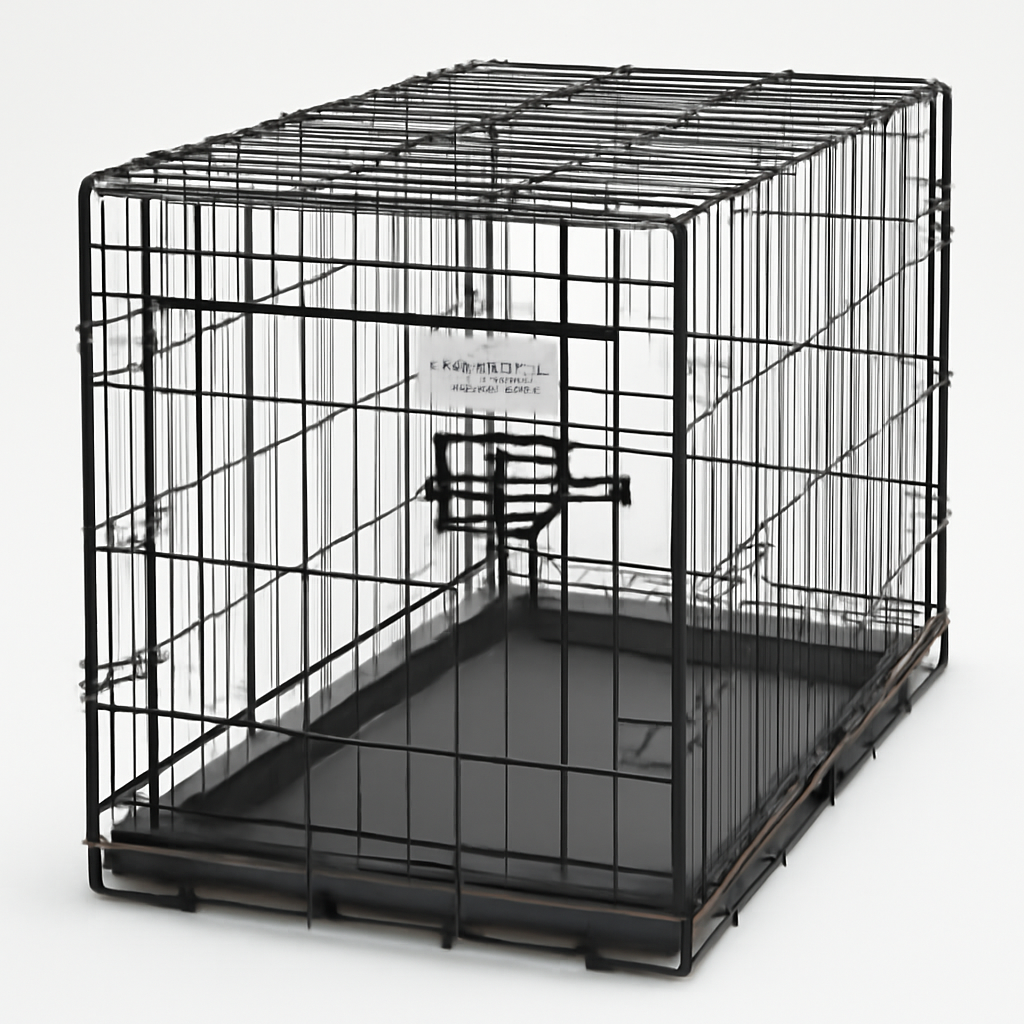
Wire crates are the default for divider use, and for good reason. The open construction means the divider panel clips directly onto the horizontal wires, so you can position it at almost any depth — not just a few preset slots. Ventilation is excellent, the crate usually folds flat for storage, and most come with a removable plastic tray for easy cleanup.
The trade-offs: they’re less cozy (some dogs prefer a den-like enclosed feel), they can be noisier, and a determined chewer or escape artist may test the latches.
Plastic crates
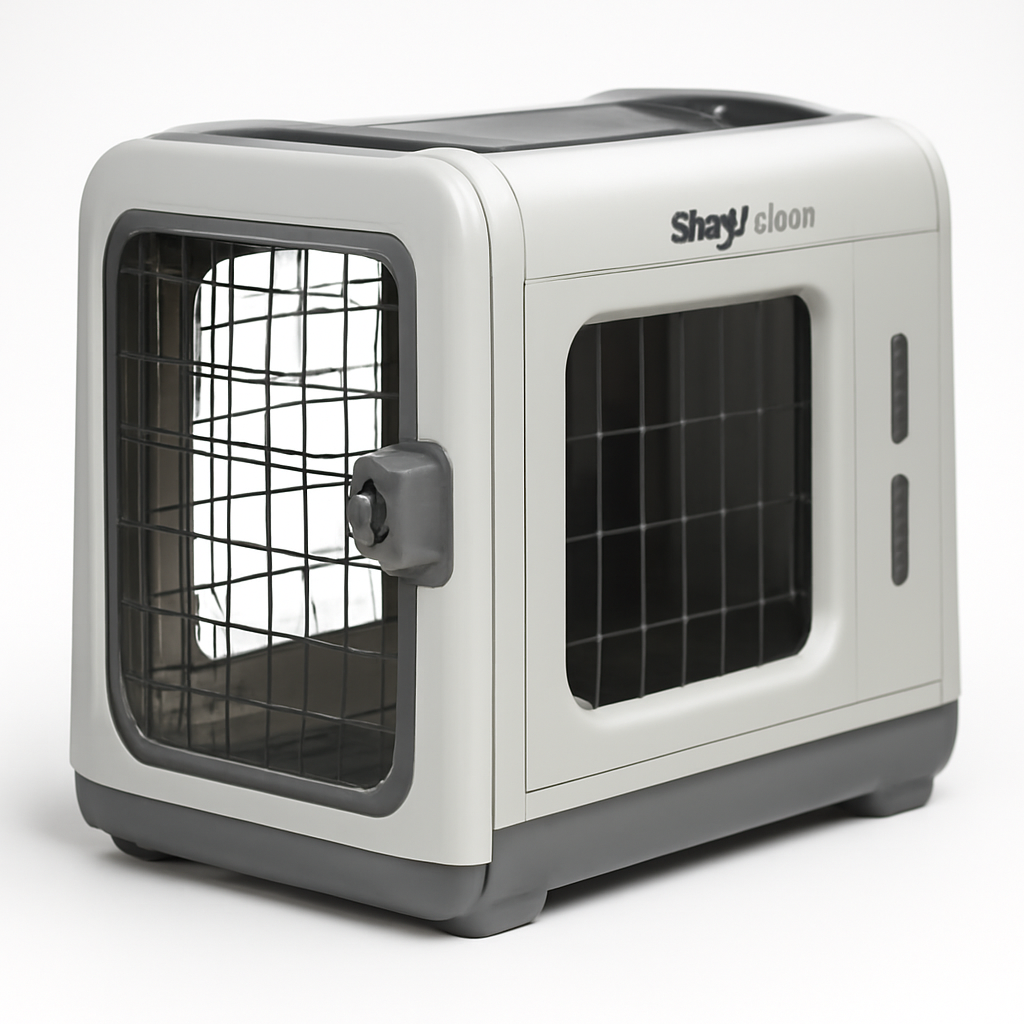
Plastic (airline-style) crates are enclosed, warmer, and more den-like, which anxious dogs often prefer. They’re also required for most air travel. The downside for our purposes: many plastic crates don’t accept dividers at all, and those that do often use fixed slots with limited positions. Ventilation is lower, and they don’t fold down.
The verdict on style
For puppy housebreaking specifically, wire wins — the infinitely adjustable divider is exactly what a growing puppy needs. Consider a plastic crate as a second crate for travel or for an adult dog who craves a cave-like retreat.
Key Features to Look For (Adjustable Panels, Durability, Safety)
Once you’ve settled on a wire crate, here’s what separates a good one from a frustrating one.
Adjustable, well-fitting divider
The panel should slide to any depth and lock securely with no gap along the edges — a puppy will find and exploit even a two-inch gap. Metal dividers hold up better than flimsy wire ones over time.
Double doors
A front and side door gives you flexibility in tight rooms and makes it easier to place the crate against furniture. It’s a small feature you’ll appreciate daily.
Secure latches (chew- and escape-resistant)
Look for slide-bolt latches, and for strong chewers, dual-latch doors. Rounded, smooth edges matter too — cheap crates sometimes have sharp wire ends that can scratch.
Leak-proof pan
The bottom tray takes the brunt of accidents during housebreaking. A durable, high-lip plastic pan that slides out fully is worth its weight in paper towels. Composite or metal pans resist chewing better than thin plastic.
Folding + portability
Fold-flat designs store easily and make the crate portable for trips to grandma’s or the vet.
Safety basics
No sharp points, a stable non-wobble base, and rubber feet to protect your floors and keep the crate from sliding.
Top Dog Crates With Dividers for 2026
Here are our picks for 2026, spanning budget to premium.
Top Picks at a Glance
| Product | Best For | Price Range |
| MidWest Homes iCrate | Best overall / value | |
| Diggs Revol | Premium design & safety | |
| Frisco Fold & Carry | Best budget pick | |
| New World Folding Crate | Big dogs / heavy duty | |
| Petmate Aspen Pet Wire | No-frills reliability |
—
1. MidWest Homes for Pets iCrate — Best Overall
The MidWest iCrate is the crate most trainers point to first, and it’s what we’d recommend to the majority of puppy owners. It ships with a divider panel, comes in every size tier from 22 to 48 inches, folds flat, and includes a leak-proof pan and rubber feet. Double-door versions are widely available. It’s the sweet spot of price, availability, and functionality.
Pros:
– Divider included in every size
– Folds flat, easy to store and transport
– Double-door options for flexible placement
– Widely available and affordable
Cons:
– Thinner wire gauge than heavy-duty crates — not ideal for aggressive chewers
– Basic latches on single-door models
—
2. Diggs Revol — Best Premium Pick
The Diggs Revol reimagines the wire crate with a more thoughtful, modern design. It features rounded corners (no sharp wire ends), a diamond-shaped mesh that’s harder for paws and snouts to get caught in, a garage-style door, a top hatch for reaching in, and — importantly — an included divider. It’s genuinely nicer to have in your living room, and the safety details are best-in-class.
Pros:
– Rounded, snag-free construction — excellent safety
– Included divider plus multiple entry points
– Collapses easily, wheels available for portability
– Looks good in a home
Cons:
– Significantly pricier than standard wire crates
– Fewer large sizes for giant breeds
—
3. Frisco Fold & Carry — Best Budget Pick
The Frisco Fold & Carry delivers the essentials — included divider, double doors, folding design, and a slide-out tray — at a lower price point than most name brands. It’s a smart choice if you want the divider functionality without paying a premium, and it’s a common pick for foster homes managing multiple dogs.
Pros:
– Very affordable with divider included
– Double doors and fold-flat design
– Good size range
Cons:
– Build quality is functional, not premium
– Latches are basic
—
4. New World Folding Metal Crate — Best for Big & Strong Dogs
For large and powerful breeds, the New World Folding Crate offers sturdier construction and a secure slide-bolt latch system, available in sizes up to 48 inches. It includes a divider and a durable leak-proof pan, making it a solid choice for a growing German Shepherd or Golden.
5. Petmate Aspen Pet Wire Crate — Reliable No-Frills
The Petmate Aspen Pet wire crate is a straightforward, dependable option when you just want a functional wire crate with a divider and don’t need extra features. It’s a fine pick for a spare room or a second crate.
Setting Up and Adjusting the Divider for Housebreaking
A crate divider only works if you use it correctly. Here’s the routine.
Install the panel snugly
Clip the divider onto the crate wires so it sits flush — no gaps a puppy could squeeze into or reach around. On the iCrate and similar wire models, the panel hooks onto horizontal wires so you can fine-tune the depth.
Start small, expand gradually
Set the panel so the puppy has just enough room to stand, turn, and lie down. As they grow — roughly every 1–2 weeks during the fast-growth months — move the panel back a few inches.
Use it as part of a real potty schedule
The divider supports housebreaking; it doesn’t replace it. Take your puppy out first thing in the morning, after meals, after naps, after play, and right before bed. Young puppies can only “hold it” for roughly their age in months plus one, in hours — a 2-month-old maxes out around three hours.
Never use the crate as punishment
The crate should be a safe, positive den. Feed meals inside it, toss in treats and a safe chew toy, and keep departures and arrivals low-key so the crate never becomes associated with abandonment or discipline.
Watch for the “graduation” signs
Once your dog is fully grown and reliably house-trained, you can remove the divider entirely — or retire the crate if your dog no longer needs it.
Frequently Asked Questions About Crate Dividers
Do all wire crates come with a divider?
No. Many do — including the iCrate, Frisco Fold & Carry, and Diggs Revol — but always confirm “divider included” in the product listing. Some budget crates sell the panel separately.
Can I make my own divider?
You can rig one from a wire mesh panel or pegboard cut to size and zip-tied in place, but be careful: DIY dividers often leave sharp edges or gaps. A purpose-built panel is safer and worth the small cost.
My puppy keeps pooping in the crate anyway — is the divider not working?
Check three things: (1) the section may still be too big, so move the panel forward; (2) you may be leaving them too long for their age; (3) there may be an underlying issue like a UTI or a history of soiling from a pet-store/puppy-mill background. Rule out medical causes with your vet.
Should I put a bed or pad in the sectioned-off space?
A thin, chew-resistant pad is fine for most puppies. But if your puppy is shredding bedding or peeing on it to mask the scent, go bare (just the tray) until house-training clicks, then reintroduce soft bedding.
Can I use a divider in a plastic crate?
Sometimes — a few plastic crates offer optional dividers, but positions are limited. For puppy training, a wire crate with an adjustable panel is far more practical.
What size divider crate should I buy for a mixed-breed puppy?
Estimate adult weight using an online calculator (a rough rule: adult weight ≈ puppy weight at 16 weeks × 2 for medium breeds), then buy the crate for that adult size and use the divider to scale down.
Our Verdict
If you’re raising a puppy in 2026, a crate with a divider isn’t a luxury — it’s the single most cost-effective, training-friendly way to crate your dog from 8 weeks to adulthood with one purchase.
For most owners, the MidWest Homes iCrate is the clear winner: it’s affordable, comes in every size with a divider included, and it simply works. If you want a safer, better-looking, premium crate and don’t mind spending more, the Diggs Revol is the nicest wire crate on the market. Shopping on a tight budget? The Frisco Fold & Carry covers the essentials for less. And for large, powerful breeds, step up to the New World Folding Crate for the extra sturdiness.
Buy for your dog’s adult size, set the divider small, move it back as they grow, and pair it with a consistent potty schedule. Do that, and you’ll have a house-trained dog and one crate that lasted the whole journey.
Prices change frequently — check the current price on each product before buying to make sure you’re getting the best deal in 2026.