Quick answer: For most Great Danes, a padded, no-pull harness with a sturdy chest plate and dual leash attachment points is the best choice. Our top overall pick is the Ruffwear Front Range for everyday walks, while the Rabbitgoo No-Pull Harness is the best value for pullers. Skip flimsy step-in nylon harnesses — a 130+ pound dog needs real hardware and a wide, weight-distributing fit.
Great Danes aren’t just big dogs — they’re giant dogs, and the gear that works for a Lab or Golden simply won’t hold up. If you’ve ever been dragged down the sidewalk by 150 pounds of gentle goofball, you already know why the right harness matters. This guide breaks down exactly what to look for, how to measure, and which harnesses actually survive life with a Dane.
—
Why Great Danes Need a Specialized Harness
A standard harness is built for a standard dog. Great Danes are anything but standard. A healthy adult male can weigh 140–175 pounds and stand over 30 inches at the shoulder, which changes the entire equation for restraint gear.
Here’s why a specialized harness isn’t optional:
– Force multiplies with size. Even a well-trained Dane that lunges at a squirrel generates enough force to snap cheap plastic clips or tear stitched nylon. Standard harnesses fail at exactly the wrong moment.
– Pressure points cause real damage. Danes are deep-chested with relatively thin skin over bony areas. A narrow strap that’s fine on a Beagle can dig into a Dane’s chest and armpits, causing chafing and sores.
– Neck and throat sensitivity. Giant breeds are prone to neck strain and, in some lines, cervical issues (like Wobbler syndrome). A harness that distributes pressure across the chest — rather than the throat, like a collar — is far safer.
– Sizing runs off the charts. Most “large” harnesses top out around a girth that a Dane blows past. You genuinely need harnesses that offer XL and XXL sizing with generous adjustment range.
Bottom line: with a dog this powerful, your harness is a safety device, not just a walking accessory.
—
Key Features to Look for in a Great Dane Harness
Not all big-dog harnesses are created equal. Here’s what actually matters for a giant breed.
1. Wide, Padded Straps
Look for chest and belly straps at least 1–1.5 inches wide, backed with padding or a foam-lined chest plate. Width spreads force over more surface area, protecting both your dog’s body and the harness itself.
2. Metal Hardware
Plastic buckles are a dealbreaker for a Dane. Prioritize aluminum or steel D-rings for leash attachment. Buckles can be reinforced plastic if they’re rated for large breeds, but metal load points are non-negotiable.
3. Dual Leash Attachment (Front + Back)
A front clip on the chest redirects a pulling dog back toward you — invaluable for a breed that can out-muscle you. A back clip is better for relaxed, trained walks. The best harnesses give you both.
4. Y-Shaped Chest (Non-Restrictive Fit)
A Y-front sits on the sternum and leaves the shoulders free to move. This protects a Dane’s natural gait and avoids restricting the front legs — important for a breed already prone to joint issues.
5. Full Adjustability
Aim for at least 4 adjustment points. Danes have deep chests and narrow waists, and a “one-strap” fit almost never works across their whole body.
6. A Grab Handle
A sturdy top handle lets you steady your dog at the vet, help an aging Dane into the car, or grab control instantly in a risky moment. On a giant breed, this is more useful than you’d expect.
—
How to Measure Your Great Dane for the Right Fit
Buying by weight alone is the #1 sizing mistake. Two Danes at the same weight can have very different chest depths. Grab a soft measuring tape (or a string and a ruler) and take these three measurements:
1. Chest/Girth (most important): Measure around the widest part of the ribcage, just behind the front legs. This is the number that decides your size.
2. Neck/Base: Measure around the base of the neck where a collar sits, at the point where the neck meets the shoulders.
3. Weight: Note current weight as a secondary check against the manufacturer’s chart.
Fit test: Once fitted, you should be able to slide two flat fingers under any strap — snug enough that it won’t slip over the shoulders, loose enough that it never digs in. Re-check the fit monthly on a growing puppy; Danes reach near-adult size fast, sometimes needing two harness sizes in their first year.
> Tip: Always measure late in the day and while your dog is standing naturally. Measuring a lying-down or freshly-fed dog throws the numbers off.
—
Top Dog Harnesses for Great Danes in 2026
Here are the harnesses that consistently hold up to giant-breed strength and size. Each is available in XL/XXL sizing suitable for a full-grown Dane.
Top Picks at a Glance
| Product | Best For | Price Range |
| Ruffwear Front Range | Best overall / everyday walks | |
| Rabbitgoo No-Pull Harness | Best value for pullers | |
| 2 Hounds Design Freedom No-Pull | Best for serious pullers | |
| Kurgo Tru-Fit Smart Harness | Best for car travel | |
| Julius-K9 IDC Powerharness | Best heavy-duty / control |
—
1. Ruffwear Front Range — Best Overall
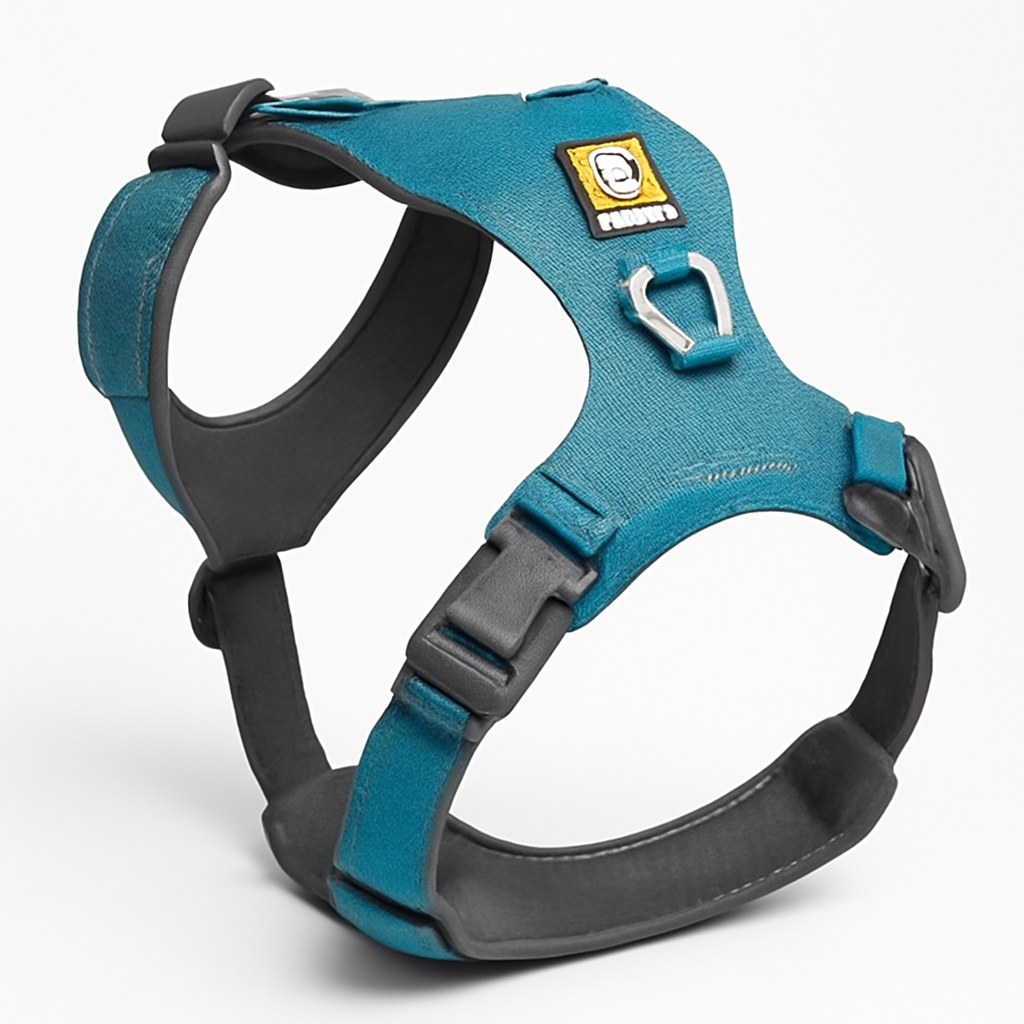
The Ruffwear Front Range hits the sweet spot for most Great Danes: a padded, load-distributing chest and belly panel, both front and back leash points, an aluminum V-ring, and four adjustment points. It’s comfortable enough for all-day wear and tough enough for a strong dog, with sizing that extends to fit deep-chested giants.
Pros:
– Genuinely comfortable padding that resists chafing on long walks
– Dual clips (front for training, back for relaxed walks)
– Aluminum hardware and a reinforced back attachment
– Easy to fit thanks to four adjustment points
Cons:
– Not the cheapest option
– The largest size fits most but not the very biggest Danes — measure carefully
—
2. Rabbitgoo No-Pull Harness — Best Value
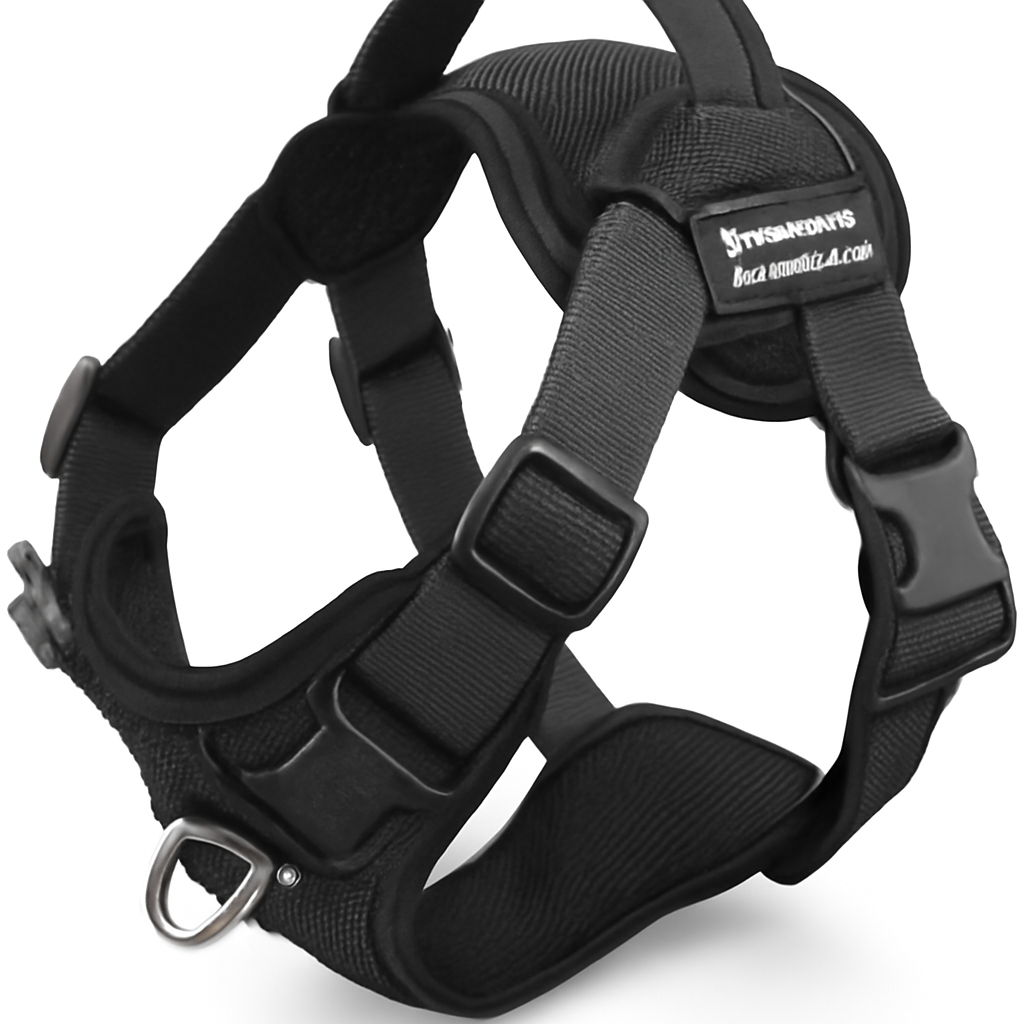
The Rabbitgoo No-Pull Harness delivers a huge amount of harness for the money. Its XL size accommodates large Danes, and it includes a padded chest, top grab handle, dual leash rings, and reflective stitching for night visibility.
Pros:
– Excellent price-to-feature ratio
– Front and back clips plus a sturdy handle
– Wide, padded straps that spread pressure well
– Reflective for low-light walks
Cons:
– Plastic buckles (reinforced, but not metal) — inspect them regularly on a heavy puller
– May need snug adjustment to prevent shoulder slippage
—
3. 2 Hounds Design Freedom No-Pull — Best for Serious Pullers
If your Dane pulls hard, the 2 Hounds Design Freedom No-Pull Harness is purpose-built for control. Its patented martingale loop on the back gently tightens to discourage pulling, while a velvet-lined belly strap prevents chafing. It’s a favorite for owners of powerful breeds who need real steering.
Pros:
– Effective no-pull martingale action for strong dogs
– Velvet-lined strap is gentle on sensitive Dane skin
– Durable build with a solid warranty reputation
Cons:
– Requires correct fitting to work as intended
– More of a training tool than a casual everyday harness
—
4. Kurgo Tru-Fit Smart Harness — Best for Car Travel
The Kurgo Tru-Fit Smart Harness is crash-tested and doubles as a car restraint, coming with a seatbelt tether. For a dog that rides in the car, this dual-purpose design is a smart, safety-forward pick with steel hardware and five adjustment points.
5. Julius-K9 IDC Powerharness — Best Heavy-Duty Control
The Julius-K9 IDC Powerharness is a European-style working harness with an ergonomic chest plate, a reinforced top handle, and rugged construction built for powerful dogs. Sizing goes large enough for Danes, and the grab handle offers excellent instant control.
—
No-Pull vs. Standard Harness: Which Is Best for Giant Breeds?
This is the question most Dane owners wrestle with. Here’s the honest breakdown.
| Factor | No-Pull (Front-Clip) | Standard (Back-Clip) |
| Best for | Untrained or strong pullers | Trained, relaxed walkers |
| Control | High — redirects the dog | Lower — dog can lean into it |
| Comfort for long walks | Good, if well-padded | Excellent |
| Learning curve | Some fitting/adjustment needed | Minimal |
| Risk with a puller | Discourages pulling | Can encourage pulling |
The verdict for Great Danes: Because of their sheer strength, most owners are best served by a dual-clip harness — use the front clip while your Dane is learning leash manners, then switch to the back clip once walks are calm. A pure back-clip harness on an untrained Dane essentially turns your dog into a sled team of one. Start with no-pull capability and grow into standard use.
—
Common Fit and Sizing Mistakes to Avoid
Even a great harness fails if it’s fitted wrong. Watch out for these:
– Buying by weight alone. Always size by chest girth first. Weight is a secondary check.
– Straps too loose. A loose harness lets a Dane back out of it — a serious safety risk near traffic. Do the two-finger test.
– Straps too tight. Digging straps cause chafing and sores on a Dane’s thin-skinned chest and armpits. Check for rubbing after the first few walks.
– Ignoring shoulder mobility. A harness that crosses the shoulder joint restricts a Dane’s gait. Choose a Y-front design.
– Forgetting to re-measure a puppy. Danes grow explosively. A harness that fit last month may be dangerously tight now.
– Trusting plastic clips on a puller. If your harness uses plastic hardware, inspect it before every walk and replace at the first sign of stress cracks.
—
Frequently Asked Questions
What size harness does a Great Dane need?
Most adult Great Danes need an XL or XXL harness, but always confirm by chest girth against the specific brand’s sizing chart — sizing varies significantly between manufacturers.
Are harnesses better than collars for Great Danes?
Yes, for walking. A harness distributes pressure across the chest instead of the throat, which is safer for a giant breed’s neck and airway. Collars are still fine for ID tags.
Do Great Danes need a no-pull harness?
If your Dane pulls at all, yes. Their strength makes even mild pulling hard to manage. A front-clip or dual-clip no-pull design gives you far more control while you train.
Can a Great Dane wear a harness all day?
For extended wear, choose a well-padded harness and remove it during long rest periods to prevent chafing and let the skin breathe. Check regularly for rubbing.
When should I replace my Great Dane’s harness?
Replace immediately if you see frayed webbing, stressed stitching, or cracked hardware. For a growing puppy, re-check the fit monthly and size up as needed.
—
Our Verdict
For most Great Danes, the Ruffwear Front Range is the best all-around harness — it balances comfort, durability, dual leash points, and metal hardware in a package that fits deep-chested giants. If you’re watching your budget, the Rabbitgoo No-Pull Harness delivers nearly everything most owners need for less, just inspect the buckles regularly. And if your Dane pulls like a freight train, step up to the 2 Hounds Design Freedom No-Pull for serious, gentle control.
Whichever you choose, remember: measure by chest girth, prioritize metal hardware and wide padded straps, and do the two-finger fit test. Get those three things right, and walks with your gentle giant become the highlight of the day — for both of you.
Prices and availability change frequently — check current pricing before you buy.