Quick answer: If you want the fastest, most vet-backed plaque control, go with Greenies Original Dental Dog Treats for daily use, or Virbac C.E.T. VeggieDent Fr3sh Chews if your dog needs a slower, tougher chew. For dogs with sensitive stomachs or grain issues, WHIMZEES by Wellness Natural Dental Chews are the best pick. Below we break down exactly why, what to look for, and how to use them safely.
If you’ve noticed brown or yellow buildup on your dog’s teeth, bad breath that could clear a room, or red gums along the tooth line, you’re dealing with plaque — and it doesn’t fix itself. The good news: a quality daily dental chew is one of the easiest, cheapest ways to slow plaque and tartar between brushings and vet cleanings. This guide walks you through the best options in 2026 and how to actually choose one.
Why Dental Chews Matter for Your Dog’s Oral Health
Plaque is a sticky film of bacteria that forms on your dog’s teeth within hours of eating. Left alone, it hardens into tartar (calculus) in as little as 24–72 hours, and once it’s tartar, a chew or brush won’t remove it — that requires a professional cleaning under anesthesia.
By the age of three, most dogs already show signs of some degree of periodontal disease. Untreated, this isn’t just about bad breath. Gum disease is painful, can lead to tooth loss, and the bacteria involved have been linked in studies to strain on the heart, liver, and kidneys.
Here’s where dental chews earn their place: a good chew works mechanically (the abrasive texture scrapes plaque off as your dog chews) and often chemically (ingredients that slow bacterial growth or bind minerals so plaque can’t harden). They’re not a replacement for brushing — nothing beats a toothbrush — but let’s be honest about reality: most owners don’t brush daily, and a chew your dog will happily do every single day beats a brushing routine you quit after a week.
Think of dental chews as your daily maintenance layer between the two things that really matter: brushing when you can, and professional cleanings when your vet recommends them.
How We Chose the Best Dog Dental Chews for Plaque
We didn’t just pick popular products off a shelf. Here’s what we weighed:
– VOHC acceptance — The Veterinary Oral Health Council (VOHC) awards a “Seal of Acceptance” to products proven in trials to reduce plaque and/or tartar. This is the single most trustworthy signal in the category.
– Mechanical design — Texture, ridges, and firmness that actually reach the gum line and back molars, not just the tips.
– Ingredient quality — What’s actually in it, how digestible it is, and whether it’s appropriate for sensitive dogs.
– Calorie load — Chews add up. We favored options that are reasonable for daily feeding.
– Size and safety range — Whether the brand offers proper sizing so the chew matches the dog (a huge safety factor).
– Real-world availability and value — Products you can actually buy and afford to give daily.
We avoided products with vague marketing claims, no sizing guidance, or ingredient lists loaded with fillers and artificial junk.
Top Dog Dental Chews for Plaque Removal in 2026
Top Picks at a Glance
| Product | Best For | Price Range |
| Greenies Original Dental Dog Treats | Overall daily plaque control | |
| Virbac C.E.T. VeggieDent Fr3sh Chews | Tougher, longer-lasting chewing | |
| WHIMZEES by Wellness Natural Dental Chews | Grain-free / sensitive stomachs | |
| OraVet Dental Hygiene Chews | Fighting existing bad breath & tartar | |
| Purina DentaLife Daily Oral Care Chews | Budget-friendly daily option |
—
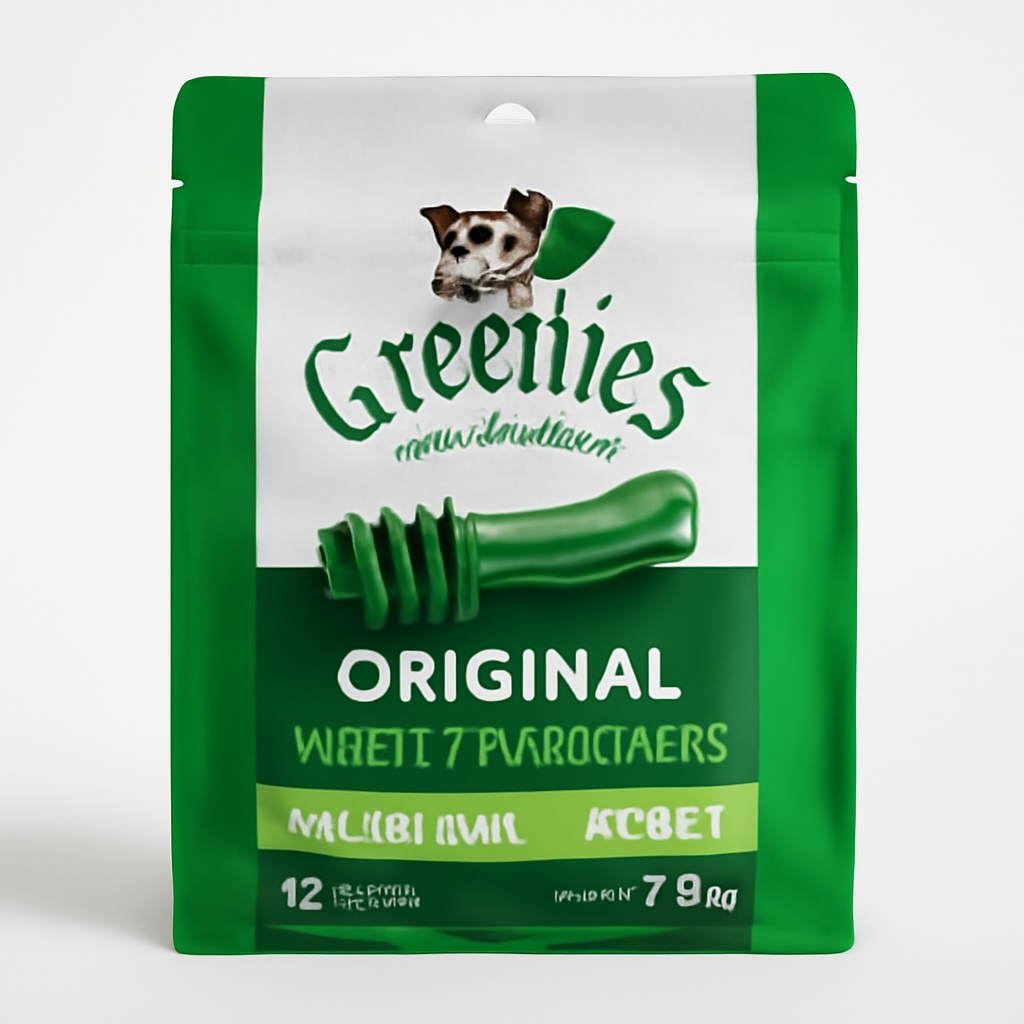
1. Greenies Original Dental Dog Treats — Best Overall
Greenies are the default recommendation for a reason. They carry the VOHC Seal of Acceptance, they’re soft enough for most adult dogs to chew fully, and the ridged, toothbrush-like texture is genuinely effective at wiping plaque as your dog works through it. They come in size ranges from Teenie to Large, which matters a lot for both effectiveness and safety.
Most dogs treat them like a high-value treat, which solves the biggest problem in dental care: consistency. A chew your dog begs for is one you’ll actually give every day.
Pros:
– VOHC accepted for plaque and tartar reduction
– Highly palatable — dogs love them
– Clear size-based options for a proper fit
– Widely available
Cons:
– Higher calorie count than some competitors — factor into daily food
– Some dogs “gulp” soft chews; supervise and pick the correct size
– Not grain-free
—
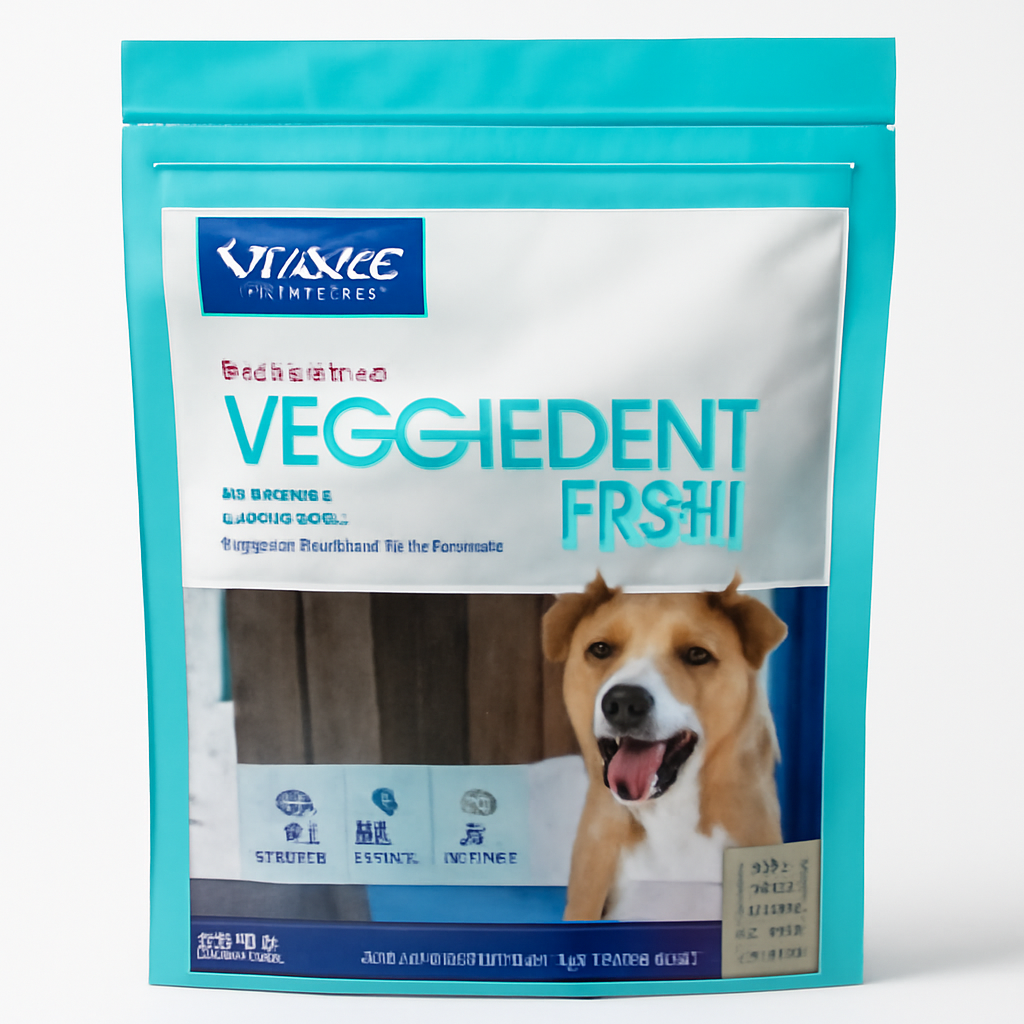
2. Virbac C.E.T. VeggieDent Fr3sh Chews — Best for Tough Chewers
Virbac is a veterinary brand, and the VeggieDent Fr3sh line is VOHC accepted. These are a plant-based, Z-shaped chew that’s firmer and takes longer to get through than Greenies — which is exactly what you want if your dog demolishes softer chews in ten seconds. The longer the chewing action, the more mechanical scrubbing your dog’s teeth get. They also include ingredients aimed at freshening breath.
Pros:
– VOHC accepted
– Firmer, longer-lasting chew = more scrubbing time
– Plant-based and grain-free formula
– Backed by a veterinary brand
Cons:
– Firmness may be too much for seniors or dogs with dental pain
– Sizing must be matched carefully
– Typically pricier per chew than mass-market brands
—
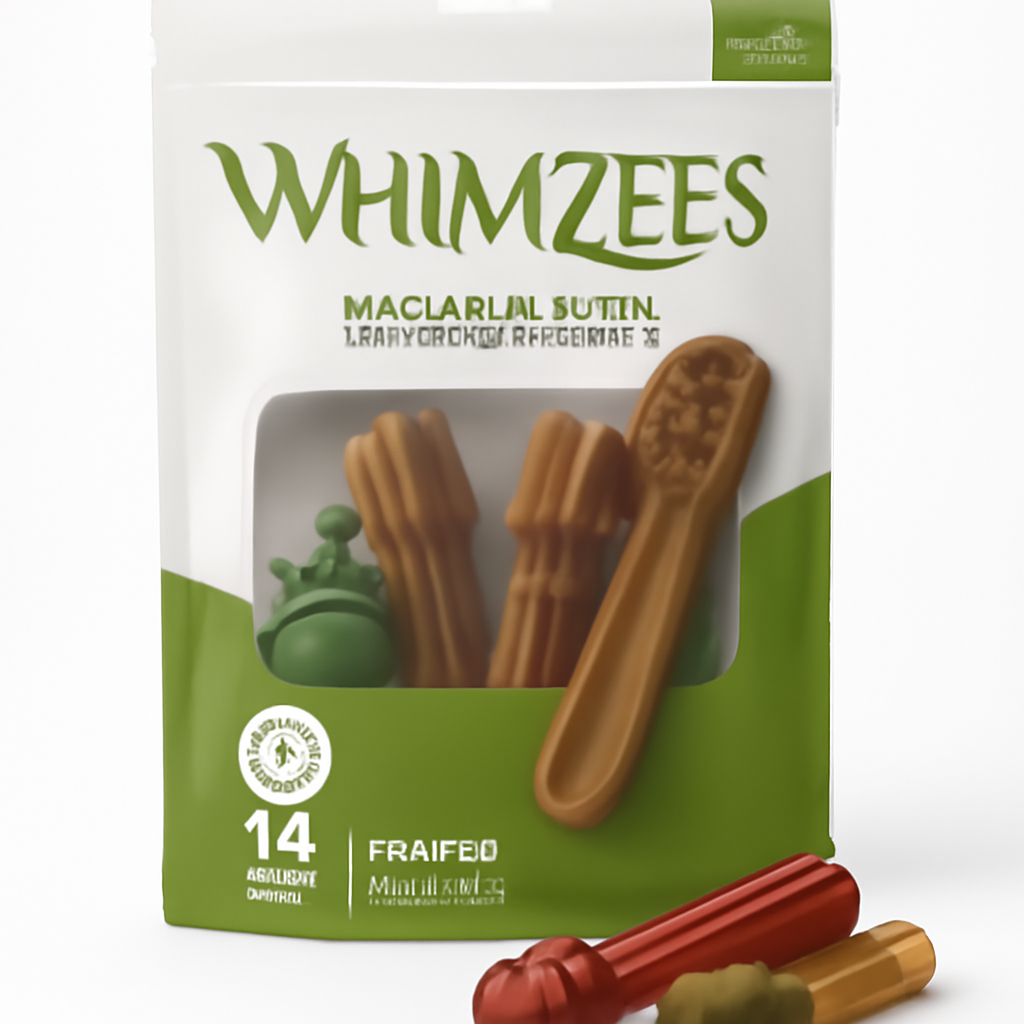
3. WHIMZEES by Wellness Natural Dental Chews — Best for Sensitive Stomachs
WHIMZEES are made with a short, natural, grain-free ingredient list and come in fun shapes (Brushzees, alligators, hedgehogs) engineered with grooves and points to reach into gaps and along the gum line. For owners who want to avoid artificial ingredients and grain, these are the standout. They’re also long-lasting relative to soft chews.
Pros:
– Grain-free with a simple, natural ingredient list
– Textured shapes reach tricky spots
– Long-lasting and highly digestible
– No artificial colors, flavors, or preservatives
Cons:
– Not currently VOHC accepted at the time of writing — verify before buying if that seal is your priority
– Firmer texture may not suit every dog
– Sizing runs specific; check the guide
—
4. OraVet Dental Hygiene Chews — Best for Bad Breath & Tartar
OraVet’s differentiator is delmopinol, an ingredient that forms a barrier to interfere with the bacteria that cause plaque and bad breath — so you get a chemical action on top of the mechanical scrub. It’s VOHC accepted and a strong choice if your main complaint is odor and visible tartar starting to build.
5. Purina DentaLife Daily Oral Care Chews — Best Budget Pick
If cost is the barrier to daily consistency, DentaLife is the answer. The porous, ridged texture is designed to reach the back teeth, it’s VOHC accepted, and it’s priced for everyday use across a big dog. It’s not fancy, but daily beats perfect.
What to Look for When Buying Dental Chews (Buyer’s Guide)
1. Look for the VOHC Seal. This is the closest thing to proof that a chew actually reduces plaque or tartar. Not every good chew has it, but if it does, that’s a strong green light. You can cross-check any product against the VOHC’s published accepted-products list.
2. Match the size to your dog. This is both an effectiveness and a safety issue. A chew that’s too small can be swallowed whole (choking risk) and does nothing for the teeth. Too large and your dog may not engage with it. Buy the size range made for your dog’s weight.
3. Pick the right firmness. A general safety rule: if you can’t dent it with your fingernail, or it doesn’t bend at all, it may be hard enough to fracture a tooth. Chews should have some give. Match firmness to your dog’s age and chewing style — softer for seniors, firmer for power chewers.
4. Check the calories. Dental chews are food. A single large chew can be a meaningful chunk of a small dog’s daily calories. Reduce meal portions slightly to avoid weight gain.
5. Consider chewing style. Gulpers need a firmer chew (or close supervision) so they don’t swallow chunks. Nibblers do fine with softer options.
Ingredients to Seek Out and Ones to Avoid
Seek out:
– Digestible bases like potato/vegetable starch, rice, or gelatin — designed to break down safely
– Delmopinol (as in OraVet) — targets plaque-causing bacteria
– Natural fiber texture that provides mechanical scrubbing
– Recognizable, short ingredient lists — you should be able to read what’s in it
– Breath aids like parsley or mint, when included in a quality formula
Approach with caution or avoid:
– Rawhide as a “dental” solution — it’s a choking and blockage risk and isn’t a true dental product
– Excess artificial colors, flavors, and sugars — added sugars are counterproductive for oral bacteria
– Overly hard materials — antlers, hooves, and very hard nylon chews are among the most common causes of fractured teeth
– Vague “cleans teeth” claims with no texture or active ingredient to back them up
– Unknown fillers you can’t identify on the label
If your dog has allergies or a sensitive stomach, favor limited-ingredient, grain-free options like WHIMZEES and introduce anything new slowly.
How to Use Dental Chews Safely and How Often
How often: For most dental chews, once per day is the sweet spot — plaque re-forms daily, so daily use is what the VOHC trials are based on. More than one a day usually just adds calories without much extra benefit.
Safety rules that actually matter:
– Always supervise. Chews are for chewing, not swallowing. Stay in the room.
– Match the size to the dog. Undersized chews are the top swallow/choking risk.
– Take away the small end piece. When a chew gets whittled down to a gulpable nub, trade it out.
– Fresh water available at all times.
– Adjust meals. Subtract the chew’s calories from daily food to prevent weight gain.
– Introduce gradually. New ingredients can upset stomachs; start with a small amount.
– Watch dogs with dental disease. If your dog already has loose teeth or painful gums, talk to your vet before offering firm chews.
Important: dental chews slow plaque; they don’t remove existing tartar. If you already see hard brown buildup or red, receding gums, book a vet exam. A chew is prevention, not a cure for established periodontal disease.
Frequently Asked Questions About Dog Dental Chews
Do dental chews really remove plaque?
Yes — quality chews reduce plaque and slow tartar through mechanical scrubbing and, in some cases, active ingredients. VOHC-accepted products like Greenies, Virbac VeggieDent, OraVet, and DentaLife have trial data behind those claims. They won’t remove hardened tartar that’s already there.
Are dental chews as good as brushing?
No. Brushing remains the gold standard because it physically reaches every surface. But a daily chew your dog loves is far better than a brushing habit you don’t keep — and using both is ideal.
How often should I give my dog a dental chew?
Once daily for most products. Follow the package guidance and adjust your dog’s meals to account for the calories.
Are dental chews safe for puppies?
Check the label — many are formulated for adult dogs. For puppies, seniors, or dogs with dental issues, ask your vet and choose a softer, appropriately sized option.
Can dental chews cause an upset stomach?
They can if introduced too fast or if your dog is sensitive to an ingredient. Start slow, and choose limited-ingredient options like WHIMZEES for sensitive dogs.
What if my dog swallows a chew whole?
Occasional gulping usually passes, but it’s a choking and blockage risk. Prevent it by using the correct size, supervising, and removing small end pieces. If your dog shows vomiting, retching, or discomfort, call your vet.
Our Verdict
For the majority of dogs, Greenies Original Dental Dog Treats are the best all-around pick: VOHC accepted, effective texture, easy to find, and — critically — a treat dogs will happily eat every single day, which is what makes any dental routine actually work.
If your dog is a power chewer who destroys soft treats instantly, step up to Virbac C.E.T. VeggieDent Fr3sh Chews for a firmer, longer-lasting scrub. If you’re managing a sensitive stomach or want grain-free and natural, WHIMZEES by Wellness Natural Dental Chews are the standout. Fighting stubborn bad breath and early tartar? Reach for OraVet Dental Hygiene Chews. And if budget is what’s stopping you from being consistent, Purina DentaLife gets the daily job done affordably.
Whichever you choose, remember the real secret: the best dental chew is the one you give every day, sized correctly, with supervision — paired with brushing when you can and regular vet cleanings. Do that, and you’ll keep your dog’s teeth cleaner, breath fresher, and vet bills lower for years.
This guide is for informational purposes and isn’t a substitute for veterinary advice. Always consult your vet about your dog’s specific dental health.