Quick answer: For most cat owners, replacement filters from PETLIBRO, Veken, and PetSafe Drinkwell cover the vast majority of popular fountains, and you’ll want to swap them every 2–4 weeks. If you’re not sure what fits your fountain, the safest move is buying the filter pack made by your fountain’s own brand — universal filters exist, but fit matters more than price. Below, I’ll walk through how these filters actually work, when to change them, and which replacements are worth buying in 2026.
If your cat’s fountain has started smelling a little funky, running slower, or leaving a filmy residue in the bowl, you’re almost certainly overdue for a filter change. Let’s fix that.
How Cat Water Fountain Filters Work (And Why They Matter)
A cat water fountain isn’t just a fancy bowl — the whole point is to keep water moving and clean so your cat actually wants to drink it. Cats are notoriously bad about hydration, and a well-maintained fountain genuinely helps prevent urinary and kidney issues down the road. But that only works if the filter is doing its job.
Most fountain filters do three things at once:
– Trap debris — fur, food crumbs, litter, and dust that fall into the water.
– Absorb odors and bad taste — usually via activated carbon, which pulls chlorine, and organic compounds out of the water.
– Soften water / reduce buildup — ion-exchange resin in some filters reduces hard-water minerals that leave white crusty scale on the pump.
When the filter clogs, water flow drops, the pump works harder (and gets louder), and bacteria and biofilm start building up in the very water you’re trying to keep fresh. A $6 filter is a lot cheaper than a vet visit — so this is one of those small maintenance habits that pays off.
When to Replace Your Cat Fountain Filter
There’s no universal timer, but here are reliable signals it’s time:
– Every 2–4 weeks for a single cat, sooner with multiple cats or a shedding-heavy breed.
– Water flow slows down or the stream sputters.
– Visible gunk — you can see debris or discoloration on the filter itself.
– The water smells even shortly after cleaning.
– Slimy film on the bowl or pump (that’s biofilm — change the filter and deep-clean the fountain).
A good rule: mark a recurring reminder on your phone. Filters degrade gradually, so it’s easy to “not notice” a filter that’s been in there for two months. If you have hard water, lean toward the shorter end of the range.
> Pro tip: Rinse a new carbon filter under cool running water for 15–30 seconds before installing it. This flushes loose carbon dust so you don’t get black flecks in the bowl on day one.
Types of Replacement Filters: Carbon, Foam & Ion-Exchange
Not all filters are the same, and many fountains use a combination. Knowing the type helps you choose the right replacement.
Activated Carbon Filters
The most common type. Carbon adsorbs odors, chlorine taste, and organic impurities. These are what most brands sell as their standard replacement pack. They’re effective but have the shortest lifespan since carbon saturates over time.
Foam / Sponge Pre-Filters
These catch the big stuff — fur and food particles — before water reaches the carbon or the pump. Many fountains include a foam pre-filter you can rinse and reuse for a while before replacing. They protect your pump and extend the life of your carbon filter.
Ion-Exchange Resin Filters
Often combined with carbon in a single filter. The resin softens water by swapping calcium and magnesium ions, which reduces the chalky mineral scale that builds up on pumps in hard-water areas. If you constantly battle white crust on your fountain, look for a filter that specifically lists ion-exchange resin.
Many premium replacement filters are triple-action — a foam layer, carbon, and resin all in one cartridge. Those are usually your best value if your fountain supports them.
Top Cat Water Fountain Filter Replacements for 2026
Here are the replacement filters I’d recommend this year, organized by the fountains they fit. Always confirm the model match before buying — filter shape is brand-specific.
Top Picks at a Glance
| Product | Best For | Price Range |
| PETLIBRO Replacement Filters | PETLIBRO fountain owners wanting triple-action filtration | $ |
| Veken Replacement Filters & Foam Set | Best value multipacks with pre-filters included | $ |
| PetSafe Drinkwell Premium Filters | Drinkwell fountain owners; proven carbon filtration | $$ |
| Catit Triple Action Filters | Catit fountain owners; ion-exchange softening | $ |
| Pioneer Pet Replacement Filters | Stainless/ceramic Raindrop & Swan fountains | $$ |
PETLIBRO Replacement Filters
PETLIBRO has become one of the most popular fountain brands, and their replacement filters are a triple-layer design (cotton, carbon, ion-exchange resin). If you own a PETLIBRO Capsule, Dockstream, or similar model, these drop right in. Multipacks make the per-filter cost very reasonable.
Pros:
– Triple-action filtration in one cartridge
– Affordable in bulk multipacks
– Wide model compatibility across the PETLIBRO lineup
Cons:
– Only fits PETLIBRO fountains
– Multiple similar models mean you must confirm the exact fit
Veken Replacement Filters & Foam Set
Veken fountains are a budget favorite, and their replacement sets typically bundle carbon filters and foam pre-filters together — which is exactly what you want, since the foam protects your pump. Great value if you want to stock up for several months at once.
Pros:
– Carbon filters and foam pre-filters included
– Excellent per-unit price in larger packs
– Easy to find and restock
Cons:
– Best fit is Veken-brand fountains
– Foam pre-filters need separate rinsing/replacing on their own schedule
PetSafe Drinkwell Premium Filters
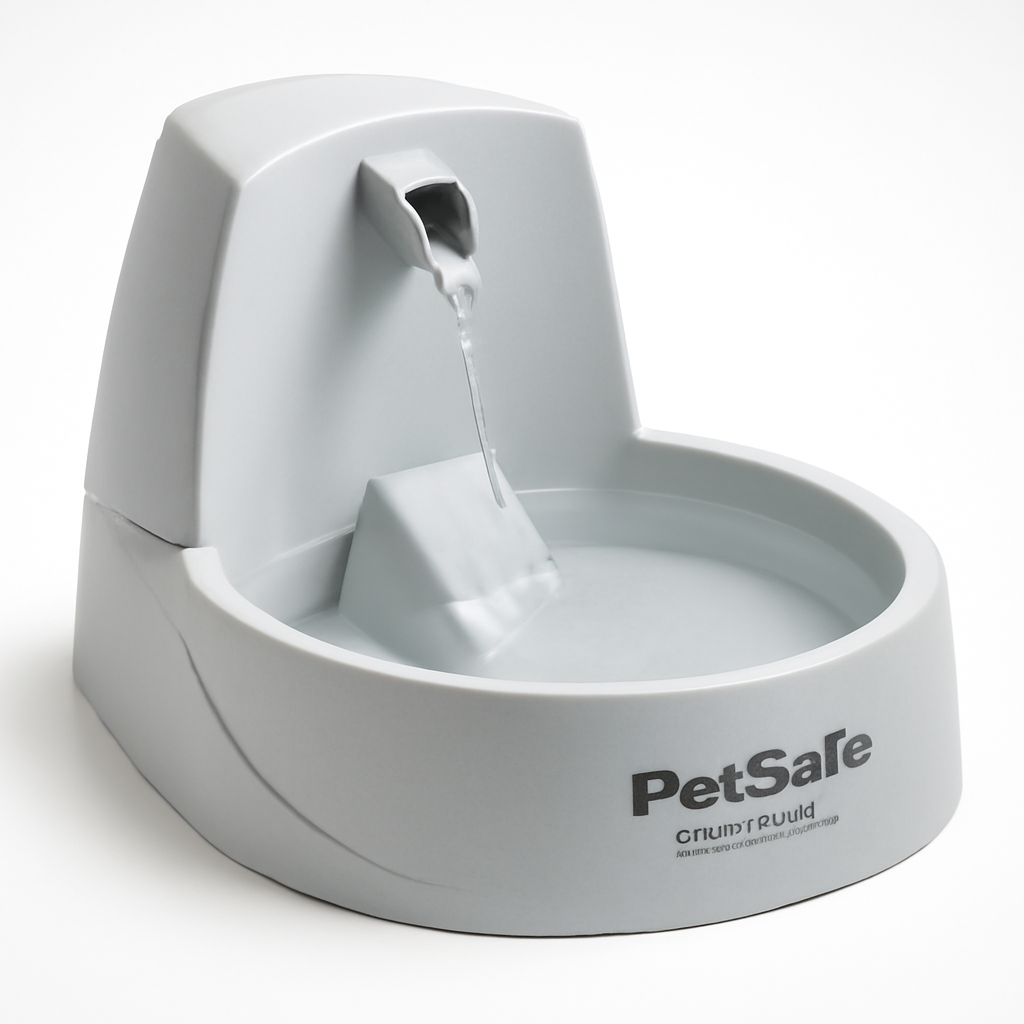
Drinkwell (by PetSafe) is one of the longest-running fountain brands, and their filters are a known quantity. If you have a Drinkwell Platinum, 360, or Pagoda, these premium carbon filters are the reliable OEM choice. They cost a bit more per filter than off-brand options, but the fit and consistency are dependable.
Pros:
– Official OEM fit for Drinkwell fountains
– Long track record of reliable filtration
– Fits a broad range of Drinkwell models
Cons:
– Higher price per filter than generic alternatives
– Carbon-focused; check separately for foam pre-filters on your model
Catit Triple Action Filters
For Catit Flower and PIXI fountain owners, the Catit Triple Action filter combines a softening ion-exchange resin with carbon, which is especially handy in hard-water homes. They’re inexpensive and widely available.
Pioneer Pet Replacement Filters
If you invested in a stainless steel or ceramic fountain like the Pioneer Pet Raindrop or Swan, use Pioneer Pet’s own replacement filters. These higher-end fountains are built to last, and matching filters keep them running quietly and cleanly.
How to Choose the Right Filter for Your Fountain Model
The single most important factor is fit. A filter that’s slightly the wrong size will let water bypass it entirely, meaning it filters nothing. Here’s how to get it right:
1. Find your fountain’s brand and model name. Check the base of the fountain, the pump, or the original box/manual.
2. Match the filter to that exact model. Many brands (PETLIBRO, PetSafe) make several fountains that use different filter shapes.
3. Decide carbon-only vs. triple-action. Hard water? Prioritize ion-exchange. Heavy shedder? Make sure you’ve got a foam pre-filter in the mix.
4. Buy in a multipack. Filters are cheap in bulk, and having spares on hand is the difference between changing on schedule and letting it slide for two months.
5. Check the replacement interval the manufacturer recommends, then adjust based on your water and number of cats.
If you have multiple cats or a large fountain, err toward more frequent changes and larger packs.
Universal vs. Brand-Specific Filters: What to Know
You’ll see “universal” replacement filters marketed as fitting many fountains, often at a lower price. They can be a fine choice — but with caveats.
Brand-specific (OEM) filters:
– Guaranteed exact fit and water flow
– Consistent quality
– Usually cost a little more
Universal / third-party filters:
– Cheaper, often in generous multipacks
– May fit several brands
– Fit can be slightly off — measure carefully and read compatibility notes
– Quality varies between sellers
My honest take: For a fountain you plan to keep for years, buying the brand’s own filters is worth the small premium — the fit is never in question. If you’re price-sensitive and buying in bulk, a well-reviewed universal filter that explicitly lists your fountain model as compatible is a reasonable money-saver. Just avoid vague listings that claim to fit “all fountains” without naming yours.
Frequently Asked Questions About Fountain Filter Replacement
How often should I really change my cat’s fountain filter?
Every 2–4 weeks for most homes. Shorten that interval if you have multiple cats, a heavy shedder, or hard water.
Can I rinse and reuse a carbon filter?
Not really. You can gently rinse a foam pre-filter a few times to extend its life, but carbon filters saturate and can’t be “recharged” by rinsing. Once carbon is spent, it’s done.
Do I still need to clean the fountain if I change filters regularly?
Yes. Filters don’t stop biofilm from forming on the pump and bowl. Deep-clean the whole fountain (including scrubbing the pump) every 1–2 weeks, and change the filter at the same time.
Why is there black dust in the water after a new filter?
That’s loose carbon dust — harmless, but easy to avoid by rinsing the new filter under cool water for about 20 seconds before installing it.
Can I use a filter from a different brand?
Only if it’s explicitly listed as compatible with your fountain model. Filter shape and size are brand-specific, and a poor fit lets water bypass the filter entirely.
My pump is loud after changing the filter — what’s wrong?
Usually low water level, air in the pump, or a pump that needs cleaning. Top off the water, reseat the pump, and make sure the foam pre-filter isn’t already clogged.
Our Verdict
For the majority of cat owners, the smartest approach in 2026 is simple: buy the multipack of your fountain’s own brand filters and set a recurring reminder to swap them every 2–3 weeks.
– If you own a PETLIBRO fountain, the PETLIBRO triple-action replacements are the easy, affordable pick.
– Veken owners get the best value from the Veken carbon + foam sets, since the pre-filters are bundled in.
– Drinkwell owners should stick with PetSafe Drinkwell Premium Filters for guaranteed fit and consistency.
– In a hard-water home, prioritize an ion-exchange option like the Catit Triple Action filter to fight mineral scale.
Whatever you choose, the real secret isn’t the brand — it’s the habit. A fresh filter and a clean fountain keep your cat drinking more, which is one of the easiest wins for their long-term health. Buy in bulk, change on schedule, and your cat gets clean, flowing water every day.