Quick Answer: After weeks of hands-on testing across single-cat and multi-cat homes, the Litter-Robot 4 is our top overall pick for its reliability, app control, and multi-cat handling. If you’re on a tighter budget, the PetSafe ScoopFree Smart delivers hands-off cleaning without the premium price tag. Below, we break down all 7 winners, what to look for, and whether the upgrade is actually worth it.
If you’re tired of scooping, dodging odor, and buying litter constantly, an automatic litter box can genuinely change your daily routine. But not all of them work as advertised — some jam, some scare cats off, and some are loud enough to wake you at 3 a.m. This guide cuts through the marketing so you can buy the right one the first time.
—
Why Trust an Automatic Litter Box in 2026?
Self-cleaning litter boxes have quietly gone from gimmick to genuinely dependable. A few years ago, sensor errors and constant jams made most models more trouble than they were worth. That’s changed.
The 2026 generation brings meaningfully better hardware and software:
– Smarter weight and motion sensors that reduce false cycles and, critically, keep the mechanism from running while your cat is inside.
– App integration that tracks how often your cat uses the box — an early warning system for urinary or kidney issues, which are among the most common (and expensive) feline health problems.
– Better odor sealing, with waste drawers that actually lock smells away for days instead of hours.
– Quieter motors, so the cleaning cycle doesn’t send your cat sprinting out of the room.
For multi-cat households, single-person homes, people with mobility limitations, or anyone who travels, the value is obvious: consistent cleanliness without daily effort. Cats are famously picky about box cleanliness, and a box that scoops after every visit means fewer accidents outside the box.
That said, these are not “set it and forget it forever” machines. You’ll still empty the waste drawer, refill litter, and occasionally wipe things down. The right expectation is dramatically less work, not zero work.
—
How We Tested and Ranked These Litter Boxes
We evaluated each litter box on the factors that actually matter over months of ownership — not just out-of-the-box impressions. Our ranking weighed:
– Cleaning reliability — Did it fully separate waste every cycle, or leave clumps behind?
– Odor control — How well did the waste compartment seal smell over 3–5 days?
– Cat acceptance — Did test cats use it willingly, or avoid it? Noise and entry height factored heavily here.
– Multi-cat capacity — Waste drawer size and cycle frequency under heavy use.
– Safety — Sensor accuracy at preventing cycles while a cat is present, including smaller cats and kittens.
– App and smart features — Usefulness of health tracking, notifications, and remote control.
– Maintenance burden — Ease of emptying, cleaning, and litter cost over time.
– Value — Performance relative to price, including ongoing costs like proprietary trays or refills.
We tested in real homes with cats ranging from a 6-pound senior to a 15-pound Maine Coon, across both clumping clay and crystal litters where compatible.
—
The 7 Best Automatic Litter Boxes Reviewed
1. Litter-Robot 4 — Best Overall
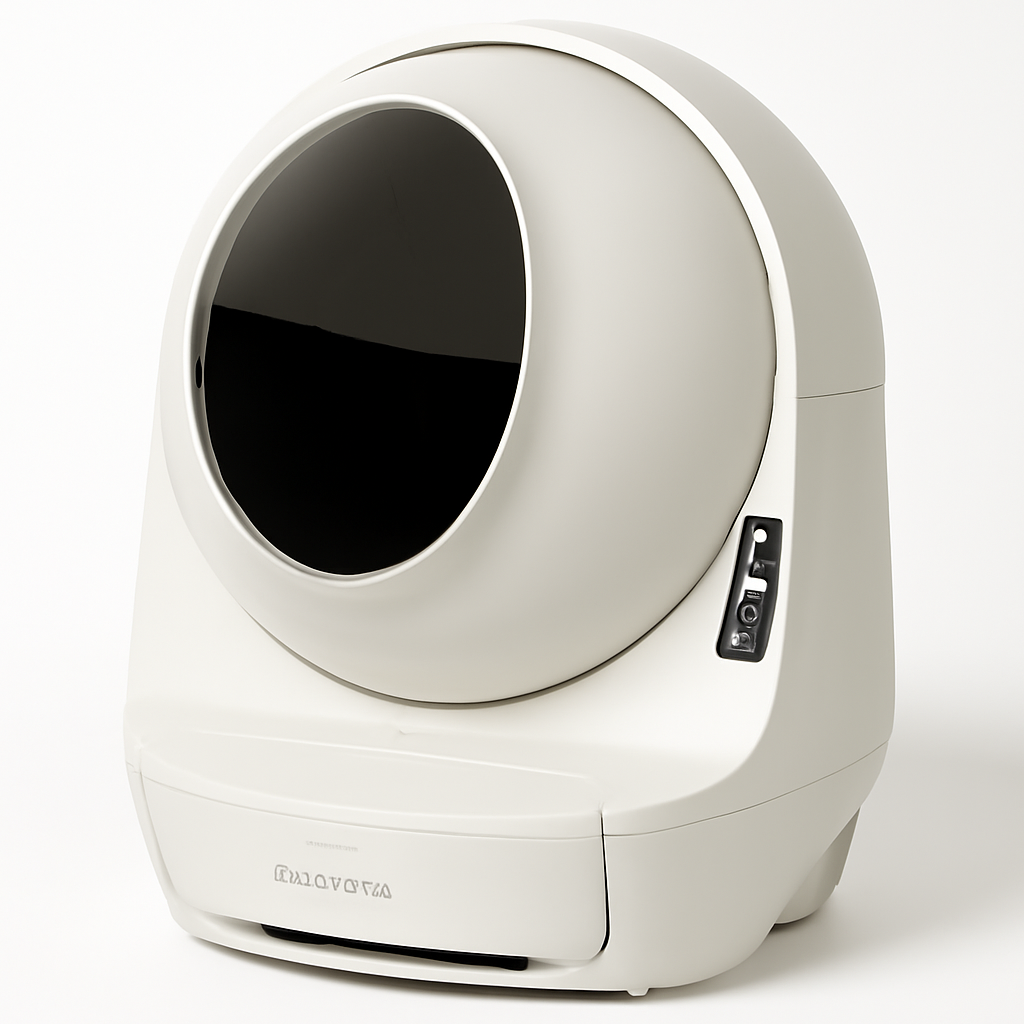
The Litter-Robot 4 is the box most others are measured against, and it earned our top spot. Its rotating globe design sifts clumping litter after each use, dropping waste into a large sealed drawer below. The redesigned sensors are noticeably more accurate than earlier generations, and the entryway is lower and wider — a real improvement for older or larger cats.
The Whisker app tracks each cat’s usage and weight, sends a “drawer full” alert, and lets you trigger a cleaning cycle remotely. For multi-cat homes, the large drawer and per-cat tracking (it estimates which cat used it by weight) are standout features.
Pros:
– Excellent odor containment and large waste capacity
– Genuinely useful health/weight tracking per cat
– Quiet operation and accurate safety sensors
– Handles multiple cats without constant emptying
Cons:
– Premium price — the most expensive on this list
– Large footprint; needs real floor space
– Works only with clumping litter
2. PetSafe ScoopFree Smart — Best Value
The PetSafe ScoopFree Smart uses crystal litter trays and a rake mechanism to sweep waste into a covered compartment. Crystal litter absorbs urine and dehydrates solid waste, which controls odor impressively well between changes. It’s a simpler machine than the Litter-Robot, and that simplicity means fewer things to break.
The tradeoff is the disposable tray system, which adds ongoing cost, though it also makes cleanup nearly touch-free. For single-cat homes that want hands-off cleaning without the flagship price, it’s the smart-money pick.
Pros:
– Very low upfront price for a smart model
– Crystal litter handles odor extremely well
– Near-zero contact cleanup
Cons:
– Recurring cost of proprietary trays
– Rake can push through softer stool
– Smaller capacity — best for one cat
3. Whisker Litter-Robot 3 Connect — Best Proven Track Record
The older Litter-Robot 3 Connect remains a strong buy, often at a lower price than the 4. It delivers most of the core cleaning performance with a longer real-world reliability record. The entry is higher and the app is less refined, but if you find it discounted, it’s a dependable workhorse.
Pros:
– Proven long-term reliability
– Often cheaper than the Litter-Robot 4
– Strong odor control and capacity
Cons:
– Higher entry step — harder for senior cats
– Bulbier design and older app experience
4. CatGenie A.I. — Best for Never Buying Litter Again
The CatGenie A.I. is the outlier: it uses washable granules and connects to a water line and drain, then literally washes and dries the reusable litter. No litter to buy, no waste drawer to empty. Setup is more involved (plumbing access required), but for the right household it’s uniquely low-maintenance long-term.
5. Petkit Pura Max 2 — Best App Experience
The Petkit Pura Max 2 pairs a spacious enclosed drum with one of the most polished apps in the category, including odor-removal add-ons and detailed usage logs. It’s a compelling middle-ground price and a favorite for tech-forward owners who want granular control and notifications.
6. Casa Leo Leo’s Loo Too — Best Enclosed Design
The Leo’s Loo Too offers a competitive feature set — weight sensing, app control, and a sealed drawer — in a more compact, enclosed footprint. It’s a solid alternative to the Litter-Robot for those who want a globe-style cleaner at a lower price point.
7. PetSafe ScoopFree Original — Best No-Frills Pick
For anyone who doesn’t want an app or smart features at all, the PetSafe ScoopFree Original delivers automated raking with crystal trays and no connectivity. It’s simple, affordable, and does exactly one job well.
—
Top Picks at a Glance
| Product | Best For | Price Range |
| Litter-Robot 4 | Overall performance & multi-cat homes | |
| PetSafe ScoopFree Smart | Budget-conscious single-cat homes | |
| Litter-Robot 3 Connect | Proven reliability on a discount | |
| CatGenie A.I. | Eliminating litter purchases entirely | |
| Petkit Pura Max 2 | App features & smart tracking | |
| Leo’s Loo Too | Compact enclosed design | |
| PetSafe ScoopFree Original | Simple, no-app operation |
—
Key Features to Look for Before You Buy
Not every feature matters equally. Here’s where to focus:
Litter Compatibility
Some boxes (Litter-Robot, Leo’s Loo Too) require standard clumping clay litter. Others (ScoopFree) use crystal trays, and the CatGenie uses washable granules. This choice locks in your ongoing cost, so factor it in before you buy the machine.
Waste Capacity
If you have multiple cats or you travel, a larger sealed waste drawer means fewer trips to empty it. Undersized drawers are the number-one complaint in multi-cat homes.
Safety Sensors
Look for weight-based plus motion sensing. The box should refuse to cycle while a cat is inside, and good sensors detect small cats and kittens, not just adults.
Noise Level
A loud motor can scare a cat away from the box entirely. Quieter, slower cycles get far better acceptance — especially important if the box is near where you sleep.
App & Health Tracking
Usage and weight monitoring isn’t just a gadget. Sudden changes in litter box frequency are often the first sign of urinary or kidney problems, and catching them early can save both your cat and a large vet bill.
Entry Height & Size
Senior cats, kittens, and cats with arthritis struggle with high steps. Larger breeds need a roomy interior. Match the box to your actual cat.
—
Self-Cleaning Litter Boxes vs. Traditional: Is the Upgrade Worth It?
Here’s the honest breakdown.
| Factor | Automatic | Traditional |
| Daily effort | Minimal (empty drawer every few days) | Daily scooping |
| Upfront cost | Higher | Very low |
| Odor control | Strong (sealed drawers) | Depends on scooping frequency |
| Health tracking | Available on smart models | None |
| Maintenance complexity | More parts, occasional cleaning | Nearly none |
| Cat acceptance | Usually good, some cats resist | Universal |
The upgrade is worth it if: you dislike scooping, have multiple cats, travel often, have mobility limitations, or want health-tracking peace of mind. Over a year, the time saved is substantial, and better cleanliness often means fewer accidents outside the box.
Stick with traditional if: you’re on a strict budget, have a cat that’s extremely resistant to change, or have a kitten too small for the mechanism’s safety threshold. In those cases, a good traditional box and consistent scooping is perfectly fine.
For most multi-cat households, the automatic box pays for itself in convenience and litter efficiency within the first year.
—
Safety, Multi-Cat Homes, and Common Concerns
Are they safe? Modern models with weight and motion sensors are designed to never cycle while a cat is present. Stick to reputable brands with proven sensor reliability — this is not the category to cheap out on with an unknown import.
Kittens and small cats: Very young or tiny cats may fall below a box’s weight-detection threshold. Most manufacturers recommend a minimum weight (often around 3–5 pounds). If you have a kitten, use a traditional box until they’re big enough, or choose a model with a documented low detection threshold.
Multi-cat homes: Two guidelines matter. First, follow the classic “one box per cat, plus one” rule — even automatic boxes benefit from this, and it prevents territorial guarding. Second, prioritize large waste capacity so the drawer isn’t overflowing between empties. The Litter-Robot 4 handled our heaviest multi-cat testing best.
Will my cat actually use it? Most cats adapt within a week or two. Ease the transition by placing the automatic box next to the old one, keeping the old box available at first, and letting curiosity do the work. Quieter models see faster acceptance.
Power and connectivity: These boxes need an outlet. Smart models need Wi-Fi for app features, though most still cycle normally offline.
—
Frequently Asked Questions About Automatic Litter Boxes
How often do I empty an automatic litter box?
For one cat, roughly every 5–7 days. For multiple cats, every 2–3 days. Models with larger drawers stretch this interval further.
Do automatic litter boxes really control odor better?
Generally yes — because waste is removed after every use and sealed in a covered drawer, odor has far less chance to build up compared to a box scooped once a day.
Can I use my own litter?
It depends on the model. Clumping-litter boxes usually let you use most quality clumping clay litters. Crystal-tray and washable-granule systems require their proprietary media, which adds ongoing cost.
Are they hard to clean?
Periodic deep cleaning is still needed — wiping the interior and washing removable parts every few weeks. It’s far less effort than daily scooping, but not zero.
What if the power goes out?
The box simply won’t cycle until power returns; your cat can still use it as a regular box in the meantime. Smart features resume once Wi-Fi is back.
Are they safe for kittens?
Only once the kitten meets the manufacturer’s minimum weight for sensor detection. Until then, use a traditional box.
—
Our Verdict
For most people, the Litter-Robot 4 is the best automatic litter box you can buy in 2026. It nails the fundamentals — reliable cleaning, excellent odor control, quiet operation, and accurate safety sensors — while adding genuinely useful per-cat health tracking that works beautifully in multi-cat homes. It’s an investment, but it’s the one we’d buy with our own money.
If that price is out of reach, the PetSafe ScoopFree Smart is the value champion: hands-off crystal-litter cleaning and strong odor control at a fraction of the cost, ideal for single-cat homes. And if you want to stop buying litter altogether and don’t mind a plumbing setup, the CatGenie A.I. is uniquely low-maintenance over the long haul.
Whichever you choose, match the box to your cat’s size, age, and household — get that right, and you’ll wonder why you waited so long to stop scooping.
Prices change frequently — always check the current price before buying to get the best available deal.