Quick Answer
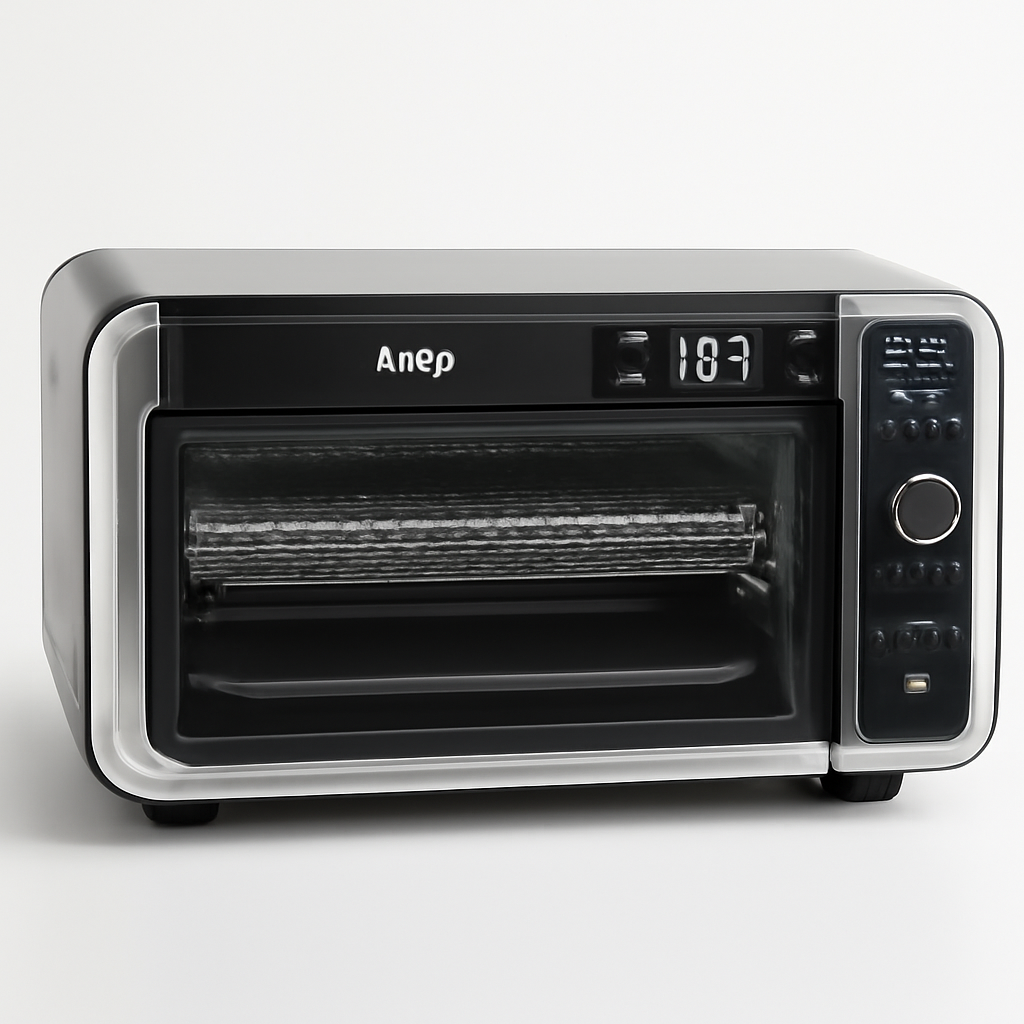
If you’re tired of buying separate appliances, an air fryer toaster oven is a game-changer for modern kitchens. These hybrid machines combine crispy air frying with traditional toasting, baking, and broiling—all in one compact footprint. The Ninja Foodi Digital Air Fry Oven leads the pack for versatility, while the Cosori Smart Air Fryer Toaster Oven is best for budget-conscious buyers who don’t want to sacrifice features. Keep reading to find the perfect fit for your cooking style and kitchen space.
—
What to Look for in an Air Fryer Toaster Oven
Choosing an air fryer toaster oven isn’t just about picking the cheapest option. You’re investing in a workhorse appliance that should handle everything from reheating pizza to roasting chicken. Here’s what actually matters:
Interior Capacity and Cooking Space
Real estate matters. Can you fit a whole rotisserie chicken? A full pizza? Most quality models offer between 15-30 quarts of interior space. Larger families and meal preppers need at least 25 quarts, while singles and couples can get away with 15-18 quarts. Check the actual dimensions—sometimes a “spacious” oven has awkward shelving that limits what you can cook.
Wattage and Heating Elements
More wattage doesn’t always equal better cooking, but it does mean faster preheating and more consistent results. Look for models with 1,500-1,800 watts. The placement of heating elements matters too—units with elements on both top and bottom cook more evenly than single-element designs.
Cooking Functions
At minimum, you want:
– Air fry
– Bake
– Toast
– Broil
– Reheat
Premium models add convection baking, rotisserie, dehydrate, and pizza-specific modes. More functions aren’t always better—they just clutter the interface. Stick with what you’ll actually use.
Temperature Range and Control
Precise temperature control separates good air fryer toaster ovens from mediocre ones. Look for units that reach 400°F or higher and offer increments of 5 or 25 degrees (not jumps of 50 degrees). Smart models with app control let you monitor cooking progress remotely, which is handy for busy weeknights.
Cooking Performance Consistency
This is where real-world testing matters. Does the unit have hot spots? Do wings cook evenly? Can it maintain temperature during longer cooks? Read actual owner reviews, not just marketing claims.
—
Top Air Fryer Toaster Ovens of 2026
1. Ninja Foodi Digital Air Fry Oven
Best For: Serious cooks who want maximum versatility
The Ninja Foodi Digital Air Fry Oven is the closest thing to a professional-grade compact oven without the professional-grade price tag. It features a spacious 19.3-quart capacity with a stainless steel exterior that looks more upscale than most competitors at this price point.
Key Features:
– 1,750 watts of power
– Temperature range: 105°F to 400°F
– Eight cooking functions (air fry, air roast, air bake, broil, toast, bagel, reheat, dehydrate)
– Dual-zone cooking (cook two different foods simultaneously at different temps)
– Smart thermometer included
– Analog controls with digital display
Pros:
– Dual-zone cooking is genuinely useful for meal prep
– Included smart thermometer eliminates guesswork
– Fast preheating (around 2-3 minutes)
– Excellent build quality and customer support
– Can fit a 9×13″ baking pan without issues
Cons:
– Larger footprint requires dedicated counter space
– Learning curve for the dual-zone feature (worth it, but takes practice)
– Pricier than single-function air fryer toaster ovens
—
2. Cosori Smart Air Fryer Toaster Oven
Best For: Budget buyers who refuse to compromise on features
The Cosori Smart Air Fryer Toaster Oven punches well above its price point. It’s practically identical in performance to models costing 30-40% more, making it the smart choice if your kitchen budget is tight.
Key Features:
– 30-quart capacity (largest in this roundup)
– 1,700 watts
– Temperature range: 77°F to 450°F
– 13 cooking presets
– WiFi-enabled with smartphone app control
– Convection technology for even cooking
– 60-minute timer with auto-shutoff
Pros:
– Exceptional capacity for the price
– App control works reliably
– Cooks evenly across multiple racks
– Great warranty coverage
– Presets actually work (no guessing)
Cons:
– App can occasionally lag
– Instruction manual is dense and confusing
– Takes up significant counter space
– Interior can accumulate grease easily (frequent cleaning required)
—
3. Breville BOV860BSS Smart Oven Air Fry
Best For: Premium builds and refined aesthetics
If you love Breville’s design philosophy (and don’t mind paying for it), the Breville BOV860BSS Smart Oven Air Fry is a stunning addition to any kitchen. Brushed stainless steel, intuitive controls, and meticulous engineering make this feel like a luxury appliance without pretentious pricing.
Key Features:
– 18-quart capacity
– 1,800 watts
– Temperature range: 150°F to 450°F
– 13 cooking functions
– Element IQ technology (adjusts heat based on cooking mode)
– LCD display with countdown timer
– Four-level rack system
Pros:
– Premium build quality that lasts
– Element IQ truly does reduce hot spots
– Interface is intuitive from day one
– Breville’s customer service is exceptional
– Cooks toast and bagels more evenly than competitors
Cons:
– Most expensive option in this roundup
– Limited to four rack positions (less flexibility than some models)
– Takes longer to preheat than some rivals
– Warranty doesn’t include accidental damage
—
4. Instant Omni Plus Air Fryer Oven
Best For: First-time air fryer toaster oven buyers
The Instant Omni Plus Air Fryer Oven is the gateway drug to air frying. If you’re unsure whether you’ll actually use all these functions, this is where to start. Reliable, affordable, and honest about what it can do.
Key Features:
– 19-quart capacity
– 1,500 watts
– Temperature range: 77°F to 450°F
– 10 preset cooking functions
– Stainless steel housing
– Roast tray and drip pan included
– 20-minute express cook option
Pros:
– Easiest learning curve of all models tested
– No WiFi complications (sometimes simplicity wins)
– Compact compared to larger alternatives
– Included accessories actually get used
– Price point is genuinely affordable
Cons:
– Lower wattage means slightly slower cooking times
– No dual-zone capability
– Preset functions are less customizable
– Fewer total cooking modes than premium models
—
Air Fryer vs. Traditional Toaster Oven: Key Differences
This is the question every shopper asks: “What’s actually different?”
Cooking Technology
Air Fryer Toaster Ovens use rapid air circulation technology combined with high heat. Air moves at extreme speeds (like a mini tornado) around your food, creating crispy exteriors while keeping interiors moist. Think of it as a convection oven cranked up to 11.
Traditional Toaster Ovens rely on radiant heat from elements. The heating element is hot; the air is warm. Food cooks more slowly and typically requires flipping or rotating halfway through.
Cooking Speed
Air fryer toaster ovens consistently cook 20-30% faster than traditional models. Frozen fries go from freezer to plate in 12 minutes instead of 18. That speed comes from the intense heat and constant air movement.
Crispiness Factor
This is where air fryer toaster ovens genuinely shine. You’ll get restaurant-quality crispiness on wings, fries, and pastries without deep frying. Traditional ovens can’t match this—they’re better for baking bread and cakes.
Versatility
Modern air fryer toaster ovens handle both jobs. They air fry, bake, toast, broil, and roast with equal competence. Traditional toaster ovens focus on baking and toasting. If you want one machine that does everything, air fryer toaster ovens win.
Cleanup
Air fryer toaster ovens require more frequent cleaning because the intense heat can splatter. Traditional ovens are slightly messier but sit idle more often. Neither is a clear winner here.
—
Capacity and Size Considerations
How Much Space Do You Actually Need?
This depends on your cooking style:
| Your Situation | Recommended Capacity | Real-World Examples |
| Single person or couple | 15-18 quarts | Reheating, basic cooking, batch prepping |
| Family of 4 | 20-25 quarts | Roasting chicken, multiple side dishes simultaneously |
| Large family or meal preppers | 25+ quarts | Whole pizza, roasting multiple trays, party hosting |
Counter Space Trade-Offs
Larger capacity means larger footprint. The Cosori’s 30-quart capacity comes with a 24″ x 17″ base. Before buying, measure your actual counter space and leave 6 inches of clearance on all sides for heat dissipation.
Rack and Tray Compatibility
Check what fits:
– Standard 9×13″ baking pans
– Round pizza (12-inch diameter?)
– Half-sheet pans (13×18″)
– Wire racks for even air circulation
The Ninja Foodi Digital handles all of these. The Breville’s rack system is more limited.
—
Cooking Performance and Temperature Control
Temperature Precision
Look for units offering granular control (5-degree increments). The difference between 375°F and 380°F can mean the difference between golden-brown and burnt when air frying.
Best for precision: Breville BOV860BSS (Element IQ adjusts automatically)
Best for flexibility: Cosori and Ninja Foodi (both offer 5-degree increments)
Heating Speed
Preheating time matters more than you’d think. Quick preheating means:
– Less energy waste
– More consistent results
– Faster meals on weeknights
Average preheating times:
– Ninja Foodi: 2-3 minutes
– Cosori: 4-5 minutes
– Breville: 5-6 minutes (worth it for precision)
– Instant Omni Plus: 3-4 minutes
Hot Spot Management
This is where Element IQ (Breville) and dual-zone cooking (Ninja) truly shine. Traditional models can have 10-15% hotter spots in certain areas, requiring you to rotate food halfway through.
Real test: Cook four frozen fish fillets simultaneously. Breville and Ninja cook them evenly. Traditional air fryer toaster ovens may need repositioning at the midway point.
—
Energy Efficiency and Safety Features
Wattage and Power Consumption
Higher wattage doesn’t automatically mean higher electricity bills. A 1,800-watt unit that cooks 30% faster actually uses comparable energy to a 1,500-watt unit.
Power consumption comparison:
– Ninja Foodi: ~0.4 kWh per hour
– Cosori: ~0.35 kWh per hour
– Breville: ~0.42 kWh per hour
– Instant Omni Plus: ~0.30 kWh per hour
Safety Features You Actually Need
Automatic Shutoff: All premium models have this. 60-minute timers are standard. Breville’s timer goes up to 120 minutes for slow roasting.
Cool-Touch Exterior: Not all models have this. Breville and Ninja feature insulated exteriors that stay safe to touch during cooking. Cosori’s exterior gets warm but not dangerous.
Overheat Protection: This prevents fires if thermostat sensors fail. All models in this roundup have it, but it’s a critical feature for any electrical cooking appliance.
Grounding and Certification: Look for UL or ETL certification marks. This means third-party safety testing.
Maintenance and Longevity
Higher-wattage models with more heating elements tend to last longer (less strain on individual components). Ninja and Breville both carry 3-year warranties. Cosori offers 2 years. Instant Omni Plus provides 3 years.
—
How to Choose the Right Model for Your Kitchen
Decision Framework
Step 1: Define Your Must-Haves
– Required capacity
– Essential cooking functions
– Counter space available
– Budget ceiling
Step 2: Identify Your Cooking Style
– Do you meal prep? (need capacity)
– Do you air fry often? (need robust air circulation)
– Do you bake? (need precise temperature control)
– Do you host? (need larger capacity)
Step 3: Match to a Model
Choose Ninja Foodi if:
– You want dual-zone cooking for efficiency
– You’re willing to spend more for versatility
– You meal prep seriously
– You have counter space
Choose Cosori if:
– Budget is your primary concern
– You want the largest capacity for the price
– You like app-enabled cooking
– You rarely need more than 13 preset functions
Choose Breville if:
– You prioritize build quality and longevity
– You want effortless even cooking
– You appreciate refined design
– You’re willing to pay 20-30% more for premium features
Choose Instant Omni Plus if:
– This is your first air fryer toaster oven
– You want simplicity over features
– Your household is smaller
– You want the lowest price entry point
Real-World Usage Scenarios
Weeknight Dinner Parent: Cosori (capacity + presets = speed)
Serious Home Cook: Breville (precision matters more than capacity)
Busy Meal Prepper: Ninja Foodi (dual-zone saves time and energy)
Budget-Conscious Household: Instant Omni Plus (reliable basics, no bloat)
—
Our Verdict
An air fryer toaster oven isn’t a luxury—it’s a practical replacement for 2-3 single-function appliances taking up real estate in your kitchen.
For most households, the Ninja Foodi Digital Air Fry Oven represents the best overall value. Yes, it costs more than entry-level options, but the dual-zone cooking, included smart thermometer, and consistent results justify the investment. If you’re serious about cooking and willing to own one multifunction tool, this is it.
If your kitchen is tight on space or budget, the Cosori Smart Air Fryer Toaster Oven delivers remarkable value. Its 30-quart capacity and WiFi control punch well above its price point. The app control actually works, and the preset functions eliminate guessing.
For luxury-minded cooks unwilling to compromise, the Breville BOV860BSS is the gold standard. Element IQ technology and premium build quality mean faster, more consistent results over years of use.
First-timers should start with the Instant Omni Plus Air Fryer Oven. It teaches you what air fryer toaster ovens actually do without overwhelming you with unnecessary features.
Buy whichever model aligns with your cooking style, kitchen space, and budget. All four options will outperform separate toaster ovens and air fryers. Any of them will change how you cook. Choose based on your priorities—not just price.