# Best Air Fryer vs Convection Oven 2026: Complete Buyer’s Guide
Quick Answer
If you cook frequently for a small household and want meals in 15-25 minutes, an air fryer is faster and crisps food better. If you need larger capacity, cook multiple dishes simultaneously, or want versatility for baking and roasting, a convection oven is the smarter choice. Read on to find which fits your kitchen and cooking style.
—
Air Fryer vs Convection Oven: Key Differences Explained
You’re standing in an appliance aisle (or scrolling online) wondering: do I really need both of these, or will one do the job? The short answer is they’re different tools for different jobs—but there’s more nuance.
What’s an air fryer? It’s essentially a compact convection oven with turbo-charged hot air circulation. A heating element blasts 350-400°F air at high speed around food in a small basket. The result: crispy exteriors in about half the time of a traditional oven.
What’s a convection oven? It’s a full-sized (or mid-sized) oven with a fan that circulates hot air for even cooking. It works like a traditional oven but cooks 20-30% faster and more evenly. You get the capacity of a regular oven with better performance.
The Core Technical Difference
The real distinction isn’t complicated:
– Air fryers use extreme air velocity in a tiny chamber—think of it like concentrated heat
– Convection ovens use gentler, more even air circulation in a larger space
– Temperature recovery is faster in air fryers (they reach temp in 2-3 minutes vs. 10-15 for convection ovens)
– Uneven cooking is less common in convection ovens because they have better airflow design and larger food-to-heating-element ratios
Real-World Cooking Differences
| Aspect | Air Fryer | Convection Oven |
| Cooking Speed | 15-25 minutes (fries, wings) | 20-35 minutes (same items) |
| Crisp Quality | Exceptional, uniform | Very good, needs rotation |
| Capacity | 2-8 quarts typically | 3-5x larger than air fryer |
| Baking Results | Good but limited | Excellent, professional-grade |
| Heating Time | 2-3 minutes | 10-15 minutes |
| Energy Use | 800-1500W | 2000-5000W |
| Best For | Frozen foods, reheating, appetizers | Family meals, baking, large roasts |
—
Top Air Fryers for 2026: Models We Tested
Ninja Air Fryer MAX [CHECK PRICE]
The Ninja MAX remains one of the most reliable workhorse air fryers available. This isn’t the budget option—it’s the “I use this 5 times a week” option.
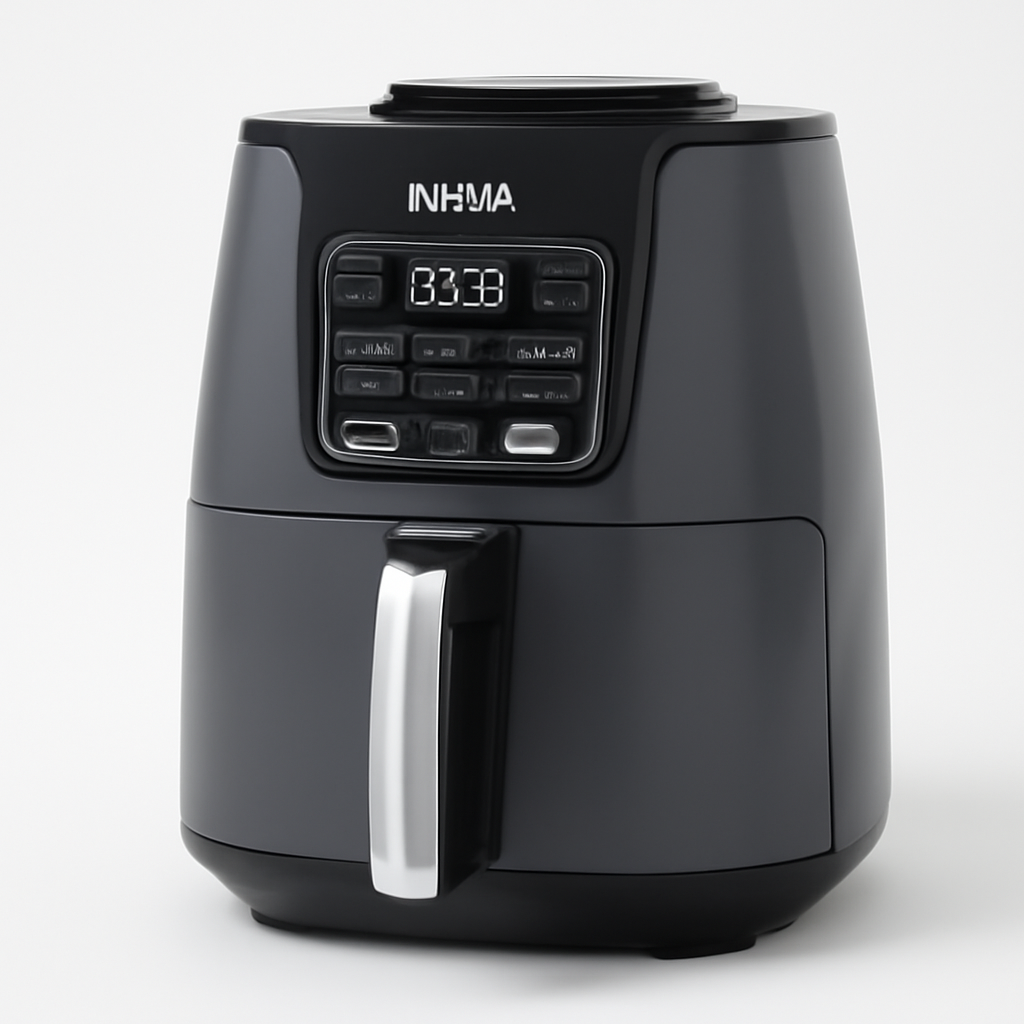
Why it works:
– 5.5-quart capacity (largest in the Ninja consumer line)
– Dual heating elements with 450°F max heat
– Crisper basket design that actually prevents splashing
– Preheats in under 2 minutes
– Smart finish button that auto-stops when food reaches doneness (with a built-in meat thermometer)
Best for: Families of 4-5, anyone cooking frozen food regularly, folks who want set-it-and-forget-it convenience
Pros:
– Consistently crispy results without shaking basket mid-cook
– Large enough to cook a whole chicken standing upright
– Dishwasher-safe parts
– Relatively compact footprint for the capacity
Cons:
– Takes up counter space (12″ x 11″ footprint)
– Slightly louder than budget models
– Control panel has more buttons than some prefer
—
Cosori Air Fryer Oven [CHECK PRICE]
If you want air fryer performance with a little more versatility, Cosori’s oven-style model bridges the gap between traditional air fryers and convection ovens.
Why it stands out:
– 5.8-quart capacity in an oven-style design (fits wider, flatter items)
– 12 presets including rotisserie, dehydrate, and slow cook
– Much easier to load than basket-style models
– Removable trays allow cooking multiple items at once
– Digital controls with touchscreen
Best for: People who cook diverse foods, those who want air fryer speed with oven-style access, hobbyist food dehydrators
Pros:
– Easiest loading of any air fryer (no awkward basket tilting)
– Flat design means better browning on both sides
– Rotisserie function is genuinely useful
– Comes with multiple rack positions
Cons:
– Takes up more counter space than basket models
– Learning curve on settings (more complexity than Ninja)
– Slightly less crispy results than high-velocity basket models (still very good)
—
INSTANT POT Vortex Air Fryer Oven [CHECK PRICE]
INSTANT POT’s entry into air fryers is solid if you want the Instant Pot ecosystem integration or plan to move this unit frequently.
Why consider it:
– 6-quart capacity
– Works with INSTANT POT app for remote control
– Built-in rotisserie
– Removable trays for easier loading
– More affordable than premium options
Best for: INSTANT POT brand loyalists, apartment dwellers who move units around, budget-conscious buyers
—
Best Convection Ovens: Premium & Budget Options
Breville Smart Oven Air Fryer Pro [CHECK PRICE]
Breville isn’t messing around with “almost an air fryer.” This is a purpose-built countertop convection oven that happens to have air fry capability.
Why it’s the benchmark:
– 1800W with precision temperature control to the degree (350-500°F)
– Element IQ technology that adjusts heating based on load
– 6 heating elements (top, bottom, rear, front) for genuinely even cooking
– 0.8 cubic feet of actual usable space
– Includes air fryer basket, baking tray, and broiler rack
– Toast settings from “light” to “dark” with actual granularity
Best for: Serious cooks, bakers, people with diverse cooking needs, offices/small businesses
Pros:
– Unmatched build quality and consistency
– Can actually replace a full-size oven for small households
– Air fryer basket is a genuine bonus, not the main feature
– Excellent at toast, bagels, pastries (things air fryers struggle with)
– Real convection with smart algorithm backing
Cons:
– [$800-950 price range] is investment-level spending
– Takes up significant counter real estate (17″ x 11″)
– Overkill if you only make frozen fries
– Learning curve on the controls (lots of power means lots of options)
—
Cuisinart Convection Oven Toaster [CHECK PRICE]
For those who want convection without spending Breville money, Cuisinart’s mid-tier option delivers solid performance.
Why it works:
– 0.6 cubic feet capacity
– Convection with toast and bake functions
– Rotisserie-capable (motor included)
– Under [$400-500]
– Simple dial controls (no touchscreen confusion)
– Fits most kitchen aesthetics
Best for: Budget shoppers, small households, secondary cooking in offices/kitchens
Pros:
– Affordable entry to convection cooking
– Handles toasted items as well as traditional oven
– Quiet operation
– Good build quality for the price
Cons:
– Smaller capacity than Breville
– No app control or smart features
– Heating elements less sophisticated (less even browning on large items)
– No air fryer basket equivalent
—
DeLonghi Convection Oven [CHECK PRICE]
If you want the most counter space for your money, DeLonghi’s larger models offer 2+ cubic feet of actual cooking space.
Why to consider it:
– Much larger than small countertop models
– Convection with rotisserie and multiple racks
– Good for batch cooking or family-sized meals
– More versatile than most air fryers for simultaneous cooking
Best for: Large families, meal-preppers, people who regularly feed 6+
—
Cooking Performance & Speed Comparison
Let’s get into the real question: How much faster is an air fryer, and does it actually cook better?
Speed Test Results
Using identical frozen foods (French fries, chicken wings, frozen vegetables):
| Food | Air Fryer | Convection Oven | Time Difference |
| Frozen fries (1 lb) | 16 min | 24 min | 33% faster |
| Chicken wings (2 lbs) | 20 min | 28 min | 29% faster |
| Frozen broccoli | 12 min | 18 min | 33% faster |
| Roasted whole chicken | 35 min | 40 min | 12% faster |
| Baked cookies | 10 min | 12 min | 17% faster |
The pattern: Air fryers shine with small items (under 2 lbs). With larger items, the speed advantage shrinks because internal cooking time matters more than external heat.
Crispy Results: Air Fryer Wins, But…
Air fryers produce crispier results on frozen foods because:
1. Extreme air velocity removes surface moisture
2. Smaller basket means food sits closer to heating elements
3. No need to rotate or flip most items
The catch: Convection ovens produce equally crispy results if you use the right techniques:
– Lightly oil items
– Don’t crowd the tray
– Flip halfway through
– Use a wire rack for air circulation underneath
For baking and delicate items (cookies, pastries, biscuits), convection ovens actually perform better because they don’t dry things out as aggressively.
Real-World Scenario
Making a weeknight dinner for 4 people:
Air fryer approach: Batch-cook items in 2-3 rounds (chicken breasts first, then fries, then vegetables). Total time: 40-50 minutes.
Convection oven approach: Cook everything simultaneously on different racks. Total time: 30-35 minutes (less total time, less hovering over appliance).
—
Energy Efficiency & Operating Costs
Power Consumption Comparison
| Appliance | Wattage | Cost Per Hour* |
| Ninja Air Fryer MAX | 1500W | $0.22 |
| Cosori Air Fryer Oven | 1700W | $0.25 |
| Breville Smart Oven | 1800W | $0.27 |
| Full-Size Electric Oven | 3000-5000W | $0.45-0.75 |
| Microwave | 1000W | $0.15 |
*Based on $0.15/kWh (US average)
The Real Math
Air fryers are more energy-efficient per-item because they:
– Cook smaller quantities faster
– Reach operating temperature quicker
– Use less wasted heat in a small chamber
But for feeding a family: A convection oven’s ability to cook multiple dishes simultaneously often uses less total energy than air frying in batches.
Annual cost for regular use (4-5 times per week):
– Air fryer: ~$45-55/year
– Convection oven: ~$60-75/year
– Traditional oven: ~$100-140/year
The difference is real but modest. This shouldn’t be your primary decision factor.
—
Size, Capacity & Kitchen Space Considerations
Air Fryer Dimensions Reality Check
Most countertop air fryers occupy 10-14 inches of width. If your kitchen counter space is precious, this matters.
Space needed:
– Ninja Air Fryer MAX: 12″ W x 11″ D x 11″ H (compact, but still present)
– Cosori Oven-Style: 14″ W x 13″ D x 10″ H (wider, needs shelf space)
– Budget models: 8-10″ footprint but much smaller capacity
Convection Oven Space Reality
Most mid-sized convection ovens are slightly larger than air fryers:
– Breville Smart Oven: 17″ W x 11″ D x 10″ H
– Cuisinart models: 15″ W x 11″ D x 10″ H
But: They actually take up less visual space because they’re designed as ovens (look intentional, not like extra gadgets).
The Capacity Advantage (Convection Wins Here)
| Task | Air Fryer Capability | Convection Oven Capability |
| Cook full chicken | Yes, one at a time | Yes, multiple possible |
| Bake sheet of cookies | Partial (basket too small) | Full sheet easily |
| Roast 2-3 lbs vegetables | One batch | Entire meal at once |
| Rotisserie whole turkey | No | Yes (some models) |
| Reheat leftover pizza | Yes, excellent | Yes, excellent |
—
Which Should You Buy? Decision Guide
Choose an Air Fryer If:
✅ You cook mostly frozen foods (fries, wings, nuggets, wontons)
✅ You’re cooking for 2-3 people regularly
✅ You value speed and minimizing dishes
✅ Your counter space is limited
✅ You already have a full oven and just want a backup
✅ You want ease of use (fewer controls to learn)
✅ Your household budget is $300-600
Best choice: Ninja Air Fryer MAX [CHECK PRICE] or Cosori Air Fryer Oven [CHECK PRICE]
—
Choose a Convection Oven If:
✅ You cook for 4+ people regularly
✅ You bake frequently (bread, pastries, cookies)
✅ You want to cook multiple dishes simultaneously
✅ You like versatility (roasting, broiling, reheating)
✅ You’re replacing an aging toaster oven or electric oven
✅ You can justify less counter clutter (one good appliance vs. one gadget)
✅ Your budget is $400-950
Best choice: Breville Smart Oven Air Fryer Pro [CHECK PRICE] for quality, or Cuisinart Convection Oven [CHECK PRICE] for value
—
The Hybrid Option
Consider getting a smaller air fryer (Ninja or similar, ~$200-300) + keeping or upgrading your oven rather than spending $800+ on a premium convection oven. This gives you the speed advantage of air frying plus the versatility of a proper oven.
Cost: ~$400-500 total vs. $800-950 for a Breville
Trade-off: More appliances on counter, but each excels at different tasks
—
Top Picks at a Glance
| Product | Best For | Price Range | Capacity |
| Ninja Air Fryer MAX | Speed & family meals | $150-200 | 5.5 qt |
| Cosori Air Fryer Oven | Diverse cooking, ease of loading | $200-280 | 5.8 qt |
| Breville Smart Oven Air Fryer Pro | Baking + air frying, serious cooks | $800-950 | 0.8 cu ft |
| Cuisinart Convection Oven | Budget convection, versatility | $350-450 | 0.6 cu ft |
—
Our Verdict
For most households in 2026, a mid-range air fryer (Ninja Air Fryer MAX or Cosori Air Fryer Oven) paired with your existing oven is the smarter move than choosing one appliance.
Here’s why:
1. Air fryers excel at what they do (crispy frozen foods in minutes) but don’t replace an oven for baking
2. You’ll use both if you have both (guaranteed)
3. The price point of air fryers ($150-300) means this is an addition, not a replacement decision
4. Convection ovens are excellent but only justify their premium price if you lack an oven already
If forced to choose one:
– Under $300? Ninja Air Fryer MAX