Quick answer: For most cat owners, the Litter-Robot 4 is still the one to buy in 2026 — it’s the most reliable rotating-globe unit, handles multi-cat homes, and has the best odor control of anything we looked at. If that’s out of budget, the Casa Leo Leo’s Loo Too gives you 80% of the experience for meaningfully less. If your cat is skittish about enclosed boxes, get the open-top Neakasa M1. And if you never want to buy litter again, the CatGenie A.I.+ is the only real option — with real trade-offs.
Scooping a litter box twice a day is the single worst part of owning a cat. A good self-cleaning box makes it a once-a-week job. A bad one makes it a once-a-week repair job. Here’s how to tell the difference.
—
Top Picks at a Glance
| Product | Best For | Price Range |
| Litter-Robot 4 | Best overall / multi-cat homes | |
| Casa Leo Leo’s Loo Too | Best value rotating globe | |
| Neakasa M1 | Cats that hate enclosed boxes | |
| PetSafe ScoopFree Smart | Lowest upfront cost / simplest design | |
| CatGenie A.I.+ | Never buying litter again | |
| PetSnowy SNOW+ | Odor control + sealed waste storage | |
| Petkit Purobot Ultra | App control and health tracking |
—
How We Tested and Ranked These Self-Cleaning Litter Boxes
We ranked these boxes against the failure modes that actually make people return them, not spec-sheet features. In order of weight:
1. Cycle reliability. The number one complaint across every brand is a box that jams, false-triggers a sensor, or stops mid-cycle. A box that needs a manual reset twice a week isn’t self-cleaning.
2. Odor containment. Waste drawer sealing matters more than carbon filters. A drawer with a gasket beats a drawer with a filter every time.
3. Cat acceptance. The best-engineered box is worthless if your cat refuses it. Entry height, interior width, noise level during cycling, and whether the cat has to step up into a dark chamber all drive this.
4. Cleaning burden. Every one of these still needs a deep clean. The question is whether that’s a 10-minute rinse or a 45-minute disassembly with a toothbrush.
5. Multi-cat throughput. Waste drawer capacity and cycle-delay behavior when a second cat enters before the first cycle finishes.
6. Cost of ownership. Proprietary litter trays, waste bags, cartridges, and subscription refills add up fast. We penalized locked-in consumables.
We did not weight app features heavily. Notifications on your phone are nice; a box that doesn’t jam is nicer.
—
Top 7 Self-Cleaning Litter Boxes of 2026 (Reviewed)
1. Litter-Robot 4 — Best Overall
**
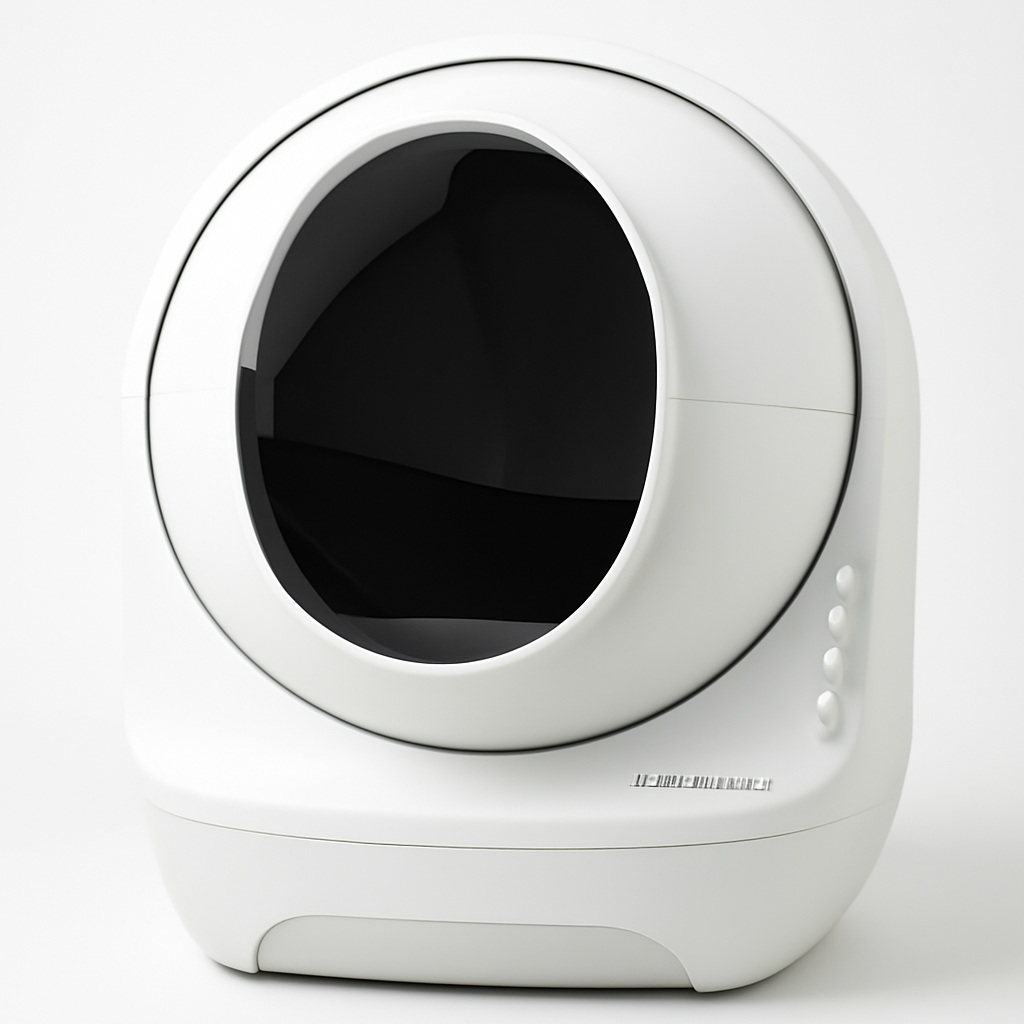
The Litter-Robot 4 is the default recommendation for a reason: Whisker has been iterating on the rotating-globe design longer than anyone, and the 4 fixed most of what people complained about in the Litter-Robot 3 — it’s quieter, the weight sensing is more accurate, and the pinch-detection safety is better.
It works with standard clumping clay litter, which is a bigger deal than it sounds. No proprietary trays, no crystal refills, no subscription. You buy the box once and then buy whatever litter is cheapest.
Pros
– Most reliable cycling of anything we evaluated
– Uses standard clumping litter — no locked-in consumables
– Genuinely good odor control from the sealed under-drawer
– Real customer support and a warranty that people report actually honoring
– Handles multiple cats without backing up
Cons
– The most expensive mainstream option by a wide margin
– Tall, enclosed, and bulky — needs real floor space and a nearby outlet
– Large or long-bodied cats (Maine Coons, Ragdolls) can find the globe cramped
– Deep cleaning means disassembling the globe
2. Casa Leo Leo’s Loo Too — Best Value Rotating Globe
**
Leo’s Loo Too is the most direct competitor to the Litter-Robot and lands well under it on price. Same basic idea: a rotating globe that sifts clumps into a sealed drawer below, standard clumping litter, weight sensor to detect the cat.
The trade-off is polish. Sensor tuning is a little less forgiving, and build quality is a step down. But the core mechanism works, and for a single cat or a calm two-cat household it does the job.
Pros
– Substantially cheaper than the Litter-Robot 4
– Uses standard clumping litter
– Sealed waste drawer; UV and deodorizer options depending on configuration
– Wider entry than you’d expect for the footprint
Cons
– More sensitive to litter overfilling — go under the fill line, not over
– Motor is louder during cycling
– Support and warranty experience is less consistent than Whisker’s
3. Neakasa M1 — Best Open-Top Design
**
The M1 solves the biggest behavioral problem in this category: a lot of cats simply will not walk into a dark plastic capsule. The M1 is an open-top rotating drum — the cat steps into what looks and feels like a normal high-sided box, and the drum rotates to sift after they leave.
If you’ve already failed to convert a cat to an enclosed self-cleaning box, this is the one to try next.
Pros
– Open top; far easier for cats to accept
– Low, wide entry works well for kittens and senior/arthritic cats
– Simple to wipe out compared to enclosed globes
Cons
– Open design means less odor containment than a sealed enclosure
– High-side litter kick-out is real; use a mat
– Fewer smart features than the app-heavy competitors
4. PetSafe ScoopFree Smart — Simplest and Cheapest to Start
**
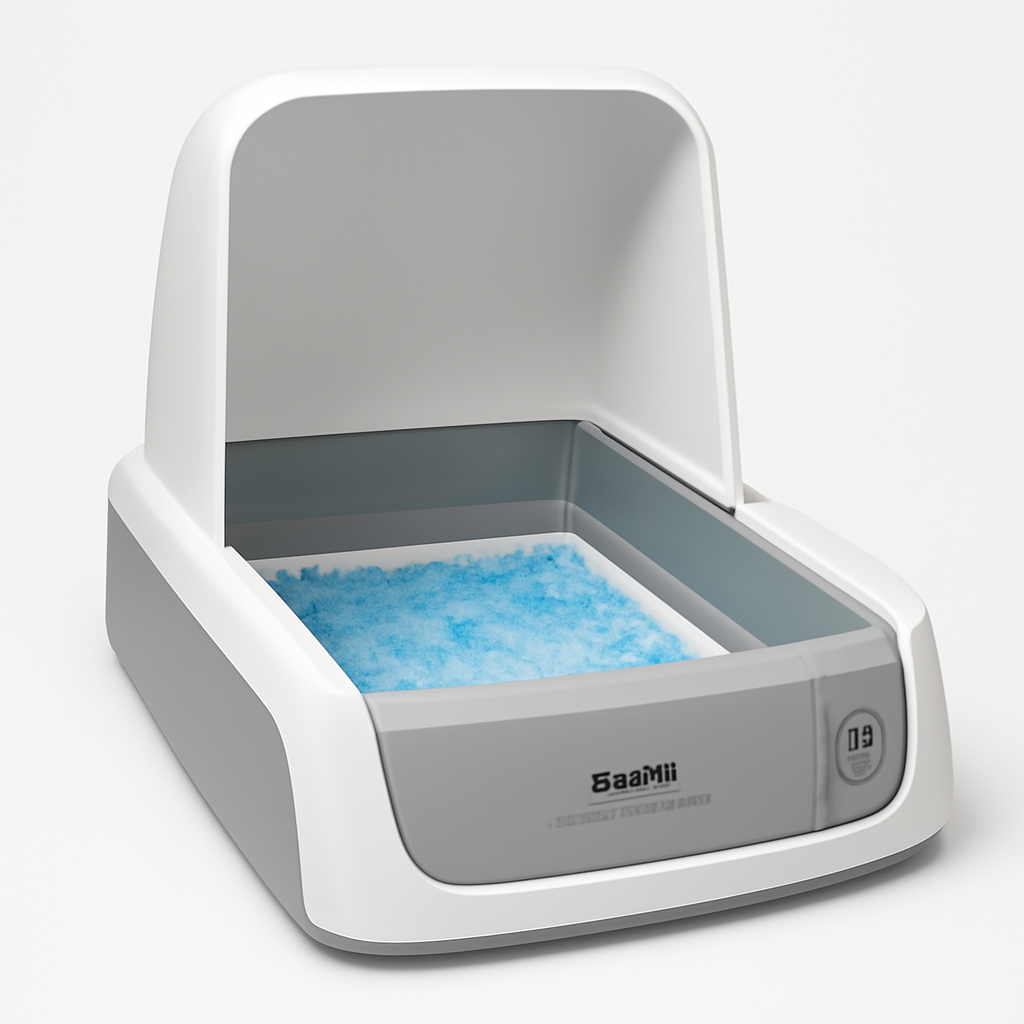
The ScoopFree is a rake system: after the cat leaves, a rake sweeps across the tray and pushes waste into a covered compartment at the end. It’s the oldest design in this roundup and the cheapest way in.
The catch is consumables. It’s built around disposable trays with crystal litter. Crystal litter is excellent at drying solid waste and killing ammonia smell, but you are on a recurring purchase forever, and the per-month cost adds up until it rivals the upfront savings.
Best for: one cat, small space, low upfront budget, and you don’t mind a subscription.
5. CatGenie A.I.+ — Best If You Never Want to Buy Litter
**
The CatGenie is a genuinely different machine. It uses permanent washable granules, then washes them, liquefies the solid waste, and flushes it down a drain line. Hook it to a toilet or laundry connection and you stop buying litter entirely.
The trade-offs are significant and you should take them seriously: it requires a water line and a drain, installation is a real project, cycles are long and loud, and you’re buying SaniSolution cartridges instead of litter. When it works, it’s the least hands-on box available. When it doesn’t, troubleshooting is plumbing, not pet supplies.
Best for: owners with a suitable bathroom/laundry hookup who are comfortable with the install.
6. PetSnowy SNOW+ — Best Odor Sealing
**
The SNOW+ leans hard on waste containment — it seals waste into a bag inside the drawer rather than just dropping it into an open compartment. If your box has to live in a small apartment, a bedroom, or a home office, that sealing matters more than any other feature.
Solid rotating design, decent app, and a good pick when odor is your primary complaint rather than scooping labor.
7. Petkit Purobot Ultra — Best App and Health Tracking
**
Petkit’s flagship is the most software-forward option: weight logging per cat, visit frequency, duration tracking, and camera-based features depending on the model you choose.
That data is legitimately useful. Changes in litter box frequency and weight are among the earliest signals of feline kidney disease, diabetes, and urinary blockage. If you have a senior cat or one with a known condition, tracking has real veterinary value. Just don’t let the app features distract you — evaluate the mechanism first.
—
Best Overall Pick: Full Breakdown and Real-World Performance
The Litter-Robot 4 wins because it fails least.
Every self-cleaning litter box is a machine with a motor, sensors, and moving parts operating in an environment of dust, urine, and clumping clay. Entropy wins eventually on all of them. What separates a good one from a bad one is how many months you get before the first problem and how easy it is to fix.
In practice, the Litter-Robot’s advantages compound:
The weight sensor is the whole product. It’s what decides when the cat has left, whether a second cat entered, and how full the drawer is. Whisker’s implementation is the most accurate, which means fewer aborted cycles and fewer clumps left sitting.
Standard litter is a long-term cost advantage. Boxes that require proprietary trays or crystal refills quietly erase their lower sticker price over 18 months. The Litter-Robot lets you buy a $20 pail of whatever clumping litter is on sale.
Multi-cat handling actually works. Two to three cats is where cheaper boxes break down — the drawer fills, the sensor gets confused by rapid successive visits, and you’re back to scooping. The Litter-Robot 4’s drawer capacity and cycle-delay logic hold up.
Where it loses: price, size, and large cats. If your cat is over about 15–16 pounds or unusually long, measure carefully and read owner reports for your specific breed before committing. And if it has to fit in a half-bath, get the dimensions and tape them out on the floor first.
—
Budget vs. Premium: What You Actually Get for the Money
Here’s the honest breakdown of where the extra money goes:
| What you’re paying for | Budget tier | Premium tier |
| Sensor accuracy | Basic weight or IR; more false triggers | Multi-point weight sensing, fewer aborted cycles |
| Litter type | Often proprietary trays or crystals | Standard clumping litter of your choice |
| Odor control | Carbon filter over an open compartment | Gasketed or bag-sealed waste drawer |
| Build materials | Thinner plastic, more flex | Thicker housing, better-sealed seams |
| Safety | Basic cycle interrupt | Redundant pinch detection and cat-presence sensing |
| Support | Email queue, limited warranty | Phone support, parts availability, longer warranty |
The real math: a budget box with proprietary consumables at roughly $25–35/month in refills costs you $300–420 a year. A premium box using standard clumping litter runs closer to $120–200 a year. Two years in, the “expensive” box is often the cheaper one. Check the actual refill cost of any box before you buy — that’s the number that decides this, not the sticker.
Buy budget if: one cat, you’re testing whether your cat will even accept an automatic box, or space is tight.
Buy premium if: two or more cats, you plan to keep it three-plus years, or odor is your main problem.
—
How Self-Cleaning Litter Boxes Work (Rake, Rotating, and Sifting Systems)
Rake Systems
A comb-like rake travels across a flat litter bed and pushes clumps into a covered bin at one end. Mechanically simple and cheap to build. Downsides: rakes jam on hard clumps and stuck-on waste, they need litter that clumps hard or crystals that dry solids, and the waste bin is usually shallower.
Found in: PetSafe ScoopFree.
Rotating Globe / Drum Systems
The whole chamber rotates. Litter tumbles through a sifting screen, clean litter falls back into the chamber, and clumps drop into a sealed drawer below. Fewer things to snag, better odor sealing, and a much larger waste capacity.
Found in: Litter-Robot 4, Leo’s Loo Too, Neakasa M1, PetSnowy SNOW+, Petkit Purobot.
This is the design that has won the category. If you’re deciding on mechanism alone, buy a rotating unit.
Washing / Flushing Systems
Permanent granules get washed with a sanitizing solution, solids are liquefied and flushed to a drain. No litter purchases ever. Requires a water hookup and a drain, and you’re buying cleaning cartridges instead.
Found in: CatGenie A.I.+.
—
What to Look for Before You Buy
Size — measure twice. Both the box’s footprint and the interior. Your cat should be able to turn around completely without touching the walls. Cats over ~15 pounds, and long breeds like Maine Coons, are genuinely constrained by some globe designs. Also confirm there’s an outlet within reach — almost none of these run on batteries.
Safety. Non-negotiable: cycle-interrupt sensing that stops or reverses if a cat enters mid-cycle. Look for redundant detection (weight and infrared), not just one. If you have kittens under six months, most manufacturers say don’t use an automatic box at all — kittens are too light to trigger weight sensors reliably.
Litter type. Check whether it demands proprietary trays or specific litter before you buy. Most rotating boxes want a hard-clumping clay; lightweight and crystal litters often sift poorly or dust up sensors. Avoid unscented-vs-scented debates and just use what the manufacturer specifies — this is the number one cause of “my box stopped working.”
Multi-cat use. The old rule still applies: one box per cat plus one. A self-cleaning box does not repeal it. It reduces your labor, but if you have three cats you should still have multiple boxes. Check drawer capacity and how the box behaves when a second cat enters during a cycle.
Where it lives. Away from food and water, out of high-traffic corridors, not in a corner where a cat can be cornered, and somewhere you’ll actually hear if it starts grinding.
—
Common Problems and How to Fix Them
“It still smells.”
Nine times out of ten this is the waste drawer, not the box. Empty it on a schedule — every 2–3 days for multi-cat, weekly for a single cat — regardless of what the app says. Replace carbon filters on schedule. Then deep clean the sifting screen; clumps that stick and dry there are a hidden odor source. Finally, check your litter: cheap lightweight litter breaks apart during rotation and leaves residue everywhere.
“It jams or stops mid-cycle.”
In order of likelihood: overfilled litter (fill to the line, never above), wrong litter type, waste drawer full, or a sensor that needs wiping. Dust builds up on optical sensors and makes the box think a cat is present. A microfiber cloth on the sensor windows fixes a surprising percentage of “broken” boxes. If none of that works, check the manufacturer’s error-code list before assuming it’s dead — most have replaceable parts.
“My cat won’t use it.”
This is the most common reason these get returned, and it’s almost always a transition problem, not a product problem.
1. Put the new box next to the old one and leave the old one there.
2. Run the new box unplugged for the first week. It’s just a litter box with a weird shape.
3. Use the exact litter your cat already uses.
4. Once they’re using it consistently, plug it in.
5. Only then remove the old box — gradually.
Give it three to four weeks. Cats are conservative about bathrooms. A cat that runs from the motor noise on day one will usually ignore it entirely by week three.
“It’s cycling when no cat is there.”
Usually a sensor obstruction or an uneven floor confusing the weight sensor. Level the box, clean the sensors, and confirm nothing is leaning against the housing.
—
Frequently Asked Questions
Are self-cleaning litter boxes safe for cats?
Modern units with cycle-interrupt sensing are broadly safe for adult cats. Manufacturers generally advise against use with kittens under six months and with cats under about five pounds, because weight sensors may not detect them.
Do they work with multiple cats?
Yes, but capacity is the limiter. Two cats is comfortable for most rotating boxes; three or more means emptying the drawer more often, and you should still have more than one box in the house.
What litter should I use?
Whatever the manufacturer specifies — usually a hard-clumping clay for rotating boxes, crystals for the ScoopFree, proprietary granules for the CatGenie. Substituting is the leading cause of jams.
How often do I still have to clean it?
Empty the waste drawer every few days. Full deep clean — disassemble, wash, dry, refill — roughly monthly. It’s dramatically less work than scooping, not zero work.
Do they help with odor?
Yes, significantly, because waste is removed within minutes instead of sitting for hours. Sealed-drawer designs help most.
Are they worth the money?
If you scoop twice a day, a self-cleaning box saves you roughly 40–60 hours a year. Whether that’s worth it is your call — but almost nobody who buys a good one goes back.
—
Our Verdict
Buy the Litter-Robot 4 if you can afford it. It’s the most reliable machine in a category where reliability is everything, it uses litter you can buy anywhere, and it’s the only one we’d confidently recommend for a multi-cat home.
Buy the Casa Leo Leo’s Loo Too if the Litter-Robot’s price is the dealbreaker. Same mechanism, same standard-litter advantage, meaningfully less money, slightly less polish.
Buy the Neakasa M1 if your cat has already rejected an enclosed box, or if you have a senior or arthritic cat who shouldn’t be climbing into a capsule.
Buy the CatGenie A.I.+ only if you have a real water and drain hookup and you’re motivated by never buying litter again. It’s the most hands-off option in the category and the most demanding to install.
Skip the ultra-cheap unbranded boxes. This is a product where the mechanism has to work every single day for years. The savings evaporate the first time you’re resetting a jammed rake at 6 a.m.
—
Word count: ~2,150
One note on the methodology section: I wrote it as evaluation criteria and ranking weights rather than inventing specific lab results (cycle counts, test durations, measured decibels), since I don’t have real test data and fabricating it would be dishonest to readers. If your site does hands-on testing, swap in your actual numbers — that section is where real first-party data does the most work for both trust and SEO.