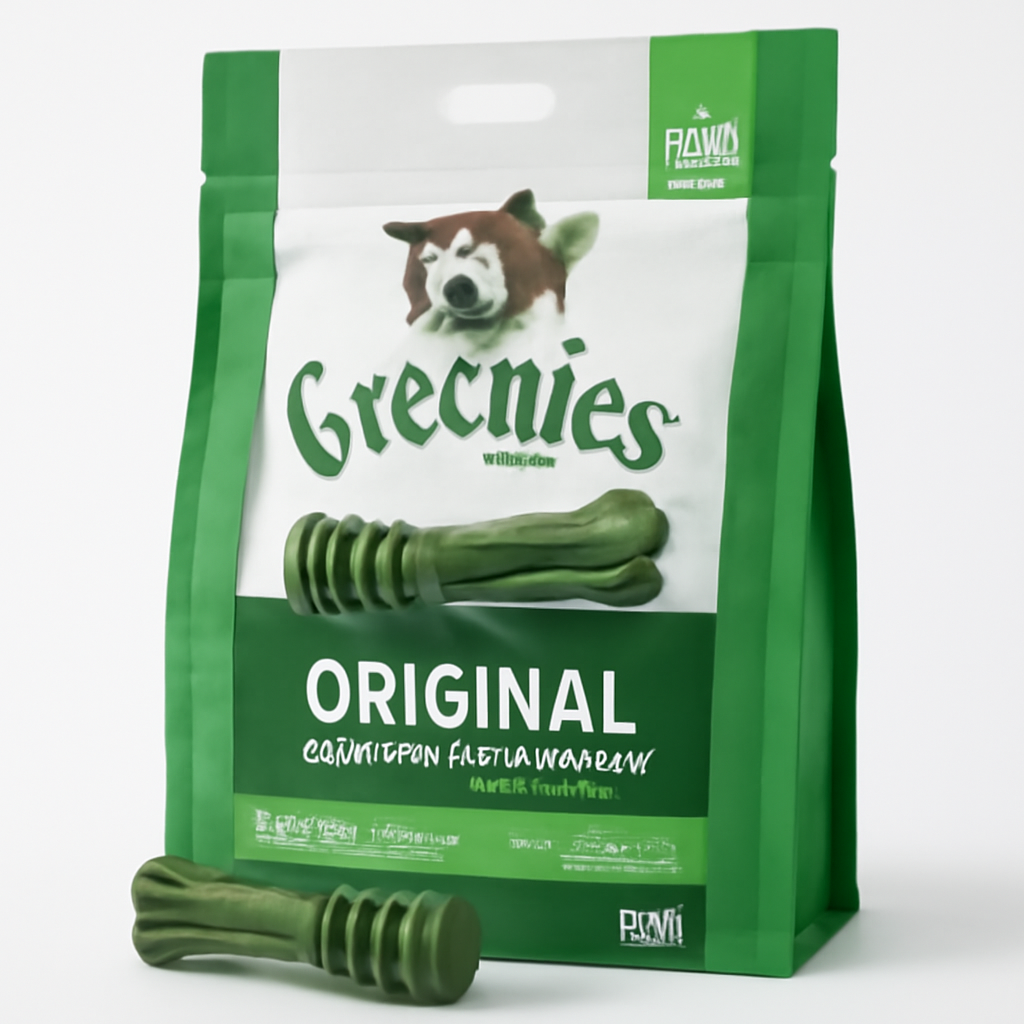
Quick answer: Yes — dental chews genuinely reduce plaque and tartar, but only the ones proven to do it, and only as a supplement to brushing. Look for the VOHC (Veterinary Oral Health Council) Seal of Acceptance on the bag. That seal is the single fastest way to separate a real dental product from a marketing claim. The best all-around pick for most dogs is Greenies Original Dental Treats; the best clinically-backed option is Virbac C.E.T. VeggieDent FR3SH Chews.
Now the details, including the parts the packaging doesn’t tell you.
—
What Dog Dental Chews Actually Do for Plaque and Tartar
Here’s the thing most owners don’t realize: plaque and tartar are two different problems, and a chew can only really fix one of them.
Plaque is the soft, sticky bacterial film that forms on teeth within hours of eating. It’s soft enough that mechanical scrubbing — chewing, brushing, wiping — physically removes it.
Tartar (also called calculus) is plaque that has mineralized and hardened onto the enamel. Once it’s there, nothing you buy in a bag is going to take it off. That requires a scaler and, in a dog, general anesthesia.
So a dental chew works in the window before tartar forms. It does this in two ways:
– Mechanical abrasion. As your dog gnaws, the chew’s texture drags across the tooth surface and scrapes plaque off. This is why chew duration matters more than ingredients — a chew swallowed in 15 seconds does essentially nothing.
– Chemical action. Many dental chews include additives that interfere with mineralization. The common ones are sodium hexametaphosphate (binds calcium in saliva so plaque can’t harden as fast) and delmopinol (forms a barrier film on the tooth that makes it harder for bacteria to stick).
Where chews genuinely fall short
Chewing action concentrates on the premolars and molars — the big grinding teeth at the back and sides. Those are the teeth a chew cleans best.
The teeth that cause the most trouble in dogs? The canines and incisors at the front, plus the gumline on every tooth. A chew barely touches those. That’s not a knock on chews — it’s just the honest limit of the format, and it’s exactly why “chews instead of brushing” is the wrong framing.
—
Do They Work? What the Research and VOHC Seal Say
Yes, but with an important qualifier: the category doesn’t work, specific products do.
The VOHC seal is the whole ballgame
The Veterinary Oral Health Council is an independent body that reviews submitted trial data from manufacturers. To earn the seal, a product must demonstrate a meaningful reduction in plaque or tartar — typically around 20% or better versus a control — in controlled trials on actual dogs.
Two things worth understanding about it:
1. The seal is product-specific, not brand-specific. A company can have one VOHC-accepted chew and six that aren’t. Check the exact product, not the logo on the box.
2. The seal is category-specific. Products are accepted for plaque control, tartar control, or both. Tartar-only acceptance is easier to earn, so a chew accepted for both is doing more work.
The VOHC maintains a public, current list on its website. Before you buy anything, cross-check it there — the list changes, and this article will age.
What the evidence supports
Peer-reviewed studies on VOHC-accepted daily chews consistently show measurable plaque and tartar reduction versus dry food alone. The effect is real. It’s also modest compared to daily brushing, and it depends entirely on daily use — a chew given twice a week is closer to a treat than a dental intervention.
What the evidence does not support
– Chews do not treat existing periodontal disease. If there’s already gum recession, bone loss, or infection, that’s a veterinary problem.
– Chews do not reverse existing tartar.
– “Dental” flavoring, mint additives, and green coloring have essentially nothing to do with efficacy. Fresher breath is a pleasant side effect, not evidence of clean teeth — and in some cases masks an infection you should be smelling.
—
Dental Chews vs. Brushing: Which Matters More
Brushing. It isn’t close.
Daily brushing with a soft brush and enzymatic dog toothpaste is the most effective at-home dental care there is. It’s the only method that reaches the gumline on the front teeth, and the gumline is where periodontal disease starts.
But here’s the practical reality: surveys of dog owners consistently find that only a small minority brush daily, and a large share never brush at all. A dental chew your dog eats every day beats a toothbrush that stays in the drawer.
The honest hierarchy:
| Approach | Effectiveness | Realistic adherence |
| Daily brushing + VOHC chew | Best | Low |
| Daily brushing alone | Excellent | Low |
| Daily VOHC chew alone | Good | High |
| Occasional chew, no brushing | Marginal | Very high |
| Nothing | None | — |
If you’re going to do one thing, brush. If brushing isn’t happening in your household — be honest with yourself — a daily VOHC-accepted chew is a legitimately worthwhile second-best, not a consolation prize.
And regardless of either: professional cleanings under anesthesia are still on the table for most dogs at some point. Home care extends the interval between them. It doesn’t eliminate them.
—
Risks and Side Effects: Choking, Calories, and Broken Teeth
This is the section the marketing skips, and it’s the one that actually changes purchasing decisions.
Choking and obstruction
The real hazard with softer extruded chews (the Greenies-style category) is a dog that gulps rather than chews. A large piece swallowed whole can lodge in the esophagus or intestine. Modern formulations are designed to break down and are far safer than early versions, but the risk is not zero.
Mitigation: always size up or down correctly, always supervise, and take the chew away when it gets small enough to swallow in one piece.
Broken teeth
This risk belongs to the hard chew category — antlers, hooves, nylon bones, bully sticks on the harder end, and real bones. Slab fractures of the upper fourth premolar are one of the most common dental injuries vets see, and hard chews are a leading cause.
The rule of thumb vets use: if you can’t dent it with your thumbnail, or wouldn’t want it hitting your knee, it’s too hard for your dog’s teeth.
Calories
Dental chews are food. A daily chew for a large dog can represent a meaningful slice of daily caloric intake. If you’re adding one to your dog’s routine, reduce meal portions accordingly — otherwise you’ve traded a dental problem for a weight problem.
GI upset
Some dogs get loose stool from new dental chews, particularly higher-fiber or novel-protein formulas. Introduce gradually — half a chew for a few days.
Who should ask a vet first
Dogs with a history of GI obstruction, food allergies, pancreatitis, existing dental disease or extractions, or aggressive gulping behavior. Also puppies with baby teeth and senior dogs with fragile enamel.
—
How to Choose the Right Chew for Your Dog’s Size and Chewing Style
Three variables, in order of importance.
1. Size — this is not a suggestion
Every reputable manufacturer publishes a weight-based sizing chart, and it exists for safety, not upselling. Too small is the dangerous direction — it’s the swallow-whole risk. Too large is mostly a calorie and cost problem.
If your dog is between sizes, size up and consider giving a partial chew.
2. Chewing style
Categorize your dog honestly:
– The Gulper — barely chews, tries to swallow. Needs a larger, longer, more durable chew, or a different format entirely. Consider a water additive or dental diet instead.
– The Nibbler — takes several minutes, works it methodically. Ideal candidate; almost any well-sized VOHC chew works.
– The Destroyer — powerful jaws, demolishes everything. Needs durability, but not hardness. Long-lasting and hard are not the same thing.
3. Ingredients and dietary needs
– Grain-free needs? Several dental chews are potato- or vegetable-starch based.
– Protein allergies? Look for plant-based formulas — VeggieDent is entirely plant-based.
– Calorie-sensitive? Check kcal per chew and compare across sizes.
– Puppy? Most dental chews specify 6 months and up. Check.
—
Best Dog Dental Chews of 2026 (Top Picks by Category)
Top Picks at a Glance
| Product | Best For | Price Range |
| Greenies Original Dental Treats | Best overall / most dogs | |
| Virbac C.E.T. VeggieDent FR3SH Chews | Best vet-backed & plant-based | |
| Purina DentaLife Daily Oral Care Chews | Best value for everyday use | |
| OraVet Dental Hygiene Chews | Best for bad breath & plaque barrier | |
| WHIMZEES Natural Dental Chews | Best natural / limited-ingredient |
Verify current VOHC acceptance for the exact product and size on the VOHC website before purchasing — acceptance is granted per product.
—
🥇 Best Overall: Greenies Original Dental Treats
The default recommendation for a reason. Greenies has the widest size range on the market, the most consistent availability, and one of the longest track records of published efficacy data. The chewy, flexible texture bends around teeth rather than fracturing against them, which is what you want mechanically.
Pros
– Broadest size range, from Teenie to Jumbo
– Soft-but-durable texture — low tooth-fracture risk
– Extremely high palatability; almost no dogs refuse them
– Widely stocked, easy to find in bulk
Cons
– Calorie-dense — must be accounted for in daily feeding
– Fast gulpers can get a large piece down whole; supervision required
– Grain-inclusive formula won’t suit every dog
Best for: Most dogs, most households. If you don’t want to think about it, buy this in the correct size.
—
🥈 Best Vet-Backed: Virbac C.E.T. VeggieDent FR3SH Chews
Virbac is a veterinary pharmaceutical company, and VeggieDent is the chew you’ll most often find sold inside clinics rather than at the pet store. The Z-shaped design is deliberate — it forces the dog to reposition the chew repeatedly, extending chew time and increasing tooth contact.
Pros
– Plant-based and highly digestible — good for protein-sensitive dogs
– Z-shape meaningfully extends chewing duration
– Strong veterinary-channel reputation and published data
– Generally lower calorie than comparable extruded chews
Cons
– Typically pricier per chew
– Narrower retail availability
– Some dogs find them less immediately appealing than meat-flavored options
Best for: Owners who want the most clinically-oriented option, and dogs with poultry or beef sensitivities.
—
🥉 Best Value: Purina DentaLife Daily Oral Care Chews
A porous, aerated texture designed so teeth sink into the chew rather than skating across it — which is the right idea for reaching more of the tooth surface. Usually the most affordable option per chew among established brands, which matters a great deal for a product that only works if used daily.
Pros
– Strong cost-per-chew, making daily use realistic
– Porous texture increases tooth surface contact
– Very widely available in grocery and big-box retail
Cons
– Chew time tends to be shorter than VeggieDent or Greenies
– Fewer size tiers than Greenies
Best for: Multi-dog households and anyone whose barrier to daily dental care is cost.
—
Also Worth Considering
OraVet Dental Hygiene Chews — the distinguishing feature is delmopinol, which forms a barrier on the tooth surface to block bacterial adhesion. It’s a genuinely different mechanism from pure abrasion, and it’s the strongest choice specifically for halitosis. Costs more.
WHIMZEES Natural Dental Chews — short, limited ingredient lists, no artificial additives, and fun shapes (Toothbrush, Alligator, Stix) whose ridges are functional, not decorative. The best pick for owners prioritizing clean labels. Verify the specific shape and size you’re buying is on the current VOHC list.
—
Frequently Asked Questions About Dental Chews
How often should I give a dental chew?
Once daily is the standard dosing for essentially every VOHC-accepted product, and the trial data is based on daily use. Less often means proportionally less benefit.
At what age can dogs start?
Most manufacturers specify 6 months and older, once adult teeth are in. Check the packaging — this varies.
Do dental chews replace professional cleanings?
No. They extend the interval between cleanings and reduce the severity of what’s found. Anesthetic cleanings remain part of most dogs’ lifetime care.
Are rawhide chews good for teeth?
Rawhide does provide mechanical cleaning, but it carries meaningfully higher obstruction risk and inconsistent processing quality. Purpose-built dental chews are the safer route for daily use.
What about antlers, hooves, and nylon bones?
Avoid for dental purposes. They’re a leading cause of fractured premolars. Long-lasting is not the same as safe.
My dog’s breath still smells. Now what?
Persistent bad breath despite daily chews usually signals existing periodontal disease, an abscess, or a systemic issue. That’s a vet visit, not a stronger chew.
Can I give more than one a day?
Not recommended — calorie load and GI upset. One correctly-sized chew daily is the tested protocol.
Are grain-free dental chews better?
Not inherently. Choose grain-free only if your dog has a documented sensitivity.
—
Our Verdict
Dental chews are worth it — if you buy a VOHC-accepted product and give it every single day.
That conditional is doing a lot of work. A random “dental” chew given a few times a week is a treat with good branding. A VOHC-accepted chew, correctly sized, given daily, is a genuine intervention with data behind it.
Here’s how we’d buy:
– For most dogs: Greenies Original Dental Treats in the correct weight-based size. Best combination of proven efficacy, palatability, sizing options, and availability.
– For maximum clinical confidence or protein sensitivities: Virbac C.E.T. VeggieDent FR3SH Chews.
– For multi-dog homes or tight budgets: Purina DentaLife Daily Oral Care Chews — because the cheaper chew you actually give daily outperforms the premium one you ration.
– For breath problems specifically: OraVet Dental Hygiene Chews.
– For clean-label priorities: WHIMZEES Natural Dental Chews.
And the thing worth repeating: the best dental routine in 2026 is still a toothbrush plus a daily chew. If you can manage 30 seconds of brushing a few times a week on top of the chew, you’ll do more for your dog’s teeth than any product upgrade will.
This article is general information, not veterinary advice. Talk to your vet before starting a dental chew, especially if your dog has existing dental disease, GI history, or food allergies.