I’ll write the article now.
Quick answer: The best dog dental chews use a short ingredient list built around a digestible base (rice starch, potato starch, or gelatin), a functional abrasive texture, and evidence-backed additives like sodium hexametaphosphate or delmopinol. Avoid rawhide, artificial dyes, added sugars, and vague “animal by-product” labeling. For most dogs, Greenies Original Dental Treats and Virbac C.E.T. VeggieDent Fr3sh hit the best balance of digestibility and proven plaque reduction.
—
Your dog’s breath smells like something died in there, and your vet just quoted you several hundred dollars for a dental cleaning under anesthesia. So you’re standing in the pet aisle staring at a wall of green, brown, and suspiciously bone-shaped chews, trying to figure out which ones actually do something versus which ones are just cookies with a marketing budget.
The answer is almost entirely in the ingredient panel. Dental chews work through two mechanisms — mechanical abrasion (the chew physically scrapes plaque off the tooth surface as the dog gnaws) and chemical action (specific ingredients that interfere with plaque mineralizing into tartar). A chew that gets swallowed in four seconds does neither. A chew loaded with sugar can actively make things worse.
Here’s how to read the label like someone who knows what they’re looking at.
Top Picks at a Glance
| Product | Best For | Price Range |
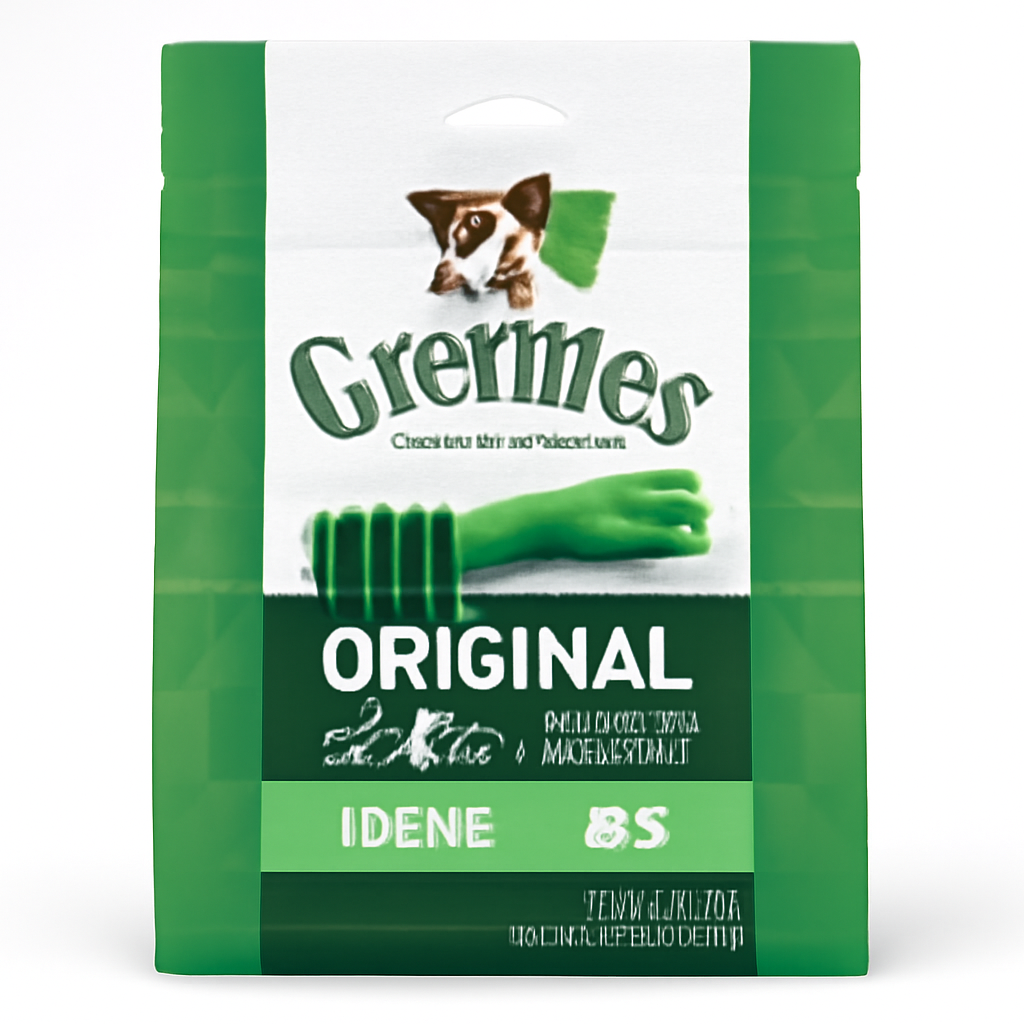
| Greenies Original Dental Treats | Overall pick — proven formula, highly digestible | |
| Virbac C.E.T. VeggieDent Fr3sh | Plant-based, no animal protein, sensitive stomachs | |
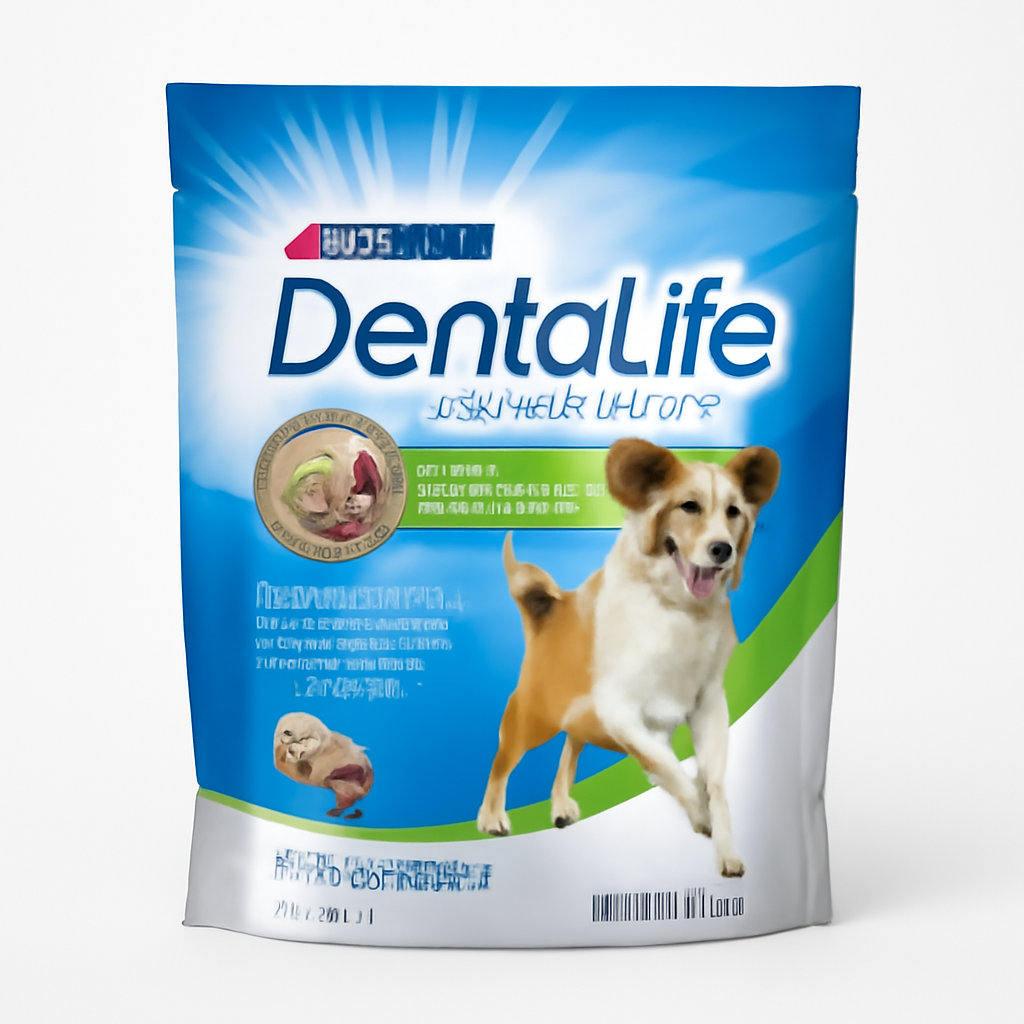
| Purina DentaLife Daily Oral Care | Budget-conscious daily use | |
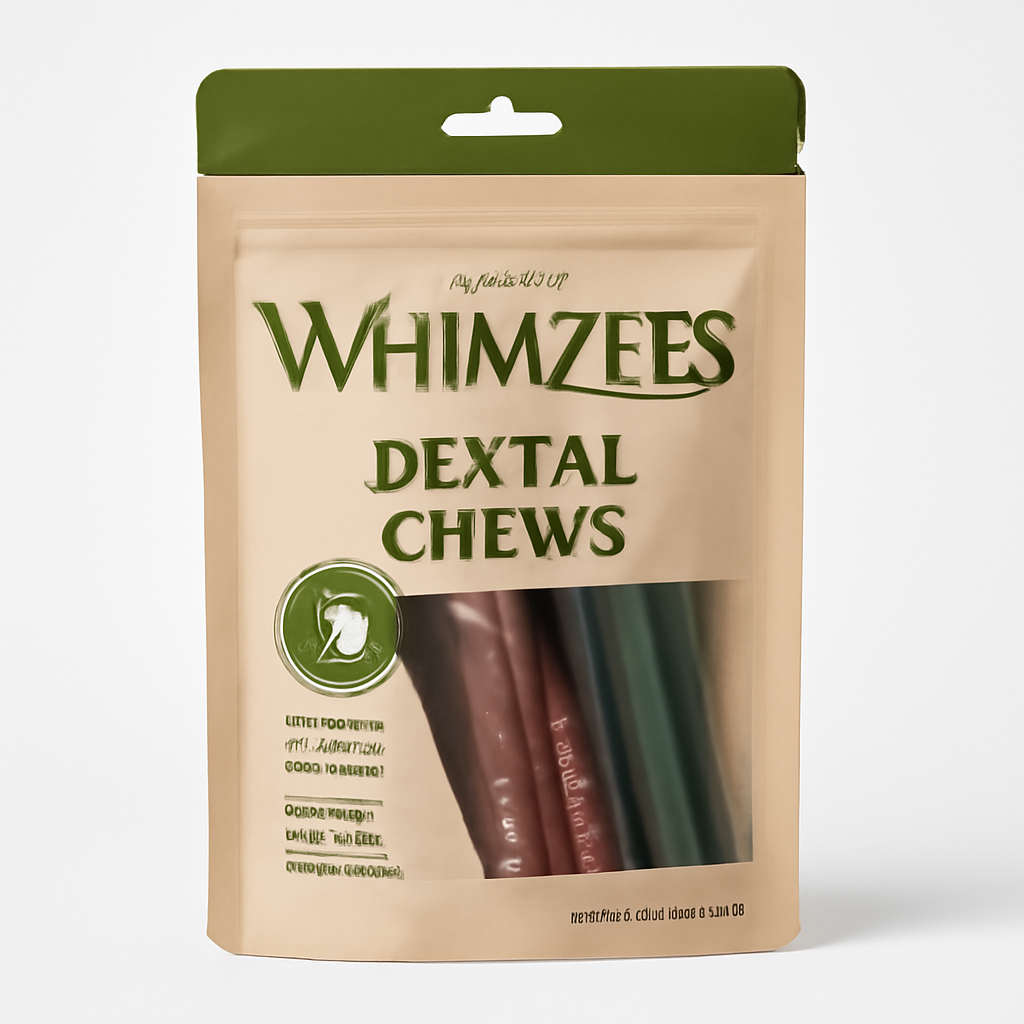
| Whimzees Natural Dental Chews | Ultra-short ingredient list, grain-inclusive minimalists | |
| OraVet Dental Hygiene Chews | Dogs with heavy tartar buildup (delmopinol barrier) |
—
What Actually Goes Into Dog Dental Chews
Most dental chews are, structurally speaking, an extruded or molded starch matrix. That’s the “dough” that gives the chew its shape and its chewiness. Everything else — flavor, functional additives, preservatives, color — is built on top of that base.
The Base (60–90% of the chew)
This is the bulk ingredient and it determines two things you care about: how well the chew holds up to chewing, and how well your dog digests it.
Common bases you’ll see:
– Wheat starch / wheat flour — cheap, extrudes well, creates a firm but pliable texture. The base in Greenies. Fine for most dogs, a problem for the small percentage with genuine wheat sensitivity.
– Potato starch / potato flour — grain-free alternative, similar texture profile, common in Whimzees.
– Rice flour / rice starch — gentle, highly digestible, often used in sensitive-stomach formulas.
– Gelatin or hydrolyzed collagen — protein-based binder that creates a springy, resilient chew. Adds a bit of protein content.
– Corn starch — functional and digestible despite its reputation, but often a signal of aggressive cost-cutting when it’s the very first ingredient.
– Rawhide (dried cattle hide) — the outlier. Not a starch at all, and the most controversial base on the market.
Humectants and Plasticizers
Glycerin (usually vegetable glycerin) shows up in the top five ingredients of most soft dental chews. Its job is to hold moisture so the chew stays flexible instead of turning into a rock. It’s safe and widely used, but it’s also calorically dense — it’s a sugar alcohol — and it’s part of why some dental chews carry more calories than you’d expect.
Functional Additives
This is the part that separates a real dental product from a treat with a toothbrush printed on the bag. We’ll cover these in depth in the next section.
Palatants
Something has to make a starch brick taste good. You’ll see natural poultry flavor, hydrolyzed protein, dried liver, or “natural flavor.” These are usually fine. The concern is when palatability is achieved through added sugars instead.
—
Ingredients to Look For (and Why They Work)
Sodium Hexametaphosphate (STPP/HMP)
This is the single most common evidence-backed additive in dental chews, and it’s worth understanding why. Plaque is soft bacterial biofilm; tartar is plaque that has mineralized by binding calcium from saliva. Sodium hexametaphosphate is a calcium chelator — it binds free calcium ions in the mouth before they can precipitate onto the plaque layer. It doesn’t remove existing tartar, but it meaningfully slows new tartar formation.
If you see it on the panel, that’s a good sign. It appears in Greenies, DentaLife, and a number of others.
Delmopinol Hydrochloride
Delmopinol is the active ingredient in OraVet Dental Hygiene Chews and it works differently from everything else on this list. Rather than chelating calcium or scrubbing, it forms a physical barrier film on the tooth surface that makes it harder for bacteria to adhere in the first place. It’s the same compound used in some human oral rinses. If your dog already has visible tartar and you want to slow further accumulation between professional cleanings, this is the mechanism to look for.
Zinc Salts (Zinc Sulfate, Zinc Gluconate)
Zinc has mild antibacterial activity and helps neutralize volatile sulfur compounds — the actual chemical source of dog breath. It’s a supporting ingredient, not a primary one, but it’s a legitimate inclusion.
Chlorophyll and Parsley Seed Oil
These are breath fresheners, not plaque fighters. They’re why so many dental chews are green. There’s nothing wrong with them, but don’t mistake a chlorophyll-green chew for a functionally effective one — cosmetic freshening and plaque reduction are different jobs.
Functional Texture (the underrated one)
Texture isn’t an ingredient, but it’s determined by ingredients, and it may matter more than any additive. A chew needs enough resistance that the dog has to work at it — that working is where the mechanical plaque removal happens. Ingredient panels won’t tell you this directly, but density and shape do. The ridged, knobbed profiles on Whimzees and the Z-shaped VeggieDent design exist to increase tooth contact area and force the dog to reposition the chew repeatedly.
The VOHC Seal
Not an ingredient, but the most useful shortcut on the entire package. The Veterinary Oral Health Council reviews submitted trial data and awards a seal for products that demonstrate a measurable reduction in plaque or tartar. It’s voluntary and manufacturer-funded, so absence isn’t proof of failure — but presence means someone actually ran a trial and the data held up. Greenies, VeggieDent, DentaLife, and OraVet all carry VOHC recognition for at least some products in their lines.
—
Ingredients to Avoid: Fillers, Additives & Red Flags
Rawhide
The most contentious item in the category. Rawhide is dried cattle hide, and the objections are real: it’s poorly digestible, it softens into a slick gelatinous mass that can be swallowed in large pieces, and it’s a documented cause of esophageal and intestinal obstruction. Processing may also involve chemical treatments depending on origin and manufacturer.
This doesn’t mean every rawhide chew is dangerous, and plenty of dogs chew them for years without incident. But given that starch-based alternatives deliver comparable abrasion with dramatically better digestibility, rawhide is hard to justify in 2026 unless your dog has a specific reason for it and you’re supervising every session.
Artificial Colors
Red 40, Yellow 5, Yellow 6, Blue 2, and titanium dioxide exist purely to make the product look appealing to you. Your dog is functionally red-green colorblind and does not care that the chew is festive. There’s no functional benefit and it’s added chemical load for zero return.
Added Sugars and Syrups
Sucrose, corn syrup, molasses, and caramel color used as a sweetener are all counterproductive in a product whose purpose is oral health. Sugar feeds the oral bacteria producing acid and plaque. If a dental chew’s palatability strategy is “make it sweet,” the manufacturer has prioritized repeat purchases over the product’s stated function.
Vague Protein Sourcing
“Meat by-products,” “animal digest,” and “animal fat” without a named species are ambiguity by design. Named ingredients — chicken liver, poultry meal, beef gelatin — indicate a supply chain the manufacturer is willing to disclose.
Chemical Preservatives
BHA, BHT, and ethoxyquin are effective preservatives with contested safety profiles in long-term animal feeding. Mixed tocopherols (vitamin E) and rosemary extract do the same job. Given that dental chews are a daily product, the cumulative exposure argument has some weight here.
Excessive Salt
Some manufacturers use salt as a cheap palatant. For a healthy dog it’s a non-issue; for a dog with cardiac or renal disease it isn’t. Worth a glance at the guaranteed analysis if that applies to you.
—
Digestibility and Safety: Reading the Label Right
Digestibility is the safety question that matters most, because the failure mode for a dental chew isn’t “it didn’t work” — it’s “a chunk of it is now lodged somewhere it shouldn’t be.”
The Practical Digestibility Test
Starch-based chews (Greenies, VeggieDent, DentaLife, Whimzees) break down in stomach acid relatively quickly. Rawhide does not — it swells and softens but stays structurally intact far longer. If your dog is a gulper who tries to swallow things whole, base material is the single most important variable in your decision.
Calories Are Not Free
A large dental chew can carry meaningful calories, and they’re daily. The standard guidance is that treats should stay under 10% of total daily caloric intake. For a 20-pound dog on roughly 500 calories a day, that’s a 50-calorie ceiling — and one large dental chew can consume most of it. Check the calorie content on the package and reduce meal portions accordingly.
Reading the Guaranteed Analysis
The panel gives you crude protein, crude fat, crude fiber, and moisture minimums/maximums. For dental chews specifically:
– High crude fiber (5%+) often indicates plant material used as bulk filler
– Very low protein on a chew marketed as meat-based is a tell that the meat is a flavoring, not a component
– Moisture above ~15% means a softer chew — less abrasive action, and it needs preservatives
Supervision Is Not Optional
Every dental chew manufacturer says to supervise, and it reads like boilerplate liability language. It isn’t. The end-stage nub — that last inch a dog tries to swallow whole — is where the actual risk lives. Take it away.
—
Natural vs. Synthetic Dental Chew Ingredients
This is where marketing does the most damage, so let’s be blunt about it: “natural” is not a regulated claim on pet products in the way buyers assume, and it does not correlate with effectiveness.
The Case for Natural-Forward Formulas
Whimzees Natural Dental Chews is the clearest example of the minimalist approach — a short panel built on potato starch, glycerin, and vegetable-derived colorants, with no artificial preservatives or synthetic additives. For dogs with sensitivities, or owners who want to be able to pronounce and identify every ingredient, that’s a genuine benefit. The functional dental effect comes from texture and density rather than chemistry, which is a legitimate mechanism.
The Case for Synthetic Additives
Here’s the thing: sodium hexametaphosphate and delmopinol are synthetic, and they’re the two ingredients with the strongest evidence behind them. A chew that removes every synthetic compound also removes the chemical anti-tartar action, leaving only mechanical abrasion.
That’s a real tradeoff, not a marketing one. Mechanical abrasion alone is meaningfully effective — but a chew with both mechanisms is doing more work.
How to Decide
| Priority | Better Fit |
| Dog has food sensitivities or allergies | Natural-forward, minimal panel (Whimzees, VeggieDent) |
| Dog already has visible tartar | Synthetic actives (OraVet, Greenies) |
| Dog is a heavy chewer, no sensitivities | Either — prioritize texture and density |
| Vegetarian/plant-based household preference | VeggieDent (no animal protein) |
| Cost is the primary constraint | DentaLife |
The honest answer is that a VOHC-recognized chew your dog will actually chew for two full minutes beats a philosophically purer chew they swallow in ten seconds. Compliance beats ideology.
—
Matching Ingredients to Your Dog’s Size and Age
Size sizing on dental chews is not upselling. It’s the primary safety control in the category.
Why Size Matters More Than Ingredients Here
A chew sized for a Labrador given to a Chihuahua is a choking hazard by geometry. A chew sized for a Chihuahua given to a Labrador gets swallowed whole — no dental benefit, and a small obstruction risk. Every major brand sizes by weight range for this reason: teacup, small, medium, large, and giant. Use the range on the package, not your judgment of your dog’s enthusiasm.
Puppies (Under 6 Months)
Most dental chews are not recommended for puppies under six months. Deciduous teeth are fragile, adult teeth are still erupting, and the jaw structure is developing. Check the package — Greenies, for example, specifies a minimum age and weight. Puppy-specific formulas exist and are softer by design.
Adults
The main window where dental chews do their work. Daily use is the standard recommendation across VOHC-recognized products, because plaque begins remineralizing within roughly 24–48 hours. Weekly use is largely cosmetic.
Seniors and Dogs with Dental Disease
This is where the ingredient conversation shifts entirely. A senior dog with periodontal disease, loose teeth, or prior extractions can be harmed by a hard chew. Softer, more pliable formulas — or a switch to water additives, enzymatic gels, and brushing — are the appropriate path. If your dog is dropping food, chewing on one side, or pawing at their mouth, that’s a vet visit, not a product decision.
Breed-Specific Considerations
Brachycephalic breeds (Pugs, Bulldogs, Frenchies) have crowded, rotated teeth in a compressed jaw, and they tend to accumulate plaque faster than average. They also often struggle with standard chew shapes. Several brands make brachycephalic-specific shapes worth seeking out.
—
Top Picks: Pros and Cons
Greenies Original Dental Treats
The default recommendation, and it earns it. VOHC-recognized, extensively studied, uses sodium hexametaphosphate, and the texture profile is genuinely well-engineered — flexible enough not to fracture teeth, firm enough to require real chewing.
Pros
– VOHC seal for plaque and tartar reduction
– Highly digestible wheat-starch base
– Sodium hexametaphosphate for chemical anti-tartar action
– Widest size range on the market, including brachycephalic shapes
– Extremely high palatability — dogs reliably eat them
Cons
– Wheat-based, so not an option for wheat-sensitive dogs
– Higher calorie density than the minimalist alternatives
– Premium pricing on a daily-use product adds up
– Aggressive gulpers can swallow large pieces — supervision matters
Virbac C.E.T. VeggieDent Fr3sh
The pick for dogs with animal protein sensitivities, and my personal favorite of the plant-based options. Entirely plant-derived, VOHC-recognized, and the Z-shaped design does real work — it forces the dog to reposition repeatedly, increasing tooth contact.
Pros
– No animal protein — good for elimination diets and protein allergies
– VOHC-recognized
– Z-shape maximizes tooth contact and chew duration
– Vet-channel brand with strong quality control
Cons
– Typically the most expensive option per chew
– Harder to find in general retail — often vet clinic or online only
– Some dogs find it less palatable than meat-flavored alternatives
– Firmer texture may not suit dogs with existing dental sensitivity
Purina DentaLife Daily Oral Care
The value pick, and a genuinely good one. VOHC-recognized despite the lower price point, with a porous texture designed to let teeth sink in rather than skid across the surface.
Pros
– VOHC-recognized at a notably lower cost per chew
– Porous, ridged texture designed for tooth penetration
– Widely available in general retail
– Lower calorie than several premium competitors
Cons
– Ingredient panel is longer and includes more processing aids
– Softer texture means shorter chew duration for powerful chewers
– Contains added colorants some owners would rather avoid
—
How to Choose the Right Dental Chew: Final Checklist
Run through this in the aisle or on the product page:
1. Does it carry the VOHC seal? If yes, someone ran a trial. Start here.
2. What’s the first ingredient? A named starch or gelatin — good. Rawhide — reconsider. Corn starch first — probably cost-optimized.
3. Is there a functional additive? Sodium hexametaphosphate or delmopinol means chemical action, not just abrasion.
4. Any artificial colors? Red 40, Yellow 5, Blue 2 add nothing. Their presence signals priorities.
5. Any added sugar? Sucrose, corn syrup, or molasses in an oral health product is a contradiction.
6. Are proteins named? “Chicken liver,” not “animal digest.”
7. Preservative system? Mixed tocopherols and rosemary extract over BHA/BHT for a daily product.
8. Correct size for your dog’s weight? Non-negotiable. Use the package range.
9. What’s the calorie count? Subtract it from the daily food allowance. Dental chews are a common hidden cause of weight gain.
10. Will your dog actually chew it for 60+ seconds? If they inhale it, none of the above matters.
—
Our Verdict
For the majority of dogs, Greenies Original Dental Treats is the right answer. It’s VOHC-recognized, the wheat-starch base digests reliably, sodium hexametaphosphate gives you chemical action on top of mechanical scrubbing, and the size range means you can match your dog properly. The palatability is high enough that compliance — the thing that actually determines whether any of this works — is rarely a problem.
If your dog has food sensitivities or you’re running an elimination diet, go with Virbac C.E.T. VeggieDent Fr3sh. It costs more and it’s harder to find, but it’s VOHC-recognized, entirely plant-based, and the Z-shape is a genuinely smart piece of design.
On a tighter budget, Purina DentaLife Daily Oral Care is the rare value option that didn’t cut the thing that matters — it carries the VOHC seal at a meaningfully lower cost per chew, which makes daily use realistic.
If you want the shortest possible ingredient list, Whimzees Natural Dental Chews delivers, relying on texture and density rather than synthetic additives. And if your dog already has visible tartar, OraVet Dental Hygiene Chews and its delmopinol barrier is the most targeted tool available over the counter.
One last thing, and it’s the part the entire category would rather not emphasize: no dental chew replaces brushing, and none of them replace professional cleaning. Daily brushing with a canine enzymatic toothpaste remains the standard of care. Dental chews are a supplement that dramatically improves outcomes for the realistic majority of owners who won’t brush daily — which is most of us. Use them, choose them well, and keep the vet dental appointments anyway.
—
Always consult your veterinarian before introducing new chews, particularly for dogs with existing dental disease, a history of GI obstruction, or known food allergies. Supervise all chewing and discard small end pieces.