Quick answer: If you’re short on floor space, the flat rake-style boxes — the PetSafe ScoopFree Smart and LitterMaid Multi-Cat — have the lowest profile and slide under most furniture. If you want a self-cleaning globe but can’t spare a whole corner, the PETKIT Pura X and Neakasa M1 are the two most space-efficient enclosed units. And if you have a big cat, stop reading the “smallest” lists entirely and go straight to the Litter-Robot 4 — a box your cat won’t use is the least space-efficient thing you can buy.
—
Why Size Matters: Where Compact Litter Boxes Actually Fit
Nobody searches for “smallest automatic litter box” out of curiosity. You’re searching because you have a specific spot in mind and you already suspect the box you want won’t fit in it.
The usual spots:
– Under a bathroom sink or vanity. Height is the killer here. Most pedestal-style automatic boxes are too tall to clear a vanity cutout.
– Inside a closet with the door cracked. Depth is the constraint. You need room for the unit plus the cat’s turning radius.
– Beside the toilet. Narrow width, and you’re fighting the toilet’s own footprint.
– In an apartment laundry nook. Usually fine on floor space, terrible on outlet access.
– Inside a cat furniture cabinet. The most common failure. These cabinets were designed around manual pans, not motorized units.
Here’s the thing most guides skip: the box’s dimensions are not the same as the space it needs. Enclosed globe-style boxes need clearance behind them (waste drawers pull out the front on some models, the back on others), clearance above them if the lid lifts, and a few inches of dead space around the sensors so they don’t false-trigger on a wall.
So “will it fit” is really three questions: footprint, height, and clearance. Let’s separate them.
—
How We Measured: Footprint, Height, and Clearance Explained
Footprint is the length × width of the base as it sits on the floor. This is the number manufacturers advertise and the one that matters least on its own.
Height is the top of the unit at rest. Critical for under-sink and under-shelf placement. Note that on some hooded models, the operating height is taller than the resting height because a lid or dome rotates upward during a cycle.
Clearance is the real-world envelope: footprint plus the room you need to open the waste drawer, plus a few inches on the sensor side, plus the cat’s entry approach. As a rough working rule, budget 4–6 inches beyond the stated footprint on whichever side the drawer opens, and don’t shove any automatic box flush into a corner on both sides.
Entry height deserves its own callout. Compact boxes often achieve their small size by having a high, narrow entry — which is exactly what senior cats, kittens, and arthritic cats can’t handle. A low entry lip is worth more than two inches of saved floor space.
We ranked below on usable compactness: how small the unit is relative to how much cat it actually accommodates. Exact dimensions change between hardware revisions, so verify current specs on the product page before you buy — [CHECK CURRENT SPECS] on anything where an inch matters.
—
The 7 Smallest Automatic Litter Boxes of 2026, Ranked
Top Picks at a Glance
| Product | Best For | Price Range |
| PetSafe ScoopFree Smart | Lowest profile / under-vanity | |
| Neakasa M1 | Open-top design, small floor plan | |
| PETKIT Pura X | Smallest enclosed globe-style | |
| LitterMaid Multi-Cat | Budget flat rake unit | |
| Leo’s Loo Too | Compact globe with better support | |
| CatLink Scooper | Narrow-footprint enclosed unit | |
| Litter-Robot 4 | Large cats in a tight room |
—
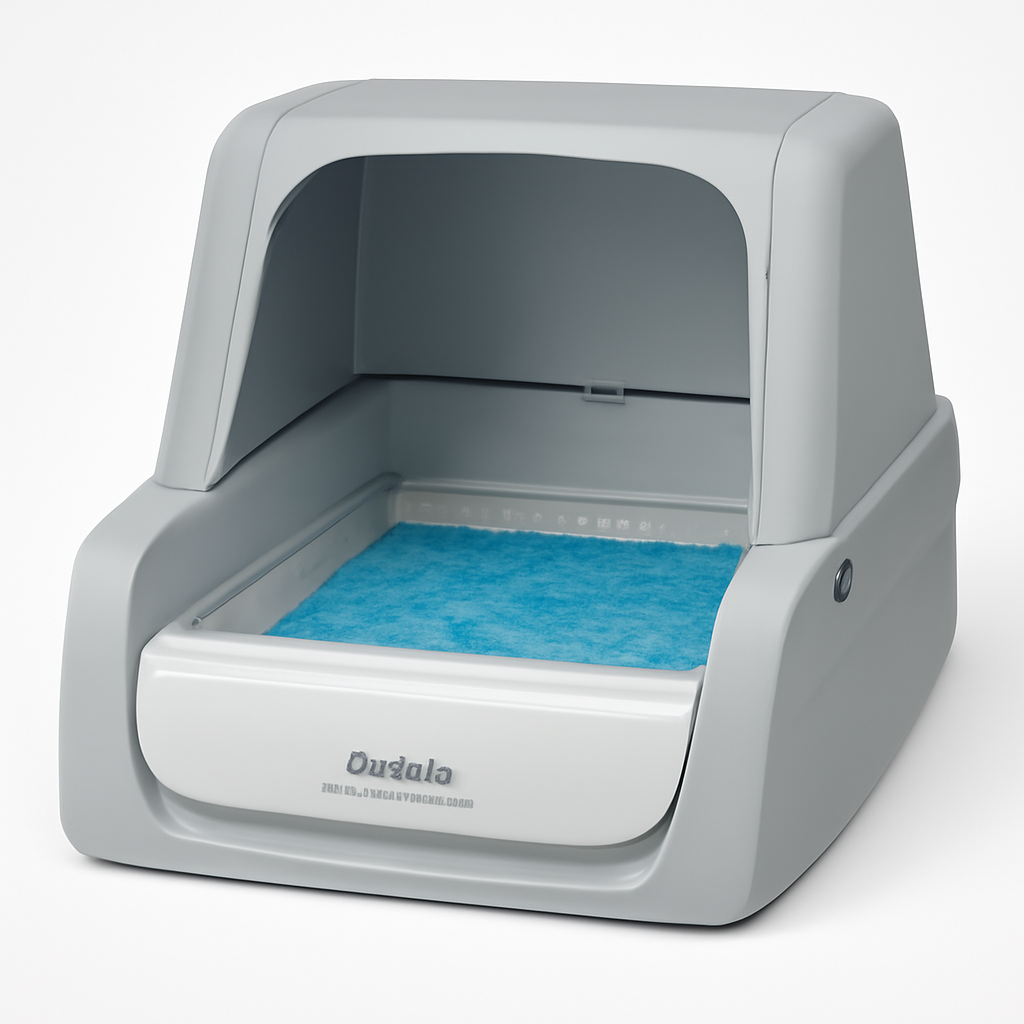
1. PetSafe ScoopFree Smart — Lowest Profile Overall
Why it ranks first for size: It’s a tray with a rake and a motor housing. There’s no dome, no globe, no vertical mechanism. That makes it the flattest automatic option on the market and the only category that reliably slides under a bathroom vanity or a low shelf.
It uses crystal litter in disposable trays rather than clumping litter. That’s a real trade-off — recurring tray cost, and some cats dislike the crystal texture — but it’s also why the unit can be so thin.
Pros
– Lowest height of any automatic box; fits where nothing else does
– No moving enclosure means quieter operation and less to intimidate a nervous cat
– Simple mechanism, fewer failure points
– Open design is easy for kittens and senior cats to enter
Cons
– Disposable crystal trays are an ongoing cost
– Crystal litter controls odor well but doesn’t clump — many cats and owners prefer clumping
– Open top means more litter scatter than an enclosed unit
– Long, rectangular footprint — it’s low, not small in area
—
2. Neakasa M1 — Best Open-Top Compact
Why it ranks here: The M1 uses an open-top design with a rotating drum underneath, so it gets a lot of the mess-containment benefit of an enclosed box without the dome height. Cats that refuse hooded boxes often accept this one immediately, which matters more than any spec.
The stainless steel drum is genuinely easier to clean than plastic, and the low entry threshold is friendlier than most globe-style units.
Pros
– Low entry lip — good for kittens and older cats
– Open top reduces the “I won’t go in there” problem
– Stainless drum resists odor absorption and scrubs clean
– Smaller floor footprint than most enclosed models
Cons
– Open top offers less odor containment than a sealed unit
– Waste bin capacity is modest — expect frequent emptying with multiple cats
– Premium pricing for the category
—
3. PETKIT Pura X — Smallest Enclosed Globe-Style
If you want a true enclosed automatic box and floor space is the binding constraint, this is the one to look at first. PETKIT built the Pura X around a smaller drum and a more vertical layout than most competitors, so it eats less floor while still hiding the waste.
App control, weight sensing, and odor management are all present. The trade-off is straightforward: smaller drum means a smaller usable interior, and larger cats will find it tight.
Pros
– Genuinely compact for an enclosed unit
– Sealed waste compartment handles odor well
– Solid app with usage tracking
Cons
– Interior space is limited — not for cats over the manufacturer’s stated weight limit
– Entry is higher off the ground than the open-top options
– Smaller waste bin than full-size competitors
—
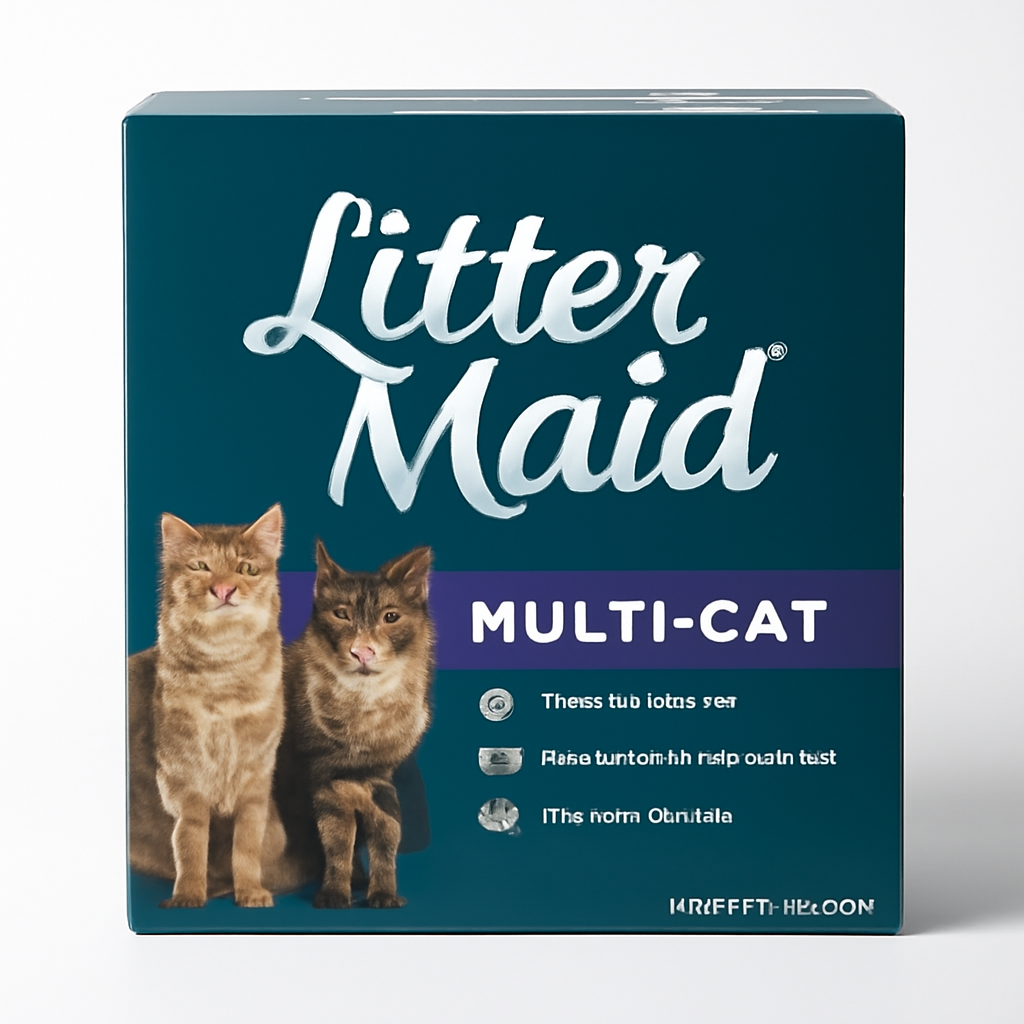
4. LitterMaid Multi-Cat Self-Cleaning — Budget Flat Option
The original flat rake design, and still the cheapest way into automatic scooping. Same low-profile advantage as the ScoopFree, but it uses standard clumping litter instead of proprietary crystal trays, which lowers the running cost considerably.
It’s less refined than newer units — louder rake, simpler controls, more maintenance — but it’s the right answer if the budget is tight and the space is short.
5. Leo’s Loo Too — Compact Globe with Real Support
Casa Leo’s unit is a globe-style box in roughly the same size class as the Pura X, and its main differentiator is customer support and warranty handling rather than dimensions. If you’ve been burned by a cheap automatic box that died out of warranty, that’s worth something. Slightly larger interior than the Pura X on most measures — [CHECK CURRENT SPECS] to compare directly against your available space.
6. CatLink Scooper — Narrow Footprint, Tall Build
CatLink’s approach is to go vertical: a narrower base with more height. That’s a good trade if your constraint is width (beside a toilet, in a narrow closet) and a bad one if your constraint is height (under a vanity). Know which problem you’re solving.
7. Litter-Robot 4 — Not Small, But Space-Efficient for Big Cats
Including this deliberately. The Litter-Robot 4 is not a compact box — it’s one of the larger units in the category. But its globe is round and the base is relatively narrow for the interior volume it delivers, so its footprint-per-usable-inch is excellent. If you have a Maine Coon or a 16-pound tabby and you buy a “smallest” pick instead, you’ll end up with a box your cat won’t use and a mess on your floor. That’s the worst possible space outcome.
—
Small Box, Big Cat? Weight and Entry Limits to Check First
Every automatic litter box has a weight sensor threshold — a minimum weight required to trigger the safety cutoff and a maximum the unit is rated for. Before you buy anything on this list, check both against your actual cat.
Three things to verify:
1. Maximum cat weight. Manufacturers publish this. Exceed it and the mechanism can bind or the sensor can misread. [CHECK CURRENT SPECS] per model.
2. Minimum trigger weight. This is the one people forget. Kittens and very small cats can be light enough that the box doesn’t register them at all — which means the cycle can start while they’re inside. If you have a kitten, either delay the automatic box or pick a model with a documented low trigger threshold.
3. Usable interior, not stated interior. A cat needs room to turn around and dig. If your cat currently sprawls in a jumbo pan, a compact globe is going to feel like a phone booth. Measure your cat nose-to-tail-base and compare against the interior width.
A practical test: look at how your cat uses their current box. If they hang their rear over the edge, or dig for twenty seconds before going, they need more room than a compact unit provides. No amount of saved floor space fixes a cat that starts going next to the box instead of in it.
—
What You Give Up When You Go Compact (Waste Bin, Noise, Price)
Compact isn’t free. Here’s the honest accounting.
Waste bin capacity. This is the biggest and most consistent trade. A smaller unit has a smaller drawer, which means emptying every two or three days instead of every week or ten days. With two cats, some compact units need attention every other day — at which point you’ve automated the scooping but not the labor.
Noise. Smaller motors in smaller housings tend to be more audible, and there’s less mass to dampen the sound. If the box is going in a bedroom or a studio apartment, this matters. Rake-style units (ScoopFree, LitterMaid) are generally quieter than rotating-drum units.
Price per inch. Miniaturization costs money. Compact enclosed boxes often cost as much as or more than larger models with bigger bins, because the engineering is harder. You’re paying a premium for the space savings, not getting a discount for less material.
Litter capacity. Less litter in the box means shallower depth, which means more frequent full changes and less margin for a cat that likes to dig.
Cat acceptance. Enclosed compact boxes have the highest refusal rate of any litter box style. If your cat is skittish, budget for the possibility that it doesn’t work out.
—
Setup and Placement Tips for Tight Spaces
Measure the envelope, not the box. Tape out the footprint on the floor, then add 4–6 inches on the drawer side and 2–3 inches on any sensor side. That’s your real requirement.
Check the outlet before anything else. Every unit on this list needs continuous power. An extension cord running across a bathroom floor is a trip hazard and a chew target. If there’s no outlet within reach of the stock cable, pick a different spot.
Level floor, hard surface. Automatic boxes rely on weight sensors. Carpet, a rug, or an uneven floor will throw off calibration and cause false triggers or missed cycles. Put a hard mat under the unit if the floor is soft.
Transition slowly. Set the new box next to the old one, leave both available, and run the new one in manual mode for the first week so your cat associates it with a normal box before the motor ever starts. Skipping this step is the number one cause of “my cat won’t use the expensive box I bought.”
Don’t corner it. Two walls on two sides makes the box feel like a trap and blocks your access for maintenance. One wall is fine.
Plan for maintenance access. You will need to pull the drawer, wipe the interior, and occasionally disassemble the unit. If it’s wedged under a vanity, you’ll be doing all of that on your knees at an angle. Test the access before you commit to the spot.
—
Frequently Asked Questions
What is the actual smallest automatic litter box?
By height, the flat rake-style units — PetSafe ScoopFree and LitterMaid — win, and it isn’t close. By floor footprint, the compact enclosed units like the PETKIT Pura X are smaller in area. “Smallest” depends entirely on which dimension is constraining you.
Will a compact automatic litter box work for two cats?
Mechanically, usually yes. Practically, the waste bin becomes the problem — expect to empty every two to three days. Two cats and a compact box is workable; three cats and a compact box is a chore you’ll resent.
Can an automatic litter box fit under a bathroom sink?
Only the flat rake-style units, and only if the vanity cutout is tall enough and you can route power. Globe and drum-style boxes are too tall for nearly every standard vanity.
Are compact automatic litter boxes noisier?
Generally yes, slightly — less housing mass to absorb motor sound. Rake-style units are the quietest option in the compact category.
Do small automatic boxes use special litter?
Depends on the model. The ScoopFree line uses crystal litter in proprietary trays. Most drum-style units (PETKIT, Neakasa, Leo’s Loo Too, Litter-Robot) use standard clumping clay. Check before you buy — proprietary litter is a permanent recurring cost.
What if my cat is over the weight limit?
Don’t buy the compact box. Go with the Litter-Robot 4 or a large manual pan. Exceeding the rated weight risks the mechanism and, more importantly, produces a box your cat won’t use.
—
Our Verdict
If height is your constraint — under a vanity, under a shelf, in a low cabinet — buy the PetSafe ScoopFree Smart. Nothing else in the category gets that flat, and the crystal-tray running cost is the price of admission for fitting where nothing else fits.
If floor area is your constraint and you want a real enclosed box, the PETKIT Pura X is the most space-efficient enclosed unit worth recommending. Verify your cat’s weight against the limit first.
If your cat is skeptical of enclosed boxes, the Neakasa M1 is the safest pick on this list. The open top and low entry get the highest acceptance rate, and it’s still meaningfully smaller than a full-size unit.
On a budget, the LitterMaid Multi-Cat gets you automatic scooping and a low profile with standard clumping litter.
And if you have a large cat — over roughly 15 pounds, or a long-bodied breed — skip the compact category entirely and get the Litter-Robot 4. Rearranging a room is cheaper than replacing a floor.
The mistake to avoid is optimizing for the smallest number on the spec sheet. The goal is the smallest box your specific cat will reliably use. Measure the space, measure the cat, and let whichever one is more constrained make the decision.