Quick answer: For most dogs, a well-fitted no-pull harness with a front-clip option gives you the best mix of control, comfort, and safety. Our top overall pick for 2026 is the Ruffwear Front Range Harness — it fits a huge range of body types, wears comfortably all day, and holds up to heavy use. Pullers do best with the PetSafe Easy Walk Harness, and car-riding dogs should look at the crash-tested Kurgo Tru-Fit Smart Harness.
If your dog chokes, coughs, or drags you down the sidewalk on every walk, the problem usually isn’t the leash — it’s what the leash is attached to. Let’s fix that.
—
Why the Right Harness Matters for Your Dog
A collar puts all the pressure of a pull, lunge, or leash-pop directly onto your dog’s throat. That’s a lot of force on a delicate area that houses the trachea, thyroid, and major blood vessels. For dogs that pull — which is most of them — that repeated pressure can cause coughing, gagging, and over time, real injury.
A harness spreads that force across the chest and shoulders, which are built to handle it. The payoff is threefold:
– Safety — no pressure on the neck, which matters enormously for flat-faced breeds (pugs, bulldogs, French bulldogs) and small dogs with fragile tracheas.
– Control — a good harness, especially a front-clip design, gives you steering leverage a collar simply can’t.
– Comfort — the right fit means your dog actually wants to go on walks instead of bracing against the leash the whole time.
The wrong harness, on the other hand, can chafe under the armpits, restrict the shoulders, or let a determined escape artist back right out of it. Fit and design matter, so let’s break down your options.
—
Types of Dog Harnesses (Back-Clip, Front-Clip & No-Pull)
Harnesses are usually categorized by where the leash attaches. Where the clip sits changes how the harness behaves on a walk.
Back-Clip Harnesses
The leash ring sits between the shoulder blades on your dog’s back. These are the most common and the most comfortable for calm, already-trained dogs.
– Best for: Small breeds, relaxed walkers, dogs with delicate throats.
– Watch out for: They can actually encourage pulling. When a dog leans into a back-clip harness, it triggers the same instinct that makes sled dogs pull — the “opposition reflex.”
Front-Clip Harnesses
The leash attaches to a ring on the dog’s chest. When the dog pulls forward, the leash gently redirects them sideways toward you, killing their forward momentum.
– Best for: Pullers, leash training, dogs you want more steering control over.
– Watch out for: The leash can occasionally tangle under the legs on dogs with a very low chest.
No-Pull Harnesses
“No-pull” isn’t a separate clip location so much as a design philosophy. These often combine a front clip with a snug chest strap and sometimes a tightening element that applies gentle, even pressure when the dog surges ahead. Many of the best modern harnesses are dual-clip, giving you both a front and back ring so you can switch based on the situation.
– Best for: Strong pullers, large or powerful breeds, reactive dogs.
– Watch out for: Cheap “tightening” designs that pinch — look for even pressure distribution, not a martingale that digs in.
—
Key Features to Look for When Buying
Not all harnesses are built the same. Here’s what separates a good one from a frustrating one:
– Adjustment points — Look for at least four points of adjustment. More adjustability means a better fit across chest, girth, and neck.
– Padding — Padded chest and belly panels prevent chafing, especially on long walks or active dogs.
– Dual clips — A front and back ring gives you flexibility as your dog’s training improves.
– Escape resistance — Backup straps and a proper girth fit stop the “Houdini” backout, which is common with anxious or slim-chested dogs.
– Reflective trim — Non-negotiable for early-morning or evening walks.
– Handle — A sturdy top handle helps with control, lifting over obstacles, or grabbing your dog fast in an emergency.
– Buckle quality — Metal or heavy-duty aluminum hardware beats flimsy plastic on strong dogs.
– Easy on/off — Step-in and over-head designs each have fans; if your dog hates having things pulled over their head, a step-in or two-buckle design saves daily grief.
—
How to Measure Your Dog for the Perfect Fit
A harness only works if it fits. Grab a soft measuring tape (or a piece of string and a ruler) and take these three measurements:
1. Girth (chest circumference) — The most important number. Measure around the widest part of the ribcage, just behind the front legs. This is what most sizing charts key off of.
2. Neck/base circumference — Measure around the base of the neck where a collar would naturally sit.
3. Weight — Many brands cross-reference weight with girth, so have it handy.
Fitting rules of thumb:
– You should be able to slide two fingers flat under any strap — snug, not tight.
– If your dog is between sizes, size up and tighten the straps.
– Check for gaps at the armpits and rubbing behind the front legs.
– Re-check the fit on puppies every few weeks — they grow fast.
> Tip: When you first put a new harness on, do a “backout test” — a gentle backward tug in a safe area to make sure your dog can’t wriggle free.
—
Our Top Dog Harness Picks for 2026
Here’s how our favorites stack up before we get into the details.
Top Picks at a Glance
| Product | Best For | Price Range |
| Ruffwear Front Range Harness | Best overall / all-day comfort | |
| PetSafe Easy Walk Harness | Best for strong pullers | |
| Kurgo Tru-Fit Smart Harness | Best for car travel (crash-tested) | |
| Rabbitgoo No-Pull Harness | Best value / everyday use | |
| Julius-K9 IDC Powerharness | Best for large & working breeds |
—
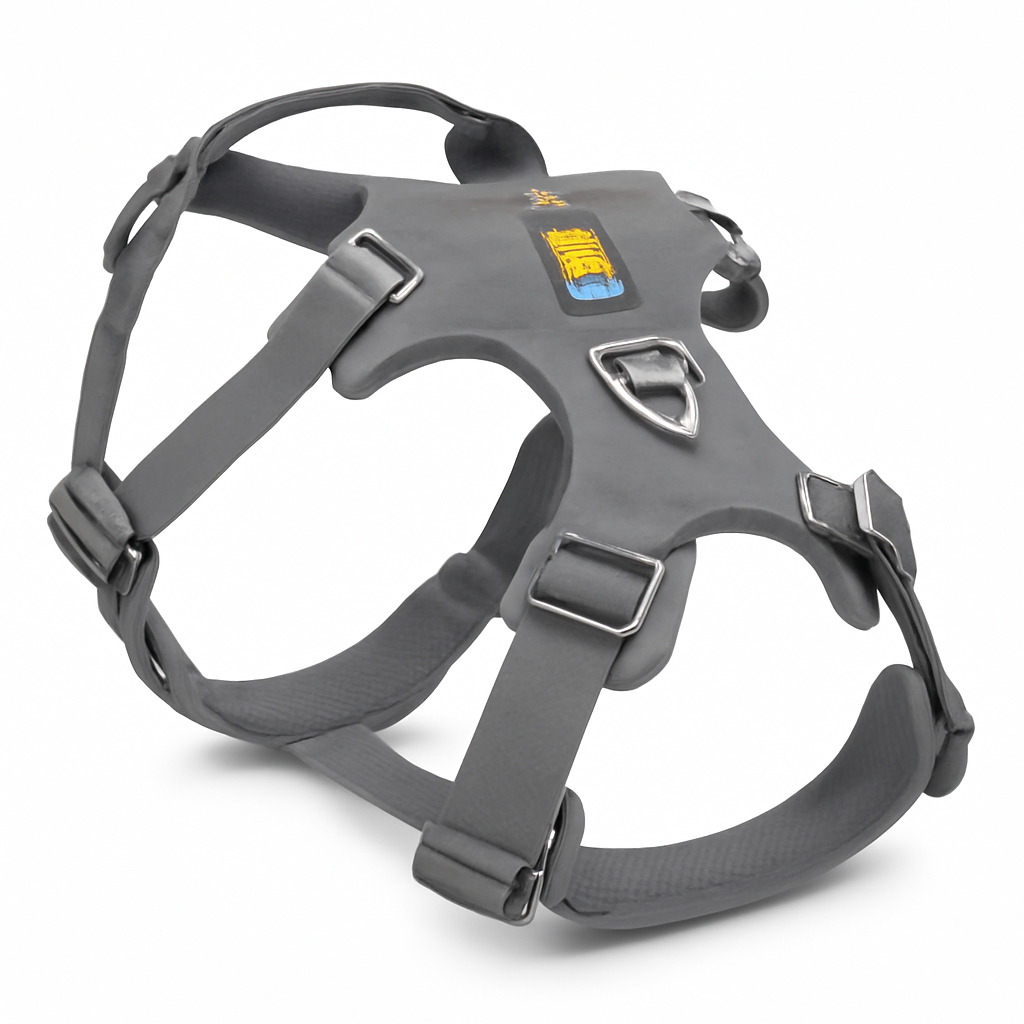
1. Ruffwear Front Range Harness — Best Overall
**
The Front Range is the harness we’d recommend to almost anyone. It hits the sweet spot: dual leash clips (a reinforced front ring for training and an aluminum back ring for relaxed walks), four points of adjustment, and a genuinely comfortable padded design that dogs seem happy to wear all day. The build quality is a clear step above budget options, and it holds up to daily use.
Pros:
– Two leash-attachment points for training flexibility
– Padded chest and belly panel for all-day comfort
– Four adjustment points for a dialed-in fit
– Reflective trim and an ID pocket
Cons:
– Pricier than basic harnesses
– Over-the-head design isn’t ideal for dogs that dislike that motion
Best for: Owners who want one do-everything harness that lasts.
—
2. PetSafe Easy Walk Harness — Best for Strong Pullers
**
If your dog treats every walk like a sled race, the Easy Walk is built for exactly this problem. The front-chest leash attachment turns your dog to the side when they lunge, taking the power out of the pull without choking. It’s a favorite of trainers for a reason — it’s simple, affordable, and effective on day one.
Pros:
– Front-clip design dramatically reduces pulling immediately
– Quick-snap buckles make it easy to get on and off
– Budget-friendly
– Color-coded straps to simplify fitting
Cons:
– Single front clip only — no back-ring option
– Not ideal as an everyday harness once pulling is under control
– Some dogs need the girth strap watched to prevent chafing
Best for: Training a puller or regaining control on walks.
—
3. Kurgo Tru-Fit Smart Harness — Best for Car Travel
**
An unsecured dog is a hazard in a moving car — to itself and everyone else. The Tru-Fit stands out because it’s crash-tested and includes a seatbelt tether loop, doubling as both a walking harness and a vehicle restraint. Five adjustment points and a padded chest plate keep it comfortable for the walk on either end of the drive.
Pros:
– Crash-tested with an included seatbelt tether
– Five points of adjustment for a secure fit
– Doubles as an everyday walking harness
– Steel nesting buckles for durability
Cons:
– More straps to adjust than a simple harness
– Bulkier than minimalist designs
Best for: Dogs that ride in the car regularly.
—
4. Rabbitgoo No-Pull Harness — Best Value
**
The Rabbitgoo delivers a lot of the features you’d expect from pricier harnesses — dual clips, four adjustment points, a padded vest-style body, and a sturdy top handle — at a wallet-friendly price. It’s a smart pick for a first harness or for growing puppies where you don’t want to invest top dollar yet.
Best for: Budget-conscious owners who still want dual clips and a handle.
—
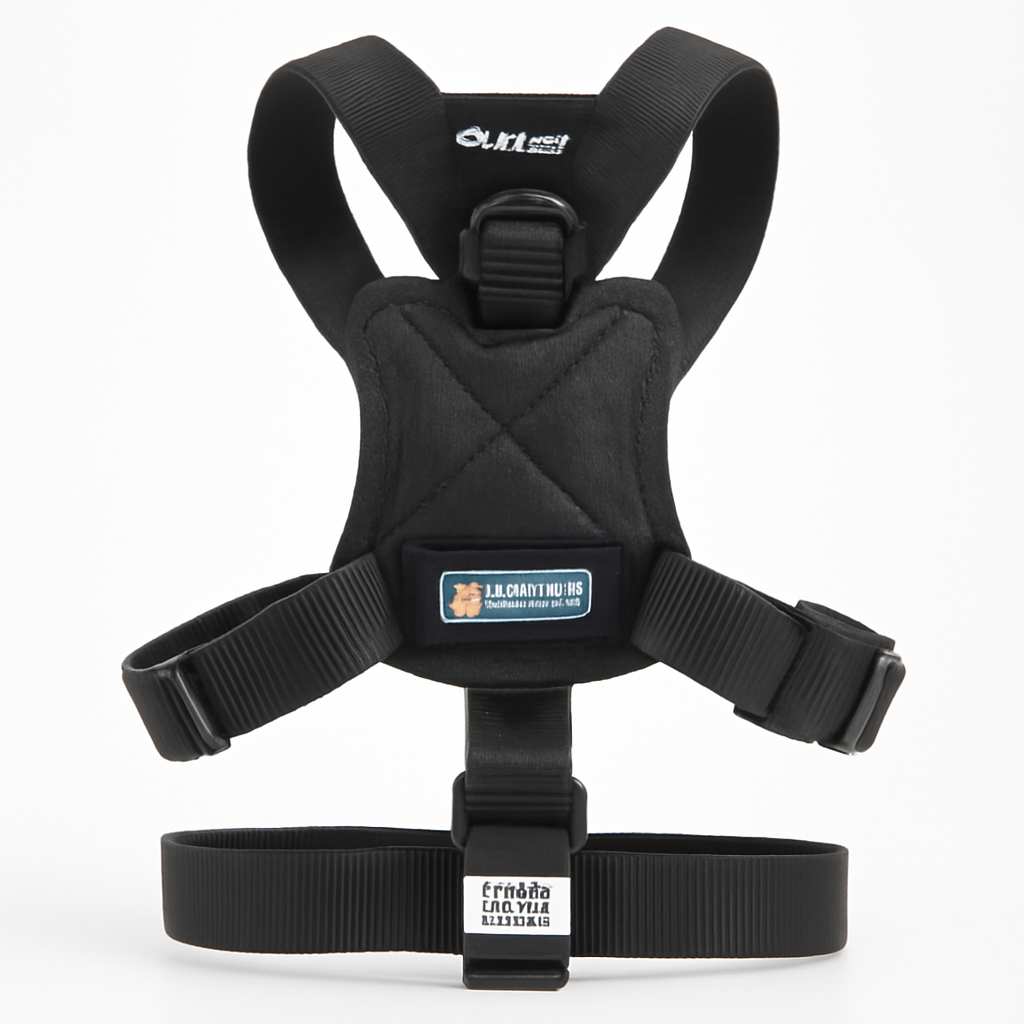
5. Julius-K9 IDC Powerharness — Best for Large & Working Breeds
**
Built tough for German Shepherds, Labs, Huskies, and other powerful dogs, the Julius-K9 features a rugged, near-indestructible construction, a strong top control handle, and a chest strap that distributes force well on big pullers. Bonus: the interchangeable side labels are a fun, functional touch.
Best for: Strong, large, or working breeds that need serious durability.
—
Harness vs. Collar: Which Is Better?
This is the question we get most, and the honest answer is: you probably need both, for different jobs.
| Harness | Collar | |
| Neck pressure | None — spreads force to chest | High when the dog pulls |
| Control | Excellent (esp. front-clip) | Limited |
| ID tags | Not always a good spot | Ideal spot for tags |
| Best for | Walking, training, pullers | Everyday ID, calm dogs |
| Escape risk | Low with proper fit | Higher |
The practical setup: Keep a flat collar on your dog for ID tags and licensing, but attach the leash to a harness for walks. You get the identification benefits of a collar without putting strain on your dog’s neck. For flat-faced breeds, small dogs, or any dog that pulls, a harness for walking isn’t just better — it’s the safer choice, full stop.
—
Frequently Asked Questions
Do harnesses stop dogs from pulling?
A front-clip or no-pull harness significantly reduces pulling by redirecting your dog’s momentum, but it’s a tool, not a cure. Pair it with consistent training for lasting results.
Are harnesses better than collars for small dogs?
Yes. Small breeds are especially prone to tracheal damage from collar pressure. A lightweight, well-fitted harness is the safer everyday choice for walking.
Can my dog wear a harness all day?
For short periods it’s fine, but harnesses aren’t meant to be worn 24/7. Take it off when your dog is home and relaxing to prevent chafing and matted fur.
Front-clip or back-clip — which should I choose?
Choose front-clip (or a dual-clip harness) if your dog pulls or you’re training. Back-clip is fine for small, calm, already-trained dogs. When in doubt, a dual-clip harness gives you both.
How do I stop my dog from escaping the harness?
Get the girth measurement right, use a snug two-finger fit, and consider a design with a backup belly strap. Escape artists do best with an extra security strap and a proper fit check before every walk.
How often should I replace a harness?
Inspect straps and buckles regularly. Replace when you see fraying, cracked hardware, or a fit that no longer adjusts snug — and always size up for growing puppies.
—
Our Verdict
For the widest range of dogs, the Ruffwear Front Range Harness is the one to beat in 2026 — comfortable enough for all-day wear, versatile with dual clips, and built to last. If your dog is a committed puller, start with the PetSafe Easy Walk Harness to get control back fast. Dogs that log a lot of car miles are safest in the crash-tested Kurgo Tru-Fit Smart Harness, and if you’re watching your budget, the Rabbitgoo No-Pull Harness punches well above its price. Got a big, powerful breed? The Julius-K9 IDC Powerharness is built for the job.
Whatever you choose, measure your dog first and get the fit right — the best harness in the world only works if it fits. Happy (and pull-free) walking in 2026.
As an affiliate, we may earn from qualifying purchases. Prices and availability change — always check current pricing before buying.