If your senior dog is slow to rise in the morning, circles endlessly before lying down, or seems stiff after a nap on the floor, the bed underneath them matters more than you might think. Aging joints, thinning muscle, and conditions like arthritis or hip dysplasia mean an older dog can’t just flop down anywhere the way they did at age two. The right bed can genuinely change how comfortable your dog is every single day.
Quick Answer
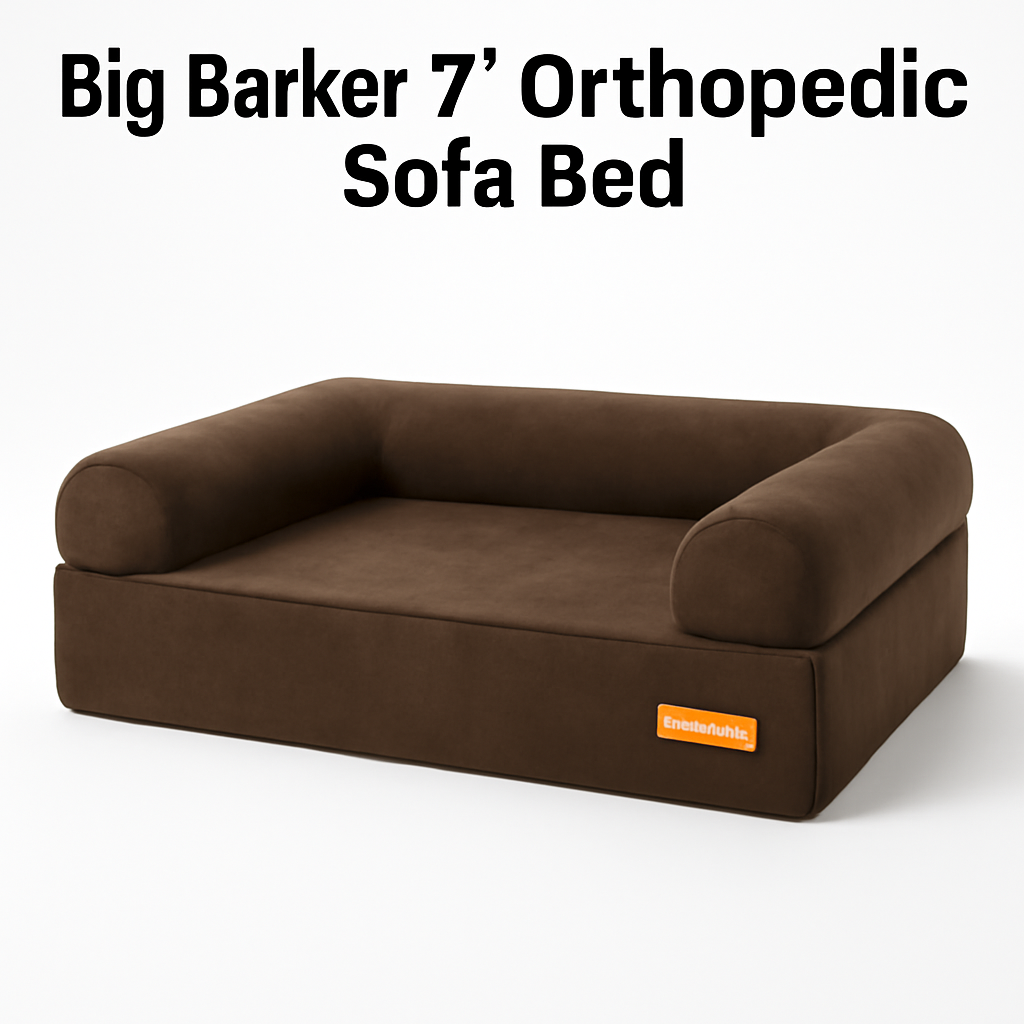
For most older dogs, a true orthopedic bed with a solid (not shredded) memory foam base is the best choice. It distributes weight evenly, keeps joints off the hard floor, and helps stiff dogs get up more easily. If you want a no-research recommendation: the Big Barker 7″ Orthopedic Sofa Bed for large and giant breeds, or the PetFusion Ultimate Lounge for small to medium seniors. Prioritize genuine support foam, a washable cover, and the correct size over flashy extras.
—
Why Senior Dogs Need a Specialized Bed
Dogs are generally considered “senior” around age 7 (earlier for giant breeds, later for small ones). As they age, several things change at once:
– Joint cartilage thins, so bone-on-hard-surface contact becomes painful. Arthritis affects a large share of older dogs.
– Muscle mass decreases, meaning less natural padding over hips, elbows, and shoulders — the exact spots that press into a hard floor.
– Circulation and temperature regulation decline, so cold tile or thin bedding can stiffen joints overnight.
– Mobility drops, making it harder to rise from a low, unsupported surface.
– Incontinence becomes more common, which is why a waterproof liner and washable cover stop being “nice to have” and start being essential.
A cheap flat cushion compresses down to nothing under a heavier dog and offers zero rebound support. Your dog ends up sleeping effectively on the floor. A specialized senior bed is engineered to not bottom out — that’s the whole point.
Orthopedic vs. Memory Foam: What Actually Helps Aging Joints
These two terms get used interchangeably in marketing, but they aren’t the same thing, and the difference matters for an older dog.
Memory Foam
Memory foam (viscoelastic foam) contours to your dog’s body and relieves pressure points. It’s excellent for comfort. The catch: not all “memory foam” dog beds use a supportive base. Many budget beds are stuffed with shredded memory foam — loose chunks that feel plush at first but shift, clump, and flatten. For a senior dog, shredded fill often provides comfort without support, which is only half the equation.
Orthopedic (Solid Support Foam)
“Orthopedic” refers to structural support. A true orthopedic bed uses a solid slab of high-density support foam, often topped with a layer of memory foam. The dense base is what keeps a heavy senior from sinking to the floor, and it’s what gives them a firm surface to push off when standing up.
What actually helps aging joints
The best senior beds combine both: a solid high-density support core for structure plus a memory foam top layer for pressure relief. Avoid beds that are only shredded fill if your dog is medium-sized or larger or has diagnosed joint issues. Look for phrases like “solid foam,” “no shredded fill,” and a stated foam density or thickness (thicker is generally better for bigger dogs — 4″ to 7″ cores are common in quality beds).
Key Features to Look For
Support That Doesn’t Bottom Out
This is the single most important feature. Press down hard on the bed (or read reviews from owners of similarly sized dogs). If your palm hits the floor, so will your dog’s hips. Larger and heavier dogs need thicker, denser cores.
Bolsters (Optional, but Often Helpful)
Raised edges give your dog something to rest their head and neck on, which many older dogs love. Bolsters can also provide a sense of security. However, a fully bolstered bed can be harder to climb into for a dog with severe mobility issues. If your dog struggles to step over an edge, a flat mattress-style bed (or one with a low cutout entry) is the better call.
Washability
Older dogs have more accidents, shed more, and sometimes carry a stronger odor. Look for:
– A removable, machine-washable cover with a sturdy zipper.
– A waterproof inner liner protecting the foam itself — this is what saves the bed when accidents happen.
– Ideally, a foam core you can spot-clean or air out.
Non-Slip Bottom
A bed that slides on hardwood or tile can spook a stiff senior and make getting up harder. A rubberized or gripped base is a small feature that makes a real difference.
Low Entry / Easy Access
For dogs with hip dysplasia or arthritis, a low-profile bed or one with a ramped edge prevents the daily strain of climbing in and out.
How to Choose the Right Size and Firmness
Size
Measure your dog from nose to base of tail while they’re lying stretched out, then add 6–12 inches. Older dogs often like to fully extend their legs to relieve joint pressure, so err on the larger side. A bed that’s too small forces them to curl tightly, which can aggravate stiff joints.
General starting points (always confirm against the specific product’s dimensions):
| Dog Size | Approx. Weight | Suggested Bed Size |
| Small (Dachshund, Shih Tzu) | Under 25 lb | Small / Medium |
| Medium (Beagle, Border Collie) | 25–50 lb | Medium / Large |
| Large (Lab, Golden, GSD) | 50–90 lb | Large / XL |
| Giant (Great Dane, Mastiff) | 90 lb+ | XL / Giant |
Firmness
Counterintuitively, firmer is usually better for seniors. A soft, sinky bed feels cozy but makes it harder for a weak-legged dog to stand back up, and it doesn’t hold joints in alignment. Aim for a supportive-but-cushioned feel — firm enough that the dog rests on it, not in it. Very old or very thin dogs may want a slightly softer memory foam top layer for pressure relief, over a firm base.
Top Dog Beds for Older Dogs in 2026
Below are well-regarded, widely available options. Prices shift constantly, so check current pricing before buying.
Top Picks at a Glance
| Product | Best For | Price Range |
| Big Barker 7″ Orthopedic Sofa Bed | Large & giant breeds with joint issues | $$$$ |
| PetFusion Ultimate Lounge | Small–medium seniors who like bolsters | $$$ |
| Furhaven Orthopedic Sofa Bed | Budget-conscious buyers | $$ |
| Casper Dog Bed | Durability & chew resistance | $$$ |
| K9 Ballistics Orthopedic Bed | Heavy chewers & accident-prone dogs | $$$ |
—
1. Big Barker 7″ Orthopedic Sofa Bed
Best for: Large and giant breeds with arthritis or hip dysplasia
The Big Barker is built specifically for big dogs and is one of the few beds with a genuinely thick, layered support core designed not to flatten over years of use. The headrest bolster gives seniors a place to rest their neck, and the microfiber cover is removable and washable.
Pros
– Thick, layered foam that resists flattening over time
– Excellent support for heavy dogs — genuinely doesn’t bottom out
– Washable, durable cover; strong long-term warranty reputation
Cons
– Premium price
– Overkill (and oversized) for small dogs
– The raised headrest edge may be slightly harder for the most mobility-limited dogs
—
2. PetFusion Ultimate Lounge
Best for: Small to medium seniors who like bolstered edges
A popular all-rounder with a solid memory foam base and bolstered sides. The waterproof liner and washable cover make it practical for older dogs, and the bolsters give a cozy, secure resting spot without being too tall.
Pros
– Solid (not shredded) memory foam base
– Water-resistant liner protects the foam
– Bolsters on three sides with a lower front for easier entry
Cons
– Largest sizes may not fully support the heaviest giant breeds
– Cover can show wear with very heavy use
—
3. Furhaven Orthopedic Sofa Bed
Best for: Budget-conscious owners who still want real support
Furhaven offers orthopedic foam beds at a much lower price point, making them a solid entry option if you’re not ready to invest in a premium bed. Quality isn’t at Big Barker levels, but for lighter or smaller seniors it delivers meaningful support for the money.
Pros
– Affordable
– Wide range of sizes and styles
– Removable, washable cover
Cons
– Foam is thinner and less durable long-term
– May compress faster under heavier dogs
—
4. Casper Dog Bed
Best for: Durability and dogs who dig or nest
Built with supportive foam and a tougher, more chew- and dig-resistant construction than many rivals. A good middle-ground pick for a senior dog who still likes to scratch and nest before settling.
5. K9 Ballistics Orthopedic Bed
Best for: Heavy chewers and accident-prone dogs
Known for tough, tear-resistant covers and genuinely waterproof construction. If your older dog has incontinence issues or destroys ordinary beds, this is the practical, cleanable choice.
Caring for Your Senior Dog’s Bed (Cleaning & Longevity)
A good bed is an investment — treat it like one and it’ll keep supporting your dog for years.
– Wash the cover regularly. Every 1–2 weeks, or immediately after accidents. Follow the care label; most covers are machine washable cold and should be air-dried or tumbled low to avoid shrinking.
– Protect the foam. If the bed didn’t come with a waterproof liner, add a separate one. Once urine soaks into a foam core, odor is nearly impossible to remove.
– Vacuum between washes to control shedding and dander.
– Rotate and flip the foam periodically (if the design allows) to even out compression.
– Air it out in sunlight occasionally to reduce moisture and odor.
– Know when to replace. Even the best foam eventually breaks down. If the bed no longer springs back, has permanently flattened spots, or your dog starts avoiding it, it’s time for a new one. A worn-out orthopedic bed offers no more support than a folded blanket.
Frequently Asked Questions
At what age should I switch my dog to an orthopedic bed?
Around age 7 for most dogs, or earlier for large and giant breeds. But you can switch at any age if you notice stiffness, difficulty rising, or a diagnosed joint condition. There’s no downside to giving a younger dog good support early.
Is memory foam or orthopedic foam better for arthritis?
The best option combines both: a solid orthopedic support core for structure with a memory foam top layer for pressure relief. Avoid beds filled only with loose, shredded foam if your dog has arthritis — they provide comfort without lasting support.
Are bolstered beds good for senior dogs?
Often yes — many older dogs like resting their head on a bolster. But if your dog has serious mobility issues, a tall edge can make getting in and out harder. Look for low-front or ramped-entry designs in that case.
How thick should the bed be for a large senior dog?
For large and giant breeds, look for a support core in the 4″–7″ range. Thicker, higher-density foam is what prevents a heavy dog from sinking to the floor.
How often should I replace my dog’s orthopedic bed?
Quality beds can last several years, but replace it once the foam no longer rebounds, develops permanent flat spots, or your dog starts avoiding it. A flattened bed offers little real support.
Can I just add a blanket instead of buying a special bed?
Blankets add warmth but no structural support, so they don’t protect aging joints from a hard floor. For a senior dog, the support layer is what matters most — a blanket on top of a good orthopedic bed is a nice bonus, not a substitute.
Our Verdict
If you have a large or giant senior dog with joint issues, the Big Barker 7″ Orthopedic Sofa Bed is the standout — its thick, durable support core is exactly what aging hips and elbows need, and it holds up for years. For small to medium seniors, the PetFusion Ultimate Lounge hits the best balance of real orthopedic support, easy cleaning, and cozy bolsters at a fairer price. Shopping on a budget? The Furhaven Orthopedic Sofa Bed delivers meaningful support for the money, and if your dog is hard on beds or prone to accidents, the K9 Ballistics Orthopedic Bed is the toughest, most cleanable pick.
Whatever you choose, prioritize genuine solid-foam support, the correct (generous) size, and a washable, waterproof cover over gimmicks. Get those three things right and you’ll give your old friend the comfortable, dignified rest they’ve earned.
Prices and availability change frequently — always confirm current pricing before purchasing.