If you’ve been shopping for a safe space for your dog, you’ve probably noticed that some products are called “crates” and others are called “cages” — and it’s genuinely confusing. Are they the same thing? Is one better? Is one crueler?
Here’s the short answer, then we’ll dig into the details.
Quick Answer: “Dog crate” and “dog cage” are mostly two words for the same category of product — an enclosed space for your dog. But in practice, crates refers to modern, training-focused enclosures designed for comfort and den-like security (wire crates with divider panels, furniture-style crates, travel crates), while cages usually refers to older-style, bare-bones metal enclosures built purely for containment. For 99% of dog owners in 2026, a purpose-built crate like the MidWest iCrate or the Diggs Revol is the right choice.
Let’s break down why — and which specific product fits your dog.
Top Picks at a Glance
| Product | Best For | Price Range |
| MidWest iCrate Double Door Folding Crate | Best overall value / crate training | Budget |
| Diggs Revol Collapsible Crate | Premium design, safety & portability | Premium |
| Frisco Heavy Duty Fold & Carry Crate | Everyday use on a budget | Budget |
| Impact Collapsible Aluminum Dog Crate | Escape artists & heavy chewers | High-end |
| Gunner G1 Kennel | Car travel & maximum crash protection | High-end |
What’s the Actual Difference Between a Crate and a Cage?
Functionally? Very little. Both are enclosed structures that contain a dog. The difference is mostly in design intent, materials, and how the product is used — and the terminology has evolved over the years.
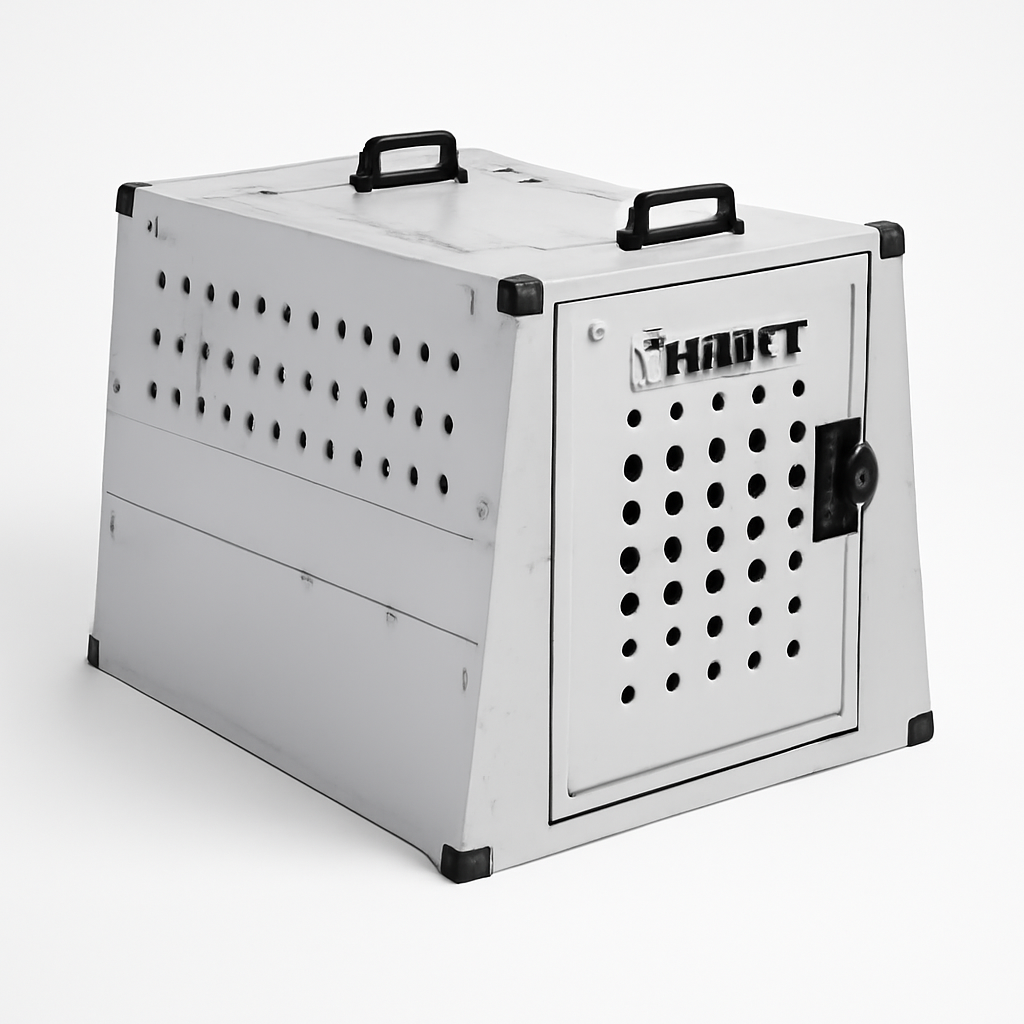
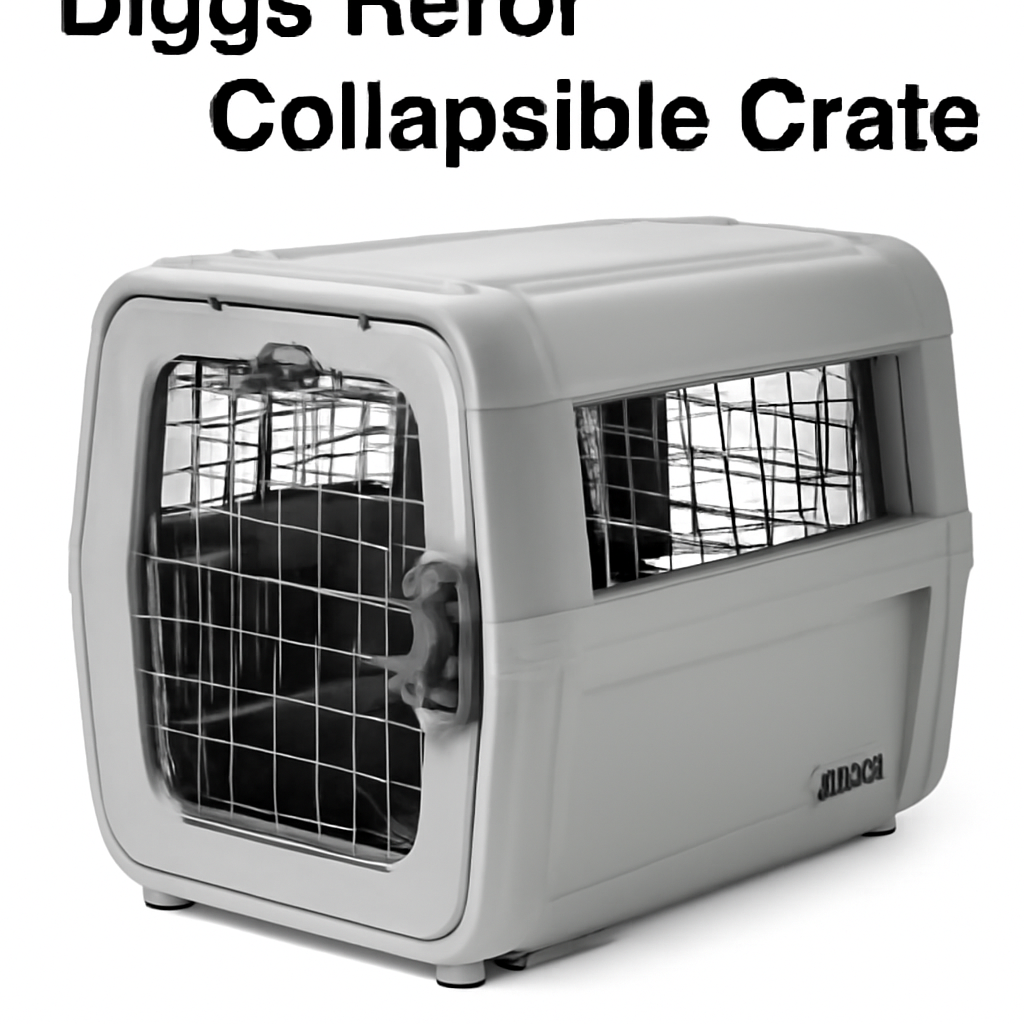
“Crate” — the modern, training-focused enclosure
When manufacturers and trainers say crate, they typically mean:
– Designed as a den, not just a container — dogs are den animals, and a properly introduced crate becomes a safe retreat, not a punishment
– Comfort-oriented features: rounded edges, plastic floor pans, compatibility with crate beds and mats
– Training features: divider panels (so a puppy can grow into a full-size crate), double doors, secure slide-bolt latches
– Portability: most fold flat or collapse for travel
The MidWest iCrate is the textbook example — a folding wire crate with a divider panel, leak-proof pan, and double doors. It’s the crate most trainers recommend for puppy crate training.
“Cage” — the older, containment-focused enclosure
Cage tends to describe:
– Bare metal construction with minimal comfort features
– Containment as the only goal — think old-school kennel runs, or heavy wire enclosures without floor pans or dividers
– Kennel/breeder/veterinary contexts, where dogs are held short-term
There’s also a perception difference: “cage” sounds punitive, and that’s partly why the industry moved toward “crate.” But don’t let vocabulary fool you in either direction — a cheap, sharp-edged product labeled “crate” can be worse than a well-built enclosure someone calls a “cage.”
The bottom line on terminology
In 2026, when you search either term on a retailer’s site, you’ll mostly see the same products. What actually matters is build quality, size, safety features, and how you use it — which is what the rest of this guide covers.
Pros and Cons of Dog Crates
Since modern crates are what you’ll actually find on the market, let’s start there.
Pros
– Supports crate training. A crate is the single most effective housebreaking tool — dogs instinctively avoid soiling their sleeping area.
– Gives your dog a den. A properly introduced crate becomes a voluntary retreat during storms, fireworks, or busy households.
– Divider panels save money. Buy one adult-sized crate (like the iCrate with divider) and adjust the space as your puppy grows.
– Safe travel. Crash-tested travel crates like the Gunner G1 Kennel dramatically improve car-accident survivability compared to a loose dog.
– Portable. Wire crates fold flat; the Diggs Revol collapses in seconds with one hand.
– Protects your home (and your dog) when you can’t supervise — no chewed cords, no swallowed socks.
Cons
– Can be misused. A crate is not a place to leave a dog for 10 hours a day. Overuse causes anxiety and behavioral problems.
– Cheap crates have safety issues. Bargain wire crates can have wide bar spacing and flimsy latches — paws and jaws get caught, and determined dogs escape.
– Introduction takes time. Forcing a dog into a crate without positive conditioning creates fear, not comfort.
– Standard wire crates won’t hold escape artists. If your dog bends wire, you need heavy-duty aluminum like an Impact Collapsible Crate.
Pros and Cons of Dog Cages
If we define “cage” as the older, containment-first style of enclosure (heavy wire kennels, basic metal pens, outdoor runs):
Pros
– Extremely durable. Heavy-gauge welded wire outlasts most consumer crates.
– Good for outdoor/kennel setups. A large outdoor kennel run gives a dog room to move that no indoor crate can match.
– Often cheaper per square foot for large containment areas.
– Simple to clean — hose-down construction, no fabric or plastic parts.
Cons
– No training features. No dividers, no floor pans, no den-like enclosure — they contain, they don’t train.
– Comfort is an afterthought. Bare wire floors, sharp edges on cheaper units, no insulation.
– Psychologically colder. An open wire box in a garage doesn’t become a “den” the way a covered crate in the living room does.
– Wrong tool for housebreaking. A large cage gives a puppy room to soil one corner and sleep in another — the opposite of what crate training needs.
Verdict on the category: unless you’re building an outdoor kennel run or a professional setup, a modern crate beats a traditional cage for home use in essentially every way.
Which One Is Right for Your Dog’s Size and Breed?
Sizing first — this matters more than crate vs. cage
The rule: your dog should be able to stand up without crouching, turn around fully, and lie down stretched out — but not much more than that (for housebreaking purposes). Measure your dog from nose to base of tail, then add 2–4 inches for length; measure standing height and add 2–4 inches.
Rough guide:
| Dog Size | Examples | Crate Length |
| Extra small | Chihuahua, Yorkie | 18–22″ |
| Small | French Bulldog, Beagle | 24–30″ |
| Medium | Border Collie, Aussie | 36″ |
| Large | Labrador, German Shepherd | 42″ |
| Extra large | Great Dane, Mastiff | 48″+ |
By dog type
– Puppies (any breed): A wire crate with a divider panel is the clear winner. The MidWest iCrate with divider lets you shrink the space during housebreaking and expand it as they grow. One purchase covers puppyhood to adulthood.
– Small breeds and apartment dogs: The Diggs Revol shines here — it’s attractive enough to keep in a living room, has a ceiling hatch for easy access, and its diamond-shaped mesh prevents paw and jaw entrapment (a real hazard with cheap wide-bar wire crates).
– Large, powerful, or escape-prone breeds: Huskies, Malinois, pit-bull-type dogs, and any dog with a history of breaking out need heavy-duty construction. The Impact Collapsible Aluminum Crate is built from aircraft-grade aluminum with marine-grade latches — dramatically stronger than any wire crate.
– Dogs that travel by car frequently: Crash protection is a separate category. The Gunner G1 is double-wall rotomolded and has earned top marks in independent crash testing. A wire crate in a car crash can collapse into the dog it’s supposed to protect.
– Calm adult dogs / occasional use: A budget wire crate like the Frisco Heavy Duty Fold & Carry is perfectly adequate — double doors, floor pan, folds flat for storage.
Safety, Comfort, and Durability Compared
Safety
This is where modern crates decisively beat old-style cages and bargain-bin products:
– Bar/mesh spacing: Wide gaps let paws slip through and jaws get stuck. The Revol’s diamond mesh and Impact’s solid panels are specifically engineered against this.
– Latch security: Determined dogs learn to pop cheap slide-bolts. Look for dual latches (iCrate) or paddle latches (Impact).
– Collapse risk: Fold-flat crates are convenient but can collapse if latches are worn or misassembled — always check the frame is locked before leaving your dog.
– Crash safety: Only rotomolded or welded-aluminum crates (Gunner, Impact) offer meaningful protection in a vehicle.
Comfort
– A crate with a plastic floor pan + washable crate mat is comfortable; bare wire is not.
– Covering a wire crate (with a fitted cover or breathable blanket) increases the den effect and reduces anxiety for most dogs.
– Placement matters: in the living room or bedroom, not isolated in a garage. A crate is part of the family space; a cage in the garage is solitary confinement.
Durability
Rough ranking, weakest to strongest:
1. Budget wire crates (fine for calm dogs, fail against determined chewers)
2. Mid-tier wire (MidWest iCrate, Frisco) — good latches, better welds
3. Reinforced hybrid crates (Diggs Revol) — steel-reinforced frame, chew-resistant mesh
4. Rotomolded travel kennels (Gunner G1) — near-indestructible shell
5. Welded aluminum heavy-duty (Impact) — the escape-artist endgame
Best Crate and Cage Picks for 2026
1. MidWest iCrate Double Door Folding Crate — Best Overall Value
The default recommendation for most dog owners, and for good reason.
Pros:
– Included divider panel — one crate lasts from puppyhood to adulthood
– Double doors give flexible placement options
– Leak-proof plastic pan slides out for easy cleaning
– Folds flat in under a minute
– Available in every size from XS to XXL
Cons:
– Standard wire won’t stop a determined escape artist
– Bare-bones look — it’s a wire box, not furniture
– Slide-bolt latches can rattle
Best for: puppies, crate training, and the vast majority of everyday household dogs.
2. Diggs Revol Collapsible Crate — Best Premium Crate
The Revol rethought the wire crate from scratch, with safety-first engineering borrowed from baby-product design.
Pros:
– Diamond mesh pattern prevents paw and jaw entrapment
– One-handed collapse — genuinely portable
– Ceiling hatch for easy treat delivery and puppy access
– Looks good enough for the living room
– Built-in wheels and integrated puppy divider
Cons:
– Significantly more expensive than wire crates
– Not rated for heavy chewers or escape artists
– Larger sizes are heavy to carry collapsed
Best for: owners who want the safest and best-designed everyday crate and don’t mind paying for it.
3. Impact Collapsible Aluminum Dog Crate — Best for Escape Artists
When your dog treats wire crates as a puzzle to solve, this is the answer.
Pros:
– Aircraft-grade aluminum — dogs do not break out of this
– Collapses flat despite the heavy-duty build
– Excellent ventilation despite solid panels
– Doubles as a calming, den-like space for anxious dogs
Cons:
– Expensive
– Heavy compared to wire crates
– Solid walls limit visibility (a feature for anxious dogs, a drawback for social ones)
Best for: powerful breeds, separation-anxiety escape artists, and working-dog households.
4. Gunner G1 Kennel — Best for Car Travel
If your dog rides in the truck bed or cargo area regularly, this is a safety purchase, not a convenience one. Double-wall rotomolded construction with independent crash-test credentials.
5. Frisco Heavy Duty Fold & Carry Crate — Best Budget Pick
Chewy’s house brand delivers the core wire-crate feature set — double doors, divider, removable pan — at an aggressive price. Great for calm adult dogs and backup/travel use.
Frequently Asked Questions
Is a dog crate the same as a dog cage?
Mostly, yes — the products overlap heavily. “Crate” is the modern term for training-oriented enclosures with comfort features; “cage” tends to describe bare containment-focused enclosures. Judge products by build quality and features, not the word on the box.
Is it cruel to crate a dog?
Not when used correctly. Dogs are den animals, and a properly introduced crate becomes a voluntary safe space. What is harmful: using the crate as punishment, or confining a dog for excessive hours. Adult dogs shouldn’t be crated more than 4–6 hours at a stretch during the day; puppies far less (roughly one hour per month of age, up to a max).
How long can a puppy stay in a crate?
The general rule is one hour per month of age — a 3-month-old puppy can hold it about 3 hours. Overnight is different because metabolism slows, but expect middle-of-the-night potty breaks for young puppies.
Should I cover my dog’s crate?
Usually yes, for wire crates — a breathable cover increases the den effect and helps many dogs settle. Leave at least one side uncovered for airflow, and never cover a crate in hot conditions. Watch your dog: some prefer full visibility.
What size crate should I buy?
Big enough to stand, turn around, and lie stretched out — and not much bigger during housebreaking. For puppies, buy the adult size with a divider panel rather than replacing crates as they grow.
Are wire crates or plastic crates better?
Wire crates win for home use (ventilation, visibility, folding, dividers). Plastic and rotomolded crates win for travel and airline requirements. Many owners end up with one of each.
Our Verdict
The crate vs. cage debate is really a question of old containment thinking vs. modern training tools — and modern crates win for home use, full stop.
For most owners, start with the MidWest iCrate. It’s inexpensive, correctly featured (divider, double doors, floor pan), and it’s the crate the training playbook was written around.
Upgrade to the Diggs Revol if you want the safest mesh design and a crate you won’t hide when guests come over. Go straight to the Impact Collapsible Aluminum Crate if your dog has ever bent a wire crate — you’ll spend more once instead of replacing wire crates twice. And if your dog logs real miles in the car, the Gunner G1 is the one purchase in this guide that can genuinely save their life.
Whatever you choose, remember: the product is only half the equation. Introduce it gradually, keep it positive, and never use it as punishment — that’s what turns a cage into a den.