Quick answer: For most dogs, the best crate to buy in 2026 is a sturdy wire crate with a divider panel like the MidWest iCrate Double Door — it’s affordable, adjustable as your puppy grows, and easy to clean. If you have a chewer or escape artist, step up to a Diggs Revol or a heavy-duty steel crate. Travelers should look at a plastic airline-approved crate like the Petmate Sky Kennel. Read on for how to match a crate to your dog’s size, temperament, and your budget.
Finding the right crate feels harder than it should be. There are dozens of brands, four different crate types, and a wall of sizing charts that never quite mention your dog’s exact breed. Buy too small and your dog is cramped; buy too big and house-training falls apart. This guide cuts through it so you can buy once and buy right.
How We Chose the Best Dog Crates to Buy in 2026
We didn’t just skim product pages. We built these recommendations around the things that actually matter once a crate is in your living room and your dog is in it every day:
– Durability under real use — Does the door latch survive a determined paw? Do wire joints stay square after months of a dog leaning on them?
– Safety — Rounded edges, no sharp wire tips, secure latches, and non-tip designs.
– Ease of cleaning — A slide-out tray is non-negotiable for puppies and senior dogs.
– Sizing flexibility — Divider panels let one crate grow with a puppy instead of forcing two purchases.
– Value for money — We weighed price against how long the crate will realistically last.
– Portability and storage — How easily it folds flat, and whether it’s genuinely travel-friendly.
We prioritized crates that balance these factors rather than chasing a single spec. A crate that’s cheap but flimsy isn’t a good buy, and neither is an over-engineered fortress for a calm 12-pound dog.
Types of Dog Crates: Wire, Plastic, Soft-Sided & Heavy-Duty
Before you compare products, decide which type fits your dog and your life. Each has a clear best-use case.
Wire Crates
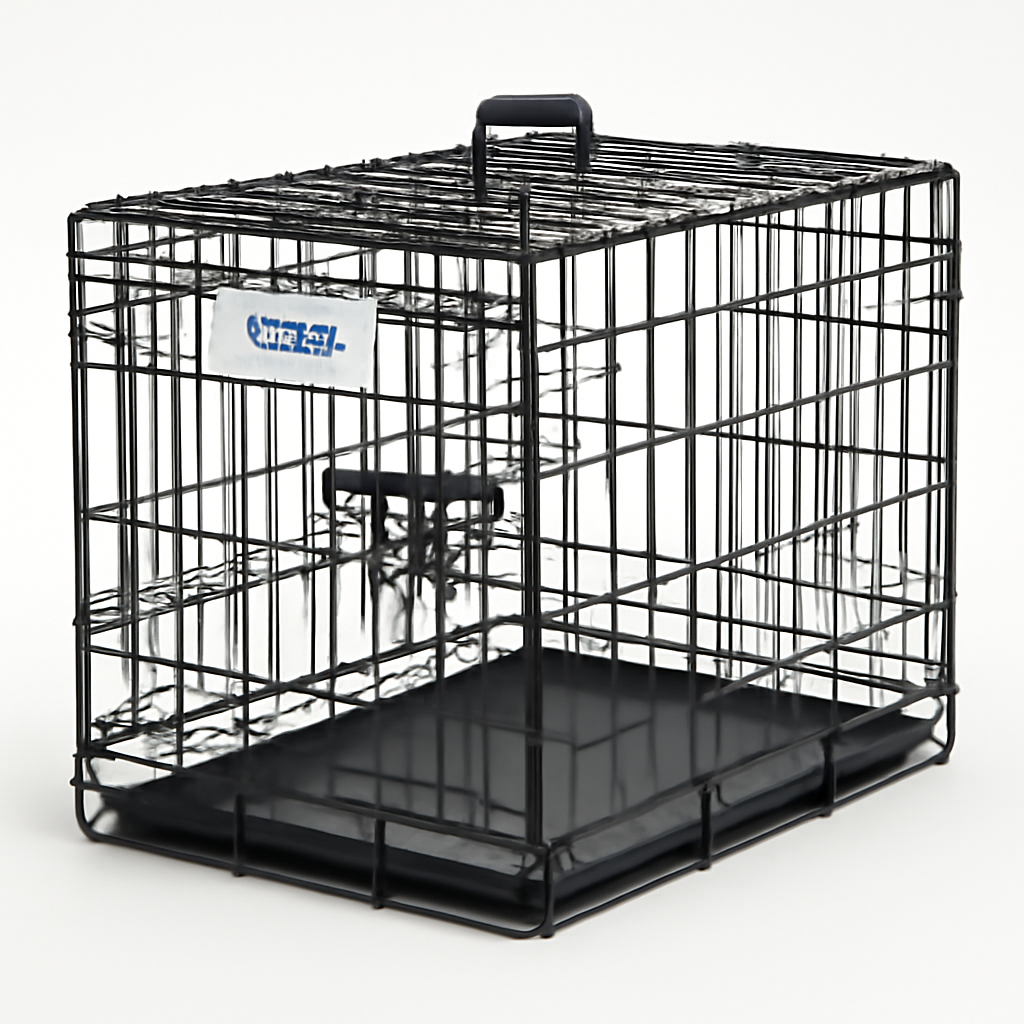
The default choice for most households. Wire crates fold flat for storage, offer great airflow and visibility, and almost always include a slide-out tray and a divider panel. They’re the most cost-effective option and the easiest to clean. The trade-off: they’re not the most escape-proof for serious chewers, and they can be a bit noisy if your dog rattles the door.
Best for: Puppies, most adult dogs, home use, budget-conscious buyers.
Plastic Crates
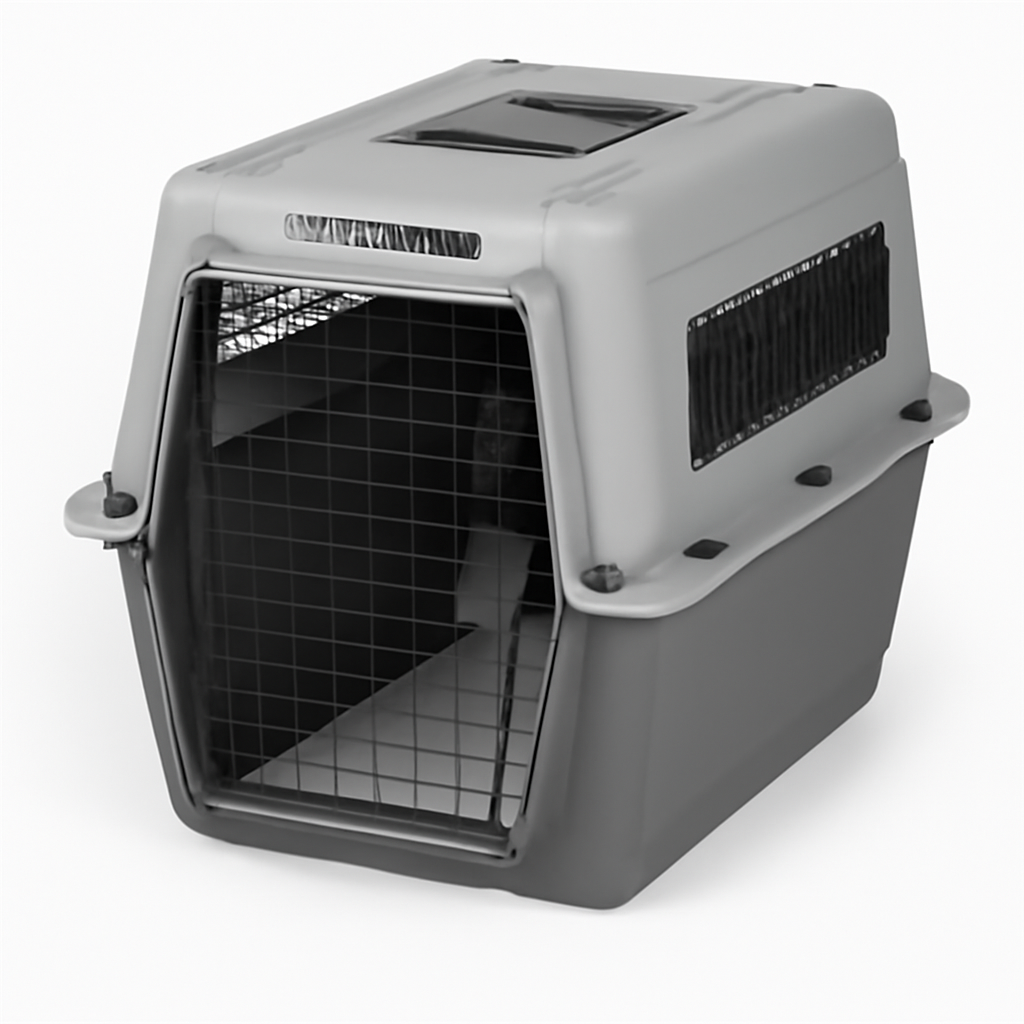
Enclosed, den-like, and typically airline-approved. Plastic crates make dogs feel secure and are the standard for flying or long car trips. They’re warmer in winter and block visual stimulation, which helps anxious dogs settle. Downsides: harder to clean thoroughly, less airflow in hot weather, and they don’t fold flat.
Best for: Travel, anxious dogs, cold climates.
Soft-Sided Crates
Lightweight fabric crates that pack down small. Ideal for well-trained adult dogs on road trips, camping, or apartment living. They are not suitable for puppies or chewers — the fabric doesn’t stand a chance against teeth.
Best for: Calm, crate-trained small-to-medium dogs and frequent travelers.
Heavy-Duty Crates
Welded steel crates built for powerful breeds, escape artists, and dogs with separation anxiety who can destroy standard wire. They’re heavy, expensive, and overkill for a mellow dog — but for the right dog, they’re the only thing that works.
Best for: Strong chewers, escape artists, large working breeds.
What to Look for When Buying a Dog Crate
Regardless of type, run through this checklist before you buy:
– Divider panel — Essential for puppies so you can shrink the usable space and prevent them from soiling one end.
– Secure latches — Slide-bolt or dual-latch doors resist nudging paws. Single flimsy clips are the first thing smart dogs defeat.
– Leak-proof tray — A removable, high-lip plastic or composite tray saves your floors.
– Rounded, finished edges — Cheap crates leave sharp wire tips that scratch dogs and owners.
– Appropriate door count — Double-door crates give you placement flexibility in tight rooms.
– Fold-flat design — If you’ll store or move it, this matters a lot.
– Weight rating — Match the crate’s rated capacity to your dog, with a margin.
Don’t over-buy on features you won’t use. A single calm senior dog doesn’t need a 40-pound steel fortress, and a mastiff puppy needs more than a bargain-bin wire box.
How to Size a Crate to Your Dog’s Breed and Weight
The rule: Your dog should be able to stand up without ducking, turn around fully, and lie down stretched out. That’s it. Bigger is not better — an oversized crate lets a puppy potty in one corner and sleep in the other, which sabotages house-training.
To measure: take your dog’s length from nose to base of tail and add about 2–4 inches. Do the same for height, from the floor to the top of the head (or ears, for upright-eared breeds). Match that to the crate’s interior dimensions, not just the model name.
Here’s a general starting point by size class:
| Dog Size | Approx. Weight | Common Breeds | Typical Crate Size |
| Extra Small | Up to 12 lbs | Chihuahua, Yorkie, Pomeranian | 18–22″ |
| Small | 12–25 lbs | Frenchie, Boston Terrier, Beagle (small) | 24″ |
| Medium | 25–40 lbs | Beagle, Cocker Spaniel, Border Collie | 30″ |
| Large | 40–70 lbs | Boxer, Aussie Shepherd, Lab (small) | 36″ |
| Extra Large | 70–90 lbs | Labrador, Golden Retriever, German Shepherd | 42″ |
| Giant | 90+ lbs | Great Dane, Mastiff, St. Bernard | 48–54″ |
Puppy tip: Buy for the adult size and use the divider panel to section off space now. It saves you from buying a second crate in six months.
Top Dog Crate Picks for Every Budget
Here are our standout picks for 2026, spanning entry-level to premium.
Top Picks at a Glance
| Product | Best For | Price Range |
| MidWest iCrate Double Door | Best overall value / puppies | Budget |
| Diggs Revol | Design-conscious buyers & daily use | Premium |
| Petmate Sky Kennel | Travel & air transport | Mid-range |
| Frisco Heavy Duty Steel Crate | Chewers & escape artists | Mid–High |
| EliteField 3-Door Soft Crate | Travel with calm, trained dogs | Budget–Mid |
1. MidWest iCrate Double Door — Best Overall Value
The iCrate is the crate most trainers point new owners toward, and for good reason. It folds flat, includes a divider panel and a leak-proof tray, and comes in sizes from XS to giant. Two doors give you placement flexibility, and the price is hard to beat.
Pros:
– Excellent value across every size
– Divider panel grows with your puppy
– Folds flat for storage and transport
– Easy to assemble in minutes
Cons:
– Not chew-proof for determined escape artists
– Wire can rattle if your dog is a shaker
Best for: First-time owners, puppies, and anyone who wants a solid crate without overspending.
2. Diggs Revol — Best Premium Crate
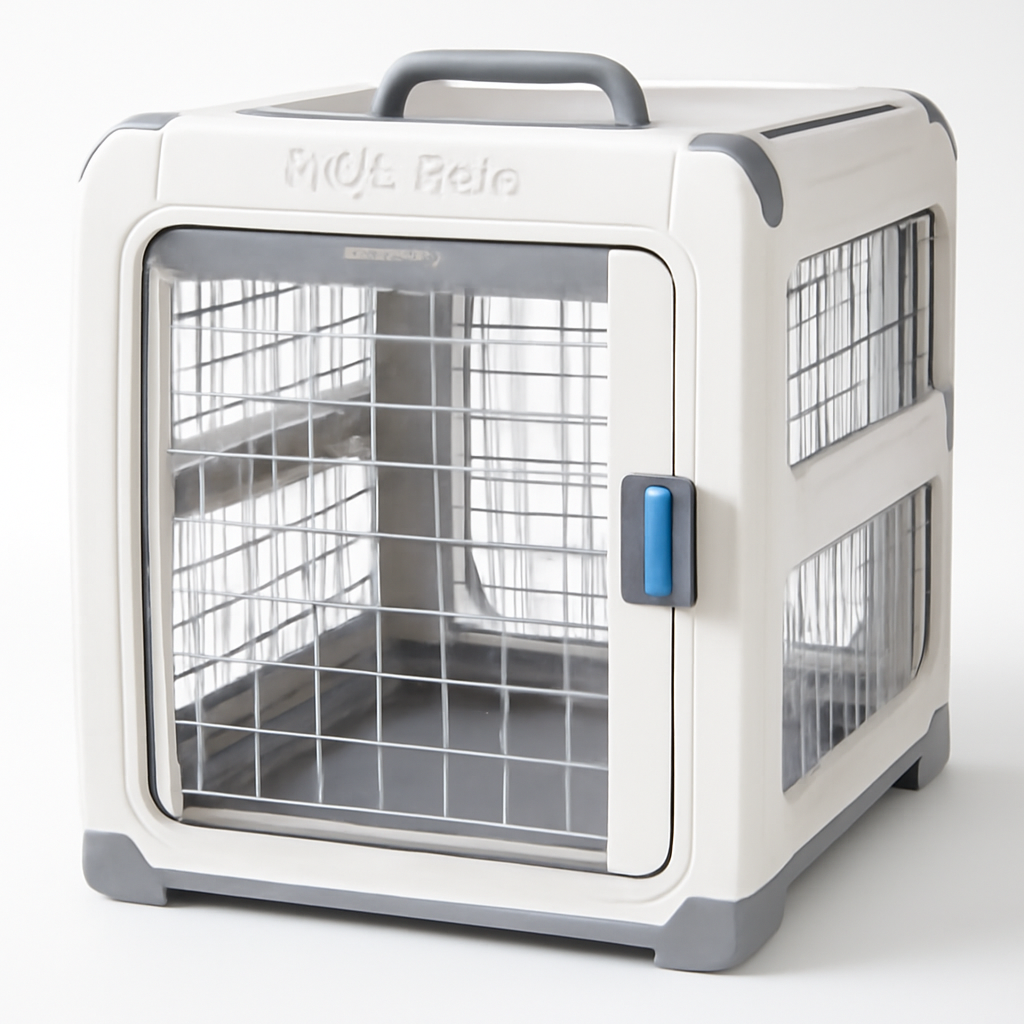
If you want a crate that doesn’t look like a cage and is built for daily use, the Diggs Revol is the standout. It uses diamond-shaped mesh (safer than straight wire bars for paws and snouts), collapses easily for travel, and has a genuinely thoughtful door and latch system. It’s an investment, but a durable, good-looking one.
Pros:
– Rounded, paw-safe diamond mesh
– Collapses without tools; portable
– Premium, living-room-friendly design
– Removable, washable tray
Cons:
– Significantly pricier than wire crates
– Heavier than a basic folding model
Best for: Buyers who prioritize safety, design, and long-term durability.
3. Petmate Sky Kennel — Best for Travel
When you need to fly or take long road trips, an enclosed, airline-compliant plastic crate is the way to go. The Sky Kennel is a long-standing standard: sturdy plastic shell, metal-grate door, and ventilation on all sides. Confirm current airline requirements before booking.
Pros:
– Airline-compliant, secure design
– Den-like enclosure calms anxious dogs
– Durable plastic that handles transport
Cons:
– Doesn’t fold flat; bulky to store
– Less airflow than wire in hot weather
Best for: Frequent travelers and dogs who feel safer in an enclosed space.
4. Frisco Heavy Duty Steel Crate — Best for Chewers
For powerful breeds and dogs who’ve bent, chewed, or escaped standard crates, a welded steel crate is the answer. The Frisco heavy-duty line uses reinforced tubing, dual latches, and often caster wheels for moving its considerable weight.
Best for: Escape artists, strong chewers, and large working breeds with separation anxiety.
5. EliteField 3-Door Soft Crate — Best Lightweight Travel Option
For a crate-trained, easygoing dog, a soft-sided crate is a featherweight travel companion. The EliteField 3-Door packs down small, sets up in seconds, and is comfortable for car trips, camping, and hotel stays. Just don’t use it for puppies or chewers.
Best for: Well-trained small-to-medium dogs and owners who travel light.
Crate Training Tips for a Happy, Calm Dog
A great crate only works if your dog likes being in it. The crate should be a safe den, never a punishment.
– Make it inviting. Add a soft bed or mat and a familiar-smelling item. Feed meals inside so the crate signals good things.
– Go slow. Start with the door open and toss treats inside. Let your dog explore on their own terms before you ever close the door.
– Build duration gradually. Close the door for a few seconds, then minutes, then step out of the room. Reward calm behavior, not whining.
– Never use it as punishment. If the crate becomes a place of banishment, training stalls.
– Right-size it. Too much space encourages accidents — use the divider until your puppy is reliably house-trained.
– Tire them out first. A dog that’s had a walk and playtime settles far faster than one full of pent-up energy.
– Cover it (sometimes). A breathable cover over a wire crate can help an anxious or overstimulated dog wind down.
Consistency beats speed. Most dogs settle into a crate within a couple of weeks when the process stays positive.
Frequently Asked Questions About Buying a Dog Crate
What size dog crate should I buy?
Buy a crate where your dog can stand, turn around, and lie down fully stretched — plus 2–4 inches. For puppies, buy for their adult size and use a divider panel to shrink the space for now.
Are wire or plastic crates better?
Wire crates are more versatile and easier to clean for everyday home use, with better airflow. Plastic crates are better for travel, air transport, and anxious dogs who prefer an enclosed den. Many owners of anxious travelers end up owning both.
How do I stop my dog from escaping the crate?
First, check the latch — many escapes come down to a single weak clip. Add a carabiner or upgrade to a dual-latch door. If your dog reliably breaks out of wire, move to a heavy-duty steel crate. Also address the why: escape attempts often signal boredom or separation anxiety.
Is it cruel to crate a dog?
No — when used correctly, a crate taps into a dog’s natural denning instinct and gives them a safe retreat. It becomes cruel only when overused, undersized, or used as punishment. Adult dogs shouldn’t be crated more than a few hours at a stretch during the day.
How much should I spend on a dog crate?
A quality wire crate covers most needs at a budget-friendly price. Spend more only if you specifically need travel-grade plastic, premium design, or heavy-duty steel for a chewer. For actual current pricing, check the links, since prices shift with size and season.
Do I need a divider panel?
If you’re crating a puppy, yes — it’s the single most useful feature for house-training. Most quality wire crates include one.
Our Verdict
For the vast majority of dogs and owners, the MidWest iCrate Double Door is the best crate to buy in 2026. It’s affordable, grows with your puppy thanks to the divider panel, folds flat, and handles daily use without fuss. It’s the crate that gets the fundamentals right at a price that makes sense.
If you want something more refined and paw-safe for daily living, upgrade to the Diggs Revol — it’s the premium pick that earns its price in safety and durability. Frequent flyers should choose the Petmate Sky Kennel, and if your dog is a genuine escape artist, don’t fight it — go straight to a Frisco Heavy Duty Steel Crate and save yourself the headache.
Match the crate to your dog’s size, temperament, and your routine, get the sizing right, and pair it with patient, positive crate training. Do that and you’ll have one calm, content dog — and a crate you only had to buy once.
Always confirm current pricing and airline requirements before purchasing, and double-check interior dimensions against your dog’s measurements.