Quick Answer
A good puppy harness should distribute pressure evenly across the chest and shoulders (not the neck), allow for growth adjustments, and include reflective material for safety. The Ruffwear Front Range Harness is our top pick for most puppies because it grows with your dog and offers excellent control. For smaller breeds, the Puppia Soft Harness combines comfort with affordability. Budget-conscious buyers should consider the Gooby Escape Free Harness, which delivers solid performance without breaking the bank.
—
What to Look for in a Puppy Harness
Your puppy isn’t staying small for long—so the harness you buy today needs to work for at least the next 6-12 months. Here’s what actually matters when you’re shopping:
Size & Adjustability
Puppies grow fast. Like, really fast. A harness that fits perfectly at 8 weeks might be too tight at 16 weeks. Look for harnesses with multiple adjustment points (usually 3-4 straps minimum) that can expand as your pup grows. This saves you from buying multiple harnesses and means your puppy stays safe and comfortable throughout the growth phase.
The sweet spot? You should be able to fit two fingers between the harness and your puppy’s body. Any tighter and you’re restricting breathing; any looser and your puppy can slip out.
Material & Durability
Puppies chew. They roll in mud. They splash through puddles. Nylon harnesses dry quickly and handle abuse well—they’re your best bet for durability. Some harnesses come with padding on the chest and back, which reduces rubbing during walks and training sessions.
Look for reinforced stitching on load-bearing points. The clips and attachment rings should be metal, not plastic, since puppies will put real tension on these during pulling.
Closure Type
Buckles come in three main styles:
– Side-release plastic clips: Easy to snap on/off, popular on affordable harnesses, but can fail under pressure
– Metal D-rings with carabiners: Durable, but slower to clip on
– Velcro + plastic buckles: Quick and secure, best for growing puppies since you can tighten easily
Reflectivity & Visibility
If you walk your puppy in low light (dawn, dusk, or evening), reflective material isn’t optional—it’s essential. At minimum, look for reflective piping on the back and chest. Some harnesses add LED attachment points if you want extra visibility.
No-Pull vs. Standard Design
– Standard harnesses: Ring at the back, good for casual walks
– Front-clip/no-pull harnesses: Ring at the chest, naturally turns your puppy toward you when they pull
For most puppies under 6 months, a standard harness is fine. If your puppy is a puller (looking at you, lab and husky owners), front-clip design makes training much easier.
—
Best Overall Puppy Harnesses (2026 Reviews)
Top Pick: Ruffwear Front Range Harness
Best for: Growing puppies of all sizes; puppy owners who want one harness that lasts
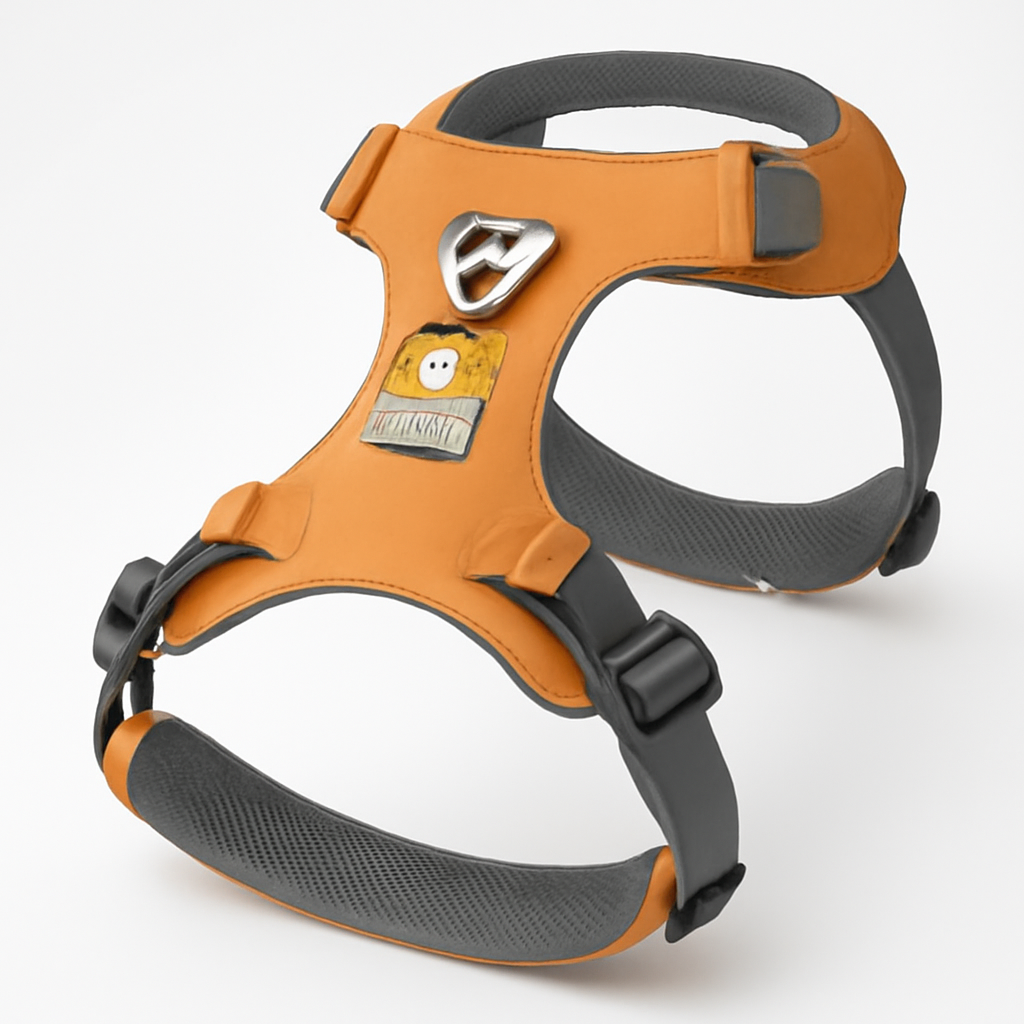
The Ruffwear Front Range is essentially the “grows with your puppy” gold standard. It has four adjustment points (neck, chest, girth, and the harness itself) so you can accommodate significant growth without upgrading. The design puts pressure on the chest and shoulders—never the neck—which is crucial for puppies whose tracheas are still developing.
The two-point attachment system gives you flexibility: clip to the back for casual walks or to the front for no-pull training. The harness is made from tough nylon with foam padding on the chest, and it comes with a handle on the back if you ever need to pick your puppy up quickly or stabilize them in the car.
Pros:
– Grows with your puppy (fits from about 5 lbs to 30 lbs depending on breed)
– Two attachment points (front and back)
– Robust construction that survives heavy use
– Excellent weight distribution
– Easy to adjust even with muddy paws
Cons:
– Higher price point than basic harnesses
– Buckle design requires some practice to master
– Not the lightest option for toy breeds
—
Runner-Up: Puppia Soft Harness
Best for: Toy and small breed puppies; owners prioritizing comfort
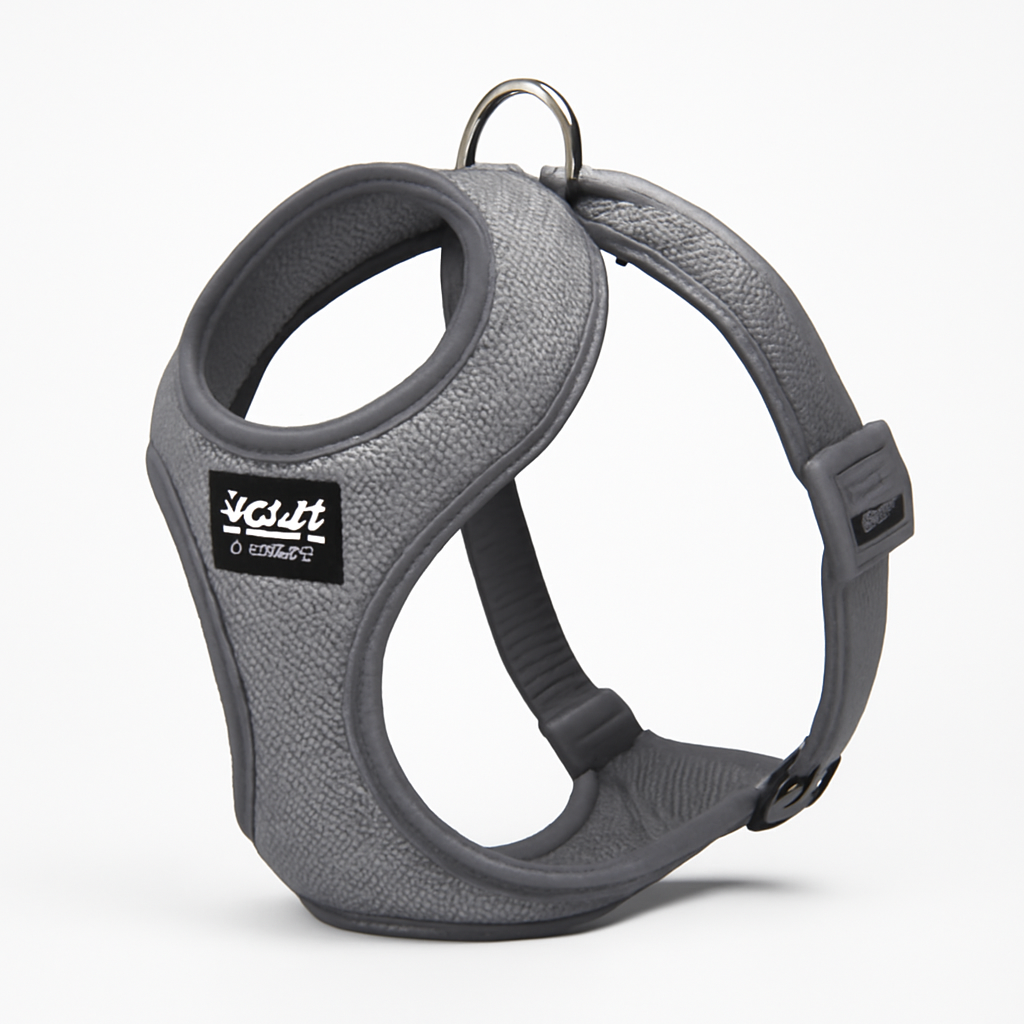
If your puppy is a Chihuahua, Maltese, Pomeranian, or similar small breed, the Puppia Soft Harness is purpose-built for their needs. It’s exceptionally lightweight (under 2 oz on small sizes) and made entirely from soft fabric with velcro closures. Your tiny puppy will barely notice it’s wearing anything.
The no-pull design means the leash clips at the chest, so even small puppies naturally redirect toward you instead of yanking your arm. The fabric is machine washable, which matters because small puppies have small accidents.
Pros:
– Incredibly lightweight and non-restrictive
– Soft fabric won’t irritate delicate puppy skin
– Easy velcro closures (great for one-handed fastening)
– Machine washable
– Affordable for the quality
Cons:
– Limited adjustment range (better for puppies staying small)
– Not suitable for large-breed puppies
– Velcro can lose grip after 100+ washes
– No back attachment point
—
Budget Pick: Gooby Escape Free Harness
Best for: Budget-conscious buyers; puppies who are escape artists
The Gooby Escape Free Harness delivers surprising quality for the price. The “escape free” design uses a unique wrapping system that makes it nearly impossible for puppies to back out of—something that happens constantly with cheaper models. The harness sits snugly against the body without feeling restrictive.
It’s available in multiple sizes for different growth stages, and the nylon construction is genuinely durable. The leash attaches to a metal ring at the back, and there’s a reinforced handle if you need to guide your puppy.
Pros:
– Excellent value for money
– Escape-proof design (real game-changer)
– Decent adjustability for the price
– Lightweight nylon construction
– Available in fun colors and patterns
Cons:
– Limited size range (you may need to buy again as puppy grows)
– No front-clip option for no-pull training
– Plastic clip on some models (not ideal long-term)
– Not ideal for long-coated puppies (can cause matting)
—
Harnesses by Puppy Size & Breed Type
| Puppy Category | Best Harness | Key Feature | Growth Capacity |
| Toy breeds (under 10 lbs) | Puppia Soft Harness | Ultra-lightweight, comfort-focused | Minimal—buy multiple as pup grows |
| Small breeds (10-25 lbs) | Ruffwear Front Range (XS) | Multi-adjustment, no-pull option | 5-25 lbs |
| Medium breeds (25-50 lbs) | Gooby Escape Free | Durable, escape-proof design | Limited—plan to upgrade |
| Large breeds (50+ lbs) | Ruffwear Front Range (S/M) | Heavy-duty construction, growth range | Grows significantly |
| Escape-prone puppies | Gooby Escape Free | Wrapping design prevents slipping | Depends on size variant |
| Training-focused | Ruffwear Front Range | Dual attachment points for technique flexibility | Long-term investment |
—
Safety Features That Matter Most
Tracheal Protection
Never use a collar on a puppy—harnesses are essential because they distribute pressure across the chest and shoulders instead of concentrating it on the throat. A puppy’s trachea is still developing, and a collar pull can cause lasting damage. All the harnesses we recommend here route the leash away from the neck entirely.
Reflective Materials
Puppies are small and hard to see. If you walk before sunrise or after sunset, reflective piping becomes your puppy’s safety gear. Both the Ruffwear and Puppia harnesses include reflective material as standard. The Gooby line offers reflective variants if you specifically choose them.
Escape-Proof Design
A puppy that slips out of their harness doesn’t become a free-range puppy—they become a lost dog. The wrapping mechanism on the Gooby Escape Free Harness specifically addresses this. If your puppy is a determined escape artist, this is worth prioritizing.
Secure Metal Hardware
Plastic clips fail. Metal clips don’t. Check that any attachment points use actual metal D-rings or carabiners, not molded plastic. This matters more for larger puppies who’ll develop real pulling strength.
Proper Fit Verification
Before any walk, verify fit:
1. You should slide two fingers (but not three) under any strap
2. The harness shouldn’t ride up toward the neck
3. Your puppy should be able to sit, lie down, and play normally
4. Check after every walk for rubs or irritation
—
Comfort vs. Control: Finding the Right Balance
Here’s the tension: puppies pull. A lot. But puppies also need to move naturally and play comfortably. How do you balance control with comfort?
For Training & Walking (Age 8-16 Weeks)
At this stage, puppies are still learning what a harness even is. Comfort should win. Choose a soft, lightweight harness (Puppia if small breed; Gooby if budget-conscious) where your main goal is getting them used to wearing it. Light leash work and gentle guidance are enough.
For Growing Independence (Age 16+ Weeks)
As puppies get bigger and stronger, you need more control. This is when a front-clip system (like the Ruffwear Front Range) becomes valuable. The front attachment naturally turns your puppy toward you without jerking, so they learn not to pull while staying comfortable.
The Padding Question
Padded harnesses feel nicer against the skin, but they’re heavier and take longer to dry. Non-padded is fine for most puppies; padding becomes more important for puppies with sensitive skin or fine coats that chafe easily.
Weight Matters
If you’re buying for a toy breed, harness weight actually impacts comfort. A 2 oz harness feels dramatically different than an 8 oz harness when you weigh 4 lbs. This is why the Puppia Soft Harness wins for tiny puppies—the minimal weight means maximum comfort.
—
Top-Rated Brands Compared
| Brand | Best Product | Price Range | Best For | Growth Range | Overall Rating |
| Ruffwear | Front Range Harness | Mid-range | Long-term investment; growing puppies | 5-30 lbs | 9.5/10 |
| Puppia | Soft Harness | Budget-friendly | Toy breeds; comfort first | Limited per size | 9/10 |
| Gooby | Escape Free Harness | Budget | Escape artists; value-conscious | Limited per size | 8.5/10 |
| Kong | Comfort Harness | Budget to mid-range | Casual wear; basic functionality | Moderate | 7.5/10 |
Why Ruffwear Leads
Ruffwear specializes in outdoor gear for dogs, and it shows. Their harnesses are built like actual climbing equipment—because they’re literally designed by the same engineers. The Front Range uses webbing that passes military durability tests. For puppies, this means a harness that survives teething, rough play, and eventual growth spurts.
Why Puppia Wins for Small Breeds
Puppia focuses entirely on toy and small breeds. Their sizing and proportions reflect actual toy breed anatomy, not just scaled-down large harnesses. The soft fabric is ideal for puppies with delicate skin or fine coats.
Why Gooby Offers Value
Gooby harnesses are engineered for one thing: stopping puppies from escaping. The design is simple, the manufacturing is efficient, and the price reflects that. If escape prevention is your main concern, it’s genuinely the best value.
—
How to Properly Fit Your Puppy’s Harness
A perfectly-designed harness fitted incorrectly becomes a dangerous harness. Here’s the process:
Step 1: Measure Your Puppy
Measure the girth (around the rib cage just behind the front legs) and neck. Compare to the manufacturer’s size chart. If you’re between sizes, go larger and adjust down—you can’t adjust a too-small harness.
Step 2: Initial Adjustment
Start with all straps loosened. Slip the harness on gently. Buckle all closures, but leave them relatively loose.
Step 3: The Two-Finger Test
Starting at the neck strap: slide two fingers under it. You should feel snug resistance without being able to compress it further. Adjust the buckle if needed. Repeat for chest, girth, and any other straps.
Step 4: Check Weight Distribution
With the harness on and fastened, observe how it sits:
– The chest plate should cover the sternum
– No straps should touch the neck directly
– The harness should be level (not twisted or riding up on one side)
– Your puppy should be able to lift their front legs without restriction
Step 5: Movement Test
Have your puppy walk around, sit, lie down, and play for 5 minutes. Watch for:
– Excessive movement of the harness (indicates it’s too loose)
– Limping or reluctance to move (indicates it’s too tight or positioned wrong)
– Chewing at straps (indicates discomfort)
Step 6: Recheck After 2 Weeks
Puppies grow fast. Even if the harness fit perfectly during fitting, recheck after 2 weeks. Adjust all straps accordingly.
Pro Tips for Fitting
– Fit during calm moments, not when your puppy is excited or jumping
– Use high-value treats to create positive associations with harness wearing
– Leave it on briefly (5-10 minutes) before first walks
– Recheck after growth, especially for large-breed puppies who can grow 1-2 lbs per week
– Never force it on aggressively—if your puppy fights it, the fit is probably wrong
—
Common Harness Problems & Solutions
| Problem | Likely Cause | Solution |
| Puppy keeps escaping | Too loose; escape-prone breed | Choose Gooby Escape Free; tighten straps; verify two-finger test |
| Rubbing/chafing on armpits | Harness too tight or positioned wrong | Loosen slightly; reposition so rings sit lower; consider padded version |
| Puppy refuses to wear it | Negative association or discomfort | Start indoors; pair with treats; check fit; use softer harness |
| Harness twisted after every walk | Too loose or improper adjustment | Tighten all straps; ensure even tension; refit following our steps |
| Pulling/lunging hasn’t improved | Wrong attachment point for training | Switch to front-clip harness; consider professional trainer |
| Rapid wear/fraying after few weeks | Low-quality materials | Upgrade to Ruffwear; check fit (too-tight harness wears faster) |
—
Our Verdict
Here’s the honest truth: the best puppy harness depends on your puppy’s size and your priorities.
If you want to buy once and adjust as your puppy grows: The Ruffwear Front Range Harness is worth the investment. It accommodates genuine growth (not just minor adjustments), includes two attachment points for training flexibility, and will outlast your puppy’s puppyhood by miles. Expect to spend, but you’re paying for one harness that lasts the entire first year-plus.
If you have a toy or small breed puppy: The Puppia Soft Harness is the right choice. Toy breed puppies don’t need tank-grade durability—they need comfort and ease of use. The velcro system and lightweight design make daily life easier, and the price is low enough that buying multiple sizes as your pup grows is painless.
If you’re on a budget or have an escape artist: The Gooby Escape Free Harness delivers solid quality at a fraction of premium prices. You’ll likely buy a new size as your puppy grows, but the per-purchase cost stays reasonable.
The Real Bottom Line
Your puppy doesn’t care about brand names