Quick answer: For most dog owners in 2026, the MidWest Homes iCrate Double Door is the best overall pick — it’s a well-built wire crate with a divider that grows with your puppy. On a tight budget, the AmazonBasics Folding Metal Crate delivers the essentials for less. If you have an escape artist or a powerful chewer, step up to the Diggs Revol or the heavy-duty ProSelect Empire.
Below we break down how we tested, our top picks by category, the different crate types, and exactly how to size a crate for your dog.
—
How We Tested and Chose These Pet Crates
Choosing the wrong crate is expensive twice — once when you buy it, and again when your dog destroys it or outgrows it in three months. So the goal here was to sort the crates that hold up from the ones that just look good in a product photo.
We evaluated crates against the criteria that actually matter day to day:
– Build quality and durability — gauge of the wire, weld strength, plastic thickness, and how the door latches feel after repeated use.
– Escape resistance — latch security, gaps a determined dog can exploit, and overall structural rigidity.
– Ease of setup and storage — how quickly it folds flat, whether you need tools, and how heavy it is to move.
– Sizing options — the range of sizes offered and whether a divider panel is included for growing puppies.
– Cleanability — removable trays, rounded corners, and materials that wipe down without trapping hair and odor.
– Value — what you actually get for the price, not just the lowest sticker.
We also weighted real-world owner feedback heavily, focusing on long-term reports (six months or more) rather than first-impression reviews. A crate that arrives nice but rattles apart after a winter of daily use doesn’t make this list.
—
Best Overall Dog Crate for 2026
MidWest Homes iCrate Double Door
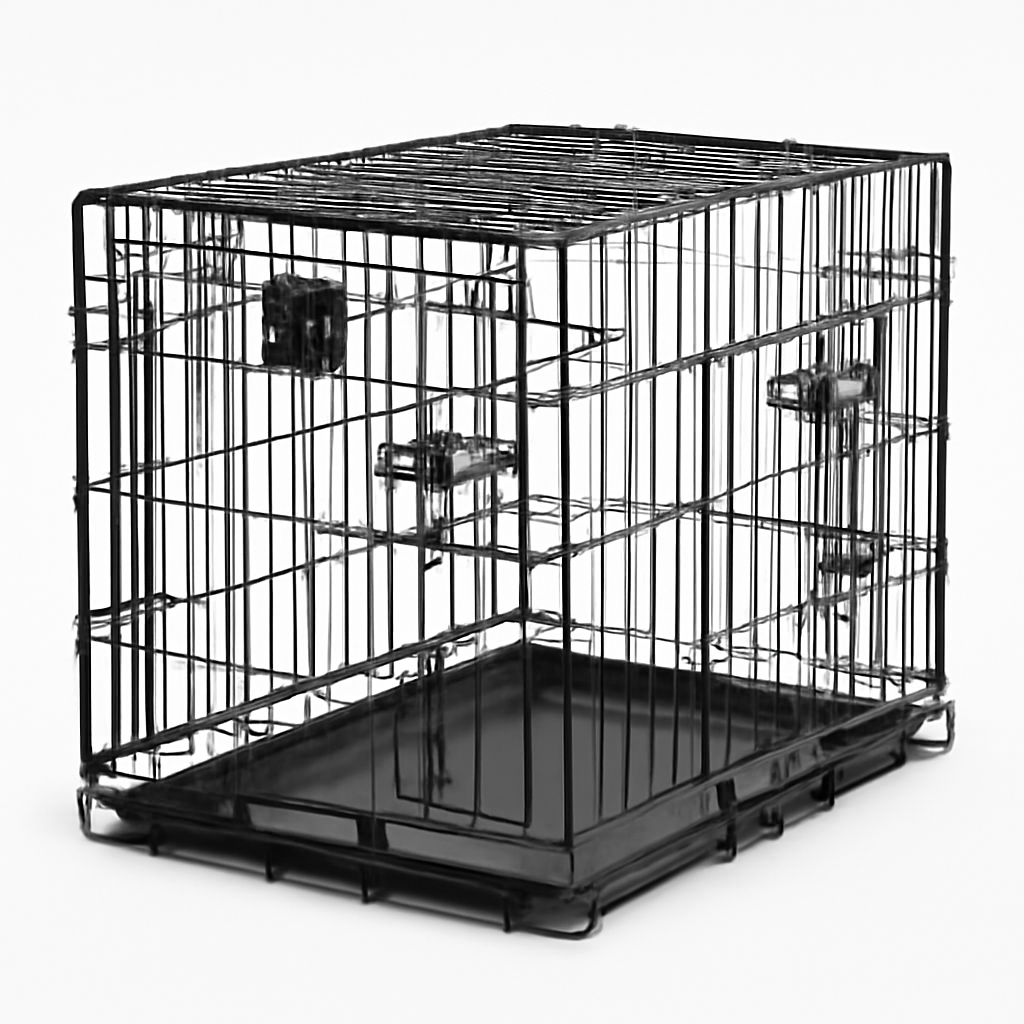
The MidWest iCrate remains the crate we’d recommend to the widest range of owners in 2026. It’s a classic folding wire crate that gets the fundamentals right: two doors for flexible placement, a leak-proof removable plastic tray, rounded corners so it doesn’t scratch floors or dogs, and a divider panel so a single crate can grow with a puppy from 12 weeks to full size.
It sets up in a couple of minutes with no tools, folds flat for travel or storage, and comes in a full range of sizes from toy breeds up to giant breeds. For the price, the value is hard to beat — which is exactly why it’s the default recommendation in most shelters and vet offices.
Pros
– Included divider means you buy one crate, not three, for a growing puppy
– Two doors for flexible room placement
– Folds flat in seconds, no tools needed
– Wide size range and consistently strong long-term durability reports
Cons
– Wire construction isn’t chew-proof for the most determined escape artists
– The base tray can flex on the largest sizes
– Not the most stylish option if you want it to blend into your living room
Best for: First-time owners, puppies, and anyone who wants one reliable crate that covers 90% of situations.
—
Best Budget Crate for Value Shoppers
AmazonBasics Folding Metal Dog Crate
If you want the wire-crate essentials for the lowest reasonable price, the AmazonBasics Folding Metal Crate is the pick. It covers the basics that matter — folding design, removable tray, a divider on most sizes, and a double-door option — without paying for a premium name.
Is it built to exactly the same standard as the iCrate? Not quite; the wire gauge feels a touch lighter and the latches are more basic. But for a calm dog, a temporary setup, a second crate for a different room, or a budget-conscious first-time owner, it does the job well and holds up fine under normal use.
Pros
– Lowest cost of entry among the crates we recommend
– Folds flat, includes a removable tray and (on most sizes) a divider
– Widely available in many sizes
Cons
– Lighter-duty latches and thinner wire than premium crates
– Not suitable for heavy chewers or escape artists
Best for: Budget shoppers, calm dogs, second crates, and short-term needs.
—
Best for Escape Artists and Everyday Style
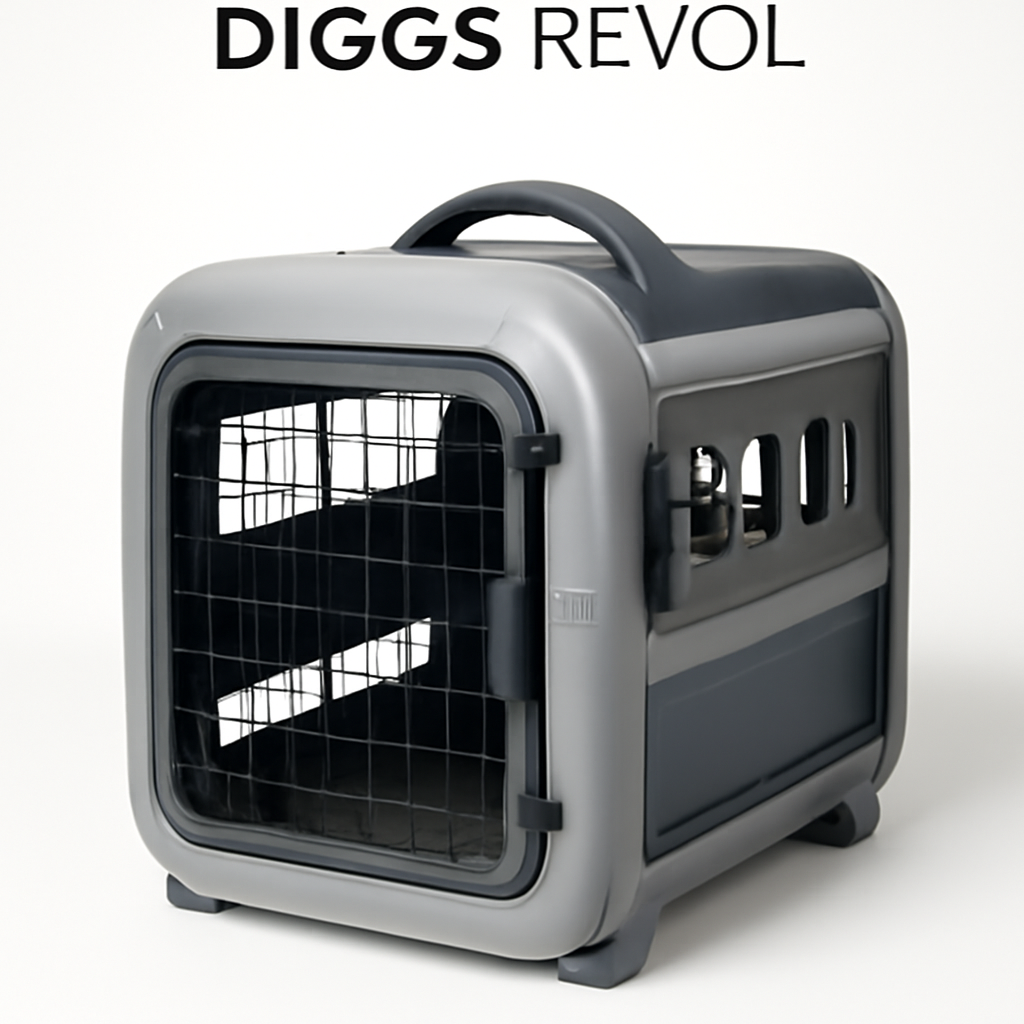
Diggs Revol Dog Crate
The Diggs Revol is the modern, design-forward option — and it earns its place beyond just looks. It uses a diamond-shaped mesh (rather than horizontal bars that dogs can climb), reinforced steel, and a garage-style door that slides up and out of the way. It collapses down like a stroller for storage and travel, and the puppy divider and included tray round it out.
It costs meaningfully more than a basic wire crate, so it’s not for everyone. But if the crate is going to live in your living room and you want something safer for an anxious or climbing-prone dog, the Revol is worth the premium.
Pros
– Climb-resistant mesh and reinforced steel build
– Genuinely attractive; collapses compactly for travel
– Thoughtful safety details (rounded edges, secure latches)
Cons
– Significantly pricier than standard wire crates
– Heavier than a basic folding crate
Best for: Anxious or climbing-prone dogs, small-to-medium breeds, and owners who care about how the crate looks.
—
Crate Types Explained: Wire, Plastic, Soft-Sided, and Heavy-Duty
There’s no single “best” crate type — the right one depends on your dog and how you’ll use it.
Wire Crates
The most popular type for home use. They’re well-ventilated, let your dog see out, fold flat for storage, and almost always include a removable tray. The MidWest iCrate and AmazonBasics crates are both wire. Downside: the most determined chewers or escape artists can sometimes work at the bars or latches.
Plastic Crates
Enclosed plastic crates like the classic Petmate Sky Kennel are the go-to for air travel and car trips. They’re airline-approved (check your carrier’s specifics), feel more den-like and secure for anxious dogs, and contain messes well. Trade-offs: less ventilation, they don’t fold flat, and they can be bulky to store.
Soft-Sided Crates
Lightweight fabric crates are made for travel, camping, and calm dogs who are already crate-trained. They pack down small and are easy to carry. But they offer zero escape or chew resistance — never use one for a puppy in training or a dog that scratches and bites at enclosures.
Heavy-Duty Crates
For powerful, anxiety-driven escape artists, a heavy-duty steel crate like the ProSelect Empire is in a different class. Thick steel tubing, welded construction, and heavy-gauge latches make these genuinely hard to break out of. They’re expensive and heavy, but for a dog that has already destroyed a wire crate, they’re the answer.
—
Top Picks at a Glance
| Product | Best For | Price Range |
| MidWest Homes iCrate Double Door | Best overall; puppies & most dogs | |
| AmazonBasics Folding Metal Crate | Budget & value shoppers | |
| Diggs Revol | Style + climb-resistant safety | |
| Petmate Sky Kennel | Air travel & car trips | |
| ProSelect Empire | Heavy chewers & escape artists |
—
How to Choose the Right Crate Size for Your Dog
Getting the size right is the single most important decision — more than brand. A crate that’s too small is uncomfortable and unfair; a crate that’s too big undermines house-training, because a dog will happily potty in one corner and sleep in the other.
The rule: Your dog should be able to stand up fully without ducking, turn around completely, and lie down stretched out — and not much more than that.
How to measure your dog:
1. Length: Measure from the tip of the nose to the base of the tail (not the tip). Add 2–4 inches.
2. Height: Measure from the floor to the top of the head while sitting (or to the ear tips for upright-eared breeds). Add 2–4 inches.
3. Match those numbers to the manufacturer’s size chart — dimensions vary between brands, so always check the actual listed inches rather than trusting a “Large” label.
For puppies: Buy the crate sized for your dog’s expected adult size, then use the divider panel to block off a puppy-sized section. Expand the space as your dog grows. This is why an included divider (like on the iCrate) saves you real money — you buy one crate instead of three.
A rough starting guide by adult weight:
| Dog Weight | Typical Crate Size |
| Up to 25 lbs | 24″ |
| 26–40 lbs | 30″ |
| 41–70 lbs | 36″ |
| 71–90 lbs | 42″ |
| 90+ lbs | 48″ |
Always defer to the manufacturer’s chart and your own measurements over a generic table.
—
Key Features to Look For (Safety, Durability, and Escape-Proofing)
Once you’ve nailed size and type, these are the details that separate a crate you’ll keep from one you’ll return.
– Latch security. Look for slide-bolt or multiple-point latches rather than a single flimsy clip. Escape artists work the door first — this is where cheap crates fail. For serious escape risks, a crate with a lockable or padlock-compatible latch is worth it.
– Weld and wire quality. On wire crates, run your hand along the joints. Solid, even welds and a heavier wire gauge mean it’ll survive years of daily use. Thin, rattly wire is a red flag.
– Removable, leak-proof tray. A slide-out plastic pan makes cleanup vastly easier and is essential during house-training. Metal trays last longer but can be noisier and pricier.
– Rounded edges and no sharp points. Check corners and door edges. Cheap crates sometimes leave exposed wire ends that can scratch or catch.
– Non-slip, floor-safe feet. Rubber feet or roller feet protect your floors and keep the crate from sliding when your dog moves inside.
– Ventilation and visibility. Especially for anxious dogs — good airflow and sightlines reduce stress. This is where wire crates beat enclosed plastic for home use.
– Ease of folding/setup. Tool-free assembly and a true flat-fold matter a lot if you’ll move or store the crate regularly.
If your dog has already escaped a standard crate, don’t keep buying bigger wire crates — escalate to a heavy-duty steel model. It’s cheaper than replacing three failed crates and safer for your dog.
—
Crate Training Tips and Frequently Asked Questions
A great crate only works if it’s introduced the right way. The goal is for the crate to feel like a safe den, never a punishment.
Quick crate-training tips:
– Make it positive from day one. Feed meals in the crate, toss treats inside, and let your dog explore it with the door open before you ever close it.
– Go slow with the door. Close it for a few seconds, then minutes, building up gradually. Don’t rush to overnight stays.
– Never use the crate as punishment. If it becomes a place of stress, training gets much harder.
– Use a comfortable, chew-appropriate bed or mat — but skip soft bedding for dogs that shred and swallow fabric until you know they won’t.
– Cover part of the crate with a breathable blanket for anxious dogs to create a den-like feel, while keeping airflow.
Frequently Asked Questions
How long can a dog stay in a crate?
As a general rule, adult dogs shouldn’t be crated more than 4–6 hours at a stretch during the day. Puppies can only hold it for roughly one hour per month of age. Crates are for rest and training — not all-day confinement.
Should I get a crate with one door or two?
Two doors give you far more flexibility in where you place the crate in a room, and they’re handy in cars. If it’s an option at a similar price, two doors is the safer choice.
Wire or plastic crate — which is better?
For everyday home use and house-training, wire crates win on ventilation, visibility, and easy cleanup. For air travel or dogs who prefer an enclosed den, plastic crates like the Petmate Sky Kennel are better.
My dog keeps escaping — what do I do?
First check the latches and size. If it’s a genuine escape artist or anxiety-driven, move to a heavy-duty steel crate like the ProSelect Empire rather than another wire crate.
Is a divider worth it?
For a puppy, absolutely. A divider lets one adult-sized crate work through every growth stage, saving you from buying multiple crates.
—
Our Verdict
For the majority of dog owners in 2026, the MidWest Homes iCrate Double Door is the smartest buy — durable, well-sized, divider included, and priced fairly. It’s the crate we’d hand to a friend bringing home a new puppy.
If money is tight, the AmazonBasics Folding Metal Crate covers the essentials for less. Want something that looks good in the living room and resists climbers? The Diggs Revol is worth the upgrade. Flying or road-tripping? Go with the Petmate Sky Kennel. And if your dog has already broken out of a standard crate, stop replacing wire crates and get the heavy-duty ProSelect Empire.
Measure your dog first, match the crate to your real-world use, and prioritize latch security and build quality over a low sticker price — that’s how you buy once instead of three times.