Quick Answer: If your dog gets loose stools, gas, or vomiting from typical dental treats, look for chews that are single-ingredient or limited-ingredient, grain-free (or with easily digestible grains), and free of artificial additives. Our top overall pick for sensitive tummies in 2026 is Whimzees Natural Dental Chews for its short, plant-based ingredient list. Keep reading for the full breakdown, comparison table, and vet-backed tips for introducing new chews without the mess.
—
If cleaning your dog’s teeth already feels like a battle, adding a digestive flare-up on top of it is the last thing you need. Many popular dental chews are packed with rich proteins, gums, and fillers that a robust dog handles fine — but a sensitive-stomached pup does not. The good news: you don’t have to choose between fresh breath and a settled gut. You just need the right chew. Below, we’ll walk through exactly what to look for, what to avoid, and which specific products actually hold up for dogs with delicate digestion.
Why Sensitive Stomachs Need Special Dental Chews
Dental chews aren’t just treats — they’re a daily habit, often given once every single day. That means whatever is in them gets eaten consistently, so even a mild irritant adds up fast. A chew that causes a little gas on Monday can turn into chronic loose stools by Friday.
Dogs with sensitive stomachs typically struggle with:
– Rich or novel animal proteins they aren’t used to
– High fat content that overwhelms digestion
– Fillers, dyes, and preservatives that irritate the gut lining
– Gums and thickeners (like carrageenan) that can loosen stools
A standard dental chew is formulated for the “average” dog. For a sensitive dog, “average” is often too much. The goal is a chew that still scrapes plaque and freshens breath, but does it with the gentlest possible ingredient list.
Signs your dog’s current chew is the problem
If you notice any of these within 6–12 hours of a dental chew, the chew may be to blame:
– Soft or loose stool
– Excess gas or gurgling
– Lip-licking, drooling, or refusing food
– Occasional vomiting (especially yellow bile)
Pull the chew for a few days and see if things settle. If they do, it’s time to switch.
What to Look For in a Gentle Dental Chew
Not all “gentle” claims are equal. Here’s what genuinely matters for a sensitive gut.
Short, recognizable ingredient lists
The fewer ingredients, the fewer chances for a reaction. Single-ingredient or limited-ingredient chews are the gold standard. If you can’t pronounce half the label, keep looking.
Digestible base ingredients
Sweet potato, pumpkin, chickpea, and rice tend to sit well with sensitive dogs. These give the chew its texture without the heaviness of rich meats or dairy.
The VOHC Seal
The Veterinary Oral Health Council (VOHC) Seal means the product was tested and proven to reduce plaque or tartar. It’s the closest thing to real proof that a chew actually works dentally — so you’re not trading digestion for a chew that does nothing.
Appropriate texture and size
The chew should be firm enough to require real chewing (that’s what scrapes the teeth) but not so hard it risks a cracked tooth. Always match the size to your dog’s weight — an undersized chew is a choking risk and a gulping-related stomach upset waiting to happen.
Low-to-moderate fat
High fat is one of the biggest triggers for digestive upset and, in serious cases, pancreatitis. Look for chews that lead with plant-based or lean ingredients rather than fatty animal by-products.
Ingredients to Avoid If Your Dog Has a Sensitive Gut
When you flip the bag over, watch for these common culprits:
– Artificial colors and dyes (Red 40, Yellow 5, etc.) — purely cosmetic, zero benefit
– Artificial preservatives — BHA, BHT, and ethoxyquin
– Carrageenan and excessive gums — can loosen stools
– Rendered “meat by-products” and “animal digest” — vague, inconsistent, often rich
– Added sugars and corn syrup — feed bad gut bacteria and add empty calories
– Wheat gluten and heavy grain fillers — a common intolerance trigger
– Rawhide — notoriously hard to digest and a blockage risk
A clean label won’t have most of these. If a chew is loaded with them, it’s not the one for a sensitive dog — no matter how good the breath-freshening claims sound.
Top Dog Dental Chews for Sensitive Stomachs in 2026
Here are the chews that consistently earn trust from owners of sensitive-stomached dogs. Each was chosen for a clean ingredient profile, real dental benefit, or both.
Top Picks at a Glance
| Product | Best For | Price Range |
| Whimzees Natural Dental Chews | Overall best for sensitive stomachs / grain-free | |
| Virbac C.E.T. VeggieDent Fr3sh | Vet-recommended, plant-based, VOHC sealed | |
| Greenies Original Dental Treats | Proven plaque control, widely available | |
| Merrick Fresh Kisses | Grain-free with natural botanicals | |
| Zesty Paws Dental Bones | Added digestive & functional ingredients |
—
1. Whimzees Natural Dental Chews — Best Overall for Sensitive Stomachs
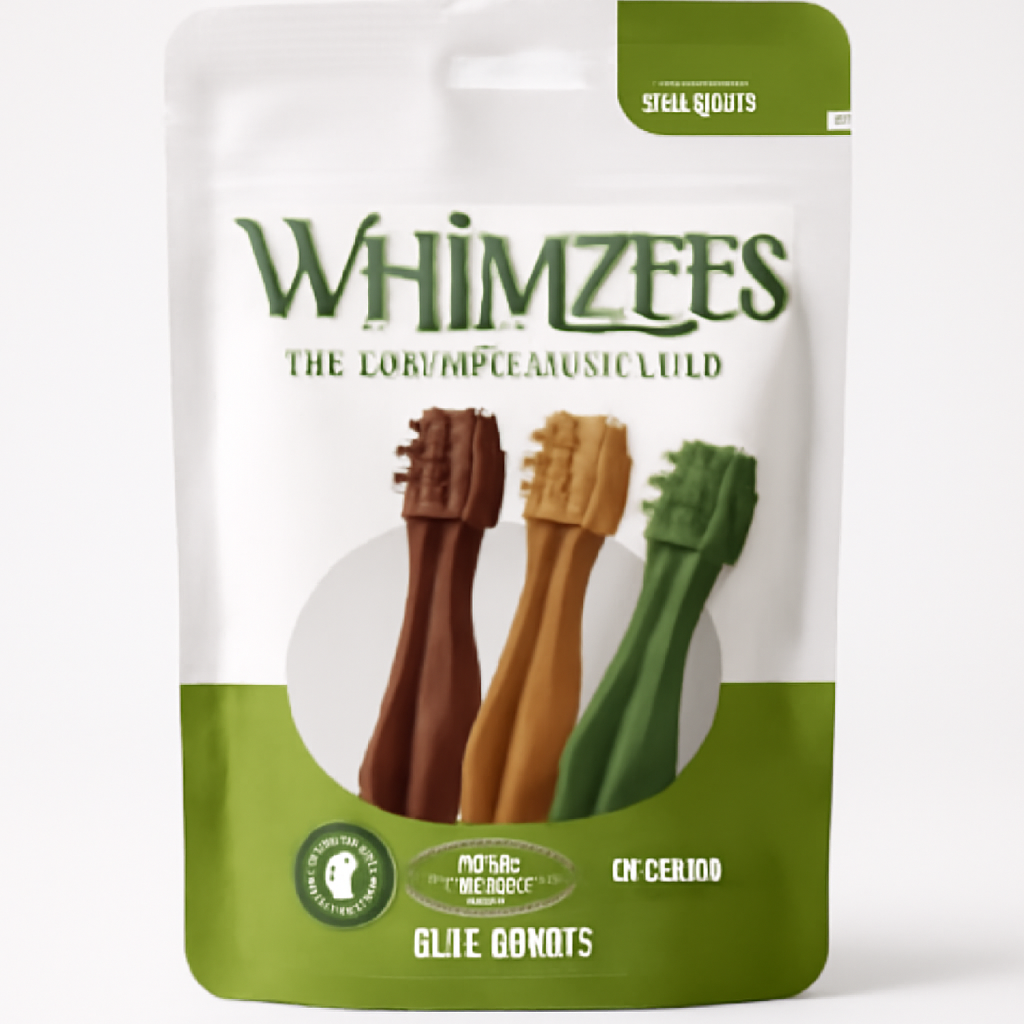
Whimzees are built around a genuinely short, plant-based ingredient list — think potato starch, pea, and natural flavor — with no added gluten, grain, or artificial anything. That simplicity is exactly what a sensitive gut needs. The textured shapes (Brushzees, Toothbrush, Alligator) are designed to work into the gumline as your dog gnaws.
Pros:
– Very short, grain-free, plant-based ingredient list
– No artificial colors, flavors, or preservatives
– Fun shapes that encourage longer chewing
– Widely available in size-specific packs
Cons:
– Not a lean-protein chew, so heavy chewers may want more durability
– Larger dogs can work through them fairly quickly
—
2. Virbac C.E.T. VeggieDent Fr3sh — Best Vet-Recommended Option
If you want dental proof plus digestibility, Virbac C.E.T. VeggieDent Fr3sh is hard to beat. It’s plant-based, carries the VOHC Seal for plaque and tartar reduction, and is a staple in veterinary offices for exactly the dogs we’re talking about. The Z-shape adds mechanical scraping action.
Pros:
– VOHC Seal — clinically shown to reduce plaque and tartar
– Plant-based and free of animal proteins that can trigger sensitivities
– Frequently recommended by veterinarians
– Freshens breath noticeably
Cons:
– Often priced higher than grocery-store chews
– Some dogs need a day or two to warm up to the taste
—
3. Greenies Original Dental Treats — Best Proven Plaque Control
Greenies are the most recognizable dental chew on the market for a reason: they carry the VOHC Seal and genuinely reduce tartar. They’re highly digestible by design (they break down more easily than they look like they would), which surprises a lot of owners. For dogs with mild sensitivities, they’re often well tolerated — though the ingredient list is longer than Whimzees or VeggieDent.
Pros:
– VOHC Seal for proven plaque and tartar control
– Formulated to be soluble and digestible
– Size-specific formulas, including options for weight management and aging dogs
– Extremely easy to find
Cons:
– Longer ingredient list than single-ingredient options
– Richer flavor may be too much for the most sensitive dogs
—
4. Merrick Fresh Kisses — Best Grain-Free with Botanicals
Merrick Fresh Kisses are grain-free and use natural botanical oils (like coconut and mint or honeysuckle) instead of synthetic breath fresheners. The double-brush design targets teeth from multiple angles. A solid middle ground for owners who want grain-free without going fully single-ingredient.
Pros:
– Grain-free recipe
– Natural botanical breath fresheners, no artificial flavors
– Double-brush texture for mechanical cleaning
Cons:
– Not VOHC sealed
– Texture is softer, so it may not last long with power chewers
—
5. Zesty Paws Dental Bones — Best with Functional Add-Ins
Zesty Paws Dental Bones pair dental cleaning with functional ingredients some sensitive dogs benefit from. They lean on cleaner recipes than typical drugstore chews and are a reasonable pick if you like the idea of a dental chew doing a little double duty. As always, check the specific formula’s label for anything your dog reacts to.
Pros:
– Cleaner recipe than most mass-market chews
– Functional ingredient options
– Reasonably priced for the category
Cons:
– Not VOHC sealed
– Ingredient lists vary by formula — read carefully
How to Introduce New Dental Chews Without Upset
Even the gentlest chew can cause a hiccup if you switch too fast. Sensitive stomachs hate sudden change. Here’s the low-drama way to transition:
1. Start small. On day one, give only a half (or even a quarter) of the recommended chew, not the full daily piece.
2. Watch the next stool. If it’s normal, you’re clear to continue. If it’s soft, hold at that small amount another day or two.
3. Increase gradually. Over 5–7 days, work up to the full-size daily chew.
4. One change at a time. Don’t introduce a new food and a new chew in the same week — you won’t know which caused a problem.
5. Keep fresh water available. Chews are dry and digestion goes smoother when your dog is well hydrated.
6. Give it after a meal. A chew on an empty stomach is more likely to cause bile vomiting in sensitive dogs.
If your dog does react, stop the chew, let the gut settle for a few days, and either retry more slowly or move to a simpler formula.
Vet Tips for Balancing Dental Health and Digestion
Dental chews are a helpful tool, but they work best as part of a bigger routine. A few things vets commonly emphasize:
– Chews supplement brushing — they don’t replace it. Brushing with a dog-safe enzymatic toothpaste is still the gold standard. A chew fills the gaps on days you can’t brush.
– Count the calories. Daily chews add up. If your dog is on the sensitive-and-round side, factor the chew into their daily calorie budget and trim their meals slightly.
– Prioritize the VOHC Seal when you want proof of dental benefit rather than marketing claims.
– Book a professional cleaning when needed. No chew reverses established tartar or gum disease — that requires a vet cleaning under anesthesia.
– Loop in your vet for chronic issues. If your dog has ongoing digestive trouble, a persistent reaction to gentle chews can be a clue worth investigating, not just a chew to swap.
– Supervise every chew. Sensitive stomach or not, gulping large pieces causes both choking and GI upset. Take away the small end piece.
Frequently Asked Questions
Are dental chews safe for dogs with sensitive stomachs?
Yes — as long as you choose a clean, limited-ingredient formula and introduce it slowly. The problem is rarely “dental chews” as a category; it’s the rich, filler-heavy formulas. Single-ingredient and plant-based chews like Whimzees and Virbac VeggieDent are generally much easier on the gut.
Grain-free or not — which is better for a sensitive dog?
It depends on the dog. Grain isn’t automatically bad, but wheat gluten is a common intolerance trigger. If your dog reacts to grain-based treats, a grain-free chew like Whimzees or Merrick Fresh Kisses is a smart test. If grains have never been an issue, a highly digestible sealed chew like Greenies can work fine.
How often should I give a dental chew?
Most are designed for once daily. For a sensitive dog, start every other day, confirm they tolerate it, then move to daily if you like. Always follow the size and frequency guidance on the specific product.
My dog got diarrhea from a dental chew — what now?
Stop the chew, offer plenty of water, and let the stomach settle for a couple of days with a bland routine. Reintroduce a simpler chew slowly. If diarrhea is severe, bloody, or lasts more than 48 hours, call your vet.
Do dental chews actually clean teeth, or is it hype?
Chews with mechanical texture do reduce plaque and freshen breath, and VOHC-sealed products have data behind them. But they clean best in combination with regular brushing and vet checkups — not on their own.
What’s the safest single-ingredient-style option?
Whimzees leads here with its short, plant-based recipe, and Virbac C.E.T. VeggieDent is the vet-favorite plant-based option with a VOHC Seal. Both avoid the rich animal proteins and fillers that most commonly upset sensitive dogs.
Our Verdict
For a dog with a sensitive stomach, the winning formula is simple: fewer, cleaner ingredients, real chewing texture, and — ideally — proof that it works.
– Best overall for sensitive stomachs: Whimzees Natural Dental Chews — the short, grain-free, plant-based ingredient list is exactly what a delicate gut wants, and the fun shapes keep dogs chewing long enough to matter.
– Best if you want vet-backed proof: Virbac C.E.T. VeggieDent Fr3sh — plant-based, VOHC-sealed, and trusted by veterinarians.
– Best proven plaque control for mild sensitivities: Greenies Original — more digestible than it looks and easy to find everywhere.
Whichever you choose, introduce it slowly, give it after a meal, keep brushing when you can, and watch that first stool. Get those basics right, and your dog can have fresh breath and a happy stomach — no trade-off required.
Always consult your veterinarian before adding a new chew to your dog’s routine, especially if they have a history of digestive issues, allergies, or pancreatitis.