Quick Answer
Your child needs an ergonomic desk and chair set that grows with them, supports proper posture, and fits your space and budget. Look for adjustable height options, breathable materials, and sturdy construction. The best combinations balance comfort, durability, and value—typically ranging from $200 for basic sets to $1,000+ for premium adjustable systems.
—
Why Ergonomics Matter for Growing Children
Here’s something most parents don’t realize: kids spend as much time at desks as they do in cars. Whether it’s homework, online learning, or creative projects, proper desk and chair setup directly impacts their posture, focus, and physical development.
Poor ergonomics in childhood doesn’t just cause immediate discomfort—it sets habits that stick into adulthood. A desk that’s too high forces kids to reach and strain their shoulders. A chair without back support teaches their spine to curve unnaturally. Over months and years, this contributes to neck pain, lower back issues, and concentration problems.
The good news? Kids’ desks and chairs have improved dramatically. Modern designs account for:
– Spinal alignment during growth spurts
– Leg clearance to prevent circulation issues
– Eye level positioning to reduce screen strain
– Adjustability since kids grow 2-3 inches per year
A proper setup costs less than a good bicycle but pays dividends in comfort, academic performance, and long-term health.
—
Best Budget-Friendly Desk and Chair Sets
If you’re outfitting a first homework station or need multiple setups, budget options deliver solid fundamentals without the premium price tag.
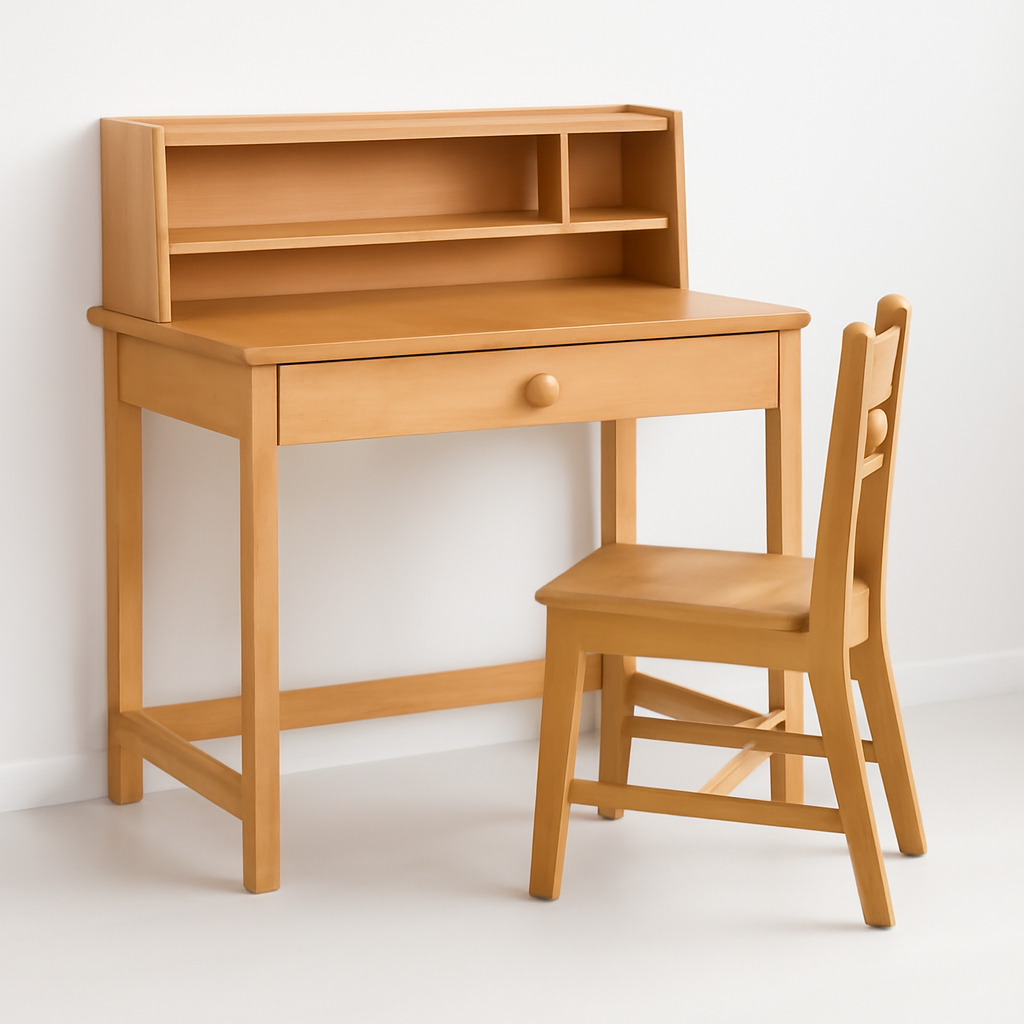
Top Budget Pick: Guidecraft Deluxe Solid Wood Desk and Chair
The Guidecraft Deluxe Solid Wood Desk and Chair Set combines real wood construction with honest functionality. This isn’t a flimsy flat-pack setup—it’s built on a hardwood frame with a spacious 36″ work surface.
Why it works:
– Solid wood won’t wobble or creak under typical use
– Tilting desktop ($5 add-on) mimics professional drafting tables
– Chair includes proper back support for posture
– Compact footprint (roughly 36″ × 24″) fits most rooms
– Recommended for ages 5-12
What to know: Heights are fixed, so you’ll outgrow this in 3-5 years. It’s a great starter investment, not a forever solution.
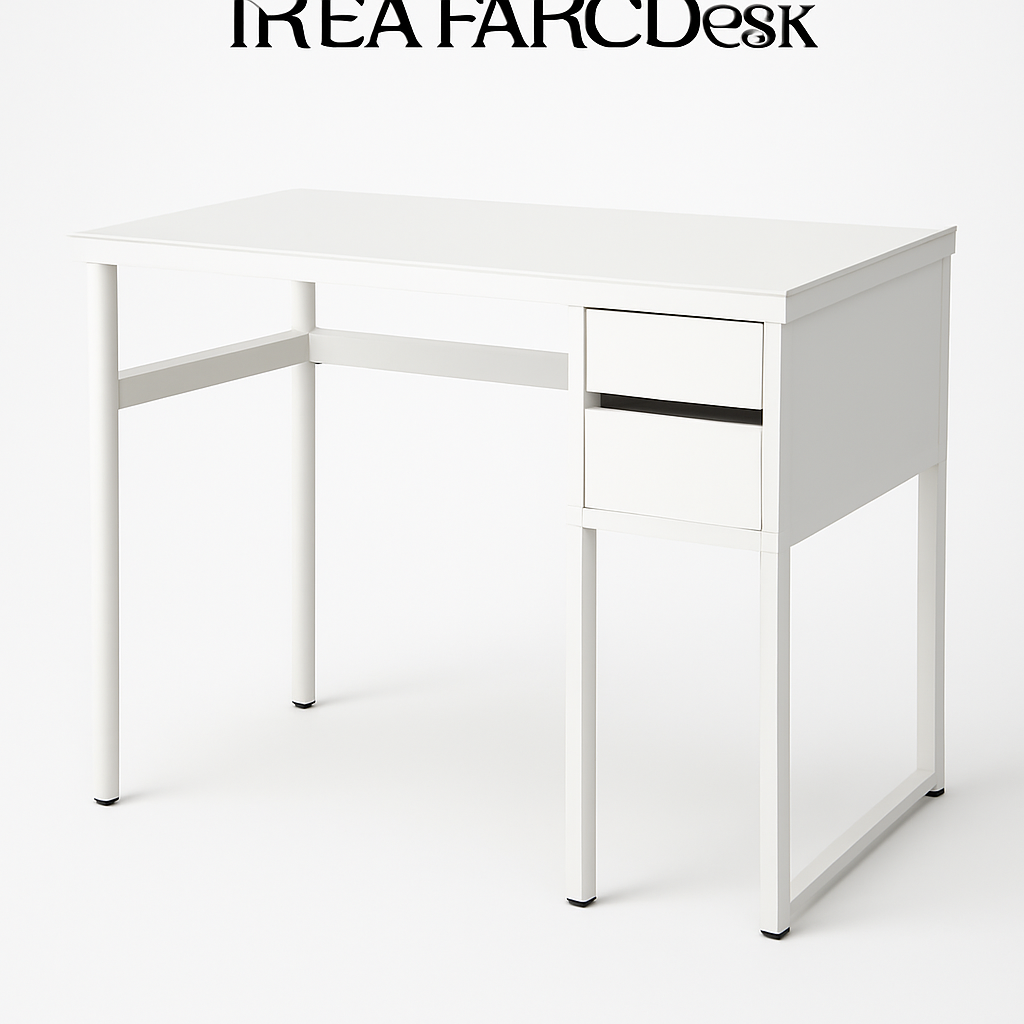
Runner-Up: IKEA Påhl Desk with Chair
The IKEA Påhl Desk is the budget baseline—and it’s honest about what it is. A simple, no-frills work surface (45″ × 22″) with a matching chair, designed for ages 6+.
Pros:
– Extremely affordable entry point
– Minimal assembly (30 minutes, one person)
– Small footprint for shared rooms
– Available in multiple colors
Cons:
– Particle board construction feels lightweight
– No height adjustment
– Limited weight capacity (around 110 lbs)
– Outgrows in 4-6 years
—
Premium Options for Long-Term Use
If you’re buying once and expecting this to last into the teen years, premium sets justify their cost through durability, adjustability, and design.
Best Premium Pick: FlexiSpot E7Q Kids Desk with Ergonomic Chair Bundle
The FlexiSpot E7Q is an electric height-adjustable desk specifically engineered for kids 6-17. This is the kind of investment that follows a child from elementary school through college.
Key features:
– Electric motor (vs. manual crank) adjusts from 22″ to 47.5″ height
– Dual-motor system for stability at any height
– Memory presets save up to 4 different heights
– Included ergonomic chair with lumbar support
– Built-in cable management
– Max weight capacity: 265 lbs
Why parents choose it:
The memory presets solve a real problem. When multiple kids share a desk, or when one child grows, you simply press a button instead of manually adjusting. The motor is whisper-quiet, so it won’t disturb other family members.
Investment perspective: Yes, it costs significantly more than basic options—but if it’s used for 8+ years by one or multiple kids, the per-year cost becomes reasonable.
Premium Alternative: Fully Jarvis Bamboo Kids Desk
The Fully Jarvis Bamboo Kids Desk competes at the premium level with sustainable materials and industrial-grade adjustability.
Standout points:
– Bamboo desktop (renewable, attractive, durable)
– Height range: 22.5″ to 48.7″
– Advanced stabilization prevents wobble at full extension
– Includes cable tray and desk organizers
– Lifetime warranty on frame
Consideration: Premium doesn’t always mean “best for kids”—Fully’s system is more builder-friendly for parents who want to customize the chair separately.
—
Height-Adjustable Desks: Growing With Your Kids
This is where you get real value for money. A fixed desk has a useful lifespan of 4-6 years. An adjustable one can serve a child from age 6 to 16+.
How Height Adjustment Works
Manual Crank: You physically turn a handle to raise/lower. Pros: no electricity, simple, cheap. Cons: takes effort, kids won’t adjust as often.
Electric Motor: Press a button or use a preset. Pros: effortless, encourages position changes, faster. Cons: costs more, needs electricity.
Height-Adjustable Comparison
| Product | Adjustment Type | Height Range | Best For | Price Range |
| FlexiSpot E7Q | Electric motor + presets | 22″–47.5″ | Long-term investment, multi-user households | |
| Fully Jarvis Bamboo | Electric motor | 22.5″–48.7″ | Eco-conscious parents, customizable setup | |
| VIVO Manual Crank | Crank handle | 19.5″–47″ | Budget-conscious, don’t mind manual adjustment | |
| Autonomous SmartDesk Core | Electric motor | 25.5″–50.5″ | Tech-forward setup, app control |
The Growth Math
A typical child gains 2-3 inches per year. Proper desk height should sit at elbow level when arms are bent at 90°. Here’s the progression:
– Age 6-7: Desk height ~20-22″
– Age 9-11: Desk height ~24-26″
– Age 13-15: Desk height ~28-30″
– Age 16+: Adult height ~28-32″
An adjustable desk grows through all these phases. A fixed desk becomes uncomfortable.
—
Top Chairs for Posture Support and Comfort
The desk matters, but the chair is where posture lives. A bad chair undermines even a perfect desk setup.
Essential Chair Features
Lumbar Support: Low back support that maintains the natural curve of the spine. Non-negotiable.
Seat Depth: Should be 2-4″ shorter than the child’s thigh length to prevent pressure behind the knees.
Armrests: Adjustable or removable. Fixed armrests that don’t match the desk height create shoulder strain.
Casters (Wheels): Smooth-rolling, lockable if possible. Kids will roll around; you want controlled rolling, not chaotic spinning.
Material: Breathable fabric or mesh. Vinyl traps heat; mesh lets air flow.
Best Kid-Specific Chairs
Autonomous ErgoChair Pro (Kids Version)
– Height adjustable 17″–21″
– Mesh back for breathability
– Synchronized tilt mechanism (reclines with you, not against you)
– Removable armrests
– Strong for kids up to 220 lbs
– Best for: Kids who need premium support but aren’t ready for full adult chairs
Herman Miller Mirra 2 in Kids Sizes
– Professional-grade ergonomics adapted for growing bodies
– Adjustable in nearly every dimension (height, back depth, armrests)
– Exceptional build quality (10-year warranty)
– Expensive but virtually indestructible
– Best for: Families treating furniture as investment-grade
Budget Option: SIDIZ T50 Kids Chair
– Designed specifically for children 5-12
– Proper lumbar support (not an afterthought)
– Breathable mesh back
– Adjustable seat height and armrests
– Solid warranty for the price
– Best for: Parents who want ergonomic quality without luxury pricing
—
Space-Saving Desks for Small Rooms
Not every home has a dedicated office nook. If space is limited, these solutions deliver function without consuming a room.
Wall-Mounted Desks
A fold-down or floating wall desk takes up just 12-18 inches of depth when not in use. Examples include:
– Small wall-mounted option: 24″–30″ wide, 16″–20″ deep
– Pros: Reclaims floor space, works in tight corners
– Cons: Limited storage, fixed position, less comfortable for long sessions
L-Shaped and Corner Desks
These snake around room corners efficiently:
– L-Shaped advantage: Two work zones (writing area + screen area) in less footprint than two separate desks
– Height consideration: Ensure both work surfaces reach the same height, or you’re creating awkward reaching
Murphy Desk Concepts
Wall-mounted desks that fold up entirely when not in use. Pros: invisible when closed. Cons: annoying to lower/raise multiple times daily, often too flimsy for regular use.
Real recommendation: If your child does 1-2 hours of homework daily, invest in a proper desk even in small spaces. The fold-down “solution” usually becomes a frustration within weeks.
—
How to Choose the Right Size for Your Child’s Age
Desk and chair sizing isn’t one-size-fits-all. Here’s how to match your child’s current and near-future needs.
Age-Based Desk Height Guidelines
| Age | Typical Height | Recommended Desk Height | Recommended Chair Height | Chair Seat Depth |
| 5-7 | 42-48″ | 18-20″ | 12-14″ | 12-14″ |
| 8-10 | 48-56″ | 22-26″ | 14-16″ | 14-16″ |
| 11-13 | 56-62″ | 24-28″ | 16-18″ | 16-18″ |
| 14+ | 62-72″ | 26-32″ | 18-20″ | 18-20″ |
The measurement method: Have your child sit with feet flat on the floor, arms at 90°. The desk should hit right at their elbow. The chair seat should be about 1 inch below the underside of their knee.
Buying Strategy by Age
Ages 5-8 (Starting School)
– Fixed-height desk is fine (cost-effective for this phase)
– Prioritize safety: rounded edges, stable base, lightweight (won’t crush fingers)
– Look for fun colors/themes to encourage use
– Example: Guidecraft or IKEA level
Ages 9-12 (Growth Spurts Begin)
– If you’re starting here, consider adjustable height (will need it in 2-3 years anyway)
– Balance fun and professional aesthetics
– Include storage (kids have supplies, art projects, books)
– This is when you transition toward higher-quality furniture
Ages 13-16 (Teen Years)
– Adjustable is essential—growth isn’t finished
– Design matters more now (teens notice if furniture looks “babyish”)
– Weight capacity becomes real (teens can exceed 180+ lbs)
– Consider adult-quality furniture they’ll use in college
Ages 17-18 (College Prep)
– Adult desk/chair combinations are appropriate
– Adjustability still helps (dorm rooms vary wildly in size)
– Durability matters—this might follow them to higher education
—
Pros and Cons: Top 2-3 Budget vs. Premium Picks
FlexiSpot E7Q (Premium)
Pros:
– Electric adjustment with memory presets saves time and frustration
– True long-term investment (8-12 years usable lifespan)
– Sturdy enough for active kids and teens
– Included ergonomic chair eliminates guesswork
– Quiet motor won’t disturb others
Cons:
– Higher upfront cost ($500-700 range)
– Needs electrical outlet
– Takes up floor space (not wall-mounted)
– Might be overkill if child only uses desk 1-2 hours weekly
Guidecraft Deluxe (Budget)
Pros:
– Real wood feels solid and long-lasting
– Appropriate for young kids starting homework routine
– Tilt-top option adds functionality
– No batteries/electricity needed
– Compact and tidy appearance
Cons:
– Fixed height limits usability to 4-6 years max
– Outgrows quickly if child is tall
– Less storage than larger desks
– Tilt function feels more “toy-like” than professional
Middle Ground: VIVO Manual Crank Desk with Quality Chair Bundle
Pros:
– Height adjustable without electricity ($200-350 range)
– Manual crank is foolproof and maintenance-free
– Usable for 8+ years across different kids
– You choose the chair separately (more control)
Cons:
– Cranking takes more effort than pressing a button
– Takes longer to adjust (kids might avoid adjusting as they grow)
– Crank mechanism can feel cheap on lower-end versions
– Less convenient than electric
—
Desk and Chair Setup Tips
Even the best furniture won’t help if it’s set up wrong.
Monitor and Screen Positioning
– Top of screen should be at or slightly below eye level
– Distance should be 20-26 inches from the face
– Angle should be neutral (not looking down, not tilted back)
Kids instinctively hunch toward screens. A monitor arm or laptop stand prevents this.
Lighting
Bad lighting causes eye strain and encourages poor posture. Aim for:
– Task lighting on the work surface (desk lamp with adjustable arm)
– Ambient lighting in the room (prevents screen glare)
– No glare on the screen (position desk to avoid window reflections)
Footrest Consideration
If your child’s feet don’t touch the floor flat, add a footrest. Dangling feet create lower back strain. A footrest can be as simple as a wooden box or as refined as an adjustable platform.
Organization
A well-organized desk reduces clutter that encourages poor posture (kids lean forward to see over piles). Include:
– Pencil holder or cup for writing supplies
– Small shelf or organizer for papers
– Cable management (prevents trip hazards)
—
Our Verdict
Best Overall for Most Families: FlexiSpot E7Q Kids Desk
This is the desk to buy if you want to set it and mostly forget it for a decade. The electric adjustment with memory presets removes friction—kids will actually adjust height as they grow instead of suffering in discomfort. The included chair is genuinely ergonomic, not an afterthought. Yes, it costs more upfront, but the per-year cost beats buying three fixed desks over the same period.
Best Budget Pick: Guidecraft Deluxe Solid Wood Desk and Chair Set
If you’re equipping a first homework station for a 5-8 year old and want honest, sturdy construction without premium pricing, Guidecraft delivers. The solid wood feels real, and you’ll genuinely enjoy looking at it. Plan to upgrade in 5-6 years—that’s the realistic lifespan—but those years will be comfortable.
Best Compromise (Budget + Adjustability): VIVO Manual Crank Desk + Autonomous ErgoChair Pro Kids
Building your own set instead of buying a bundle lets you choose quality at each component. A manual crank desk costs 40% less than electric but still adjusts. Pairing it with a genuine ergonomic kid chair (not a generic rolling stool) gives you better posture support than bundled “budget chairs.” Total investment typically $350-450.
Best Premium Alternative: Fully Jarvis Bamboo Desk
If sustainability matters to your family and you want industrial-grade adjustability, Fully’s bamboo option delivers. The environmentally conscious design appeals to older kids who care about these things. Choose your own chair for even more customization.
—
Final Thoughts
Your child will spend thousands of hours at a desk over the next 12+