Quick Answer: For most kittens under 4 months, a non-clumping litter is the safest choice — kittens explore with their mouths, and ingested clumping clay can cause intestinal blockages. Our top overall pick is Dr. Elsey’s Kitten Attract, a vet-formulated clay litter with a natural herbal attractant that speeds up litter training. If you want a fully non-clumping option, Yesterday’s News Unscented Paper Litter is the classic recommendation from shelters and vets for post-surgery and very young kittens.
—
Why Kittens Need Different Litter Than Adult Cats
A kitten isn’t a small adult cat — behaviorally or physically. Three things change the math:
They taste everything. Kittens between 4 and 16 weeks investigate the world orally. A curious 8-week-old will absolutely take a mouthful of litter, and a sodium bentonite clumping litter is designed to expand and bind when wet. That’s a genuine risk in a digestive tract the size of a pencil.
They track litter everywhere. Tiny paws with no coordination fling substrate across the room. Heavy, low-dust litters matter more than they will later.
Their lungs are small and developing. Fine clay dust that an adult cat shrugs off can irritate a kitten’s respiratory tract. Low-dust or dust-free formulas are worth prioritizing.
They’re still learning the box. This is the one people underestimate. A kitten that has a bad early experience with litter — wrong texture, strong fragrance, sharp crystals — can develop avoidance habits that take months to undo. The litter you choose in week one shapes the next fifteen years of box behavior.
—
What to Look for in Kitten-Safe Litter
Texture and Particle Size
Kittens have soft, undeveloped paw pads. Large crystal granules and coarse pellets can feel genuinely unpleasant. Fine-grain clay or soft paper pellets are gentler. If your kitten steps in, hesitates, and steps back out, texture is usually the culprit.
Dust Level
Look for “99% dust-free” or “low dust” on the label. Pour a small amount from a height and watch the cloud — that’s the same cloud your kitten is breathing at nose level.
Fragrance
Skip it. Cats have roughly 40 times more scent receptors than we do, and heavy floral or “fresh linen” perfumes are one of the most common causes of box rejection. Unscented is the default recommendation for every age, and especially for kittens.
Clumping Ability
Useful for you, potentially risky for them. See the next section — this is the core decision.
Tracking
Lightweight plant-based litters track the worst. Heavier clay tracks least. A litter mat solves most of this regardless of what you buy.
Vet-Formulated Attractants
Some litters include a natural herb blend that draws kittens to the box. If you’re litter training a rescue or a kitten with prior accidents, this is the single most effective feature you can pay for.
—
Clumping vs. Non-Clumping: Which Is Safer for Kittens?
This is the question every new kitten owner asks, and the honest answer has nuance.
The concern: Sodium bentonite clay clumps by absorbing many times its weight in liquid and forming a solid mass. The theory is that a kitten who ingests a meaningful quantity could develop an intestinal obstruction. Documented clinical cases are genuinely rare, but the potential outcome is severe enough that most veterinarians recommend caution.
The consensus recommendation:
| Kitten Age | Recommendation |
| Under 8 weeks | Non-clumping only |
| 8–16 weeks | Non-clumping preferred; clumping acceptable if kitten shows no interest in eating litter |
| 4+ months | Clumping is generally fine |
The practical counterpoint: Non-clumping litter is harder to keep sanitary. Urine soaks to the bottom of the pan and sits there, and a dirty box is itself a leading cause of litter box avoidance. If you use non-clumping, you need to fully dump and wash the box every few days — not scoop-and-top-off.
Some litters split the difference. Dr. Elsey’s Kitten Attract is a clumping clay litter but is specifically marketed and formulated for kittens, on the reasoning that its attractant and fine texture get kittens using the box correctly rather than playing in it. Plenty of vets recommend it; plenty of others prefer to wait until 4 months. Watch your specific kitten — if they’re mouthing the litter, switch to non-clumping and revisit later.
—
Our Top Picks for Best Cat Litter for Kittens
Top Picks at a Glance
| Product | Best For | Price Range |
| Dr. Elsey’s Kitten Attract | Best overall / litter training | $$ |
| Yesterday’s News Unscented | Safest non-clumping / post-surgery | $$ |
| Dr. Elsey’s Ultra Unscented | Best for multi-cat homes | $$ |
| World’s Best Cat Litter Original | Best natural clumping | $$$ |
| Arm & Hammer Clump & Seal | Best odor control (older kittens) | $$ |
| Purina Tidy Cats Naturally Unscented | Best budget clumping | $ |
| Fresh Step Crystals | Best low-maintenance (4+ months) | $$$ |
—
1. Dr. Elsey’s Kitten Attract — Best Overall
Price:
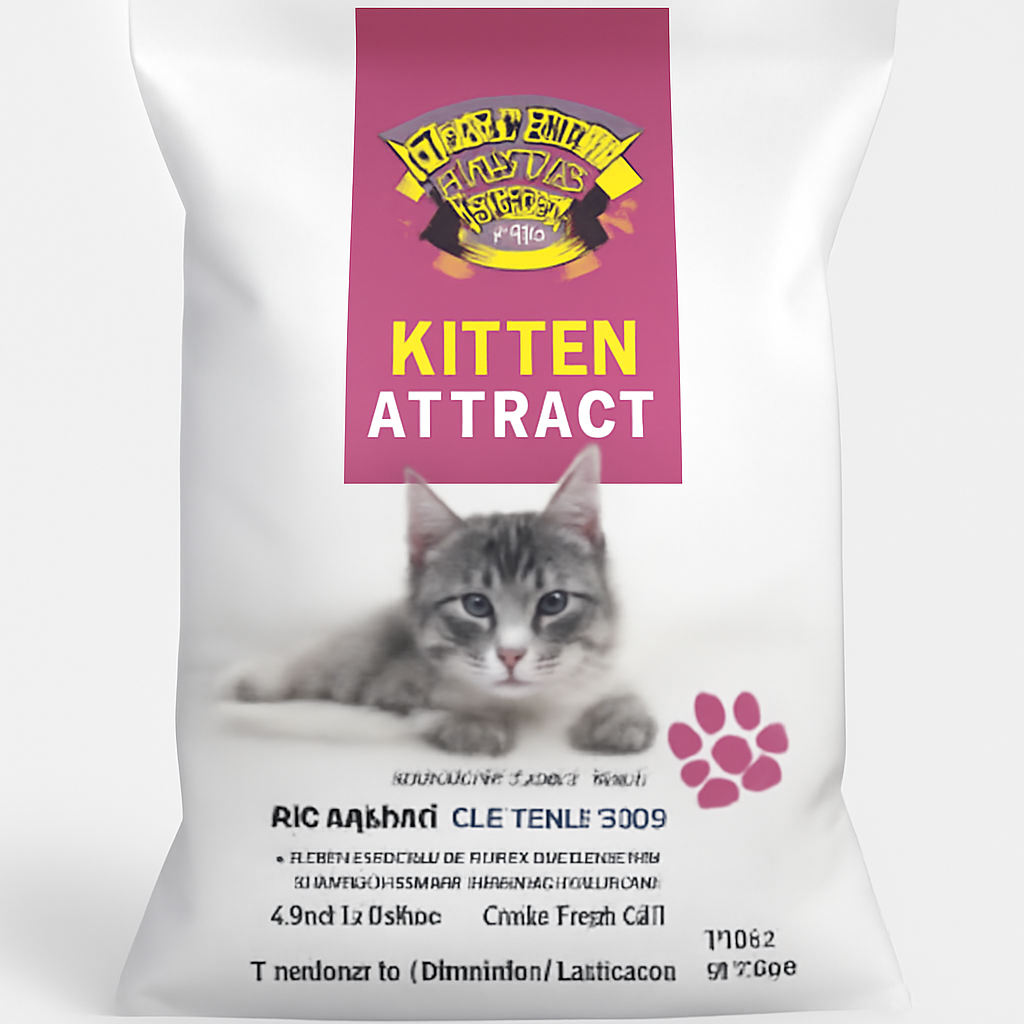
This is the litter most shelter workers and vet techs reach for when a kitten needs to learn the box fast. It’s a fine-grain clumping clay with a proprietary natural herb attractant, and the particle size is deliberately smaller and softer than the adult formula so it’s comfortable on young paws.
The attractant is not marketing fluff — it genuinely works on kittens who are hesitant or who have been going outside the box. If you’re bringing home a rescue with an unknown history, start here.
Pros
– Herbal attractant dramatically speeds up litter training
– Fine, soft texture designed specifically for kitten paws
– Unscented — no perfume to trigger avoidance
– Low dust for a clay litter
– Clumps hard, so the box actually stays clean
Cons
– It is a clumping clay litter — not ideal for kittens under 8 weeks or those who mouth their litter
– Costs more than standard clay
– Heavy bags
– You’ll likely need to transition off it eventually (Dr. Elsey’s sells a matching adult formula, which makes this easy)
Bottom line: The best choice for kittens 8 weeks and older who aren’t eating their litter.
—
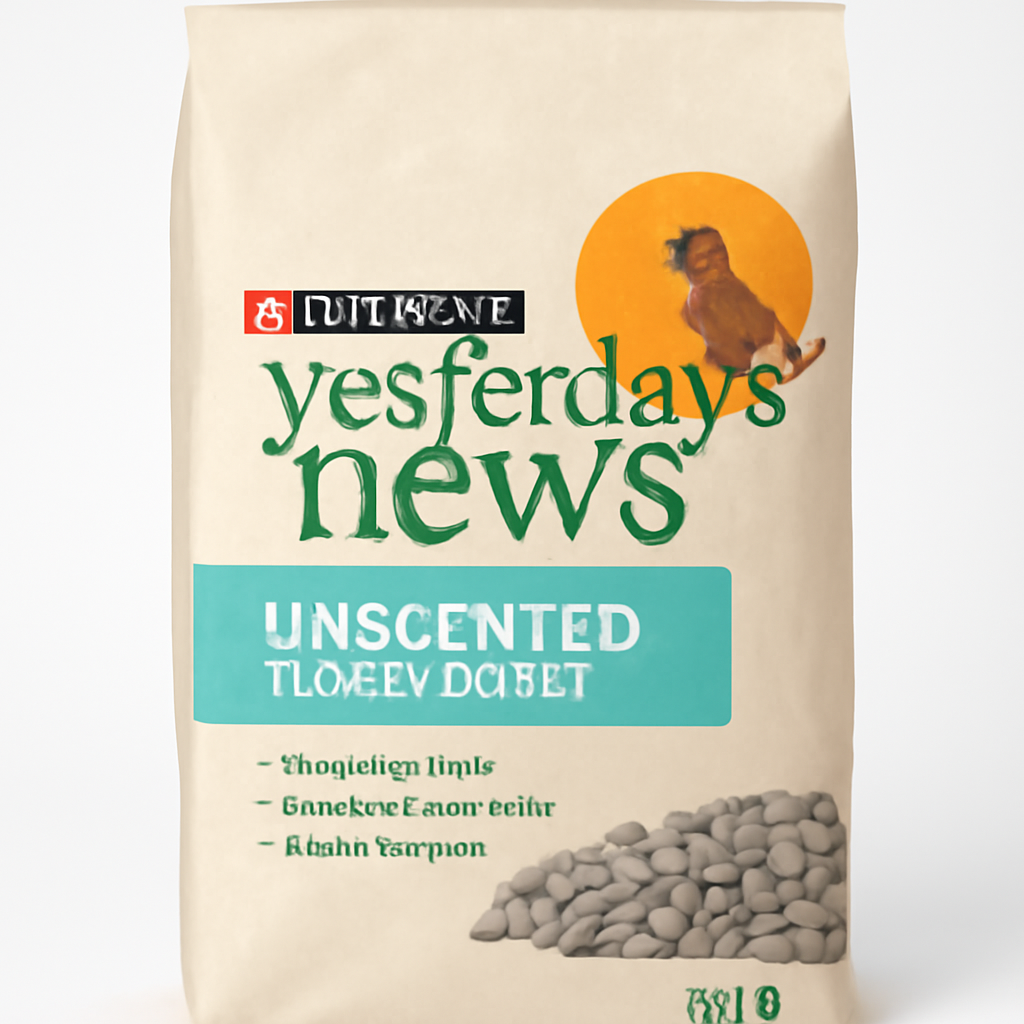
2. Yesterday’s News Unscented Paper Litter — Safest Non-Clumping Pick
Price:
Recycled paper pellets, non-clumping, dust-free, and the standard recommendation for kittens under 8 weeks and for cats recovering from declaw or abdominal surgery. If ingestion is your primary worry, this is the answer — it’s paper.
The pellets are soft and absorbent, and the near-total absence of dust makes this the best respiratory choice on the list.
Pros
– Non-clumping and paper-based — safest option for very young kittens
– Virtually dust-free
– Highly absorbent
– Recycled material, low environmental footprint
– Very low tracking (pellets are too big to stick to paws)
Cons
– Odor control is mediocre — you’ll smell it before you see it
– Requires full box changes every 2–4 days
– Some kittens dislike the pellet texture, especially if they’ve used clay before
– Doesn’t clump, so scooping urine isn’t possible
Bottom line: The default safe choice for kittens under 8 weeks. Plan on frequent full changes.
—
3. Dr. Elsey’s Ultra Unscented — Best for Multi-Cat Homes
Price:
The adult sibling to Kitten Attract, and a longtime favorite for households running several boxes. Hard clumping, unscented, low dust, and it holds up under heavy traffic better than most.
Pros
– Excellent hard clumps that don’t crumble on scoop
– Unscented but strong natural odor control
– Low dust
– Widely available and reasonably priced per pound
Cons
– Clumping clay — same age caveat applies
– Heavy
– Tracks more than pellet litters
Bottom line: The litter to graduate to once your kitten is past 4 months, especially if you have adult cats sharing boxes.
—
4. World’s Best Cat Litter Original — Best Natural Clumping
Price:
Made from whole-kernel corn. It clumps genuinely well for a plant-based litter, is flushable in most municipalities, and is lightweight enough that carrying it isn’t a workout.
The corn base means ingestion is less concerning than sodium bentonite — though “less concerning” isn’t “zero concern,” and some kittens find corn litter interesting to snack on precisely because it’s food-derived. Watch for that.
Pros: Lightweight, flushable, clumps well, plant-based
Cons: Expensive per pound, tracks significantly, some kittens try to eat it
—
5. Arm & Hammer Clump & Seal — Best Odor Control
Price:
Baking-soda-based odor control that genuinely outperforms most of the category. Best suited to kittens 4 months and up — some versions are scented, so check the label and choose unscented if you can.
Pros: Best-in-class odor control, strong clumps, widely available
Cons: Scented variants can cause box avoidance, dustier than premium clays, not for young kittens
—
6. Purina Tidy Cats Naturally Unscented — Best Budget
Price:
If cost is the constraint, this is the sensible clumping clay. Unscented, decent clumps, available in every grocery store. It’s dustier than Dr. Elsey’s and odor control is average, but it does the job and it’s cheap enough to change out frequently — which matters more than most people think.
—
7. Fresh Step Crystals — Best Low-Maintenance
Price:
Silica gel crystals absorb moisture and control odor for weeks with minimal scooping. Great for busy households — but not for young kittens. The granules are sharp-edged and uncomfortable on soft paws, and silica is not something you want a kitten ingesting. Save this for 6 months and up.
—
Litter Types Compared: Clay, Crystal, Paper, and Plant-Based
| Type | Clumping? | Dust | Odor Control | Kitten Safety | Tracking |
| Clumping clay | Yes | Low–Med | Excellent | 8 wks+ | Medium |
| Non-clumping clay | No | Med–High | Fair | Good | Medium |
| Paper pellets | No | Very low | Fair | Excellent | Very low |
| Crystal/silica | No | Low | Excellent | 6 mo+ | Low |
| Corn/wheat | Yes | Low | Good | Good* | High |
| Pine pellets | Varies | Low | Good | Good | Low |
*Corn and wheat litters are food-derived, so some kittens are drawn to eat them. Monitor early.
The short version: Paper for the youngest kittens. Clumping clay once they’re past the mouthing stage. Crystals only for older cats.
—
How to Introduce Litter to a New Kitten
Most kittens litter-train themselves — the instinct to bury waste is hardwired. Your job is mostly to not get in the way.
1. Get the box right first. Low sides, no lid, no door flap. A kitten who can’t climb in will find somewhere else to go. A disposable aluminum baking pan works fine for the first few weeks.
2. Shallow fill. One to two inches. Deep litter is unstable under tiny feet and makes the box feel unsafe.
3. Placement matters. Quiet, accessible, away from food and water bowls, and not next to a noisy appliance. If you have multiple floors, put a box on each one — a kitten won’t make it downstairs in time.
4. Introduce after meals and naps. These are the highest-probability moments. Set the kitten gently in the box and let them investigate. Don’t hold them there.
5. Never punish accidents. Punishment near the box creates box aversion, which is far harder to fix than a stain on the carpet. Clean accidents thoroughly with an enzymatic cleaner so the scent doesn’t mark the spot as a bathroom.
6. One box per cat, plus one. Two boxes for one kitten. This is the standard rule and it prevents most territorial problems later.
7. Transition slowly. When you change litters, mix 25% new into 75% old, then increase over a week or two. Sudden switches are a common cause of “my kitten randomly stopped using the box.”
—
Common Mistakes to Avoid (and When to Call Your Vet)
Mistake: Buying scented litter. The most common error. It smells nice to you and overwhelming to them.
Mistake: A box with high sides. Kittens are short. Save the tall-walled box for later.
Mistake: Covered boxes too early. Enclosures trap odor and can feel like a trap. Open boxes until they’re confident.
Mistake: Filling the box too deep. Two inches maximum for kittens.
Mistake: Not scooping enough. Twice daily with a kitten. They’re far pickier than adult cats about cleanliness.
Mistake: Switching litters abruptly. Always transition over a week or more.
Mistake: Using a litter box liner. Claws catch on the plastic, and the noise startles some kittens.
When to Call Your Vet
Contact your veterinarian if you see:
– Straining in the box with little or no output — potential urinary blockage. This is an emergency, particularly in males.
– Blood in urine or stool
– Persistent diarrhea — kittens dehydrate fast, and this can become serious within a day
– Actively eating litter — can indicate anemia or a nutritional deficiency (pica), not just curiosity
– Crying or vocalizing while urinating
– Sudden box avoidance in a previously trained kitten — often the first sign of a UTI, not a behavioral problem
– Vomiting combined with lethargy and no stool — possible obstruction
The pattern worth internalizing: a kitten that was using the box and stops is usually telling you something is medically wrong. Treat it as a health signal first and a behavior problem second.
—
Our Verdict
For most people bringing home a kitten 8 weeks or older: Dr. Elsey’s Kitten Attract. The herbal attractant makes litter training close to effortless, the fine texture is genuinely designed for kitten paws, and it’s unscented. It’s the pick that solves the hardest part of the problem — getting the kitten to reliably use the box in the first place.
For kittens under 8 weeks, or any kitten you’ve caught mouthing their litter: Yesterday’s News Unscented. Non-clumping paper removes the ingestion concern entirely. You’ll trade some odor control and do full box changes every few days, but for the first month or two that’s a reasonable trade.
On a budget: Purina Tidy Cats Naturally Unscented does the job for meaningfully less.
Once your kitten passes 4 months: graduate to Dr. Elsey’s Ultra Unscented — especially in a multi-cat home — or World’s Best Cat Litter if you want a plant-based, flushable option.
The mistake to avoid is buying the litter that’s most convenient for you before your kitten has established a solid box habit. Get the habit locked in first with a safe, unscented, kitten-appropriate litter. Optimize for your own convenience in month four.
—
Always consult your veterinarian about your specific kitten’s needs, particularly if they have a history of urinary issues or are recovering from surgery.