Quick Answer
If you want the best cat litter box right now, the Litter Robot 4 delivers on automation and odor control, while the Catit Jumbo offers a budget-friendly option for most households. For multiple cats, the Nature’s Miracle Advanced Odor Control handles the job efficiently. All three balance price, durability, and cat comfort—keep reading to find your perfect match.
—
What to Look for in a Cat Litter Box
Before you buy any litter box, understand what actually matters for your cat’s health and your home.
Size & Space Requirements
This is non-negotiable. Your litter box should be at least 1.5 times the length of your cat from nose to tail. A cramped box leads to accidents outside the litter area, which defeats the entire purpose. Measure your cat first—many people skip this and end up with an undersized box their cat refuses to use.
Consider your home layout too. Corner placement, bathroom accessibility, and traffic flow all matter. Cats want privacy but also quick access. A hidden litter box in a laundry room is ideal; a box in a high-traffic living room isn’t.
Material & Durability
Plastic degrades over time, especially with constant moisture and cat urine. Look for high-density polyethylene or reinforced plastic that resists cracking and odor absorption. Metal components should be stainless steel to prevent rust. Some boxes use wood or cardboard as alternatives—these are eco-friendly but require more frequent replacement (typically every 3-4 months vs. 1-2 years for plastic).
Odor Control Technology
This is what separates good boxes from great ones. Standard options include:
– Carbon filters (replace every 2-4 weeks)
– Ventilation systems (mechanical or natural airflow)
– Antimicrobial linings (reduce bacteria growth)
– Enzyme-based treatments (break down urine at the molecular level)
The best boxes combine multiple strategies. A single carbon filter isn’t enough if your box lacks ventilation.
Ease of Cleaning
You’ll be scooping this box multiple times per week. Look for:
– Easy-access lids that don’t require two hands
– Sloped bottoms that funnel clumps toward the front
– Removable trays for quick emptying
– Non-stick surfaces that prevent litter from sticking
High sides prevent tracking (litter on the floor), but make cleaning harder. It’s a tradeoff.
Automatic vs. Manual
Automatic boxes cost 3-4x more ($300-$600) but save 30-45 minutes per week on cleaning. Manual boxes ($20-$100) require daily scooping but are simpler and less likely to malfunction. Your cat’s personality matters here too—some cats are nervous around moving parts.
—
Best Overall Cat Litter Boxes
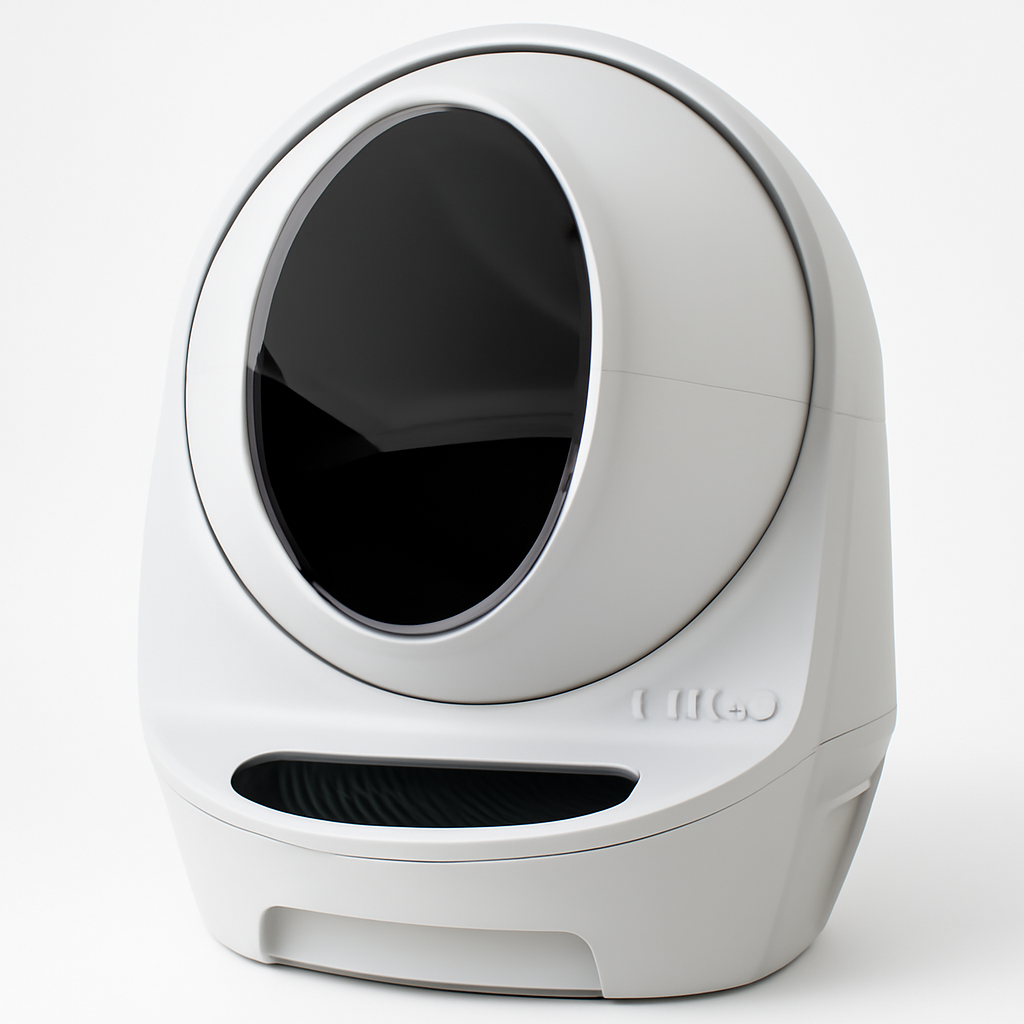
Litter Robot 4
Price:
The Litter Robot 4 is the gold standard for automatic boxes in 2026. This WiFi-connected device cleans itself after each use, separates waste into a drawer that holds up to two weeks of litter, and alerts your phone when it needs emptying.
Why it works:
– Patented sifting technology works with any clumping litter
– Automatic odor detection and nightlight feature
– Health monitoring tracks litter box usage (useful for detecting UTIs or kidney issues early)
– Whisper-quiet operation (68 dB—quieter than a refrigerator)
Cons:
– High upfront cost ([$CHECK PRICE])
– Requires electricity and WiFi
– Some cats take time adjusting to the automated motion
– Replacement litter trays can be pricey
Best for: Multi-cat households, busy owners, cats with health issues requiring monitoring
—
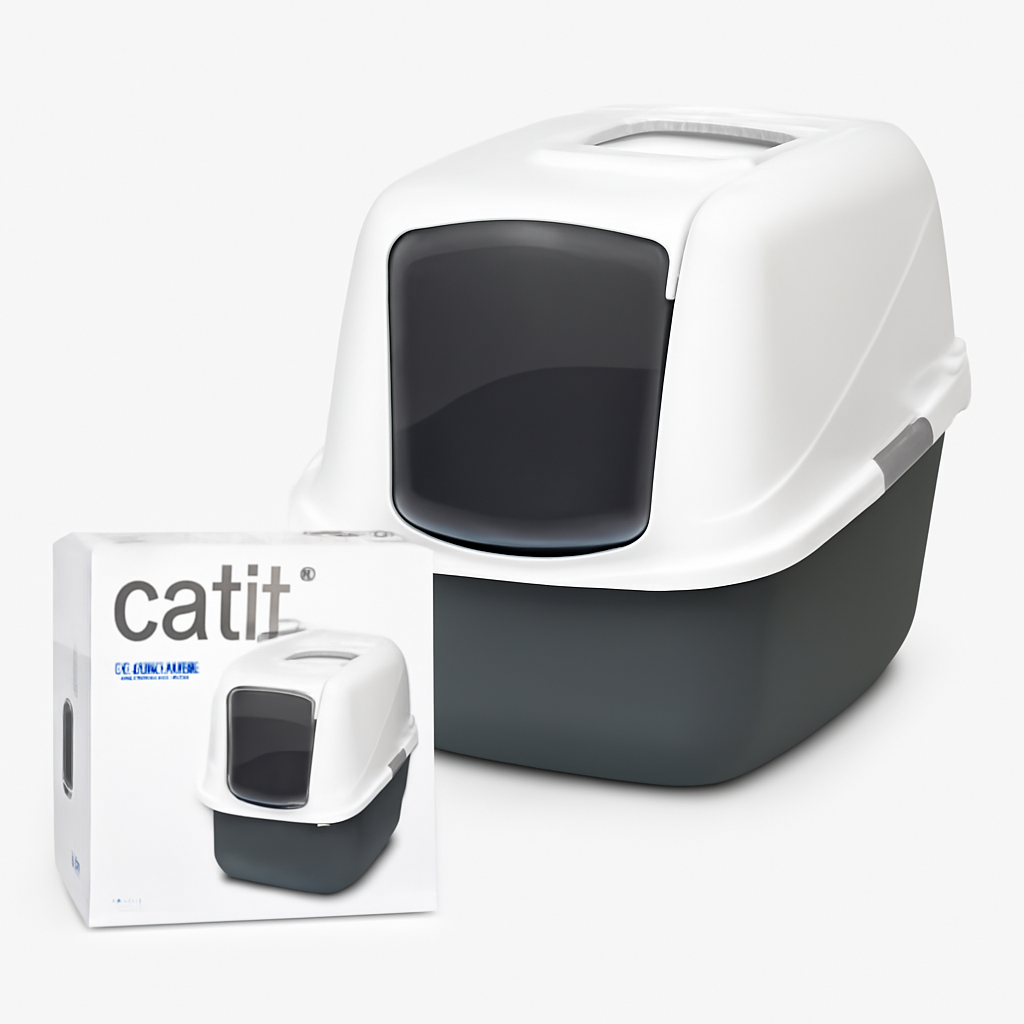
Catit Jumbo Litter Pan
Price:
The Catit Jumbo is a traditional litter box that prioritizes what cats actually want: space and ventilation. At 24″ x 16″, it’s spacious enough for even large breeds, with a low entry point for senior cats.
Why it works:
– High-sided design prevents litter scatter without feeling claustrophobic
– Smooth, sloped interior reduces waste sticking
– Durable polypropylene construction (5-year lifespan typical)
– Affordable and widely available
Cons:
– Manual scooping required
– No built-in odor filtration
– Takes up significant floor space
– Darker colors show dust more easily
Best for: Budget-conscious owners, households with one cat, homes with space to spare
—
Nature’s Miracle Advanced Odor Control Litter Box
Price:
This semi-enclosed box uses enzyme-based liners and built-in charcoal filtration to tackle odor at the source. The hinged roof opens fully for easy cleaning, and the bottom tray slides out like a drawer.
Why it works:
– Pre-treated liners contain natural enzymes that break down urine odor
– Dual carbon filtration system (top and bottom)
– Works with lightweight or crystal litters
– Medium price point balances features and cost
Cons:
– Requires purchasing replacement liners (adds ongoing cost)
– Some cats feel trapped in the enclosed design
– Charcoal filters need replacement every 3-4 weeks
– Slightly smaller than the Catit Jumbo
Best for: Apartment dwellers, odor-sensitive households, owners wanting semi-automation without full robot complexity
—
Top Picks at a Glance
| Product | Best For | Price Range | Key Feature |
| Litter Robot 4 | Automation & health monitoring | [$CHECK PRICE] | WiFi tracking, self-cleaning |
| Catit Jumbo | Budget & space | [$CHECK PRICE] | Large size, durable plastic |
| Nature’s Miracle Advanced | Odor control | [$CHECK PRICE] | Enzyme liners, dual filtration |
| Petmate Booda Dome | Design & accessibility | [$CHECK PRICE] | Low entry, removable hood |
—
Best Budget-Friendly Options
Not everyone needs (or wants) a $500 litter box. Here’s what actually delivers on a budget.
What Budget Actually Means
A “budget” box costs under $60. Below that price point, you’re usually sacrificing durability or odor control. Above $60 but under $150, you get better materials and design. Don’t assume cheaper = better value—a $35 box you replace twice a year costs more than a $80 box lasting three years.
Petmate Booda Dome
Price:
The Booda Dome combines affordability with thoughtful design. The removable hood gives you quick access for scooping, while the low entry point works for senior or arthritic cats. The charcoal filter behind the door catches odors without being intrusive.
Pros:
– Litter tracking prevention (raised edges, low entry)
– Tool-free assembly
– Attractive rounded design fits modern bathrooms
– Works with standard clumping litter
Cons:
– Charcoal filters need replacement ($15-20 every 4-6 weeks)
– Smaller than the Jumbo (good for single cats, tight for large breeds)
– Hood can be finicky to remove consistently
Verdict: Best budget pick if your cat is small-to-medium sized and you don’t mind replacing filters regularly.
—
Van Ness Large Corner Litter Box
Price:
A completely open design with practical corner placement. This box relies on simplicity—no filters, no moving parts, just smart design that reduces odor naturally through ventilation.
Pros:
– Fits snugly in room corners (saves floor space)
– High sides prevent tracking effectively
– Open design means maximum ventilation
– No filters to buy = lowest ongoing cost
– Lightweight and easy to move
Cons:
– Requires consistent daily scooping
– No odor control features
– Open top means some odor escapes into the room
– Not ideal for households that are away frequently
Verdict: Choose this if you’re home daily, live alone with your cat, and can commit to regular scooping.
—
Best Automatic & Self-Cleaning Models
Automatic boxes have evolved dramatically since 2024. Here’s what’s worth the premium in 2026.
How Automatic Boxes Work
Most automatic boxes use one of three mechanisms:
1. Sifting cylinders (Litter Robot)—rotate to separate waste
2. Conveyor belts (CatGenie)—transport waste to collection area
3. Raking mechanisms (Enabot SureFlap)—pull waste to the side
Sifting is most reliable and works with any clumping litter. Conveyor systems are gentler but limited to specific litters. Raking is noisy and can jam.
Litter Robot 4 (Worth the Price)
We covered this above, but the automation justifies itself when you calculate time savings. At 8-10 minutes per day scooping (70-80 minutes per week), an automatic box pays for itself in saved time within 2-3 years. Add health monitoring and multi-cat capability, and you’re looking at a genuine productivity gain.
Hidden benefit: Automatic boxes are quieter about odor because waste is isolated immediately. Your home stays fresher without you obsessing over scooping schedules.
CatGenie 120
Price:
The CatGenie is the only self-washing litter box on the market. It connects to your water supply, automatically flushes waste, and uses washable pellets instead of traditional litter. It’s controversial—some cats love it, others refuse it entirely.
Pros:
– Truly hands-free (just refill pellets every 2-3 weeks)
– Uses water to wash pellets between uses
– No litter dust or tracking
– Works well for homes near water sources
Cons:
– Steep learning curve for cats (works like a toilet)
– Not suitable for multi-cat homes (cats become territorial)
– Requires plumbing access
– Pellets cost more than traditional litter
– Makes noise during wash cycles (can startle cats)
Verdict: Innovative but requires cat buy-in. Not for everyone.
—
Best Litter Boxes for Multiple Cats
The golden rule: one box per cat, plus one extra. So three cats need four boxes minimum. Many owners ignore this and end up with behavioral problems.
Space & Capacity Needs
With multiple cats, you’re essentially running a commercial operation. A single large box is often better than two medium boxes because:
– Cats can stagger bathroom visits (reducing conflict)
– More volume means less frequent cleaning
– Easier to monitor individual health
Minimum size: 30″L x 20″W for two cats, 36″L x 24″W for three or more.
Top Multi-Cat Solutions
Litter Robot 4 stands out here because:
– One unit handles multiple cats efficiently
– Health monitoring distinguishes between cats
– Waste capacity supports 2+ week intervals
– Reduces territorial disputes (auto-cleaning means no “claiming”)
If you can’t afford an automatic box, get the Catit Jumbo Litter Pan (two units) positioned in different rooms. Cats feel safer with options.
—
Best Odor Control Solutions
Odor is the #1 complaint from cat owners. Here’s how to actually fix it.
The Odor Control Hierarchy
1. Litter quality (50% of the battle)—Use excellent litter first
2. Box design (30%)—Ventilation matters more than filters
3. Filtration (15%)—Carbon filters help but aren’t magic
4. Maintenance (5%)—Daily scooping beats fancy features
Most owners skip step 1 and buy premium filters instead. That’s backwards.
Best Litter for Odor Control
Pair any of our recommended boxes with premium litter:
– Dr. Elsey’s Ultra ($30 for 40 lbs)—Highly absorbent, low dust
– Worlds Best Cat Litter ($25-35 for 28 lbs)—Plant-based, naturally odorous
– Precious Cat Pro ($30 for 40 lbs)—Recommended by veterinarians
These work better than budget litter in any box.
Premium Filtration Boxes
Nature’s Miracle Advanced combines:
– Enzyme-treated liners (enzymatic action > carbon absorption)
– Dual charcoal filters (top removes ammonia, bottom catches airborne odors)
– Enclosed design traps smell naturally
Enzyme-treated liners genuinely work better than carbon alone. Enzymes break down uric acid before it becomes ammonia. Cost is higher ($0.50-1.00 per liner vs. free boxes), but odor control is legitimately superior.
—
How to Choose the Right Size & Style
Getting this wrong leads to behavioral problems your cat suffers from.
Measuring Your Cat
Stand your cat on a flat surface. Measure from the tip of the nose to the base of the tail (not including tail length). The litter box should be at least 1.5x this measurement.
Example: 18-inch cat needs a minimum 27-inch box. This sounds large, but it’s necessary for comfort.
Physical Limitations
Senior cats (10+ years):
– Low entry point (3-4 inches max)
– Open or easily removable top (avoid enclosed boxes)
– Avoid automatic (noise/movement can be stressful)
Large breeds (Maine Coons, Bengals):
– Extra-large boxes (24″+ length)
– High sides to prevent litter scatter
– Sturdy construction (lighter boxes can tip)
Kittens & young cats:
– Accept enclosed boxes more readily
– Appreciate higher sides for play
– Can handle low entry points without issue
Style Considerations
Enclosed vs. Open:
– Enclosed = better odor control, less tracking, more privacy for the cat
– Open = easier to clean, better ventilation, less intimidating for some cats
Most cats prefer slightly enclosed (like a semi-dome) rather than fully exposed or completely enclosed.
Color & Aesthetics:
– Light colors show litter dust and discoloration
– Dark colors hide dirt but show dust more
– Mid-tone grays/taupes are the sweet spot
– Design matters less than function (most cats ignore aesthetics)
Placement Strategy
– Multiple boxes = different rooms (cats feel safer with options)
– Away from food/water (cats are clean animals and dislike proximity)
– Quiet, low-traffic areas (reduce stress during vulnerable moments)
– Easy human access (you’ll be cleaning daily, factor in convenience)
—
Comparison: Pros & Cons of Top 3 Picks
Litter Robot 4
| Pros | Cons |
| Automatic sifting saves 45+ min/week | High upfront cost ($CHECK PRICE) |
| WiFi health monitoring catches issues early | Requires electricity and WiFi |
| Works with any clumping litter | Some cats take weeks to adjust |
| Minimal odor (waste isolated immediately) | Replacement parts are expensive |
| Perfect for multi-cat homes | Rare mechanical issues reported |
Catit Jumbo
| Pros | Cons |
| Affordable ($CHECK PRICE) | Manual scooping required (daily) |
| Extremely durable (5+ year lifespan) | Takes up considerable floor space |
| Large size accommodates big cats | No built-in odor control |
| Zero learning curve (cats adapt immediately) | Litter tracking still occurs with any open box |
| No filters to replace | Heavier than smaller boxes |
Nature’s Miracle Advanced
| Pros | Cons |
| Excellent odor control (enzyme liners) | Requires purchasing liner refills |
| Semi-enclosed reduces odor in room | Charcoal filters need frequent replacement |
| Dual filtration system | Some cats feel confined in enclosed design |
| Mid-range price ($CHECK PRICE) | Smaller capacity than Jumbo |
| Works with multiple litter types | Slightly harder to clean than open boxes |
—
Our Verdict: Which Litter Box Should You Buy?
Choose the Litter Robot 4 if:
– You have multiple cats
– You’re willing to invest upfront for time savings
– You want health monitoring capabilities
– Your cat isn’t noise-sensitive
Choose the Catit Jumbo if:
– You have a single cat (or two)
– Budget is your primary concern
– You’re home daily and can commit to regular scooping
– You prioritize simplicity over automation
Choose Nature’s Miracle Advanced if:
– Odor control is your biggest concern
– You want some automation without full robotics
– Your