# Best Desk Chair for Back Pain 2026: Top Picks
Quick Answer
If you spend 8+ hours a day sitting and your back is screaming at you, you need a chair that actually supports your spine—not one that looks cool on Instagram. The best desk chairs for back pain combine adjustable lumbar support, proper recline mechanics, and seat depth adjustment. Look for brands like Herman Miller, Steelcase, and Autonomous that prioritize ergonomics over aesthetics.
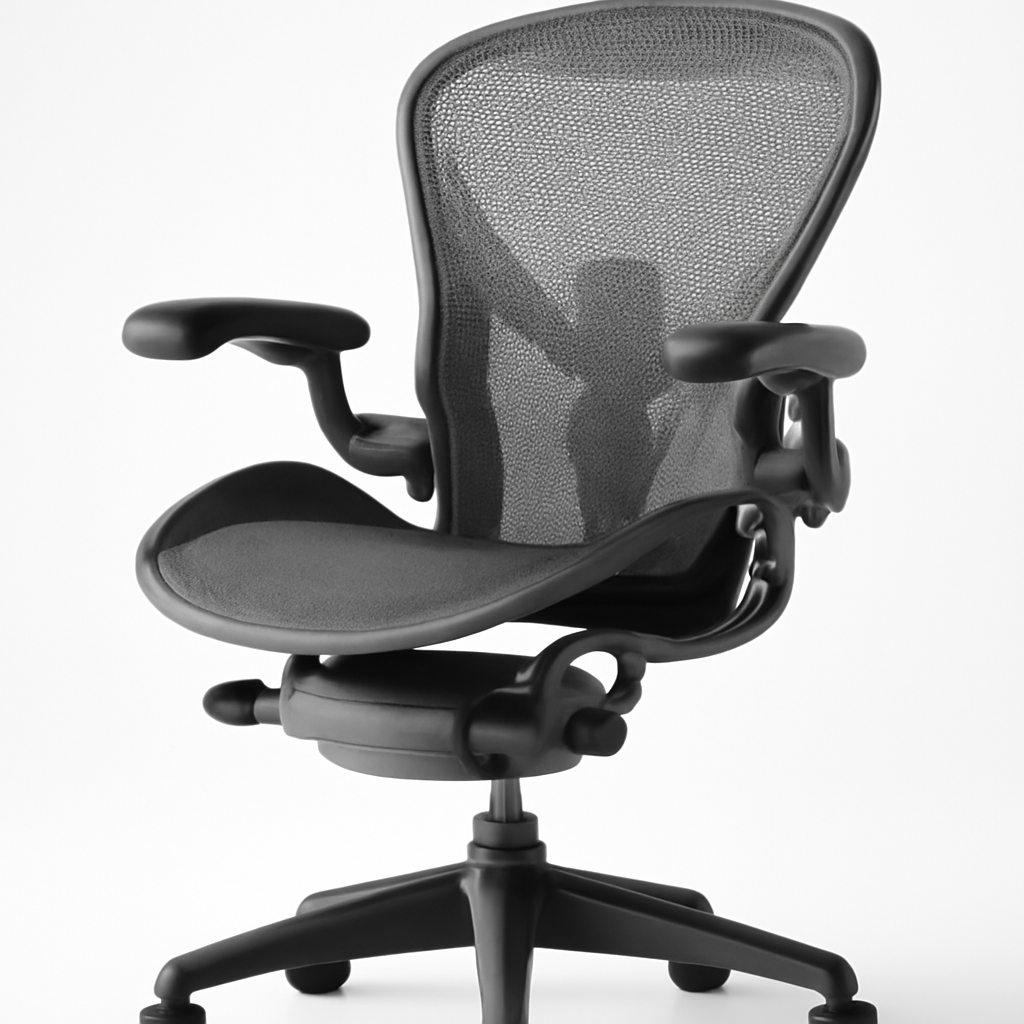
The gold standard is the Herman Miller Aeron CHECK PRICE], which has been the benchmark for 30 years. But if you’re budget-conscious, the [Autonomous Premium Ergonomic Chair [CHECK PRICE] delivers 80% of the benefits at 40% of the price.
—
What to Look for in a Back-Pain-Friendly Desk Chair
Before dropping $300-$1,500 on a chair, understand what actually matters for your spine. Not all “gaming chairs with RGB lights” will fix your back—in fact, most make it worse.
Essential Features for Lumbar Support
Adjustable lumbar support isn’t optional—it’s non-negotiable. Your lower back has a natural curve (called lordosis), and your chair needs to support that specific curve, not flatten it or over-exaggerate it. Look for:
– Depth-adjustable lumbar support: This lets you move the support point up and down to match your spine
– Width and firmness options: Some chairs let you adjust how wide the support is
– Material quality: Mesh breathes better than vinyl, but memory foam provides more targeted support
Seat Depth and Width Matter
A seat that’s too deep pushes your knees down and cuts off circulation. Too shallow and your thighs don’t get support. Look for:
– Seat depth between 18-20 inches for most adults (measure from backrest to front edge)
– Waterfall edge design: The front curves down gradually instead of having a hard edge that digs into your legs
– Width that fits without squishing: Typically 16-18 inches wide
Recline and Tilt Mechanisms
Not all recline is created equal. A cheap tilt mechanism locks up when you lean back, but premium chairs use:
– Synchro tilt: The backrest and seat move together at a 2:1 ratio, keeping you comfortable as you recline
– Free float recline: Lets you adjust tension so you can rock back without effort
– Tension knob: Allows personalization of how stiff the recline feels
Armrest Adjustability
Your shoulders and neck suffer when armrests don’t adjust. You need:
– Height adjustment: Should reach your elbows when arms are at 90 degrees
– Width/pivot adjustment: To move in and out and rotate
– Removable or flip-up design: For under-desk positioning if needed
—
Best Overall Desk Chair for Back Pain
Herman Miller Aeron [CHECK PRICE]
The Aeron is the chair that orthopedic surgeons recommend. It’s been around since 1994, and for good reason.
Why it wins:
– PostureFit technology: A uniquely curved lumbar support that stabilizes your pelvis (most chairs miss this)
– 8Z Pellicle seating surface: Breathable mesh that doesn’t sag, even after 5+ years
– Full adjustability: 12 adjustment points including lumbar depth, seat height, and armrest angle
– Proven durability: 12-year warranty because Herman Miller knows it’ll last
– Available in three sizes (A, B, C) so you get a proper fit whether you’re 5’2″ or 6’4″
Pros:
– Truly solves back pain for most users (not just temporary relief)
– Investment-grade chair that holds resale value
– Backward-compatible with most standing desk converters
– PostureFit specifically targets lower back issues
Cons:
– Premium price point ($1,295-$1,595 depending on size)
– Takes 15-20 minutes to properly adjust all settings
– Minimal cushioning feels “firm” to some users initially (but this is why it works)
Best for: Anyone with chronic lower back pain who’s tried 3+ other chairs and failed. Corporate offices. People who work 8+ hours daily.
—
Best Budget-Friendly Option
Autonomous Premium Ergonomic Chair [CHECK PRICE]
Autonomous has disrupted the standing desk market for years, and their ergonomic chair is their strongest product.
Why it’s the best value:
– Adjustable lumbar support with memory: You adjust it once, and the chair remembers your setting
– 4D armrests: Height, width, depth, AND angle adjustment (most budget chairs don’t have depth)
– SynchroPro tilt mechanism: Matches Herman Miller’s synchro-tilt logic but at a fraction of the cost
– Breathable mesh: Won’t turn into a sweat factory by afternoon
– One-year trial period: If your back doesn’t improve, return it (though most people keep it)
Pros:
– $400-$600 price range makes it accessible
– Customer reviews specifically mention back pain relief
– Easy assembly (30 minutes vs. 90+ for some premium brands)
– Straightforward adjustments without a 20-page manual
– Good lumbar adjustment without being overcomplicated
Cons:
– Slightly less durable than Herman Miller (5-year vs. 12-year warranty)
– Armrests aren’t quite as smooth as premium brands
– Seat cushioning softens faster (still takes 3+ years though)
– Smaller brand, so fewer local showrooms to test
Best for: Remote workers on a budget. Anyone spending $4,000-$8,000 on a standing desk who needs to stop at $600 for the chair. People who want 90% of the features for 50% of the price.
—
Best Ergonomic Features for Lumbar Support
Steelcase Leap [CHECK PRICE]
If the Aeron is the reliability champion, the Steelcase Leap is the innovation champion. It has features specifically designed for problematic backs.
Unique features:
– LiveBack technology: The backrest flexes with your spine’s natural movement instead of staying rigid (this is genuinely innovative)
– Adjustable back tension: You can make the backrest stiffer or softer to match your preference
– Seat angle adjustment: Tilts independently of the back, helping with hip positioning
– Natural glide technology: The whole seat moves slightly forward as you tilt back, reducing strain
– Available in mesh or fabric options
Pros:
– LiveBack is genuinely superior for dynamic sitting (people who move around a lot)
– Comes in tall and small versions for proper sizing
– Adjustable back tension solves the “one-size-fits-all” problem
– Excellent for people with existing back injuries
Cons:
– Price rivals the Aeron ($1,100-$1,400)
– Requires understanding 8-10 adjustments to maximize benefits
– The innovation means fewer service centers if repairs needed
– Heavier than some competitors
Best for: People with multiple back issues (stenosis, disc problems, etc.). Office workers who shift positions constantly. Anyone who values innovation and customization over simplicity.
—
How to Adjust Your Desk Chair for Maximum Comfort
You bought a quality chair—now don’t sabotage it with poor adjustments. This is where 70% of people fail.
Step 1: Set Your Seat Height First
The rule: Feet flat on floor, knees at 90 degrees, thighs parallel to ground.
– Adjust height so your knees are slightly lower than your hips
– Your feet should rest flat (not on tiptoes)
– If feet don’t reach the floor, use a footrest
– Common mistake: Sitting too high causes legs to dangle and reduces circulation
Step 2: Adjust Lumbar Support Depth
This is the #1 missed step.
– Sit all the way back in the chair
– Locate the lumbar support mechanism (usually a knob on the side or back)
– Adjust forward/backward until the curve matches the small of your back (about 3-4 inches above your butt)
– It should feel like a gentle hug, not a punch
Test it: Reach behind you—you should barely be able to slip a finger between the chair and your lower back.
Step 3: Adjust Lumbar Support Height
– The highest point of lumbar support should hit around your L4-L5 vertebrae (roughly 4 inches above your hips)
– If it’s too low, it doesn’t support anything
– If it’s too high, it presses on your mid-back
Step 4: Set Armrest Height and Position
– Elbows should be at 90 degrees when arms rest
– Armrests should support your weight without forcing shoulders up
– If too high, you’ll shrug your shoulders (causes neck pain)
– If too low, you’ll lean to one side
Step 5: Fine-Tune Recline Tension
– Adjust the tilt tension so you can recline slightly without effort
– You shouldn’t feel “stuck” when leaning back
– But it shouldn’t feel floppy either
Pro tip: Spend 5 minutes adjusting every week for the first month. Your spine will tell you what’s wrong.
—
Common Back Pain Mistakes to Avoid While Working
Even the best chair won’t help if you’re sabotaging yourself with bad habits.
Mistake #1: Not Taking Micro-Breaks
Your discs compress gradually. After 90 minutes, they’re 25% thinner. After 4 hours, they’re 50% thinner. Standing for 10 minutes every hour rehydrates them.
Fix: Set a timer for every 50 minutes. Stand, stretch, walk 20 steps. It takes 90 seconds.
Mistake #2: Slouching Forward (Text Neck Posture)
Even a $2,000 chair can’t fix this. Your head weighs 12 pounds—but it feels like 60 pounds when tilted forward 45 degrees. Your posterior chain muscles scream.
Fix:
– Monitor should be at eye level (top of screen at 15-20 degrees below horizontal eye line)
– Keyboard should be at elbow height
– If using a laptop, buy a $20 laptop stand
Mistake #3: Crossing Your Legs
Feels comfortable, but it creates unequal pressure on your hips and lower back. Creates asymmetrical stress on your L5-S1 disc.
Fix: Keep both feet planted or rest one foot on a footrest.
Mistake #4: Leaning to One Side
Usually happens because one armrest is higher, or your desk is too deep. Creates repetitive micro-stress on one side of your spine.
Fix: Check that armrests are equal height. Desk should be 10-12 inches from your torso, not 18 inches away.
Mistake #5: Ignoring Pain
“I’ll just push through it” is how temporary back strain becomes chronic back pain. Pain is information.
Fix: If something hurts after 2-3 weeks of proper adjustment, consult a physical therapist or chiropractor. It might not be the chair—it might be your desk height, monitor position, or the mattress you sleep on.
—
Desk Chair Comparison Chart
| Product | Best For | Lumbar Support | Price Range | Warranty |
| Herman Miller Aeron | Chronic back pain, all-day users | PostureFit (best-in-class) | $1,295-$1,595 | 12 years |
| Autonomous Premium Ergonomic | Budget-conscious remote workers | Adjustable with memory | $400-$600 | 5 years |
| Steelcase Leap | Dynamic movers, injury recovery | LiveBack technology | $1,100-$1,400 | 12 years |
| Logitech Ergo 2 | Desk-bound office workers | Fixed lumbar support | $250-$350 | 3 years |
| Secretlab Omega 2024 | Hybrid sitting (work + gaming) | Adjustable lumbar | $350-$500 | 5 years |
—
Frequently Asked Questions
Do I Really Need a $1,000+ Chair?
Not necessarily. A $400-$600 chair with proper lumbar adjustment will solve back pain for 60-70% of people. Spend the extra on a quality chair if you:
– Work 10+ hours daily
– Have a history of disc issues
– Plan to keep it 10+ years
– Are in the office 5 days/week
Can a Chair Actually Fix Back Pain?
A chair is one tool, not a cure-all. You also need:
– Correct monitor/desk height
– Regular movement breaks
– Core strengthening exercises
– Good sleep setup
– Proper standing desk usage (if you use one)
Think of it as 40% of the solution. The other 60% is your habits and lifestyle.
What’s the Difference Between Ergonomic and Gaming Chairs?
Gaming chairs prioritize:
– Looks (racing car aesthetic)
– Side bolsters (fine for gaming, bad for office work)
– High recline angles
– Often poor lumbar design (despite marketing claims)
Ergonomic chairs prioritize:
– Adjustability over style
– Even weight distribution
– Moderate recline mechanics
– Real lumbar support backed by research
For back pain, ergonomic wins every time. Gaming chairs are designed for posture of tilting back at 160 degrees—not the 90-120 degrees you use while working.
How Long Does a Chair Take to “Adjust” Your Back Pain?
You’ll notice improvement within 3-7 days if the chair is actually a good fit. Significant improvement (as in, you forget you had back pain) takes 2-4 weeks because your muscles are relearning proper posture.
If you’re not noticing anything after 2 weeks, the issue might be elsewhere: desk height, monitor position, or you need physical therapy.
Should I Buy in Person or Online?
Buy in person if:
– You have multiple back issues
– You’ve never sat in quality ergonomic chairs
– You want to test the lumbar adjustment
– You’re considering Herman Miller or Steelcase (showrooms available)
Buy online if:
– You know what features you want
– The brand offers good return policy (Autonomous does)
– You’re on a budget
—
Our Verdict
Back pain at your desk is solvable, but it requires buying the right chair—not the cheapest chair or the one that looks coolest.
If budget isn’t a concern: The Herman Miller Aeron [CHECK PRICE] is the gold standard. PostureFit technology is genuinely superior, the 12-year warranty protects you, and it actually holds resale value. Don’t overthink it.
If you’re budget-conscious ($400-$650): The Autonomous Premium Ergonomic Chair [CHECK PRICE] is the smartest choice. It delivers 85-90% of the Herman Miller experience at 30-40% of the price. The adjustable lumbar support with memory is real, and customer reviews specifically mention back pain relief. One-year trial period removes the risk.
If you move around a lot or have complex back issues: The Steelcase Leap [CHECK PRICE] is worth considering. LiveBack technology is genuinely innovative, and adjustable back tension solves the “one-size-fits-all” problem that plagues other chairs.
Your Action Plan
1. This week: Assess your current setup. Is your monitor at eye level? Keyboard at elbow height? Feet flat on floor? Fix these first—they’re free and might solve 30% of your pain.
2. Next week: If pain persists, order a chair with a good return policy (Autonomous, Herman Miller, or Steelcase all have them). Test for 2-3 weeks.
3. While waiting for delivery: Start taking movement breaks every 50 minutes. Do 5 minutes of light stretching. Your future back will thank you.
4. After receiving: Spend 20 minutes properly adjusting all settings. Use the guides above. The difference between a “meh” experience and “this solved my pain” is often just adjustments.
Remember: A great chair is like a great mattress. You spend a third of your life on it. If it costs $50 more per year to eliminate back pain, that’s the best ROI you’ll ever get.
Your spine isn’t going anywhere—invest in it now.