Quick answer: If you have two to four cats and want the least hands-on litter box available in 2026, the Litter-Robot 4 is still the one to beat — biggest usable waste drawer, fastest sensing, and the most reliable multi-cat tracking. If that’s outside your budget, the PetKit PuraMax 2 gets you most of the way there for meaningfully less. If you have a kitten or a senior cat mixed in with adults, the Neakasa M1 open-top design is the easiest transition. And if you never want to touch litter again, the CatGenie A.I. washes and dries permanent granules instead of using clumping litter at all.
Here’s the thing most reviews skip: an automatic litter box that works beautifully for one cat can become a smelly, jammed-up mess with three. Multi-cat use isn’t just “more of the same” — it changes which features actually matter.
—
Why Multi-Cat Homes Need a Different Kind of Automatic Litter Box
A single cat produces a predictable, small load. Three cats produce overlapping visits, back-to-back cycles, and a waste drawer that fills several times faster. The failure points multiply:
Cycle interruptions. Cat B walks in while the box is mid-cycle for cat A. A well-designed unit aborts safely and re-runs. A poorly designed one either stalls, dumps a partial scoop, or restarts so often it never finishes. In multi-cat homes, interruption handling is arguably the single most important spec — and almost nobody tests for it.
Drawer capacity vs. real-world fill rate. Manufacturers quote drawer capacity assuming one average cat. Divide that estimate by your cat count and you get your actual emptying schedule. A box you empty every 10 days with one cat becomes a every-3-days chore with three — and if the drawer overfills, waste packs against the sensor and the unit throws errors.
Odor concentration. More waste in the same sealed drawer means more ammonia. Carbon filters that last a month with one cat get saturated in a week or two with four.
Territory and queueing. Cats don’t like waiting. If your box is busy cycling when someone needs it, you get accidents next to the box. This is why the standard “n+1” rule (one box per cat, plus one) doesn’t fully go away just because you automated things — more on that in the FAQ.
Weight-sensor confusion. Units that identify cats by weight can mix up two similarly sized cats, which wrecks the per-cat health tracking a lot of people buy these for in the first place.
—
How We Tested and Ranked Automatic Litter Boxes for 2026
Our ranking weights the things that break in multi-cat households, not the things that photograph well:
– Sustained throughput — how the unit behaves across many consecutive visits in a short window, not a single clean cycle.
– Interruption recovery — what happens when a second cat enters mid-cycle.
– Effective drawer life at 3 cats — capacity divided by realistic multi-cat fill rate, plus how gracefully the unit handles a nearly-full drawer.
– Odor containment over a full drawer cycle — measured at the end of the emptying interval, when it’s worst, not on day one.
– Entry accessibility — step-in height and opening size, evaluated against kittens, arthritic seniors, and large breeds like Maine Coons.
– Cleaning burden — how long a full teardown-and-scrub takes, and whether the parts that get dirtiest are removable and water-safe.
– Ongoing cost — proprietary liners, filters, cartridges, and litter type restrictions.
– App and multi-cat tracking accuracy — does it actually distinguish your cats, or just log “a cat used the box.”
We prioritized units with real multi-year track records over new entrants with thin service histories, because the failure mode that matters most — a motor or sensor dying in year two — only shows up over time.
—
The 7 Best Automatic Litter Boxes for Multiple Cats (Reviewed)
Top Picks at a Glance
| Product | Best For | Price Range |
| Litter-Robot 4 | Best overall for 2–4 cats | |
| PetKit PuraMax 2 | Best value for multi-cat homes | |
| Neakasa M1 | Best open-top / easiest transition | |
| CatGenie A.I. | Best litter-free (washable granules) | |
| Casa Leo Leo’s Loo Too | Best budget globe-style unit | |
| PetSafe ScoopFree Smart | Best low-maintenance rake design | |
| Litter-Robot 3 Connect | Best proven workhorse, lower cost |
—
1. Litter-Robot 4 — Best Overall for Multiple Cats
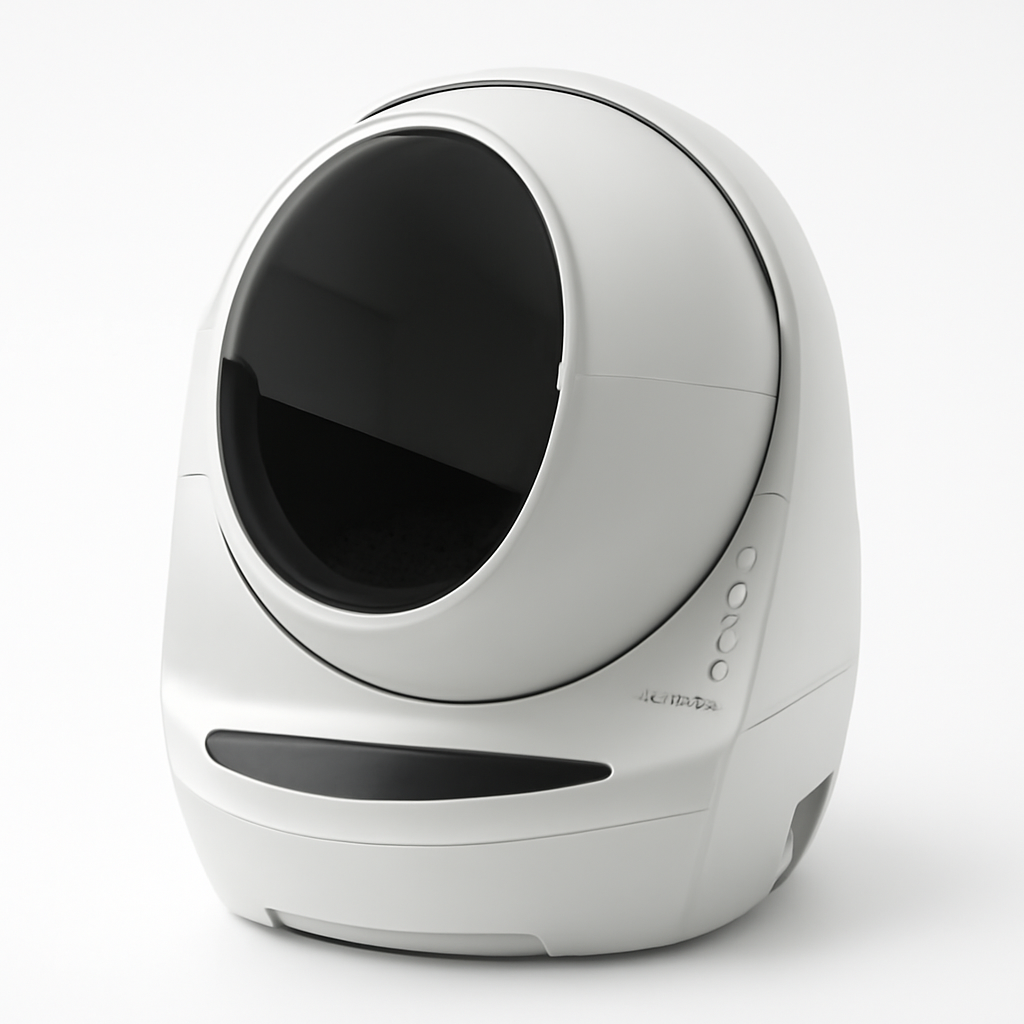
Whisker’s Litter-Robot 4 remains the default recommendation for households with two to four cats, and it earns it on the boring stuff: a large sealed waste drawer, a sifting globe that handles heavy clumping litter without jamming, and cat-detection that reliably aborts and re-runs when a second cat walks in mid-cycle.
The per-cat tracking via the Whisker app is the most usable implementation we’ve seen — it distinguishes cats by weight and logs visit frequency, which is genuinely useful for catching early urinary issues in a house where you otherwise can’t tell whose clumps are whose. It’s not perfect: two cats within a pound or so of each other will get confused, and you’ll need to correct the app occasionally.
Pros
– Largest practical waste-drawer life in its class — realistic multi-day intervals even at 3 cats
– Excellent mid-cycle interruption handling; safety sensing is the most mature on the market
– Works with standard clumping clay litter — no proprietary consumables required
– Strong app, meaningful per-cat data, and the best-supported warranty and service network in the category
Cons
– Most expensive mainstream option by a wide margin
– Tall, bulky footprint that’s hard to hide in a small apartment
– Weight-based cat ID struggles with similarly sized cats
– Carbon filters are a recurring cost, and you’ll replace them faster with more cats
Who it’s for: Multi-cat homes where you want to set it up and mostly forget it, and the budget exists.
—
2. PetKit PuraMax 2 — Best Value for Multi-Cat Homes
The PetKit PuraMax 2 is the pick if the Litter-Robot’s price makes you wince. It’s a drum-style sifting unit with a large entry, a generous drawer, and a deodorizing system built into the waste compartment rather than relying purely on a passive filter.
Multi-cat handling is solid — it detects entry and delays cycling — though interruption recovery isn’t quite as polished as Whisker’s. The app is capable but less refined, and firmware updates have historically been hit-or-miss.
Pros
– Substantially cheaper than the Litter-Robot 4 for comparable capacity
– Wide, low entry that most cats accept quickly
– Active deodorizing in the waste bin, not just a carbon pad
– Uses standard clumping litter
Cons
– App polish and support responsiveness lag behind Whisker
– Multi-cat weight identification is less accurate
– Some units have needed sensor recalibration out of the box
Who it’s for: Two- to three-cat households that want 85% of the flagship experience at a much friendlier price.
—
3. Neakasa M1 — Best Open-Top Design
The Neakasa M1 takes a different approach: instead of an enclosed globe, it uses an open, low-walled tray that tilts and sifts. That matters enormously for multi-cat homes with a mixed roster.
Cats that refuse enclosed automatic boxes — and that’s more of them than manufacturers admit — usually accept this one immediately. Seniors with arthritis and kittens too small to trip a globe unit’s sensors both do better here. The trade-off is odor: an open design simply cannot contain smell the way a sealed drawer does.
Pros
– Easiest transition of any automatic box; the lowest refusal rate we’ve seen
– Genuinely accessible for kittens, seniors, and large breeds
– Compact footprint compared to globe-style units
– Simple mechanism with fewer jam points
Cons
– Weakest odor containment of our top picks
– Litter scatter is higher than enclosed models
– Smaller effective waste capacity — expect more frequent emptying with 3+ cats
Who it’s for: Households where at least one cat has already rejected an enclosed automatic box, or where you’re mixing kittens/seniors with adults.
—
4. CatGenie A.I. — Best Litter-Free Option
The CatGenie A.I. doesn’t use litter. It uses permanent washable granules, connects to a water line and drain, and washes, sanitizes, and dries after each use. For multi-cat homes, that means no drawer to empty and no litter to buy — the biggest ongoing chore in the category disappears.
The catch is installation. You need a plumbing connection near the box, which realistically means a laundry room or bathroom, and that may not be where your cats want their box to be. Cycle time is also longer than a mechanical sift, which is a real consideration when several cats are queueing.
Who it’s for: Multi-cat homes with a plumbing-adjacent spot and a strong desire to stop buying litter forever.
—
5. Casa Leo — Leo’s Loo Too — Best Budget Globe-Style
Leo’s Loo Too delivers the enclosed rotating-globe format at a lower price than the Litter-Robot. It includes UV sanitizing and a decent app, and it handles standard clumping litter.
The compromises show up in drawer capacity and long-term durability reports. For two cats it’s a genuinely good deal; at four cats you’ll be emptying it often enough that the savings feel less impressive.
—
6. PetSafe ScoopFree Smart — Best Simple Rake Design
The PetSafe ScoopFree Smart uses a rake that sweeps waste into a covered tray, with crystal litter rather than clumping clay. It’s mechanically simple, quiet, and rarely jams.
The multi-cat catch is the disposable tray system — it’s a recurring cost, and it fills fast with several cats. Crystal litter also controls urine odor well but does less for solid waste. Best suited to two cats, not four.
—
7. Litter-Robot 3 Connect — Best Proven Workhorse
The previous-generation Litter-Robot 3 Connect is still sold and still excellent. It gives up the 4’s improved sensing, quieter operation, and larger entry, but the core mechanism is the most field-proven in the category, and parts and repair support are widely available. If you find one at a real discount, it’s a smart multi-cat buy.
—
Capacity, Cycle Speed, and Waste Drawer Size: What Actually Matters
Ignore the marketing number and do this instead: take the manufacturer’s stated drawer life and divide by your cat count, then subtract about 20%. Cats in multi-cat homes tend to use a clean automatic box preferentially, which concentrates usage more than a simple division suggests.
Cycle speed matters less than you’d think — cycle delay matters more. Every unit waits a set period after a cat exits before cycling. Too short and you get interruptions; too long and waste sits. Most good units let you tune this, and in a multi-cat home a slightly longer delay (so back-to-back visitors get handled in one cycle) usually works better than the default.
Sift quality determines drawer efficiency. A unit that sifts cleanly drops only waste into the drawer. A sloppy sifter drags clean litter along, filling the drawer faster and costing you more in litter. This is where cheaper units lose ground fastest at scale.
—
Safety Sensors and Cat Size Limits: Kittens, Seniors, and Large Breeds
Every enclosed automatic box has a minimum weight threshold for its sensor. Kittens below that threshold may not be detected — which is exactly the safety scenario you cannot risk. The universal rule: do not use an enclosed automatic litter box with a kitten under the manufacturer’s stated minimum weight. Give kittens a standard open pan until they’re clearly over the line.
At the other end, large breeds — Maine Coons, Ragdolls, Savannahs — need to check two things: the maximum weight rating and, more often the real limiter, the entry opening dimensions. A big cat that has to crouch and contort will find somewhere else to go. Measure your cat’s current box footprint before you buy.
Seniors need a low step-in height. Arthritic cats will silently stop using a box that hurts to enter, and you’ll discover the problem as a behavioral issue rather than a mobility one. Open-top designs like the Neakasa M1 solve this cleanly; for enclosed units, a ramp accessory is close to mandatory.
Look for units with both weight sensing and an infrared or light-beam barrier across the entry. Weight sensing alone can miss a cat that’s leaning in rather than standing fully inside.
—
Odor Control, Cleaning, and Ongoing Costs (Liners, Litter, Filters)
Ongoing costs to budget for:
| Cost item | Typical situation |
| Clumping litter | Higher volume than manual boxes — sifting units keep a deeper bed |
| Carbon filters | Replace 2–4× more often with multiple cats than the label suggests |
| Waste drawer liners | Some units require proprietary bags; others take standard kitchen bags |
| Disposable trays | Only rake-style units like ScoopFree — the highest recurring cost per cat |
| Cleaning cartridges | CatGenie-style washing units use a consumable sanitizing solution |
Prefer units that take standard clumping litter and standard trash bags. Proprietary consumables are where multi-cat costs quietly balloon.
For deep cleaning, plan on a full teardown every 4–6 weeks with three or more cats. Urine mist gets everywhere inside an enclosed unit, not just in the litter bed. Check whether the globe or drum is removable and rinseable — if it isn’t, you’re wiping a fixed cavity by hand, and that’s a genuinely miserable hour.
Odor tip that costs nothing: empty the drawer before it’s full, not when it’s full. The last 20% of drawer capacity is where odor control collapses on every unit we’ve evaluated.
—
Setup Tips for Multi-Cat Households: Placement, Litter Type, and Transition
Don’t remove the old boxes. Run the automatic box alongside your existing setup for at least two to three weeks. In a multi-cat home, one cat adopting it doesn’t mean all of them will, and pulling the old boxes early is the fastest route to litter-box aversion.
Placement: somewhere with an escape route on both sides. Cats dislike enclosed boxes in dead-end corners, and in multi-cat homes a box with only one exit becomes a spot where a dominant cat can corner another. Avoid placing it next to noisy appliances — the unit’s own cycling noise plus a washing machine is enough to spook a nervous cat.
Litter type: use a hard-clumping, low-dust clay litter unless the manufacturer says otherwise. Lightweight litters clump poorly and crumble during sifting, which fouls the mechanism. Fill to the marked line — under-filling causes clumps to stick to the base, and over-filling causes spillover during rotation.
Transition sequence that works:
1. Set the unit up powered off, filled with the litter your cats already use, in a location they already accept.
2. After several days of normal use, turn it on with the longest available cycle delay.
3. Let them see and hear it cycle while they’re nearby and calm — never while a cat is inside.
4. Only after all cats are using it consistently should you reduce the number of conventional boxes, and do it one at a time.
Keep at least one conventional box permanently. Power outages, firmware updates, and mid-cleaning downtime all happen — and with multiple cats there’s no slack in the system when the automatic box is unavailable.
—
FAQ: How Many Cats Can One Automatic Litter Box Handle?
How many cats per automatic litter box?
Realistically, two to three cats per premium unit is the comfortable range, and four is the practical ceiling for the largest-capacity models. Beyond that, add a second unit rather than emptying the first one daily. The n+1 rule (one box per cat plus one) still applies to access — an automatic box can’t be used by two cats at once, and cats don’t queue politely.
Will my cats fight over one automatic box?
Some will. If you see one cat guarding the unit or another eliminating nearby, that’s territorial — add a second box in a different room, not a bigger one in the same room.
Can I use one automatic box for a kitten and adult cats together?
Not safely, until the kitten exceeds the unit’s minimum weight threshold. Run a conventional open pan alongside it until then.
Do these actually reduce odor with multiple cats?
Yes, meaningfully — waste gets sealed within minutes instead of sitting for hours. But sealed isn’t gone. With three or more cats you’re still emptying the drawer every few days and changing filters more often than the box says.
Is per-cat health tracking accurate with multiple cats?
Partially. Weight-based identification works well when your cats differ by a couple of pounds or more and gets unreliable when they’re similar. Treat it as a trend indicator worth watching, not a diagnostic.
Can I put an automatic litter box in a closet?
Only with the door propped open and adequate ventilation. Enclosed spaces concentrate ammonia, and most units need clearance behind and above for the drawer and lid.
—
Our Verdict
For most multi-cat households, the Litter-Robot 4 is the right buy. It handles interruptions properly, its drawer lasts long enough to be genuinely low-maintenance at three cats, it runs on ordinary clumping litter with no proprietary consumables, and it has the service network to back up a purchase this size. If you’re going to spend real money on this category, spend it here.
If the price doesn’t work, the PetKit PuraMax 2 is the value pick and gets you most of the way there for two to three cats.
If any cat in your house has already refused an enclosed box — or you’re mixing seniors, kittens, or large breeds — buy the Neakasa M1 instead. A box your cats will actually use beats a technically superior box they avoid, every time.
And if you have a plumbing hookup near a workable spot and you’re done with litter entirely, the CatGenie A.I. is the only unit here that eliminates the chore rather than automating it.
Whichever you choose: keep one conventional box, transition slowly, and empty the drawer before it’s full. That’s what separates people who love these things from people who return them.