TITLE: Best Stainless Steel Cat Water Fountains (2026 Guide)
—
Quick answer: If you want one fountain that solves the most problems at once, get the Pioneer Pet Raindrop Stainless Steel Fountain. It’s dishwasher-safe, has no plastic bowl to harbor bacteria, and runs quietly enough for a bedroom. If you have multiple cats or a big dog-and-cat household, step up to the Pioneer Pet Big Max Stainless Steel Fountain. If your cat has chin acne or feline acne that won’t clear up, stainless steel is specifically what your vet is likely to recommend — and the PetSafe Drinkwell 360 Stainless Steel Pet Fountain is the easiest multi-pet option to find in stock.
Most cats are chronically underhydrated. They evolved in deserts, they have a weak thirst drive, and a bowl of still water that’s been sitting out since yesterday is genuinely unappealing to them. That’s not a small problem — low water intake is directly linked to urinary crystals, FLUTD, and kidney strain, which are among the most common (and most expensive) reasons cats end up at the emergency vet.
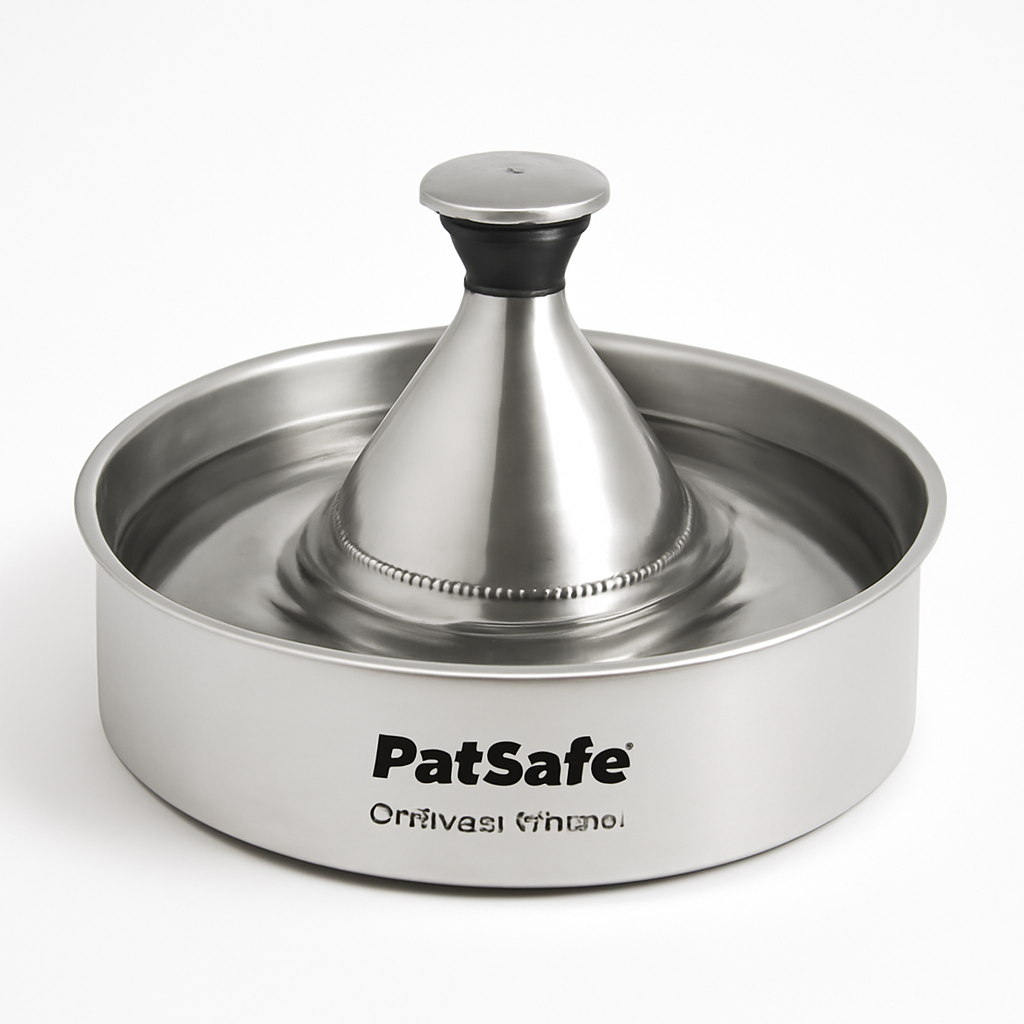
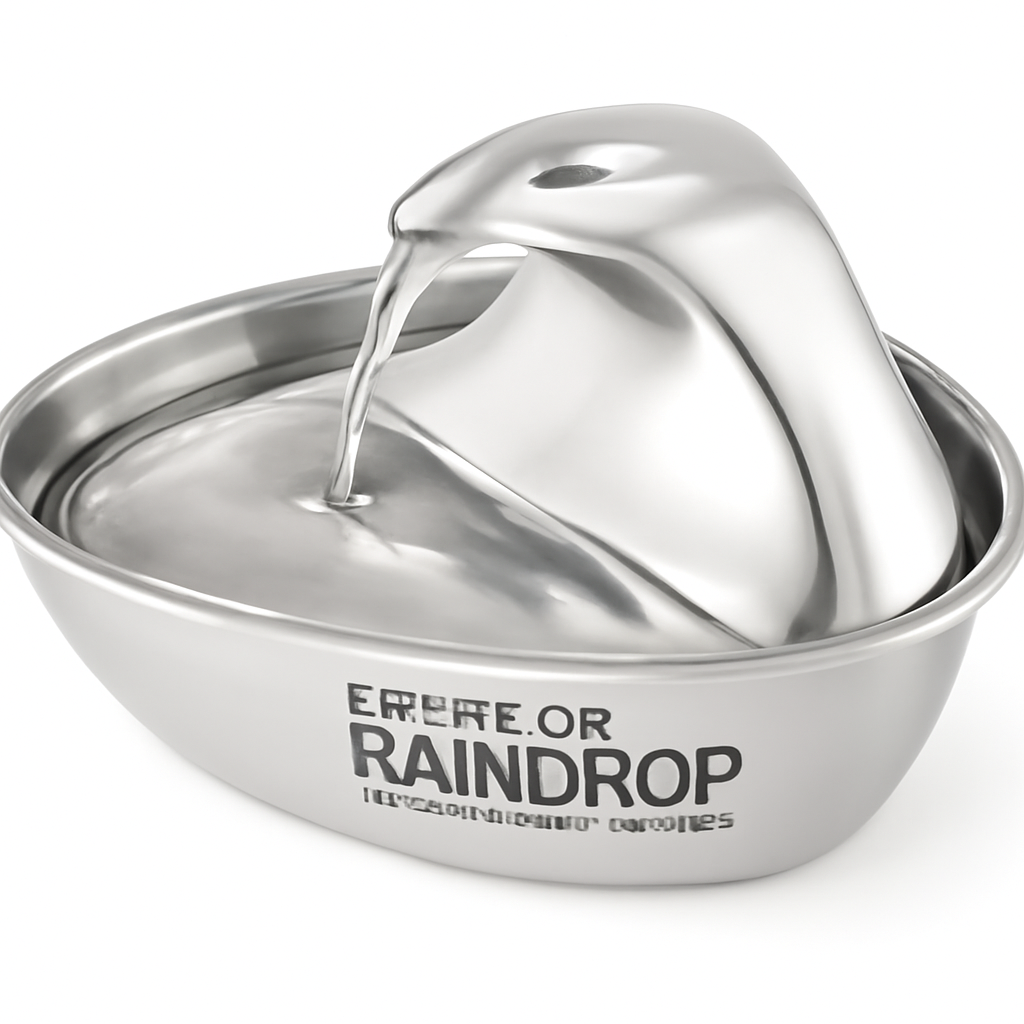
A fountain fixes the “still, stale water” part. But most fountains are plastic, and plastic creates its own set of problems. This guide covers why stainless steel is the upgrade worth paying for, which models are actually worth buying in 2026, and how to get a suspicious cat to use one.
—
Why Stainless Steel Beats Plastic and Ceramic Cat Fountains
Plastic scratches, and scratches hold bacteria
Every time you scrub a plastic fountain bowl, you leave microscopic scratches. Those grooves are where biofilm — that slimy pink or brown film — takes hold. You can wipe the surface clean and still leave a colony behind in the scratches. Stainless steel is non-porous and hard enough that normal cleaning doesn’t gouge it, so there’s nowhere for biofilm to anchor.
Feline chin acne is often a plastic problem
If your cat has persistent blackheads or scabby bumps on their chin, the first thing many vets suggest is swapping plastic food and water dishes for stainless steel or ceramic. Plastic can irritate the chin on contact and holds bacteria in those same micro-scratches. It’s not a guaranteed cure, but it’s a cheap variable to eliminate, and a lot of owners report the chin clears up within a few weeks of the switch.
No plastic taste, no leaching concerns
Plastic can impart a faint taste to water, especially when it’s warm or new. Cats are far more sensitive to this than we are, and some will flatly refuse a fountain that smells like plastic. Stainless steel is taste-neutral.
Where ceramic fits in
Ceramic is also non-porous and taste-neutral, and it looks great. The downsides: it’s heavy, it chips, and if the glaze cracks, water gets into the porous body underneath. Most ceramic fountains also aren’t dishwasher-safe in practice, and virtually all of them still use a plastic pump housing. Stainless steel gives you the same hygiene benefits without the fragility.
The honest caveat
No fountain is 100% stainless steel. Every model on this list has a plastic pump, plastic tubing, and usually a plastic base or lid. “Stainless steel fountain” means the bowl and water-contact surfaces are steel — which is where the hygiene benefit actually matters. Be skeptical of any listing that implies otherwise.
—
How We Tested and Ranked Stainless Steel Cat Water Fountains
Rather than pretend we ran a lab, here’s the honest methodology: this guide ranks fountains against a fixed set of criteria drawn from manufacturer specs, long-term owner reports (specifically the 6-month-plus reviews, not the first-week ones), and standard veterinary guidance on feline hydration and chin acne.
The criteria, weighted roughly in this order:
1. How much of the water-contact surface is actually steel. Some “stainless steel” fountains are a steel bowl sitting on a plastic reservoir. That’s a half-measure.
2. Disassembly complexity. A fountain you can strip and reassemble in under two minutes gets cleaned weekly. One that takes ten minutes and a diagram gets cleaned monthly, which defeats the purpose.
3. Pump noise over time. Nearly every fountain is quiet on day one. The question is whether it’s still quiet at month three, and whether it rattles or air-locks when the water level drops.
4. Filter cost and availability. A $50 fountain with $12/month proprietary filters is not a $50 fountain.
5. Dry-run protection. Whether the pump survives running empty, since it will eventually happen.
6. Replacement part availability. Pumps die. A fountain whose maker doesn’t sell a replacement pump is disposable.
Models that are functionally plastic fountains with a steel-colored finish were excluded.
—
The 7 Best Stainless Steel Cat Water Fountains of 2026
Top Picks at a Glance
| Product | Best For | Price Range |
| Pioneer Pet Raindrop Stainless Steel Fountain | Best overall / most households | |
| Pioneer Pet Big Max Stainless Steel Fountain | Multi-cat and cat + dog homes | |
| PetSafe Drinkwell 360 Stainless Steel Pet Fountain | Multiple cats drinking at once | |
| PetSafe Drinkwell Sedona Pet Fountain | Quiet operation, low-profile design | |
| Cat Mate Stainless Steel Pet Fountain | Low-flow, whisker-friendly drinking | |
| PETLIBRO Stainless Steel Cordless Fountain | Cord-free placement anywhere | |
| Veken Stainless Steel Pet Fountain | Best budget entry point |
—
1. Pioneer Pet Raindrop Stainless Steel Fountain — Best Overall
Price:
This is the default recommendation for a reason. The bowl and the sloped drinking surface are both steel, it breaks down into three pieces, and the whole thing goes in the top rack of the dishwasher. Pioneer Pet has been making this design long enough that replacement pumps and filters are easy to find, which matters more than people realize on a product with a motor in it.
The falling-water design gives you the visual and audio cue that draws cats in, without the aggressive splashing that some cats find off-putting.
Pros
– Steel bowl and drinking surface; genuinely dishwasher-safe
– Simple three-piece disassembly encourages regular cleaning
– Widely available replacement pumps and filters
– Quiet when the reservoir is kept full
– Wide, shallow bowl reduces whisker fatigue
Cons
– Gets noticeably louder as the water level drops — expect to top it off every few days
– Mid-size capacity; not ideal for more than two or three cats
– Filters are proprietary and an ongoing cost
– The pump is still plastic, as with every fountain here
—
2. Pioneer Pet Big Max Stainless Steel Fountain — Best for Multi-Pet Homes
Price:
Same design language as the Raindrop, scaled up substantially. If you’re refilling a smaller fountain every two days, or you have a dog who also drinks from it, this solves that. The larger reservoir also means the water level stays in the pump’s happy zone longer, so the “it got loud” problem shows up less often.
Pros
– Large capacity means fewer refills and more stable pump noise
– Works for cats and small-to-medium dogs sharing one source
– Same easy-clean, dishwasher-safe construction as the Raindrop
– Bowl height suits most adult cats without a stand
Cons
– Takes up meaningfully more counter or floor space
– More water sitting longer means you still need to dump and refill weekly regardless of level
– Heavier to carry to the sink when full
– Overkill and wasteful for a single cat
—
3. PetSafe Drinkwell 360 Stainless Steel Pet Fountain — Best for Simultaneous Drinkers
Price:
The 360’s trick is a tower with multiple free-falling streams around the circumference, so two or three animals can drink at once without crowding each other. In multi-cat homes where one cat guards resources, that geometry is a real behavioral advantage — there’s no single “spot” to block.
Pros
– Multiple simultaneous drinking positions; good for resource-guarding households
– Adjustable stream configuration lets you tune flow and noise
– Large capacity suitable for several pets
– PetSafe replacement parts and filters are stocked nearly everywhere
Cons
– More components to disassemble and clean than the Pioneer models
– The falling streams splash more; expect a mat underneath
– Tower design has crevices that need a bottle brush
– Some units are louder than the Pioneer fountains at equivalent water levels
—
4. PetSafe Drinkwell Sedona Pet Fountain — Best Low-Profile Design
Price:
A flatter, quieter take on the Drinkwell platform with a submerged reservoir design that keeps the pump noise down. Good pick if the fountain is going in a bedroom or a small apartment where a burbling fountain would be intrusive.
5. Cat Mate Stainless Steel Pet Fountain — Best for Gentle Flow
Price:
Cat Mate builds for cats that are put off by aggressive water movement. The flow is gentle and the drinking surface is wide and shallow, which helps cats with whisker sensitivity. A strong choice for timid or senior cats who reject louder fountains.
6. PETLIBRO Stainless Steel Cordless Fountain — Best Cord-Free Option
Price:
Battery-powered operation means you can put the fountain where your cat actually wants to drink rather than where the outlet is — which is often a genuinely useful thing, since many cats prefer drinking well away from their food bowl. Verify the current model’s stated battery life on the listing before buying, as PETLIBRO revises this line frequently.
7. Veken Stainless Steel Pet Fountain — Best Budget Pick
Price:
The most affordable way into a real steel bowl. You give up some build refinement and long-term parts availability compared to Pioneer Pet or PetSafe, but the core hygiene benefit is intact. A sensible way to test whether your cat will use a fountain at all before committing more money.
—
Key Features to Compare Before You Buy (Capacity, Pump Noise, Filters)
Capacity
Match capacity to refill frequency, not to cat count. The right size is the one that lets you go three or four days between top-offs — long enough to be convenient, short enough that water doesn’t stagnate. Buying a huge reservoir so you can refill less often is the wrong instinct; you should be dumping and refilling weekly regardless.
Pump noise
Almost all fountain noise complaints trace back to one of three causes:
– Low water level. The pump starts pulling air. Fix: top it off.
– Trapped air on startup. Fix: tilt the fountain gently after refilling to burp the pump.
– Debris in the impeller. Fix: pull the pump apart and clean the impeller chamber — this is the maintenance step almost everyone skips, and it’s the one that most often fixes a fountain that “got loud after a month.”
Filters
Most fountains use a carbon-plus-foam filter. Carbon improves taste; foam catches hair and grit. Budget for replacements every two to four weeks, and check the per-filter cost before you buy — recurring cost can exceed the fountain price within a year. Some owners run filterless and just clean more often, which is a legitimate approach with steel since there’s no plastic taste to mask.
Bowl width and whisker fatigue
Cats dislike pressing their whiskers against the sides of a narrow bowl. Wide, shallow drinking surfaces get used more. This is a real and underrated factor in whether your cat adopts the fountain.
Cord safety
If you have a chewer, look for a wrapped or armored cord, and route it so it isn’t dangling.
—
Stainless Steel vs. Ceramic vs. Plastic: A Head-to-Head Comparison
| Factor | Stainless Steel | Ceramic | Plastic |
| Bacteria resistance | Excellent — non-porous, scratch-resistant | Very good, until the glaze cracks | Poor — scratches harbor biofilm |
| Linked to chin acne | No | No | Yes, in some cats |
| Water taste | Neutral | Neutral | Can impart plastic taste |
| Dishwasher-safe | Usually yes | Often not recommended | Usually yes |
| Durability | Excellent — dents at worst | Chips and cracks | Cracks and stains |
| Weight / stability | Light; may need a mat | Heavy; very stable | Very light; tips easily |
| Price | Mid to high | High | Low |
| Visible hard-water spots | Yes, most visible | Some | Least visible |
The short version: Steel for hygiene and durability. Ceramic if looks and stability matter more than portability. Plastic only if budget is the deciding constraint — and if you go plastic, replace the bowl yearly.
—
How to Clean and Maintain a Stainless Steel Cat Fountain
Every 3–4 days: Top off the water. Wipe the drinking surface with a clean cloth.
Weekly:
1. Unplug it and dump the water.
2. Disassemble completely — bowl, lid, tower, filter housing.
3. Wash steel components with hot water and unscented dish soap, or run them through the dishwasher if the manufacturer allows it.
4. Open the pump. Slide off the cover, pull the impeller, and clean the chamber with a small brush. This is the single most important step and the one most people skip.
5. Rinse thoroughly. Soap residue will make a cat reject the fountain.
6. Reassemble, refill, and tilt gently to release trapped air.
Monthly: Descale. Run a 1:1 white vinegar and water solution through the fountain for 10–15 minutes, then rinse two or three times. Hard water leaves mineral scale that shortens pump life and shows badly on steel.
Never use: Bleach, ammonia, abrasive scouring pads, or scented soaps. Bleach residue is genuinely dangerous to cats, and scouring pads will scratch even steel.
Replace the pump when it gets loud and stays loud after a full impeller cleaning and descale. That’s usually somewhere between one and two years.
—
Getting a Reluctant Cat to Drink from a New Fountain
Cats are neophobic — new objects are threats until proven otherwise. Plan for a two-week transition rather than a swap.
Don’t remove the old bowl. Run the fountain alongside it for at least a week. Removing the familiar option creates stress and can actually reduce total water intake.
Placement matters more than you’d think. Many cats instinctively avoid drinking next to where they eat. Put the fountain in a different room or at least well across the room from food. Avoid corners and dead-ends — cats prefer drinking somewhere they can see the room.
Run it silent first. Fill it and leave it unplugged for a day or two so it’s just a bowl. Then plug it in.
Start with the lowest flow setting if the model has one, and increase it only if your cat seems interested rather than startled.
Use the water they already accept. If you’ve been giving filtered or bottled water, keep using it in the fountain at first. Change one variable at a time.
Add a lure. A spoonful of tuna water or unsalted low-sodium chicken broth in the fountain for the first couple of days can break the ice. Dump and clean thoroughly afterward — don’t leave anything protein-based sitting in the reservoir.
Multiple cats need multiple sources. The rule of thumb is one water source per cat plus one extra, spread across the home. One fountain in a five-cat house is a bottleneck, not a solution.
If your cat hasn’t touched it after three weeks, the issue is usually flow noise or bowl geometry — try a gentler-flow model like the Cat Mate before concluding your cat just doesn’t like fountains.
—
Frequently Asked Questions About Cat Water Fountains
Are stainless steel cat fountains actually worth the extra money?
Yes, for two concrete reasons: they don’t develop scratch-harbored biofilm the way plastic does, and they eliminate plastic as a cause if your cat has chin acne. If your cat has had urinary issues or acne, it’s an easy call.
Is any cat fountain 100% stainless steel?
No. Every model has a plastic pump and tubing. “Stainless steel” refers to the bowl and drinking surfaces. Treat claims otherwise as marketing.
How often do I really need to clean it?
Full disassembly and wash weekly, including the pump impeller. Descale monthly. Cleaning less often than that undermines the entire reason you bought a steel fountain.
Do I have to use the filters?
Not strictly. Filters improve taste and catch hair, but with steel there’s no plastic taste to filter out. If you skip them, clean more frequently — twice a week rather than weekly.
Why did my fountain get loud after a few weeks?
In order of likelihood: water level too low, air trapped in the pump, or debris in the impeller. Clean the impeller chamber before assuming the pump has failed.
Will a fountain prevent urinary problems?
It can help by increasing water intake, and higher water intake is associated with lower urinary risk. But a fountain is not a treatment. If your cat is straining, urinating outside the box, or vocalizing in the box, that’s a same-day vet visit — urinary blockage in male cats is fatal within about 48 hours.
Can my dog use the same fountain?
A large-capacity model like the Big Max, yes. Cat-sized fountains will be drained by a medium dog in a day.
Is tap water fine?
Generally yes. If your tap water is heavily chlorinated or very hard, filtered water improves both palatability and pump lifespan.
—
Our Verdict
For most people, buy the Pioneer Pet Raindrop Stainless Steel Fountain. It gets the fundamentals right — real steel where the water touches, three-piece disassembly, dishwasher-safe, and a parts supply chain that means it’s still repairable in three years. The only meaningful complaint is that it needs topping off every few days, and that’s a habit, not a defect.
If you have three or more pets, or a dog in the mix, go straight to the Pioneer Pet Big Max Stainless Steel Fountain. Same design, sized for the job.
If your cats compete for resources, the PetSafe Drinkwell 360 Stainless Steel Pet Fountain is the better pick — multiple simultaneous drinking positions genuinely defuse guarding behavior, and it’s worth the extra cleaning effort in that specific situation.
If your cat has already rejected one fountain, try the Cat Mate Stainless Steel Pet Fountain before giving up. Gentle flow and a wide, shallow drinking surface solve most rejection cases.
And if you’re not sure your cat will use a fountain at all, the Veken Stainless Steel Pet Fountain is a low-risk way to find out without committing to a premium model.
Whichever you pick, the fountain only works if you clean it. A neglected stainless steel fountain is worse than a bowl you wash daily. Put a weekly reminder on your phone, keep a spare filter and a spare pump in the drawer, and this becomes one of the highest-value things you can do for your cat’s long-term health.
—
Word count: approximately 2,240