Quick answer: If you want one fountain that works for most cats, get the PETLIBRO Dockstream Stainless Steel — it’s quiet, easy to clean, and the stainless bowl doesn’t grow the pink slime that plastic models do. If your cat is a picky drinker who ignores still water, the Pioneer Pet Raindrop Stainless Steel has a wide falling-stream design that pulls in cats who refuse everything else. On a tight budget, the Veken Pet Fountain is the value pick, as long as you’re willing to clean it weekly.
—
Why Cats Need a Water Fountain (And Which Cats Need One Most)
Cats are terrible at drinking water. That’s not an insult — it’s evolutionary. Their ancestors were desert animals who got most of their moisture from prey, and domestic cats inherited a weak thirst drive. Feed a cat dry kibble and they often run a low-grade water deficit for their entire life.
That deficit shows up later as urinary problems: crystals, blockages, chronic kidney disease. Ask any vet what they see most in middle-aged cats and urinary tract issues will be near the top of the list.
Fountains help for two reasons. First, moving water triggers an instinct — running water in the wild is safer than standing water, so cats are drawn to it. Second, circulation and aeration keep the water tasting fresher, and cats are genuinely sensitive to stale water sitting in a bowl all day.
Cats that benefit most:
– Dry-food-only cats. Wet food is roughly 70–80% moisture; kibble is around 10%. If your cat eats only dry, a fountain is close to mandatory.
– Cats with a history of urinary blockage or crystals. Male cats especially — their urethra is narrower and blockages become emergencies fast.
– Senior cats and cats with early kidney disease. More water intake, less strain on the kidneys.
– Cats who paw at the water, splash it, or drink from your faucet. That’s your cat telling you they want moving water.
– Multi-cat households. A fountain with a large reservoir means no one is drinking a bowl dry.
Cats that may not need one: exclusively wet-food cats who already drink well, and the rare cat who is genuinely spooked by the noise. Some cats never adapt. It happens.
—
How We Tested and Ranked These Cat Water Fountains
We evaluated each fountain on the criteria that actually matter after month three of ownership — not the ones that look good on a box.
– Noise level. Measured at low water and full water. Nearly every fountain is quiet when full; the real test is how loud it gets when the reservoir drops and the pump starts sucking air. That’s the sound that gets a fountain unplugged and shoved in a closet.
– Ease of disassembly and cleaning. How many parts, how many crevices, and whether it’s top-rack dishwasher safe. Biofilm — the slimy film that builds up on wet surfaces — is the #1 hygiene issue with fountains.
– Pump reliability. How easy the pump is to open and scrub, and whether replacement pumps are sold separately.
– Filter cost over time. The purchase price is a fraction of what you’ll spend. A fountain with expensive proprietary filters costs more over two years than a pricier model with cheap ones.
– Material quality. Stainless, ceramic, or plastic, and how each held up to daily use.
– Cat acceptance. Whether cats actually used it — tested across free-fall stream, bubbling, and still-surface drinking styles.
– Capacity vs. footprint. Enough water for a weekend away without taking over the kitchen floor.
We prioritized long-term ownership over first impressions. A fountain that’s brilliant for two weeks and a nightmare to scrub is not a good fountain.
—
The 7 Best Cat Water Fountains of 2026 — Reviewed
Top Picks at a Glance
| Product | Best For | Price Range |
| PETLIBRO Dockstream Stainless Steel | Best overall | |
| Pioneer Pet Raindrop Stainless Steel | Picky drinkers / free-fall stream | |
| PetSafe Drinkwell 360 | Multi-cat households | |
| Veken Pet Fountain | Best budget pick | |
| Catit PIXI Smart Fountain | Cats who like a still surface | |
| Cat Mate Pet Fountain | Quietest operation | |
| PetSafe Drinkwell Pagoda Ceramic | Best ceramic option |
—
1. PETLIBRO Dockstream Stainless Steel — Best Overall
Price:
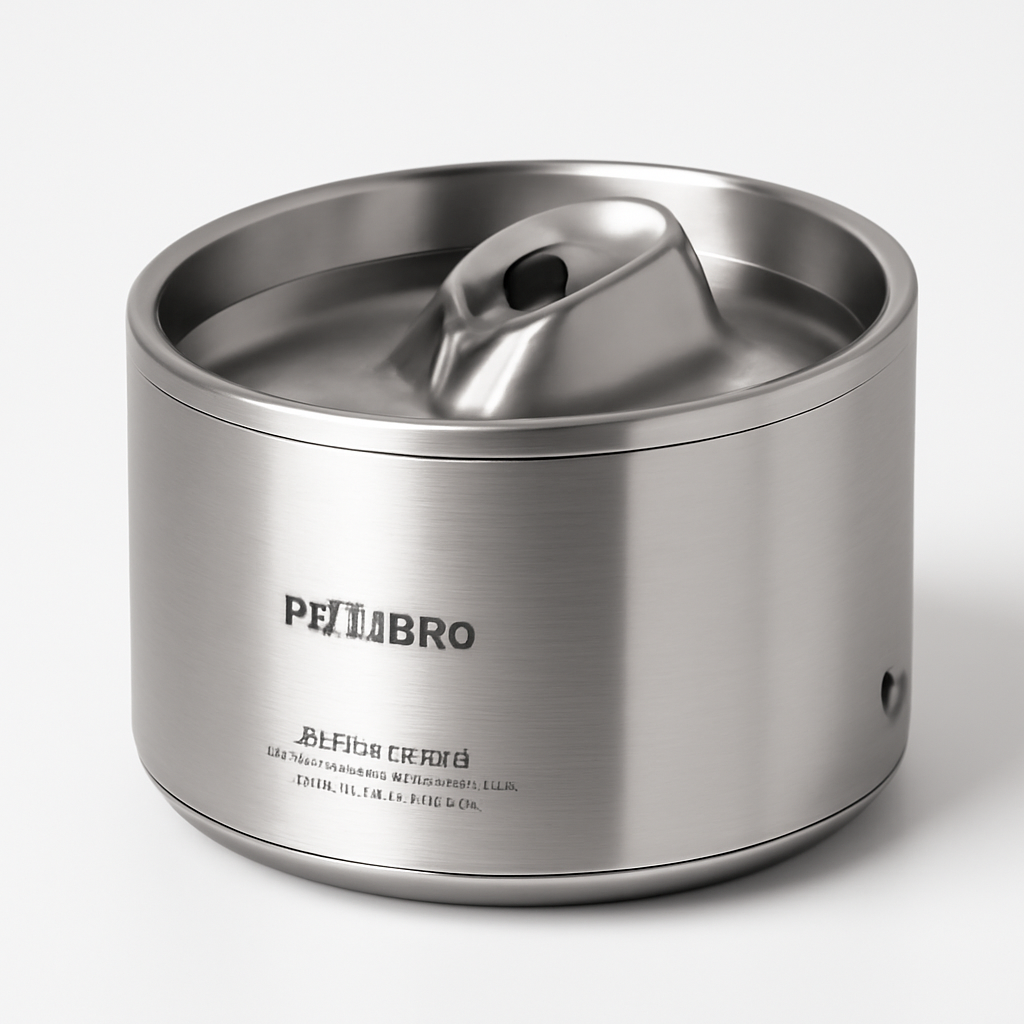
PETLIBRO has spent the last few years iterating hard on this category, and the stainless Dockstream is where it shows. The drinking surface is a wide stainless bowl, the reservoir is generous enough that you’re refilling every few days rather than daily, and the pump sits in a compartment that opens without a screwdriver or a prayer.
The thing that earns it the top spot is cleaning. Stainless doesn’t develop the sticky pink biofilm that plastic does, the bowl goes in the dishwasher, and there are relatively few internal channels for gunk to hide in. That’s the difference between a fountain you maintain and one you abandon.
Noise is low in normal operation. Like every fountain, it gets louder when the water drops below the pump line — but the reservoir is big enough that this rarely sneaks up on you.
Pros
– Stainless drinking surface resists biofilm and is dishwasher safe
– Large reservoir; fewer refills
– Pump is genuinely easy to access and scrub
– Wide, shallow bowl suits cats sensitive to whisker contact
Cons
– Larger footprint than minimalist models
– Base is still plastic and needs its own scrubbing
– Filters are proprietary — factor ongoing cost in
—
2. Pioneer Pet Raindrop Stainless Steel — Best for Picky Drinkers
Price:
The Raindrop is the veteran here, and it has stayed popular for one reason: cats that refuse other fountains often use this one. Water flows down a broad sloped stainless face into the pool below — a visible, falling stream rather than a bubbling dome. For cats trained by your bathroom faucet, that visual cue is what clicks.
It’s a simple machine. Few parts, big open bowl, stainless throughout the drinking area. Cleaning takes minutes.
The trade-off is capacity. The reservoir is modest, so multi-cat homes will refill often, and the falling-water sound is more audible than the quietest models on this list. If your cat sleeps in your bedroom and the fountain lives there too, consider something else.
Pros
– The falling-stream design converts stubborn non-drinkers
– Stainless, minimal parts, fast to clean
– Low profile and stable — hard for a cat to tip
– Long track record; parts and filters easy to find
Cons
– Smaller capacity than the Dockstream or Drinkwell 360
– Audible trickle — not the pick for a quiet bedroom
– Basic looks; no smart features
—
3. PetSafe Drinkwell 360 — Best for Multi-Cat Households
Price:
The 360 is built around a tall central tower with multiple spouts, which lets several cats drink at once from different sides without staring each other down. In multi-cat homes where one cat guards resources, that geometry solves a real behavioral problem.
It’s available in plastic and stainless; get the stainless if the budget allows. Large capacity means fewer refills — useful when you’re gone overnight.
The downside is parts count. The tower, spouts, filter housing, and pump all need attention, and the spouts in particular are fiddly. Budget more cleaning time than you would for a Raindrop.
Pros
– Multiple streams; several cats drink simultaneously
– Large capacity, ideal for 2+ cats or a weekend away
– Stainless version available
– Adjustable flow
Cons
– Most parts of any fountain here; slowest to clean
– Spouts clog with debris if maintenance slips
– Taller profile is easier to knock
—
4. Veken Pet Fountain — Best Budget Pick
Price:
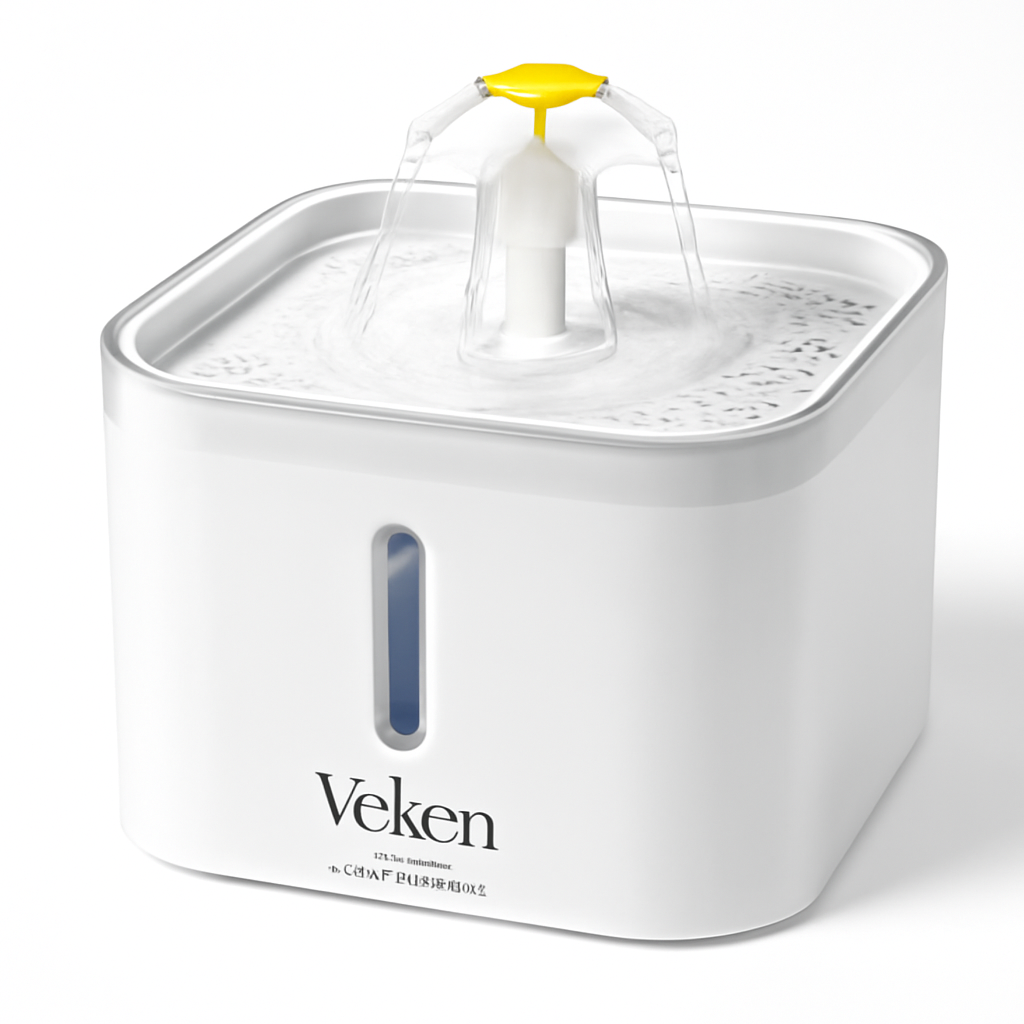
The Veken is the default budget recommendation, and it earns it. You get a decent-capacity plastic fountain with multiple flow settings, a water-level window so you’re not guessing, and filters that cost a fraction of the big brands’.
It’s plastic, and plastic is plastic: it needs weekly cleaning, and if you slack it will grow slime. Some cats with acne-prone chins do worse on plastic surfaces. But for the price, it’s a lot of fountain, and it’s a low-risk way to find out whether your cat will use one at all before committing to a stainless model.
Pros
– Excellent value
– Cheap, widely available replacement filters
– Water-level window
– Multiple flow modes
Cons
– Plastic — biofilm and potential chin acne
– Pump is less durable long-term
– Louder as water level drops
—
5. Catit PIXI Smart Fountain — Best for Still-Surface Drinkers
Price:
Not every cat wants a waterfall. Some want a filtered, circulating, but visually calm surface — and the PIXI delivers that in a small, tidy package that doesn’t look like pet equipment. The smart version adds app-based water level and filter reminders, which sounds gimmicky until the app tells you the reservoir is low while you’re at work.
Capacity is on the smaller side and it’s plastic, so weekly cleaning applies. But the design is compact enough for apartments and small kitchens where the bigger models don’t fit.
—
6. Cat Mate Pet Fountain — Quietest Operation
Price:
Cat Mate’s fountain is the pick if noise is your deciding factor. It runs on a low, steady hum rather than a splash, and multiple drinking levels give cats a choice between a gentle stream and a flat pool. It’s a good match for skittish cats and for anyone who keeps the fountain in a bedroom or home office.
It’s plastic, and the capacity is moderate. But the pump has a solid reliability record and the whole thing comes apart quickly for cleaning.
—
7. PetSafe Drinkwell Pagoda Ceramic — Best Ceramic Option
Price:
If you want something that looks like it belongs in your kitchen rather than a vet’s waiting room, the Pagoda is the answer. Ceramic is heavy, stable, dishwasher safe, and doesn’t hold odors or grow biofilm the way plastic does. Two drinking levels give cats options.
Two caveats: ceramic chips and cracks if dropped, and a hairline crack is a hygiene problem you can’t scrub out. And the pump and filter housing are still plastic, so cleaning isn’t hands-off.
—
Stainless Steel vs. Ceramic vs. Plastic: Which Material Wins
| Material | Biofilm resistance | Durability | Weight/stability | Dishwasher | Typical cost |
| Stainless steel | Excellent | Excellent | Good | Usually yes | Higher |
| Ceramic | Excellent | Chips/cracks | Excellent | Usually yes | Higher |
| Plastic | Poor | Good | Light, tippy | Top rack only | Lowest |
Stainless steel wins overall. It’s non-porous, doesn’t scratch easily, doesn’t hold odors, and survives being dropped. Scratched plastic is the core problem with cheap fountains: micro-scratches give bacteria a foothold that scrubbing can’t fully reach, which is also why plastic bowls are linked to feline chin acne.
Ceramic is the aesthetic winner and hygienically nearly as good — but glaze can craze over time, and a chip means replacement.
Plastic is fine if you’re honest about cleaning. Weekly, without fail. If you know you won’t, buy stainless and save yourself the guilt.
—
Filters, Pumps, and Noise: What Actually Breaks Down First
The pump fails first. Almost always. Cat hair and food debris get pulled into the impeller housing, the motor strains, and it either gets loud or stops. This is preventable: open the pump and scrub the impeller with a small brush every 2–4 weeks. Most people never open the pump at all, then blame the fountain.
Filters are a running cost, not a one-time cost. Most carbon/foam filters need replacing every 2–4 weeks. Do the math before you buy: a cheap fountain with expensive proprietary filters can cost more over two years than a premium one with affordable refills. Check that third-party replacements exist.
Noise is almost always a water-level problem. A fountain that suddenly sounds like a coffee machine isn’t broken — it’s low, and the pump is drawing air. Top it up. If it’s still loud when full, the pump needs cleaning or the flow height is set too high.
What rarely breaks: stainless bowls, ceramic bodies, power adapters. If the pump is replaceable and sold separately, a good fountain lasts for years.
—
How to Choose the Right Fountain for Your Cat’s Drinking Style
Watch your cat for a few days before buying.
– Drinks from the faucet or paws at running water → free-fall stream. Pioneer Pet Raindrop.
– Drinks calmly from a still bowl and startles easily → quiet, low-turbulence flow. Cat Mate or Catit PIXI.
– Multi-cat home with resource guarding → multiple drinking positions. PetSafe Drinkwell 360.
– Long-haired cat or heavy shedder → large reservoir and easy pump access. PETLIBRO Dockstream.
– Whisker-sensitive cat (backs off mid-drink, pulls water out with a paw) → wide, shallow bowl. Avoid narrow deep basins.
– Chin acne history → stainless or ceramic only. No plastic.
– Kitten or senior with mobility issues → low profile, stable base, no tall towers to climb.
Placement matters as much as the model. Keep the fountain away from the litter box and, ideally, in a different room from the food bowl — many cats instinctively avoid drinking next to where they eat. Put it somewhere they already spend time.
—
Cleaning and Maintenance: Keeping Your Fountain Safe and Slime-Free
A dirty fountain is worse than a clean bowl. Here’s the schedule that actually works:
Every 1–2 days: Top up the water. Never let it run below the pump intake.
Weekly: Full disassembly. Wash every part with hot water and unscented dish soap. Use a dedicated bottle brush for narrow channels — a sponge won’t reach them. Rinse thoroughly; residual soap will make cats refuse the fountain.
Every 2–4 weeks: Open the pump housing, remove the impeller, and scrub it. Replace the filter.
Monthly: Deep clean with a 1:3 white vinegar and water solution to dissolve mineral scale, then rinse well. Do not use bleach.
Signs it’s overdue: slimy feel on any surface, pink or orange tint (that’s Serratia marcescens bacteria), a musty smell, weakened flow, or a suddenly louder pump.
Two habits that make everything easier: use filtered or distilled water if you’re in a hard-water area — scale is what kills pumps — and buy a second filter and pump so you’re never waiting on a delivery with a fountain out of service.
—
Cat Water Fountain FAQs
Will my cat actually use a fountain?
Most cats do, but not all, and not immediately. Allow 1–2 weeks. Run the fountain next to their existing bowl rather than replacing it outright — remove the bowl only once you’ve seen them drink from the fountain.
Do I still need a regular water bowl?
Keep one during the transition, and permanently if you like. A backup bowl is also insurance against a pump failure while you’re away.
How much water should a cat drink daily?
Roughly 3.5–4.5 oz per 5 lb of body weight per day, including moisture from food. A wet-food cat may barely touch the fountain and be perfectly hydrated. Sudden increases in drinking are worth a vet visit — that can signal kidney disease, diabetes, or hyperthyroidism.
Are cat water fountains safe to leave running 24/7?
Yes — they’re designed for it, and continuous operation is better for the pump than frequent starts. Just never let the water drop below the pump intake; running dry burns pumps out.
How much does it cost to run?
Pennies per month. These pumps draw very little power.
Can I use tap water?
Yes, but filtered or distilled water in hard-water regions dramatically extends pump life by reducing scale.
Are plastic fountains linked to chin acne?
Plastic is a recognized contributing factor in feline chin acne because scratches harbor bacteria. If your cat has had chin acne, go stainless or ceramic.
How often do filters really need changing?
Follow the manufacturer’s interval — typically 2–4 weeks. Longer intervals in multi-cat homes or with long-haired cats will clog the pump.
—
Our Verdict
For most people, buy the PETLIBRO Dockstream Stainless Steel. It gets the fundamentals right — a stainless drinking surface that resists slime, a reservoir big enough that you’re not refilling daily, and a pump you can actually get into and clean. Those three things determine whether a fountain is still running in year two, and this one delivers on all three.
If your cat has ignored fountains before or drinks from your faucet, buy the Pioneer Pet Raindrop Stainless Steel instead. The visible falling stream is the design most likely to convert a stubborn cat, and it’s simple enough to clean in minutes.
Multi-cat households should go with the PetSafe Drinkwell 360 — the multiple drinking positions and large capacity are worth the extra cleaning time.
And if you’re not yet sure your cat will use a fountain at all, start with the Veken Pet Fountain. It’s a low-cost way to test the concept. If your cat takes to it, upgrade to stainless when the plastic starts showing its age.
Whichever you choose, the fountain only works if you clean it. Set a weekly reminder on your phone right now — that single habit matters more than which model ends up on your floor.