Quick answer: For most Litter-Robot owners, a hard-clumping, low-dust clay litter is the right call — Dr. Elsey’s Ultra Premium Clumping Cat Litter is the safest all-around pick, and Arm & Hammer Clump & Seal Platinum is the best choice if odor is your main complaint. Avoid crystal, pellet, and soft-clumping natural litters unless you’ve confirmed compatibility with your specific model — they’re the #1 cause of sifting failures and sensor weirdness.
You spent real money on an automatic litter box. Then you filled it with whatever was on sale, and now it’s throwing errors, leaving cemented rings in the globe, or dumping half-formed clumps into the drawer. That’s almost never the machine. It’s the litter.
Here’s how to pick one that actually works with the way a Litter-Robot cleans.
—
How the Litter-Robot Sensors Change What Litter You Can Use
A Litter-Robot isn’t just a box that spins. It’s a box that spins based on weight.
The unit uses a weight-sensing system to detect when your cat enters and exits. Once your cat leaves and the countdown finishes, the globe rotates, and a sifting screen separates clumps from clean litter. Clean litter falls back into the globe. Clumps ride over the lip and drop into the waste drawer.
Newer units add more sensing on top of that — the Litter-Robot 4 uses a scale-based system that also estimates litter level and tracks cat weight over time. That’s genuinely useful, and it’s also why litter choice matters more than it used to.
Three things follow from this design:
1. The clump has to survive a tumble. Your litter gets rotated, dropped, and pushed across a screen. A clump that crumbles under its own weight gets shredded into the clean litter and rides back into the globe. That’s how you end up with a smelly globe and a suspiciously light waste drawer.
2. Weight matters. Because detection and litter-level reporting are weight-based, unusually light litters (crystal, some wood pellets, some corn-based products) can read differently than the system expects. Very heavy overfilling causes the opposite problem — strain on the motor and inaccurate fill readings.
3. Granule size has to match the sifting screen. Too fine and it dusts everything, including the sensor housings. Too coarse and it doesn’t sift cleanly or it wedges in the gap between the globe and the base.
Whisker, the company behind Litter-Robot, has consistently pointed owners toward clumping clay for exactly these reasons. You can deviate — but every deviation costs you something, and this guide is honest about what.
—
What to Look For: Clump Strength, Granule Size, and Dust
Clump Strength (the one that actually matters)
This is the whole ballgame. In a manual box, a mediocre clump is a minor annoyance — you scoop carefully. In a Litter-Robot, a mediocre clump disintegrates and goes right back into circulation.
Look for litters marketed as “hard clumping,” “scoopable,” or “tight clumping.” The test: a clump should hold together when you lift it with a scoop and give it a gentle shake. If it sheds crumbs, it will fail in an automatic box.
Sodium bentonite clay is the material that does this best. That’s not marketing — it’s just what bentonite does when it hits liquid.
Granule Size
Medium-fine, uniform granules are ideal. You want particles small enough to pack into a solid clump but large enough not to become airborne dust.
Avoid: large pellets, crystal beads, and anything with a mix of wildly different particle sizes.
Dust
Dust is the silent killer of automatic boxes. It coats sensors, works into the bonnet seams, and settles on the floor around the unit. Low-dust and “99% dust-free” formulations are worth paying for here even if you wouldn’t bother in a manual box.
Tracking
Not a machine problem — a you problem. Litter-Robots have a step and a ramp, and cats carry granules out on their paws. Heavier, larger granules track less. A trapping mat under the unit does more than switching litter, honestly.
Scent
Skip heavy fragrance. In an enclosed globe, perfumed litter concentrates in a way that some cats refuse to use. Odor control should come from the clumping and the sealed waste drawer, not from a cover-up scent.
—
Best Cat Litter for Litter Robot in 2026: Our Top Picks
Top Picks at a Glance
| Product | Best For | Price Range |
| Dr. Elsey’s Ultra Premium Clumping | Overall best — hard clumps, unscented, low dust | |
| Arm & Hammer Clump & Seal Platinum | Multi-cat homes and odor control | |
| Tidy Cats 24/7 Performance | Best value / budget pick | |
| Boxiecat Premium Clumping Clay | Low-dust, low-tracking, sensitive cats | |
| World’s Best Cat Litter (Multiple Cat) | Best natural option (with caveats) |
—
1. Dr. Elsey’s Ultra Premium Clumping Cat Litter — Best Overall
Dr. Elsey’s Ultra is the litter most Litter-Robot owners land on eventually, and it’s the one I’d start with if you’re troubleshooting.
It’s unscented sodium bentonite with a medium-fine grain and genuinely hard clumps. In an automatic box, that combination is exactly what you want: clumps form fast, hold their shape through a full rotation, and sift cleanly into the drawer without shedding.
It’s also unscented, which matters for cats who’ve started avoiding the unit.
Pros
– Excellent clump strength — survives the tumble and sift reliably
– Low dust for a clay litter
– Unscented, so it won’t drive off a picky cat
– Widely available, so you’re not hunting for it
Cons
– Heavy bags — a real consideration if you’re carrying them up stairs
– Tracks more than large-granule litters
– Odor control is good, not best-in-class, for heavy multi-cat use
Best for: Almost everyone. Single-cat and two-cat homes especially.
—
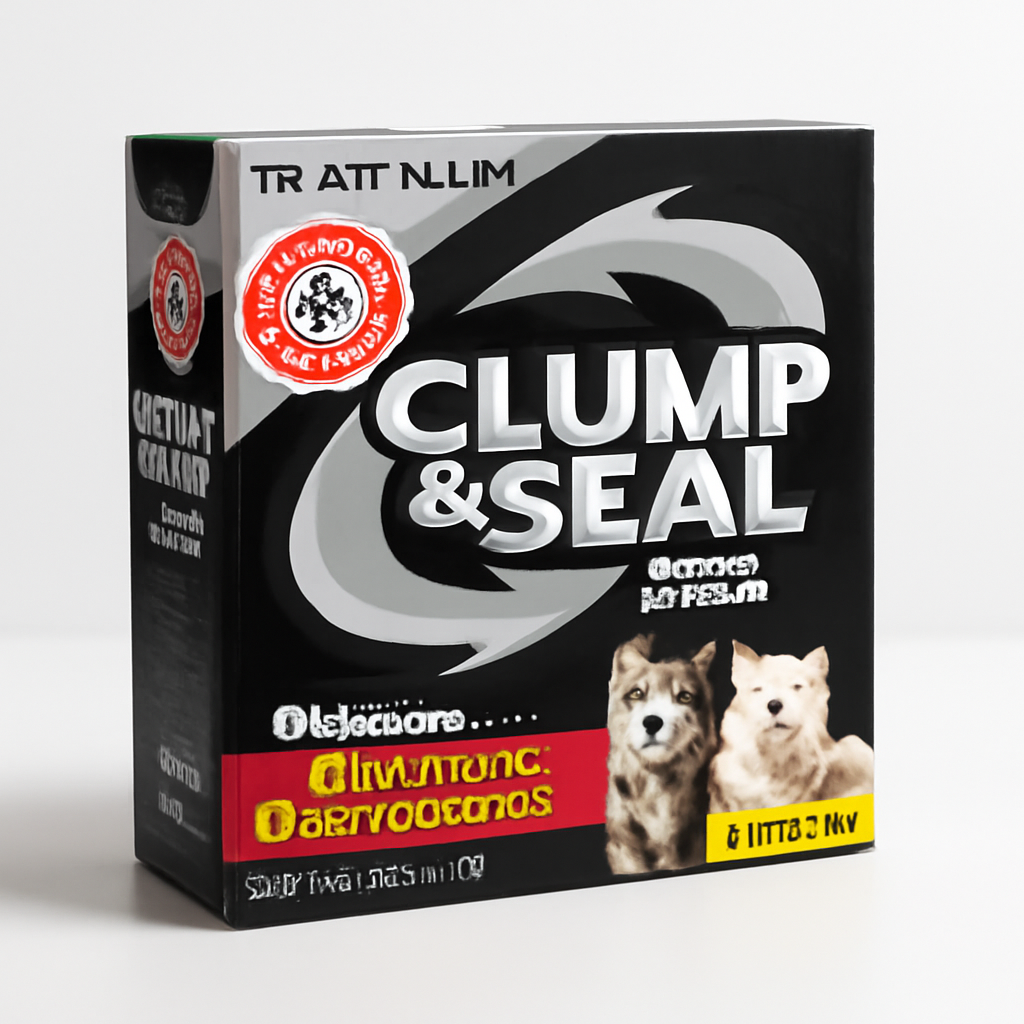
2. Arm & Hammer Clump & Seal Platinum — Best for Odor
If your complaint is smell rather than mechanics, Arm & Hammer Clump & Seal Platinum is the upgrade.
The baking-soda-plus-odor-blocker approach genuinely works, and the clumping is firm enough for automatic sifting. This is the pick for three-cat households, small apartments, or anyone who put the Litter-Robot in a spot with poor ventilation.
Pros
– Strongest odor control among the clay picks
– Clumps hard enough for reliable sifting
– Widely stocked
Cons
– Scented — some cats object, and the fragrance is noticeable in an enclosed globe
– Dustier than Dr. Elsey’s or Boxiecat
– Costs more per pound than basic clay
Best for: Multi-cat homes, small spaces, anyone whose main problem is odor.
—
3. Boxiecat Premium Clumping Clay — Best Low-Dust
Boxiecat is the pick when dust is the issue — for the machine’s sensors, for your floors, or for a cat or human with respiratory sensitivity.
Clumping is firm, granules are uniform, and tracking is noticeably lower than typical fine-grain clay. It’s a premium product at a premium price, but if you’ve been wiping dust off your unit weekly, it solves that.
Pros
– Among the lowest-dust clay litters available
– Uniform granule size sifts very cleanly
– Low tracking
Cons
– Meaningfully more expensive than mainstream clay
– Less available in physical stores
—
4. Tidy Cats 24/7 Performance — Best Value
Tidy Cats 24/7 Performance is the sensible budget option. Clumping is solid, availability is universal, and it costs less per use than any premium pick.
The trade-offs are real — it’s dustier and the scent is more assertive than the picks above — but it works in a Litter-Robot without drama. If you’re filling a unit for multiple cats and burning through litter, the math favors this.
—
5. World’s Best Cat Litter (Multiple Cat Formula) — Best Natural Option
If you want out of clay, World’s Best Cat Litter is the corn-based litter with the best shot at working. Its clumps are firmer than most plant-based alternatives, and it’s lightweight, which is a genuine quality-of-life win on the “carrying bags” front.
But be clear-eyed: it is not as hard-clumping as bentonite, and it’s lighter, which can affect weight-based readings. Some owners run it successfully for years. Others get soft clumps that break apart in the sift. Test it before you commit to a bulk order.
—
Clay vs. Crystal vs. Natural Litters in an Automatic Box
| Type | Clumping | Weight | Automatic-Box Verdict |
| Clumping clay (bentonite) | Excellent | Heavy | Recommended. What the system was designed around. |
| Crystal / silica gel | None (absorbs) | Very light | Risky. Non-clumping means nothing to sift. Check your model’s guidance first. |
| Corn / wheat | Good to fair | Light | Workable. Test on a small bag before committing. |
| Wood pellets | Breaks into sawdust | Light | Avoid. Pellets don’t clump — they disintegrate. |
| Walnut shell | Fair | Medium | Mixed. Clumps are softer; dust is dark and shows. |
| Paper pellets | None | Very light | Avoid. No clumping, no sifting. |
The pattern is simple: the mechanism sifts clumps. Litters that don’t form liftable clumps have nothing for the machine to remove. The waste stays in the globe, and you’re back to cleaning by hand — which defeats the purpose.
Crystal litter deserves a specific note because it comes up constantly. Traditional crystal litter absorbs urine rather than clumping it, so there’s no solid mass to sift out. Whisker’s compatibility guidance has differed by model and has changed over time, so check the current documentation for your exact unit before buying crystal — don’t take a forum post’s word for it, and don’t take mine.
—
Litters That Cause Sensor Errors, Clumping Failures, and Jams
If your unit is misbehaving, check this list before you contact support:
Non-clumping anything. No clump, no sift. This is the single most common cause of “the Litter-Robot isn’t cleaning.”
Pellets of any material. Wood, paper, or grass pellets are too large to sift correctly and can wedge in the gap between the globe and the base.
Very lightweight litters. Weight sensing is central to how the unit detects your cat and estimates fill level. Unusually light litter can produce inaccurate readings.
Heavily dusty litters. Dust migrates into sensor housings and the drawer seals. Over months, this degrades performance.
Overfilling. This is the mistake almost everyone makes. Litter above the fill line gets pushed over the sifting lip on every cycle and dumped into the waste drawer as clean litter. You’ll swear the unit is eating your litter. It is — because you overfilled it.
Underfilling. Too little litter means urine reaches the globe floor and cements there instead of forming a clump.
Litter deodorizer powders. Fine powders behave like dust. Use the unit’s own carbon filter and a sealed waste drawer instead.
—
How Much Litter to Use (and How Often to Actually Refill)
Fill to the line. Litter-Robot globes have a molded fill line inside. It’s not a suggestion — it’s the level at which the sifting geometry works. Fill to it, level the litter out, and stop.
Check the level weekly. Every cycle removes a small amount of clean litter along with the clumps. That’s normal. Top off back to the fill line whenever it drops below.
Full change: roughly monthly. Even with perfect clumping, fine particles and residue accumulate. Dump the globe completely, wipe it out, let it dry fully, and refill. Monthly is a reasonable default for one to two cats; more often for three or more.
Don’t mix a full change with a litter switch. If you’re changing brands, transition gradually — mix the new litter into the old over a week or so. Cats are conservative about substrate, and an abrupt switch is a common cause of a cat suddenly going outside the box.
Empty the waste drawer before it’s full. A packed drawer is heavier, harder to line, and smellier. If your unit reports drawer status, trust it.
—
FAQ: Litter Robot Litter Questions Answered
Can I use crystal litter in a Litter-Robot?
It depends on your model, and guidance has changed. Standard non-clumping crystal litter gives the sifting mechanism nothing to remove. Check Whisker’s current documentation for your specific unit before buying.
What about “lightweight” clay litters?
They’re clay with air introduced to reduce weight. Clumping is usually acceptable, but the reduced weight can interact oddly with weight-based sensing, and they tend to be dustier. Standard-weight clay is the safer choice.
Does litter type affect the cat weight tracking?
Indirectly. The system establishes a baseline from the globe’s contents. Consistent fill level matters more than brand — keep it at the fill line and let the unit recalibrate after a full change.
Is scented litter bad for the Litter-Robot?
Not for the machine. Potentially for the cat. Fragrance concentrates inside an enclosed globe, and litter-box avoidance is a much more expensive problem than mild odor. Start unscented.
My clumps are breaking apart in the drawer. Is that normal?
Some breakage is fine. Clumps that turn to powder mean your litter isn’t clumping hard enough — switch to a firmer bentonite. Try Dr. Elsey’s Ultra as a baseline.
Can I use litter box liners or additives?
No liners — they interfere with rotation. Skip powdered additives; they act like dust.
Why does my litter level drop so fast?
Almost always overfilling. Litter above the fill line is carried over the sifting lip and discarded as waste on every cycle. Fill to the line, not above it.
—
Our Verdict
Buy Dr. Elsey’s Ultra Premium Clumping Cat Litter. It’s unscented, low-dust, and clumps hard enough to survive the tumble-and-sift cycle intact — which is the only thing that really matters in an automatic box. It’s the default for a reason, and it’s the first thing to try if your unit is acting up.
If odor is your actual problem, go with Arm & Hammer Clump & Seal Platinum and accept the scent trade-off. In a multi-cat home, it’s worth it.
If dust is your problem — for your floors, your lungs, or your cat’s — Boxiecat Premium Clumping Clay is the cleanest-running option and justifies its price.
If you’re watching cost, Tidy Cats 24/7 Performance works fine and costs less. It’s dustier. That’s the deal.
If you want a natural litter, try World’s Best Cat Litter — but buy the small bag first and confirm the clumps hold up in your unit before you commit.
And whatever you pick: fill to the line, not above it. That one habit prevents more Litter-Robot complaints than any brand switch.