Quick answer: If you want the biggest odor reduction with the least effort, a self-cleaning box like the Litter-Robot 4 wins because it removes waste within minutes instead of hours. If you’d rather not spend that much, a well-sealed enclosed box like the Modkat Flip paired with a strong clumping clay litter gets you most of the way there for a fraction of the cost. The single biggest factor, though, isn’t the box at all — it’s how fast waste gets removed and how often the box gets fully emptied.
—
Why Litter Box Odor Happens (And Why the Box Matters More Than the Litter)
Cat urine smells because of what happens after it sits. Fresh urine is relatively mild. As bacteria break down the urea in it, they release ammonia — that sharp, eye-watering smell that hits you from across the room. Feces add sulfur compounds on top of that.
Two things drive how bad it gets:
Time. Every hour waste sits in the box, bacteria have more time to work. This is why a box scooped twice a day smells dramatically better than one scooped every other day, even with identical litter.
Surface area exposed to your room’s air. Odor molecules need to travel to your nose. A wide-open pan in a hallway broadcasts. A sealed box with a carbon filter contains and traps.
Litter helps — good clumping litter locks moisture into a solid mass that’s easy to remove intact, and additives can neutralize some ammonia. But litter is a delay mechanism, not a solution. If waste stays in the box for three days, no litter on the market will save you. The box is what determines how easy it is to remove waste fast and how much escapes in the meantime.
There’s also a trap worth naming: over-containing odor can backfire. If a box smells bad enough inside that your cat avoids it, you get a much worse problem — urine on carpet, which is genuinely hard to remove. Any odor strategy has to keep the cat willing to use the box.
—
What to Look For in an Odor-Controlling Litter Box
Size — bigger than you think
The most common mistake is a box that’s too small. A cat should be able to turn around fully and dig without hitting walls. When a box is cramped, cats don’t bury waste properly, and unburied waste smells far more. General rule: the box should be about 1.5× the length of your cat, nose to base of tail.
A real lid seal, not a decorative hood
Many hooded boxes have a loose plastic dome that sits on the base with gaps around the rim. That doesn’t contain much. Look for a lid that latches or clips down, or a top-entry design where the only opening is a hole in the roof.
Carbon filter slot
An activated carbon filter in the lid genuinely adsorbs some odor compounds — but only if you replace it. A filter that’s been in place for eight months is a piece of dirty cardboard. If a box has a filter, treat it as a consumable.
Depth for high-siders and diggers
If your cat sprays up the wall or kicks litter out, high walls or a top-entry design solve two problems at once — less litter on the floor, and less odor escaping at floor level.
Non-porous, scratch-resistant plastic
Cheap textured plastic develops micro-scratches from claws and scooping. Those scratches hold urine and become permanently smelly. This is why old boxes stink even after cleaning. Smooth, hard plastic lasts much longer — but plan to replace any plastic box every year or two regardless.
Automation
Self-cleaning boxes attack the root cause: they cycle waste into a sealed compartment minutes after your cat leaves. That’s the difference between “waste sits 8 hours until you get home” and “waste sits 7 minutes.” No passive box can compete with that on odor.
—
Top Cat Litter Boxes for Odor Control in 2026
Top Picks at a Glance
| Product | Best For | Price Range |
| Litter-Robot 4 | Best overall odor control | $$$$ |
| PetSafe ScoopFree Smart Self-Cleaning | Lower-cost automation | $$$ |
| Modkat Flip | Best manual/enclosed box | $$ |
| Catit Jumbo Hooded Cat Pan | Best budget enclosed box | $ |
| Petmate Booda Dome Clean Step | Multi-cat households, large cats | $$ |
—
1. Litter-Robot 4 — Best Overall
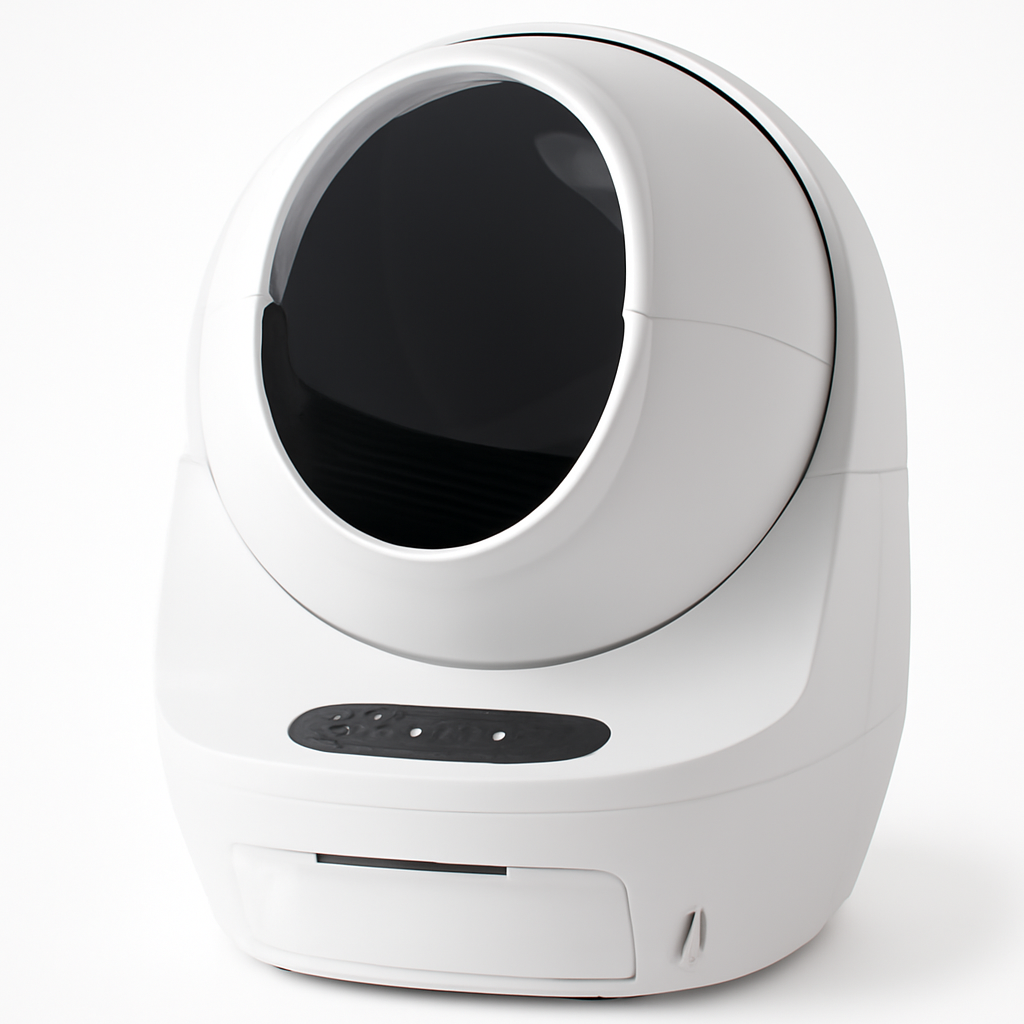
The Litter-Robot 4 is a rotating globe that sifts clumps into a sealed, carbon-filtered drawer at the base a few minutes after your cat exits. It uses standard clumping clay litter (no proprietary refills), has a WiFi app that tells you when the drawer is full and logs each cat’s usage, and includes weight sensing that can flag changes in bathroom habits — an early health signal worth having.
The odor advantage is structural: waste is separated and sealed almost immediately, and the waste drawer is a genuinely closed compartment rather than a tray under an open box.
Pros
– Fastest waste removal of any box type — the core driver of odor
– Sealed waste drawer with carbon filter
– Uses any standard clumping litter, no subscription lock-in
– App alerts mean the drawer actually gets emptied on time
– Health tracking via weight and frequency data
Cons
– Expensive — by far the priciest option here
– Has motors and sensors, so it can fail in ways a plastic pan can’t
– Large footprint; needs a power outlet nearby
– Some cats need a transition period to accept it
– Still needs the drawer emptied every few days and a full teardown clean periodically
Best for: Anyone who’s tired of the problem and willing to pay to mostly delete it. Especially good if you’re away from home during long days.
—
2. PetSafe ScoopFree Smart Self-Cleaning — Automation Without the Top-Tier Price
The ScoopFree uses a rake that sweeps waste into a covered compartment at one end of the tray. It’s designed around crystal (silica) litter, which absorbs urine and lets it evaporate rather than clumping — this is genuinely effective on ammonia, and it’s the reason ScoopFree owners often report low urine odor specifically.
Pros
– Meaningfully cheaper than a globe-style automatic box
– Crystal litter is strong on urine odor
– Disposable tray option means you can toss the whole thing instead of scrubbing
– Simple mechanism with fewer failure points than more complex units
Cons
– Ongoing cost of trays and crystal litter adds up
– Crystals don’t clump, so solid waste odor depends entirely on the rake cycle working properly
– Rake can push soft stool around rather than sweeping it cleanly
– Some cats dislike the texture of crystals underfoot
Best for: People who want automation, are more bothered by urine smell than anything else, and don’t mind a recurring supply cost.
—
3. Modkat Flip — Best Manual Box
The Flip is a sealed-sided box with a hinged lid that offers both top and front entry, and it uses a reusable liner instead of a hard pan bottom. Because the sides are solid and the lid closes over the top, containment is much better than a typical dome hood. The liner is the smart part — you lift the whole thing out to change litter instead of wrestling a heavy pan.
Pros
– Genuinely good seal compared to most hooded boxes
– Top-entry option drastically reduces tracking and floor-level odor escape
– Liner makes full changes fast, which means you’ll do them more often
– Looks like furniture rather than a litter box
Cons
– Smaller interior than the biggest pans — tight for very large cats
– Liners are a consumable
– Top entry doesn’t work for kittens, seniors, or arthritic cats
– No filter; relies on the seal plus your litter
Best for: One or two average-sized, mobile cats in a small apartment where the box is visible.
—
4. Catit Jumbo Hooded Cat Pan — Best Budget Pick
A large hooded pan with a carbon filter in the lid and a swinging front door. It’s the classic design done at a generous size, which matters — jumbo capacity means more cats can use it before it becomes unpleasant. The filter is a real, replaceable carbon insert.
Best for: Getting a meaningful odor improvement over an open pan without spending much. Replace the filter on schedule or the advantage disappears.
—
5. Petmate Booda Dome Clean Step — Best for Multi-Cat and Large Cats
A dome with a stepped entry that catches litter off paws on the way out. The rounded shape gives cats room to turn and dig, and the covered design plus a carbon filter contains odor well. It’s a good fit for households where the box is used often.
Best for: Two-plus cats, or a single large cat who needs room to maneuver inside a covered box.
—
Enclosed vs. Open Litter Boxes: Which Actually Controls Odor Better?
Short version: enclosed boxes control odor better in your room, and worse inside the box. That tradeoff decides everything.
| Open Pan | Enclosed / Hooded | |
| Odor escaping into your room | High | Low |
| Odor concentration inside box | Low | High |
| Cat acceptance | Higher | Varies by cat |
| Visual reminder to scoop | Constant | Easy to forget |
| Works for shy/nervous cats | Yes | Often better (privacy) |
| Works for cats who feel trapped | Yes | Often worse |
The hidden risk with enclosed boxes is exactly that “easy to forget” row. Out of sight means out of mind, and an enclosed box that goes unscooped for three days becomes a chamber your cat won’t enter. The people who do best with hooded boxes are the ones who scoop on a schedule rather than when they notice a smell.
A practical middle path in multi-cat homes: offer one covered and one open box and let the cats vote. The standard guidance is one box per cat plus one — and that ratio does more for odor than any single product upgrade, because it spreads waste across more litter volume.
—
Self-Cleaning Litter Boxes: Worth the Price for Odor Control?
For odor specifically — yes, more than any other category of upgrade. Nothing else changes the time-waste-sits variable, which is the dominant term in the equation.
Where the value is real:
– You’re gone 8–10 hours a day and waste would otherwise sit
– You have a sensitive nose or a small apartment where the box is near living space
– You’d realistically scoop once a day or less
– Mobility issues or pregnancy make daily scooping hard or inadvisable
Where it’s not worth it:
– You already scoop twice a day and it’s not a burden
– You have more than two or three cats — throughput and reliability get strained, and you may need multiple units anyway
– Kittens under about four months, which most units aren’t rated for
– You have a cat who is genuinely spooked by the mechanism
Things buyers underestimate: these are appliances. They have motors, sensors, and failure modes. Budget for eventual repair or replacement, and note that an automatic box still needs a full teardown cleaning periodically — automation reduces daily labor, it doesn’t eliminate maintenance. Check the warranty terms before buying; that’s a real part of the value at this price point.
—
Best Litter and Accessories to Pair With Your Box
The box handles containment. Litter handles the first line of chemistry.
Dr. Elsey’s Ultra Premium Clumping Clay — Hard, tight clumps that come out in one piece instead of crumbling. Crumbling is a hidden odor source: fragments left behind keep smelling. Unscented, which matters more than people expect — heavy fragrance masks odor rather than removing it, and some cats reject scented litter outright.
Arm & Hammer Clump & Seal — Baking soda plus a sealing agent built for odor specifically. If ammonia is your main complaint and you’re using a manual box, this is the straightforward pick.
Tidy Cats Breeze System pellets and pads — A different approach: pellets let urine pass through to an absorbent pad below, separating liquid from solids entirely. Low tracking, low dust, and effective on urine odor. It’s a whole system rather than a drop-in litter.
Accessories worth having:
– Replacement carbon filters — the cheapest odor upgrade there is, and the most neglected
– A litter mat at the exit — tracked litter carries odor across your floor
– A sealing waste pail — scooping into an open trash can just relocates the smell
– Enzyme cleaner (not ammonia-based) for accidents and for wiping down the box; ammonia cleaners smell like urine to a cat and can encourage repeat marking
Depth matters: 3–4 inches of clumping litter. Too shallow and urine hits the plastic floor, soaks in, and creates a permanent smell no scooping fixes.
—
How to Keep Odor Down: Maintenance Tips That Actually Work
1. Scoop twice a day. This single habit outperforms every product on this page. Morning and evening.
2. Do a full dump and wash monthly. Unscented dish soap and hot water. Skip bleach and ammonia — bleach residue plus urine can produce irritating fumes, and ammonia smells like a marking spot to your cat.
3. Dry the box completely before adding litter. Damp plastic plus fresh litter equals sludge in the corners.
4. Replace the carbon filter on schedule. Every one to three months depending on use.
5. Top up litter after scooping. You remove volume every time; letting depth drop is how you end up with urine on bare plastic.
6. Replace the box itself every 1–2 years. Scratched plastic holds odor permanently. A $30 replacement beats fighting a box that can’t be cleaned.
7. Add a box before you add air freshener. More boxes means more litter volume per cat and less saturation. One per cat plus one.
8. Placement matters. A ventilated area beats a sealed closet or under-stair nook where odor accumulates. Avoid next to food and water — cats dislike it and may start avoiding the box.
9. Sudden, dramatic odor changes deserve a vet call. A urinary tract infection or kidney issue can change urine smell, and litter box avoidance is often the first symptom owners notice.
—
Frequently Asked Questions
Does an enclosed box trap odor and make my cat avoid it?
It can, if you don’t scoop often enough. The enclosure concentrates odor inside. Scoop twice daily and it’s a non-issue; scoop every third day and you may find your cat using the rug instead.
Are self-cleaning boxes safe?
Modern units have weight and motion sensors that halt the cycle if a cat enters. Most aren’t rated for very small kittens — check the manufacturer’s minimum weight before buying.
Do carbon filters actually work?
Yes, modestly, and only when fresh. They adsorb some odor compounds but saturate. An unchanged filter does nothing.
Scented or unscented litter?
Unscented. Fragrance masks rather than removes, and cats have a far more sensitive sense of smell than we do — strong scent is a common cause of box avoidance.
How many boxes for two cats?
Three. One per cat plus one. It’s the most underrated odor fix available.
Will an air purifier help?
It helps with ambient odor in the room but does nothing about the source. Fix the box routine first, then add a purifier if you want.
—
Our Verdict
If odor is your top priority and budget allows, buy the Litter-Robot 4. It’s the only option here that changes the variable that actually matters — how long waste sits before removal. Everything else manages the smell after it’s already forming.
If you want automation for less, the PetSafe ScoopFree gets you most of the urine-odor benefit at a lower entry price, as long as you’re fine with recurring tray and crystal costs.
If you’d rather spend $30 than $300, the honest answer is that a Modkat Flip or a Catit Jumbo Hooded pan plus Dr. Elsey’s Ultra plus scooping twice a day will get you 80% of the result. That last part isn’t optional — it’s the actual product. A $700 box scooped never will smell worse than a $25 pan scooped religiously.
Start with the routine. Buy the box that makes the routine easier to keep.