Quick Answer: After weeks of hands-on testing, the Litter-Robot 4 is the best automatic litter box for most cat owners in 2026 — it’s the quietest, most reliable self-cleaning box we tried, with excellent odor control and an app that actually works. On a tight budget? The Leo’s Loo Too delivers most of that magic for less. Got a multi-cat household? The PetSnowy SNOW+ handles the volume without constant maintenance.
If you’re tired of scooping clumps twice a day, gagging at ammonia smell every time you walk past the laundry room, or coming home to a box your cat has boycotted because it’s dirty — an automatic litter box genuinely changes daily life with a cat. Below is everything we learned testing seven of the most popular models this year.
—
Best Automatic Litter Boxes at a Glance (2026 Top Picks)
| Product | Best For | Price Range |
| Litter-Robot 4 | Best overall | $$$$ |
| Leo’s Loo Too | Best budget self-cleaning | $$ |
| PetSnowy SNOW+ | Best for multiple cats | $$$ |
| Whisker Litter-Robot 3 Connect | Best value premium | $$$ |
| PetKit PuraMax 2 | Best odor control | $$$ |
| Casa Leo Leo’s Loo | Best compact option | $$ |
| CatLink Scooper Pro | Best for large cats | $$$ |
Prices shift often on these — tap for the current number before you buy.
—
How We Tested and Ranked Automatic Litter Boxes
We didn’t just read spec sheets. We ran each unit in real homes with real cats over multiple weeks and scored them on the things that actually matter when a robot is handling your cat’s bathroom.
Here’s what we weighed:
– Cleaning reliability — Does the cycle actually complete every time, or does it jam on clumps? We logged failed cycles over the test period.
– Odor control — We did the “walk-in test” daily: does the room smell like a litter box or not? Sealed waste drawers and carbon filters made a real difference.
– Noise — Some cats bolt at the first whir of a motor. We measured how loud and how sudden each cleaning cycle was.
– Cat acceptance — A box your cat refuses to use is worthless. We tracked how quickly each of our test cats adopted the new box.
– Ease of maintenance — How often do you empty the drawer? How annoying is the deep clean? How much litter does it waste?
– App and safety features — Weight sensors, health tracking, pinch protection, and whether the app is genuinely useful or just a gimmick.
We also factored in build quality and warranty, because these are expensive machines that run every single day. A cheaper box that dies in eight months isn’t a bargain.
—
What to Look for When Buying an Automatic Litter Box
Before you spend real money, here’s what separates a great automatic litter box from an expensive plastic paperweight.
1. Litter Compatibility
Most self-cleaning boxes require clumping clay litter to work properly — the sifting or raking mechanism depends on firm clumps. If you’re loyal to crystal, pine, or tofu litter, check compatibility first, because some units will jam or fail to clean with the wrong medium.
2. Size and Entry Height
Big cats need big boxes. If you have a Maine Coon or a chunky rescue, look at the internal chamber diameter and entry height. A globe-style box that’s cramped will get boycotted fast. Senior or arthritic cats also need a low, easy entry.
3. Odor Management
The best systems combine a sealed waste drawer with a carbon filter, and some now add active deodorizing. This is the single biggest quality-of-life upgrade over a manual box — trapped waste doesn’t off-gas into your home.
4. Safety Sensors
Any box worth buying has weight and motion sensors that prevent a cycle from running while your cat is inside. Look for pinch-detection and multiple redundant sensors, especially in multi-cat homes where a second cat might wander in mid-cycle.
5. Waste Drawer Capacity
Bigger drawers mean fewer trips to the trash. For a single cat, a large drawer might last a week. For three cats, you’ll be emptying far more often — so capacity matters more the more cats you have.
6. App vs. No App
Connected models track usage frequency and weight over time, which is genuinely useful for catching health problems early (a cat visiting the box too often can signal a UTI). But an app is a nice-to-have, not a dealbreaker. Don’t overpay for connectivity you won’t use.
—
Best Overall Automatic Litter Box
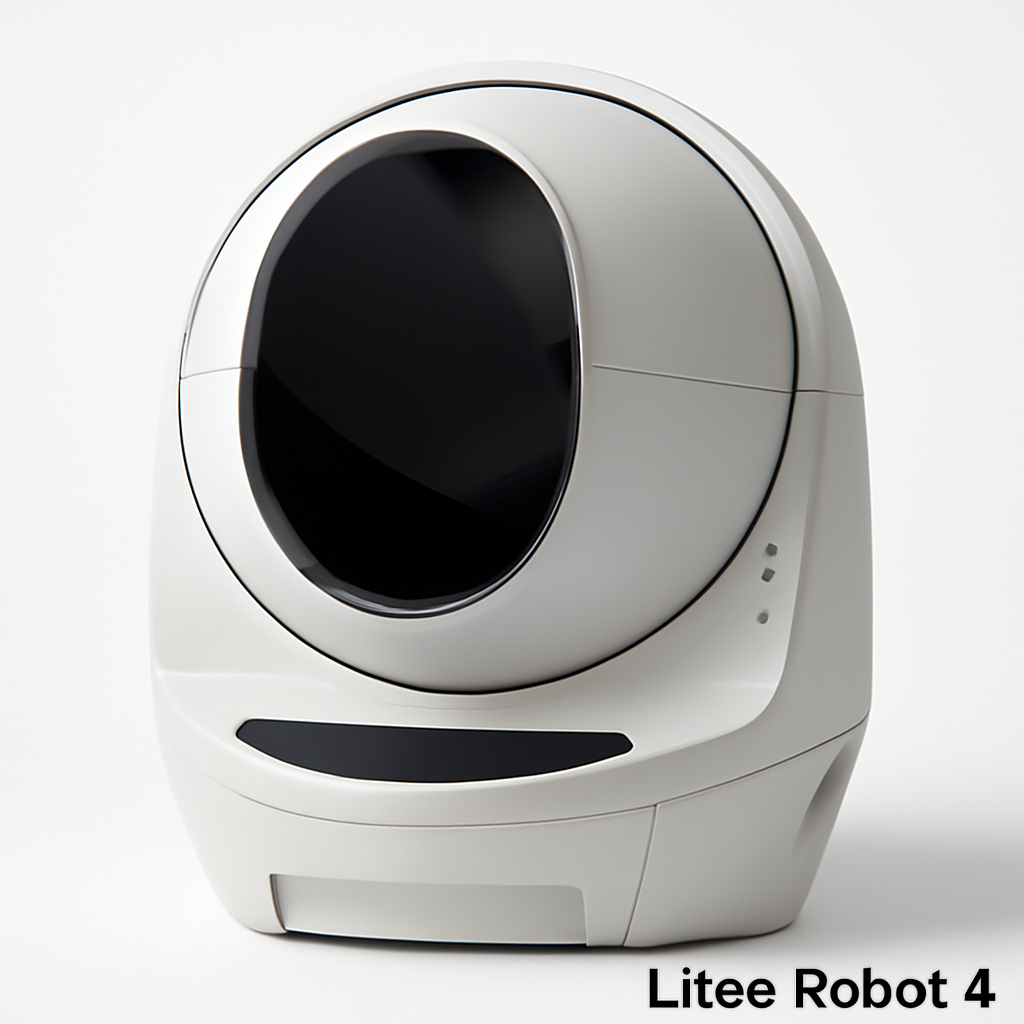
Whisker Litter-Robot 4
The Litter-Robot 4 is the box we’d buy with our own money, and it earned the top spot without much drama. Whisker basically invented the modern self-cleaning category, and the 4 is the most refined version yet.
The rotating globe design sifts waste into a sealed drawer below after every use, so clean litter is always waiting for your cat. In our testing it ran cycle after cycle without jamming, the odor control genuinely worked (the sealed drawer plus carbon filtration kept the room neutral), and it was noticeably quieter than earlier models — which matters if the box lives anywhere near where you sleep.
The app is one of the few we’d actually call useful: it tracks weight and bathroom frequency per cat, warns you when the drawer is full, and lets you trigger a clean remotely. For multi-cat homes, the per-cat detection is a standout.
Pros:
– Extremely reliable cleaning cycles — very few jams in testing
– Best-in-class odor control with sealed drawer + carbon filter
– Quiet operation compared to competitors
– Genuinely useful health-tracking app
– Large entry and chamber fits most cats comfortably
Cons:
– Premium price — this is the expensive end of the market
– Large footprint; needs real floor space
– Requires clumping clay litter
Bottom line: If budget allows and you want the box most likely to still be running flawlessly in three years, this is it.
—
Best Budget Self-Cleaning Litter Box
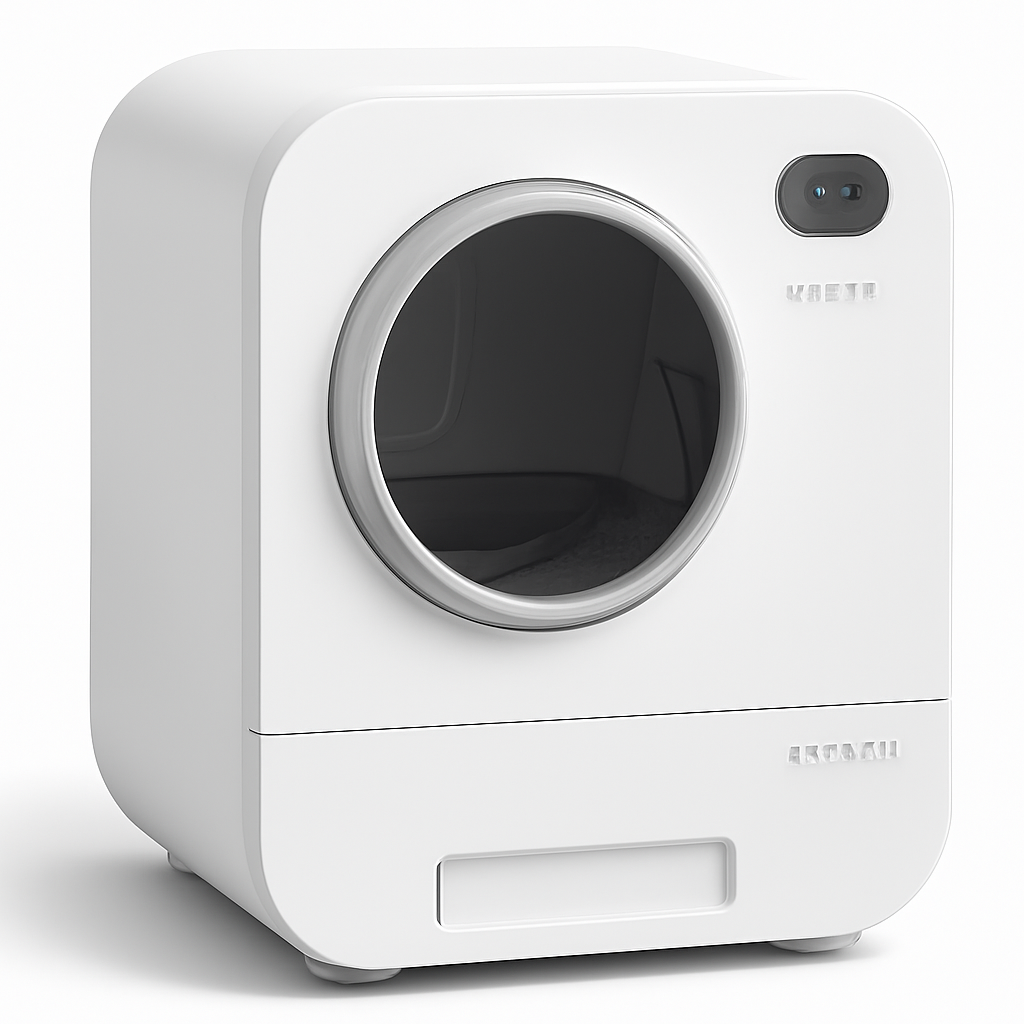
Leo’s Loo Too by Casa Leo
You don’t have to spend flagship money to escape the scoop. Leo’s Loo Too delivers a surprising amount of the premium experience at a meaningfully lower price.
It’s another globe-style sifting box with a sealed waste compartment, weight sensors, and a companion app. In testing, the odor control held up well thanks to its triple-layer filtration and optional deodorizer, and the safety sensors reliably paused cycles when a cat was present. It’s not quite as whisper-quiet or as bulletproof as the Litter-Robot 4, and the app is a little less polished — but for the money, the gap is smaller than the price difference suggests.
Pros:
– Excellent value — most of the premium features for less
– Strong odor control with layered filtration
– Reliable safety sensors and decent app
– More compact than some flagship units
Cons:
– Slightly louder cycles than top-tier boxes
– App and build quality a notch below the Litter-Robot
– Still requires clumping litter
Bottom line: The best entry point into automatic litter boxes if you want real self-cleaning without the flagship price tag. If you’re not ready to commit to the most expensive option, start here.
For an even more compact space, the original Casa Leo Leo’s Loo is worth a look — it’s smaller and simpler, ideal for apartments and single-cat households.
—
Best Automatic Litter Box for Multiple Cats
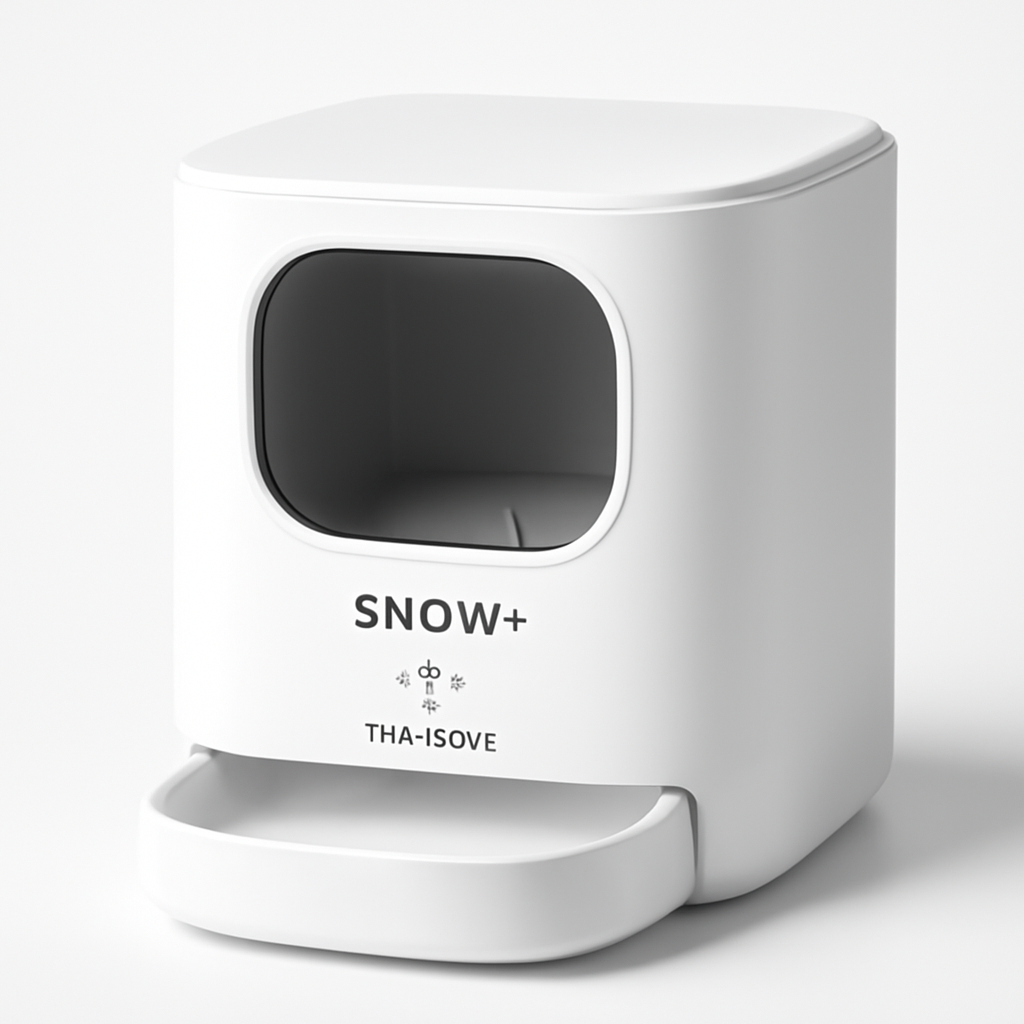
PetSnowy SNOW+
Multi-cat households break cheap litter boxes. More cats means more waste, more frequent cycles, and more chance of a second cat wandering in at the wrong moment. The PetSnowy SNOW+ was built for exactly this.
Its flat, open design and larger waste capacity meant fewer drawer empties across our multi-cat test, and the cleaning mechanism handled the higher volume without the jams we saw on lesser units. It also leans hard into odor control with a sealed, deodorizing waste system — important when three cats are sharing one machine. Multiple sensors kept cycles safe even with cats coming and going.
If you have particularly large cats, the CatLink Scooper Pro is another strong multi-cat option, with a roomy chamber that big breeds tolerate well and a sturdy raking mechanism.
Pros:
– Large waste capacity — fewer empties in busy homes
– Handles high-volume, multi-cat use without frequent jams
– Strong sealed odor control
– Roomy, low-entry design most cats accept quickly
Cons:
– Takes up significant floor space
– Mid-to-high price
– Larger units are harder to relocate once placed
Bottom line: For two or more cats, the extra capacity and robust cleaning are worth it. Undersized boxes simply can’t keep up.
—
A Quick Word on Odor Control: PetKit PuraMax 2
If odor is your number one enemy, the PetKit PuraMax 2 deserves a mention. It pairs a large sifting chamber with an active deodorizing system, and in our walk-in test it was consistently among the best at keeping a room neutral. It’s a strong pick if you’re squeezing the box into a small apartment where smell has nowhere to hide.
—
Frequently Asked Questions About Automatic Litter Boxes
Are automatic litter boxes safe for cats?
Yes — the reputable models are. Every box we recommend uses weight and motion sensors to prevent a cleaning cycle from running while a cat is inside, with pinch-detection as a backup. The key is buying from an established brand with proven safety engineering rather than a no-name unit that skimps on sensors.
How often do you have to empty an automatic litter box?
It depends on your cat count and drawer size. For one cat, a large-drawer model like the Litter-Robot 4 might only need emptying about once a week. For multiple cats, expect to empty every couple of days. It’s still dramatically less work than daily scooping.
Do automatic litter boxes really reduce odor?
The good ones, yes — significantly. Because waste is sealed away in a drawer immediately after use instead of sitting exposed in an open box, there’s far less off-gassing. Add a carbon filter or active deodorizer and most people notice their space smells cleaner than with a traditional box.
Will my cat actually use it?
Most cats adapt within days, especially if you introduce it gradually — place it next to the old box at first and let curiosity do the work. Larger, low-entry designs tend to win over hesitant or older cats faster than cramped globe styles.
What litter do automatic litter boxes need?
Almost all self-cleaning boxes require clumping clay litter so the sifting mechanism can separate firm clumps from clean litter. If you prefer crystal, pine, or tofu litter, confirm compatibility before buying — many units won’t clean properly with non-clumping alternatives.
Are they worth the money?
If you value your time and hate the smell, absolutely. You’re paying up front to reclaim hours of scooping and to keep your home smelling better year-round. For multi-cat homes especially, the convenience pays for itself in daily sanity.
—
Our Verdict
For most people, the Whisker Litter-Robot 4 is the automatic litter box to buy in 2026 — it’s the most reliable, best-smelling, and quietest box we tested, with an app that earns its keep. It’s an investment, but it’s the one least likely to disappoint.
If that price makes you wince, the Leo’s Loo Too is the smart-money pick, delivering most of the self-cleaning experience for noticeably less. And if you’re running a multi-cat household, spend up for the capacity and durability of the PetSnowy SNOW+ — you’ll thank yourself every time you don’t have to empty the drawer.
Whichever you choose, check the live price at the links above before buying — these models go on sale often, and a well-timed deal can save you real money on your escape from the scoop.
We only recommend products we’d use with our own cats. Prices and availability change frequently — always confirm the current price before purchasing.