Quick answer: If you have a large or giant breed dog, you need a bed with genuine orthopedic support (real memory foam at least 4 inches thick), a durable chew-resistant cover, and a size that lets your dog stretch out fully. For most big dogs, the Big Barker 7″ Pillow Top is the best overall pick, while the K9 Ballistics Original Elevated Bed wins for heavy chewers and hot sleepers. Below, we break down exactly how to choose the right one.
—
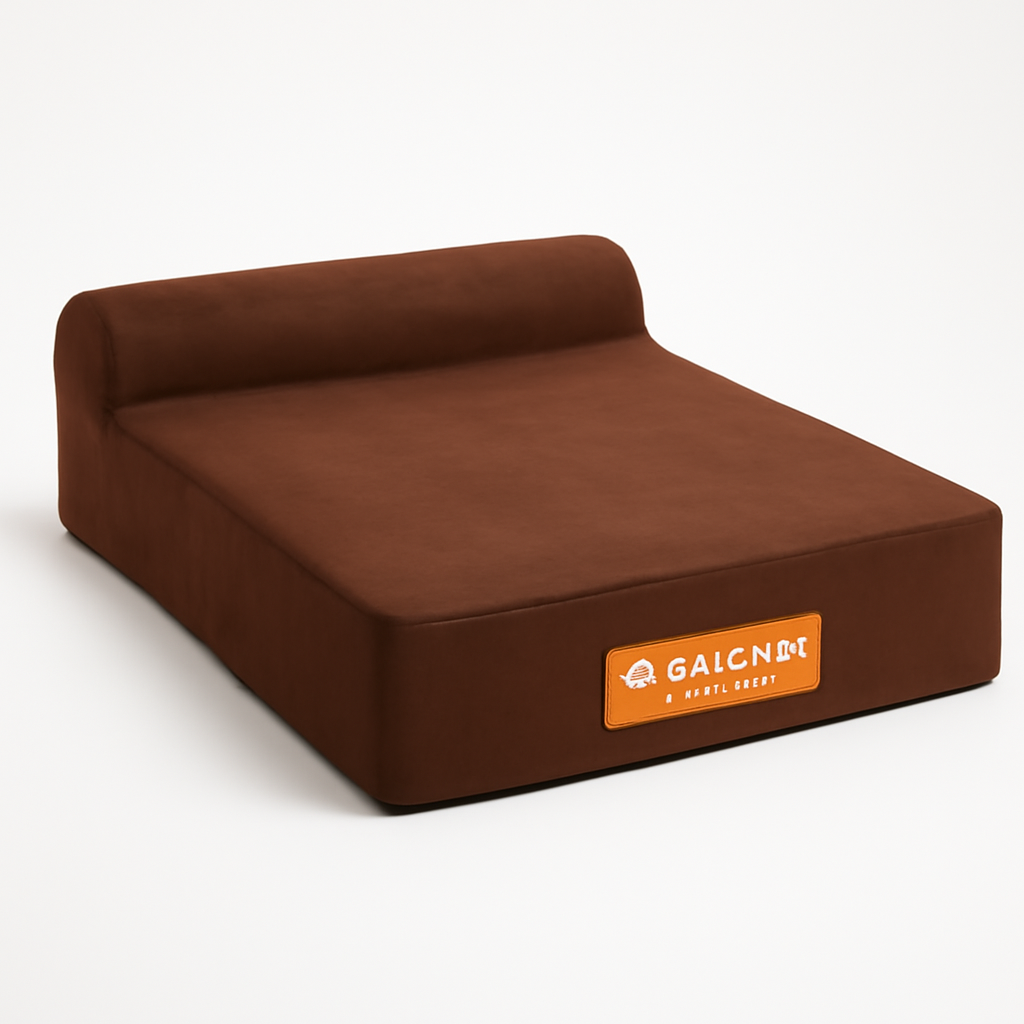
Large dogs sleep hard, and cheap beds fail fast. If you’ve watched a $40 bed flatten into a pancake within a month — or found the stuffing shredded across your living room — you already know the problem. Big breeds put serious weight on their joints, and a bed that bottoms out doesn’t just wear out quickly; it can actually make hip and elbow problems worse over time.
This guide walks you through what actually matters when shopping for a large-dog bed in 2026, the different types available, and our top picks after comparing durability, support, and washability.
Top Picks at a Glance
| Product | Best For | Price Range |
| Big Barker 7″ Pillow Top | Overall / orthopedic support | |
| K9 Ballistics Original Elevated Bed | Heavy chewers & hot sleepers | |
| PetFusion Ultimate Lounge | Bolster / anxious dogs | |
| Kuranda Aluminum Frame Bed | Extreme durability / crates | |
| Furhaven Orthopedic Sofa Bed | Budget orthopedic |
—
What Makes a Dog Bed Right for Large Breeds
A bed built for a 30-pound spaniel is not just a smaller version of what a 100-pound mastiff needs — the engineering is fundamentally different. Three things separate a real large-dog bed from a scaled-up small one.
Weight-bearing foam. Large dogs compress foam far more than small dogs do. A thin or low-density foam will “bottom out,” meaning your dog’s hips and elbows press straight through to the hard floor. For breeds over 50 pounds, you want dense support foam, not fluffy poly-fill that packs down within weeks.
Joint protection. Big breeds — Labs, German Shepherds, Great Danes, Golden Retrievers, mastiffs — are genetically prone to hip dysplasia and arthritis. A supportive bed distributes their weight evenly and keeps pressure off the joints. This is why orthopedic construction matters so much more for large dogs than small ones.
Structural durability. More weight means more stress on seams, zippers, and covers every single time your dog circles, flops, and shifts. A large-dog bed needs reinforced stitching and a tough cover, or it simply won’t survive.
Types of Large-Dog Beds: Orthopedic, Bolster & Elevated
There’s no single “best” style — the right type depends on your dog’s age, chewing habits, climate, and how they like to sleep.
Orthopedic Beds
Orthopedic beds use a solid slab of memory or support foam (ideally 4–7 inches thick) to cradle joints and relieve pressure points. These are the gold standard for senior dogs, dogs recovering from surgery, and any breed prone to joint issues. If your dog is over 7 years old or over 70 pounds, start here.
Bolster Beds
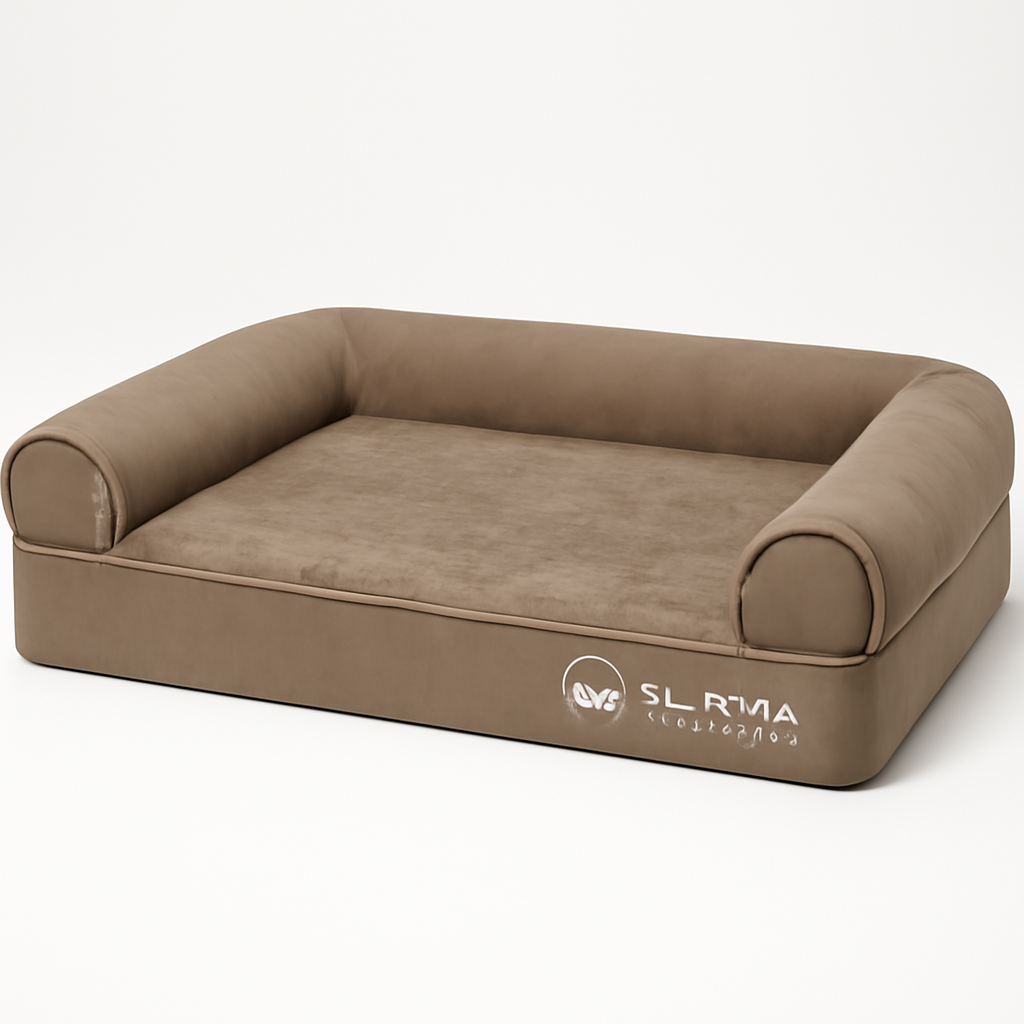
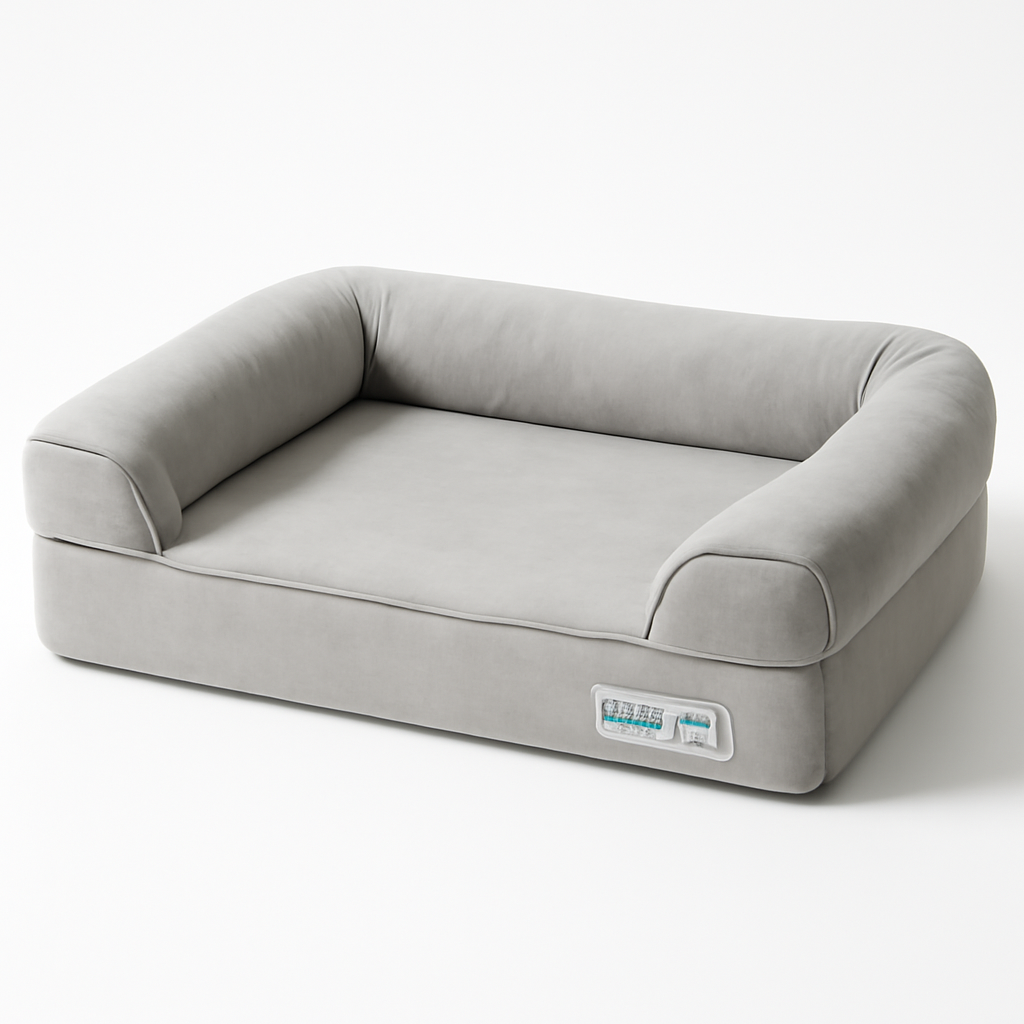
Bolster beds add raised edges or a cushioned rim around some or all sides, giving your dog something to rest their head and neck against. Dogs that curl up, lean, or show anxiety often sleep better with bolsters — the raised sides create a sense of security. The trade-off is usable surface area: sprawlers who like to stretch flat may find bolsters cramped.
Elevated (Cot-Style) Beds
Elevated beds suspend a taut fabric surface on a raised frame, keeping your dog off the ground entirely. They excel in three situations: hot climates (air circulates underneath for cooling), outdoor or porch use, and homes with aggressive chewers, since there’s no stuffing to destroy. The downside is minimal cushioning, so they’re not ideal as the primary bed for an arthritic senior.
Key Features to Look For (Support, Durability, Washability)
Support
Look for the actual foam specs, not marketing language. “Orthopedic” is an unregulated term — plenty of beds slap it on a thin layer of shredded foam. For a large dog, you want:
– Solid foam core, not loose fill or chunks that shift and clump
– At least 4 inches of thickness for dogs 50–90 lbs; 6–7 inches for giant breeds
– High-density support foam, sometimes layered with a memory-foam top for comfort
A good test: press your hand firmly into the bed. If you can feel the floor, so will your dog.
Durability
The cover is where most beds die first. Prioritize:
– Ripstop or ballistic-weave fabric if your dog chews or digs
– Reinforced, double-stitched seams (single stitching pops under big-dog weight)
– Heavy-duty zippers hidden or covered so they can’t be chewed open
Elevated frames should be aluminum or steel — cheap plastic frames crack under 80+ pounds.
Washability
Big dogs mean big messes: mud, drool, shedding, the occasional accident. The single most important feature here is a removable, machine-washable cover. Beyond that, look for:
– Waterproof or water-resistant inner liner protecting the foam itself
– Covers that survive repeated hot washes without shrinking or pilling
Skip any large bed where the cover doesn’t come off — you’ll regret it within a month.
How to Choose the Right Size for Your Dog
Getting the size right is where most people go wrong. A bed that’s too small forces your dog to curl up when they’d rather stretch, which defeats the joint-support purpose entirely.
Measure your dog first. With your dog lying on their side, fully stretched out, measure from nose to the base of the tail. Then add 8–12 inches to get your minimum bed length. This gives them room to sprawl without hanging off the edge.
Weight matters as much as length. Heavier dogs need thicker, denser foam regardless of their length. A lean 70-pound Greyhound and a stocky 70-pound Bulldog have very different support needs.
Here’s a rough sizing guide:
| Dog Weight | Recommended Bed Size | Minimum Foam Thickness |
| 50–70 lbs | Large (40–46″) | 4″ |
| 70–100 lbs | Extra-Large (46–54″) | 5–6″ |
| 100+ lbs (giant breeds) | Giant / XXL (54″+) | 6–7″ |
When in doubt, size up. Dogs almost never complain about too much room — but they’ll avoid a bed that’s too small.
Our Top Picks for Best Large Dog Beds in 2026
Best Overall: Big Barker 7″ Pillow Top
The Big Barker is purpose-built for large and giant breeds, and it shows. The 7-inch, three-layer therapeutic foam holds its shape under heavy weight far better than typical memory foam, and the microfiber cover is genuinely durable and machine-washable. It’s the bed most commonly recommended for arthritic seniors and big working breeds.
Pros:
– Thick, high-quality foam that resists bottoming out
– Sized specifically for large-to-giant dogs
– Removable, washable cover; long warranty
Cons:
– Premium price
– Bulky — takes up significant floor space
Best for Chewers & Hot Sleepers: K9 Ballistics Original Elevated Bed
If your dog destroys everything or overheats easily, an elevated cot is the answer, and K9 Ballistics builds some of the toughest. The ripstop ballistic fabric resists chewing and digging, the frame is sturdy under heavy weight, and the open-air design keeps big dogs cool. It’s also nearly effortless to hose off and dry.
Pros:
– Extremely durable, chew-resistant surface
– Excellent cooling and airflow
– Very easy to clean
Cons:
– Minimal cushioning — not ideal for arthritic dogs
– Firmer surface some dogs need time to adjust to
Best Bolster Bed: PetFusion Ultimate Lounge
For dogs that like to lean and curl, the PetFusion Ultimate Lounge combines a solid memory-foam base with cushioned bolstered sides. The water-resistant liner and washable, tear-resistant cover make it practical for daily use, and the bolsters give anxious dogs a secure spot to nestle.
Pros:
– Comfortable bolsters plus a supportive foam base
– Water-resistant inner liner protects the foam
– Attractive enough for the living room
Cons:
– Bolsters reduce flat sprawling space
– Cover can be a tight fit to remove and replace
Also Worth Considering
– Kuranda Aluminum Frame Bed — a nearly indestructible chew-proof cot with an aluminum frame, popular for crates, kennels, and the most determined destroyers.
– Furhaven Orthopedic Sofa Bed — a solid budget-friendly orthopedic option with bolstered sides, good for dogs on the lower end of the large-breed range.
Caring for and Cleaning Your Dog’s Bed
A good large-dog bed is an investment — treat it right and it’ll last years instead of months.
Wash the cover regularly. Aim for every 2–4 weeks, more often during shedding season or if your dog spends time outdoors. Always follow the care label; most washable covers do best in cold or warm water and air-dry or low heat to prevent shrinking.
Protect the foam. If your bed has a waterproof liner, keep it on. If it doesn’t, consider adding a separate waterproof cover underneath — foam that gets soaked with drool or accidents is nearly impossible to fully dry and will start to smell.
Vacuum between washes. A quick pass with a vacuum or a rubber pet-hair brush knocks down the hair and dander that build up fast with big dogs.
Rotate and flip. If the bed is single-sided foam, rotate it periodically so your dog doesn’t wear a permanent dent in one spot. Flip double-sided beds monthly.
Clean elevated beds simply. Cot-style beds usually just need a hose-down and a quick scrub, then full air-drying before your dog gets back on.
Frequently Asked Questions
How thick should a large dog’s bed be?
For dogs 50–90 pounds, look for at least 4 inches of solid support foam. Giant breeds over 100 pounds do best with 6–7 inches. The heavier the dog, the more foam you need to prevent bottoming out.
Are orthopedic beds worth it for large dogs?
Yes — especially for seniors, heavy breeds, and dogs prone to hip or elbow issues. Because large dogs put more pressure on their joints, a genuinely orthopedic bed with dense foam makes a real difference in comfort and long-term joint health.
What’s the best bed for a dog that chews everything?
An elevated cot-style bed with ballistic or ripstop fabric, like the K9 Ballistics Original, or a chew-proof aluminum-frame bed like the Kuranda. Neither has loose stuffing to destroy.
How often should I replace my dog’s bed?
A quality large-dog bed should last 3–5 years or more. Replace it sooner if the foam no longer springs back, has permanently flattened, or you can feel the floor through it — that means it’s no longer protecting your dog’s joints.
Can I put a large orthopedic bed in a crate?
Yes, but measure your crate’s interior carefully first. For crates, a low-profile orthopedic pad or a chew-resistant Kuranda-style bed often fits better than a thick bolstered bed.
Our Verdict
For most large-dog owners, the Big Barker 7″ Pillow Top is the best all-around choice in 2026 — its thick, durable foam delivers the joint support big breeds genuinely need, and it holds up over years of heavy use. If your dog is a serious chewer or runs hot, skip the foam entirely and go with the K9 Ballistics Original Elevated Bed for its near-indestructible, cooling design. And for dogs that love to curl up and lean, the PetFusion Ultimate Lounge offers the best balance of bolstered comfort and everyday practicality.
Whichever you choose, prioritize real foam thickness, a tough washable cover, and a size that lets your dog fully stretch out. Get those three things right, and your big dog will thank you with years of better sleep.
Prices change frequently — always check the current price before buying.