Quick answer: If your dog drags you down the sidewalk, the fastest fix is a well-fitted no-pull harness with a front (chest) clip. Our top overall pick for 2026 is the Ruffwear Front Range for its balance of comfort, durability, and control. Budget shoppers should grab the Rabbitgoo No-Pull Harness, while dogs that pull hard do best in the 2 Hounds Design Freedom No-Pull Harness. Below, we break down exactly what to look for, how to fit it, and how to train the pulling out of your walks.
—
Why a No-Pull Harness Matters for Strong Pullers
If you’ve ever been yanked off balance by an excited dog spotting a squirrel, you already know the problem. A dog that pulls on a standard collar isn’t just hard to walk — they’re putting real pressure on their own trachea and neck, and they’re teaching themselves that pulling works (they get to move forward, so the behavior gets reinforced).
A no-pull harness changes the physics of the walk in two ways:
1. It removes pressure from the neck. The load spreads across the chest and shoulders, which is far safer, especially for flat-faced breeds, small dogs, and any dog with a history of throat or spine issues.
2. It redirects forward momentum. The best anti-pull designs use a front chest clip that gently turns your dog back toward you when they lunge, instead of letting them power straight ahead like a sled dog.
For a genuinely strong puller — think a young Lab, Husky, Boxer, or a big mixed breed with more enthusiasm than manners — the right harness is the difference between dreading walks and actually enjoying them. It’s not a magic cure (training still matters, and we’ll get to that), but it gives you immediate control while the training catches up.
What to Look for in an Anti-Pull Dog Harness
Not every harness labeled “no-pull” actually reduces pulling. Here’s what separates a real one from marketing:
A Front Chest Attachment Point
This is the single most important feature. A D-ring on the chest gives you a steering point that discourages forward lunging. Back-clip-only harnesses can actually encourage pulling (they trigger a dog’s natural opposition reflex — push against pressure).
The Right Fit and Adjustability
Look for at least four adjustment points. Dogs come in wildly different shapes, and a harness that fits the chest but gapes at the shoulders will chafe and slip. Adjustability is what lets one harness work across a dog’s weight fluctuations and coat changes.
Padding Where It Counts
Strong pullers put force on the chest strap and under the “armpits” (the girth strap behind the front legs). Padding — ideally soft, moisture-wicking foam — prevents rubbing and hot spots on long or high-energy walks.
Durable Hardware
Cheap plastic buckles crack; thin stitching frays. For a powerful dog, look for reinforced stitching, aluminum or heavy-duty steel D-rings, and buckles rated for the dog’s weight. This is where the budget picks and premium picks really diverge.
Escape Resistance
Anxious or clever dogs can back out of a poorly designed harness. A design with a snug girth strap and a third strap (or a martingale-style tightening loop) is much harder to wriggle out of.
Reflectivity and Visibility
For early-morning or evening walks, reflective trim or stitching is a genuine safety feature, not just a nice-to-have.
Front-Clip vs. Back-Clip vs. Dual-Clip Designs
Understanding clip placement is the key to picking the right harness. Here’s how the three styles compare:
Front-Clip (Chest Attachment)
The leash attaches at the center of the chest. When your dog pulls, the leash redirects them sideways and back toward you, killing forward momentum. Best for: active pullers and loose-leash training. Downside: the leash can occasionally tangle under the front legs if it’s too long or loose.
Back-Clip (Between the Shoulders)
The leash attaches on the back. It’s comfortable and tangle-free, and great for calm dogs, small breeds, or once your dog has learned not to pull. But on a determined puller, a back clip gives them a straight line to lean into — exactly what you don’t want.
Dual-Clip (Both Front and Back)
The most versatile option: use the front clip for training and control, then switch to the back clip (or use both with a double-ended leash) once your dog settles. Best for: owners who want one harness that grows with their dog’s training. Most premium harnesses in 2026 are dual-clip for this reason.
> Bottom line: For a dog that currently pulls, prioritize a harness with a front clip. Dual-clip gives you the most long-term flexibility.
Our Top Dog Harnesses for Pulling in 2026
Here’s a quick comparison, followed by detailed breakdowns.
Top Picks at a Glance
| Product | Best For | Price Range |
| Ruffwear Front Range | Best overall / all-around | $$–$$$ |
| 2 Hounds Design Freedom No-Pull | Hard, powerful pullers | $$–$$$ |
| Rabbitgoo No-Pull Harness | Best value / budget | $ |
| PetSafe Easy Walk | Simple front-clip control | $ |
| Kurgo Tru-Fit Enhanced Strength | Car safety + walking combo | $$ |
| Julius-K9 IDC Powerharness | Large working breeds | $$ |
—
1. Ruffwear Front Range — Best Overall
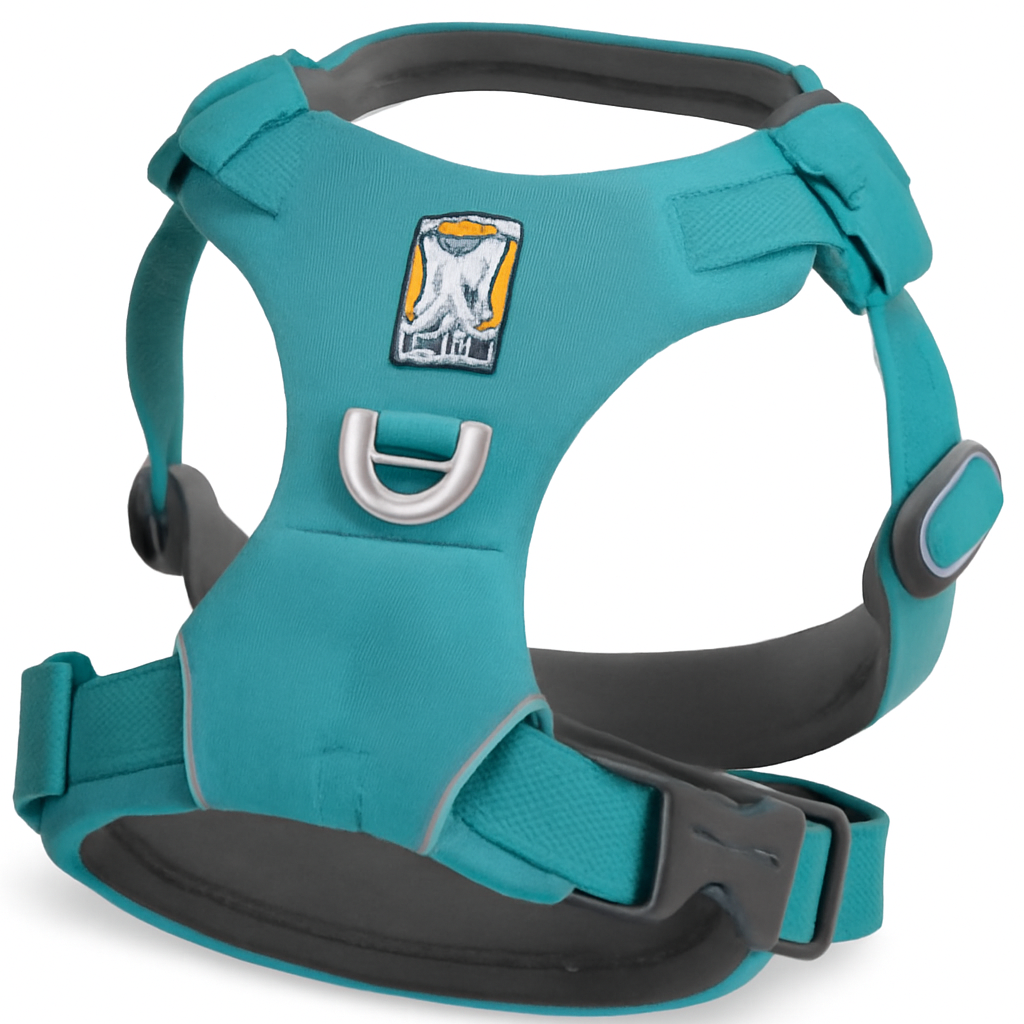
The Ruffwear Front Range is the harness we recommend to most owners. It’s a dual-clip design (reinforced front chest ring plus an aluminum back V-ring), with four points of adjustment and genuinely comfortable foam-padded panels that distribute pressure evenly. It holds up to daily use, and the fit dials in cleanly across a wide range of body types.
Pros:
– Dual-clip versatility (train up front, cruise on the back)
– Excellent padding and load distribution for all-day comfort
– Durable construction that survives heavy, repeated use
– Reflective trim for low-light walks
– ID pocket for tags
Cons:
– Not the cheapest option
– Very strong escape artists may still need a design with a third strap
Verdict: If you want one harness that does nearly everything well, this is it.
—
2. 2 Hounds Design Freedom No-Pull Harness — Best for Hard Pullers
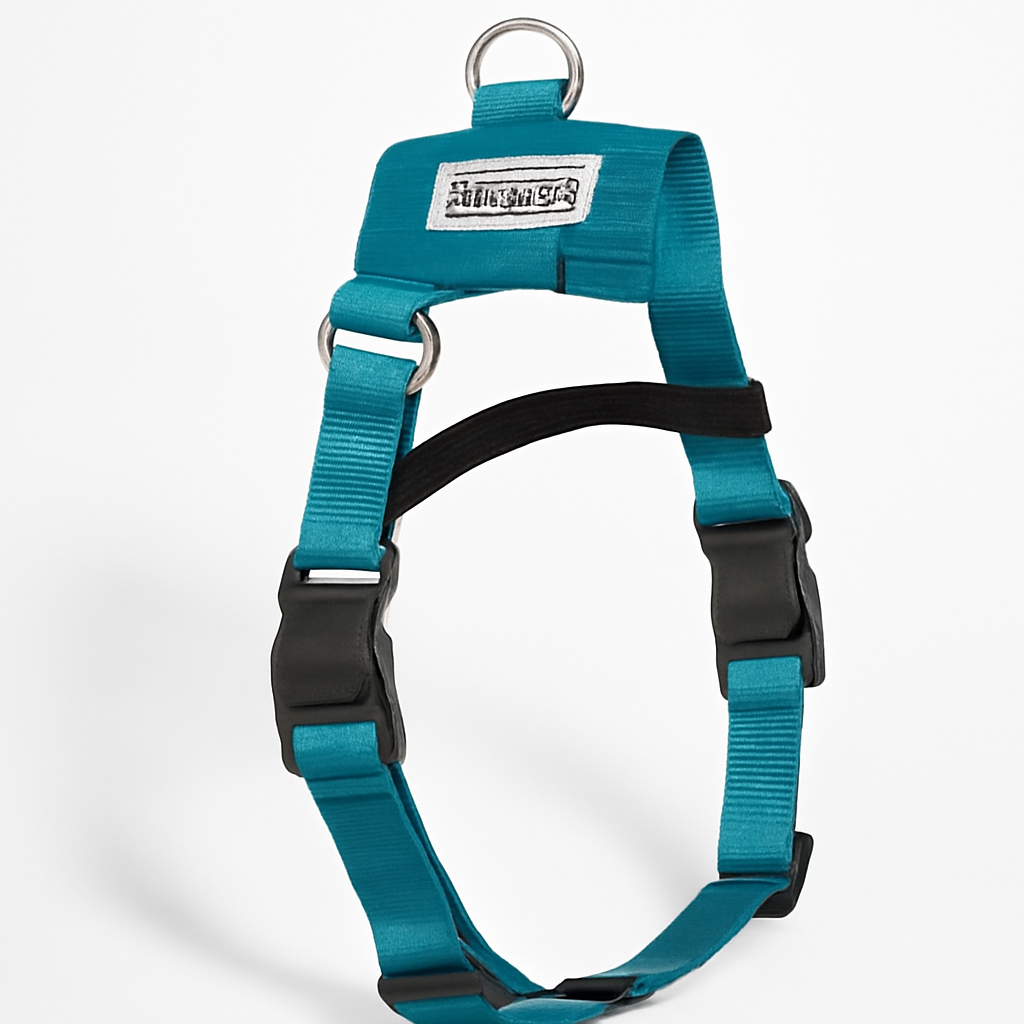
If your dog treats every walk like a strongman competition, the 2 Hounds Design Freedom No-Pull Harness is built for you. Its standout feature is a martingale loop on the back that gently tightens when the dog pulls, combined with a front chest ring — using both together (with a double-ended leash) gives you steering and a subtle, humane correction cue. A velvet-lined girth strap helps prevent the chafing that plagues cheaper harnesses on powerful dogs.
Pros:
– Front clip + back martingale loop = superior control on strong pullers
– Velvet lining under the girth strap reduces armpit chafing
– Stainless steel hardware built for force
– Works best paired with a double-ended training leash
Cons:
– Slightly more involved to fit correctly at first
– Best results require a double-ended leash (sometimes sold separately)
Verdict: The most effective anti-pull mechanism on this list for genuinely powerful dogs.
—
3. Rabbitgoo No-Pull Harness — Best Value
The Rabbitgoo No-Pull Harness proves you don’t have to overspend for a solid dual-clip harness. You get a front chest clip, a back clip, four adjustment points, breathable padding, and a top handle — at a budget-friendly price. It’s not as bombproof as premium options for a 90-pound puller, but for small-to-medium dogs and moderate pullers, it’s outstanding value.
Pros:
– Dual-clip design at a low price
– Breathable, lightweight padding
– Top control handle and reflective strips
– Easy on/off with quick-release buckles
Cons:
– Hardware isn’t as heavy-duty as premium picks
– Very large, very strong dogs may outgrow its capabilities
—
4. PetSafe Easy Walk Harness — Simple Front-Clip Control
The PetSafe Easy Walk is a no-frills, front-clip-only harness that’s been a trainer favorite for years. The chest strap sits across the breastbone and turns the dog when they pull. It’s easy to put on (it goes over the head differently than most) and affordable. The trade-off: it has less padding and can ride into the armpits if not fitted carefully, so getting the fit right matters here.
—
5. Kurgo Tru-Fit Enhanced Strength — Best for Car + Walk Combo
If your dog rides in the car often, the Kurgo Tru-Fit Enhanced Strength Harness doubles as a crash-tested seatbelt harness and a walking harness with a front no-pull clip. Five adjustment points and steel hardware make it a strong all-rounder for active households.
—
6. Julius-K9 IDC Powerharness — Best for Large Working Breeds
The Julius-K9 IDC Powerharness is a back-clip harness beloved for big, strong working breeds (Shepherds, Malinois, Rottweilers). It’s incredibly durable with a chest-plate design and a sturdy top handle for close control. Note it’s primarily a back-clip design, so pair it with training if pulling is severe — its strength is control-by-handle and durability rather than front-clip redirection.
How to Measure and Fit Your Dog’s Harness
A no-pull harness only works if it fits. Here’s how to get it right:
1. Measure the girth. Wrap a soft tape measure around the widest part of your dog’s ribcage, just behind the front legs. This is the most important measurement.
2. Measure the neck/chest. Measure around the base of the neck where a collar would sit, and note the chest breadth.
3. Weigh your dog. Many harnesses size by weight and girth — use both.
4. Check the two-finger rule. Once on, you should be able to slide two fingers flat under any strap. Tighter risks chafing; looser risks escape.
5. Watch the armpits. The girth strap should sit about 1–2 finger-widths behind the front legs, not jammed up into the armpit where it rubs.
6. Test the front clip position. The chest ring should sit centered on the breastbone, not sagging low.
If your dog is between sizes, size down if the harness has generous adjustment range, and up if it runs small. Always re-check the fit after the first few walks — straps loosen slightly with movement.
Training Tips to Stop Leash Pulling
A harness controls pulling; training cures it. Combine the two for lasting results:
– Reward the loose leash. The moment the leash goes slack, mark it (“yes!”) and treat. You’re teaching that a loose leash is what earns forward progress.
– Be a tree. When your dog pulls, stop moving entirely. Only resume walking when the leash loosens. Pulling should never move them forward.
– Change direction. When your dog forges ahead, turn and walk the other way. This resets their focus onto you.
– Use the front clip actively. A gentle sideways redirect via the chest ring is far more effective than yanking back.
– Practice in low-distraction areas first. Master loose-leash walking in the backyard before tackling a busy street.
– Keep sessions short and end on a win. Five focused minutes beats thirty frustrating ones.
– Tire them out first. A dog with pent-up energy pulls more. A quick play session before a training walk sets you both up to succeed.
Consistency is everything. Most dogs show meaningful improvement within two to four weeks of daily practice paired with the right harness.
Frequently Asked Questions
Do no-pull harnesses actually work?
Yes — especially front-clip designs, which redirect a dog’s forward momentum. They work best as a control tool alongside consistent loose-leash training, not as a standalone fix.
Is a harness better than a collar for pulling?
For pulling, yes. A harness spreads pressure across the chest and shoulders instead of the neck and trachea, which is both safer and more effective for control.
Can a dog still pull in a no-pull harness?
A determined dog can still pull somewhat, but a well-fitted front-clip harness makes it far harder and less rewarding for them. Pairing it with training is what eliminates pulling over time.
Will a front-clip harness hurt my dog’s shoulders?
A properly fitted front-clip harness doesn’t restrict the shoulders or cause harm. Problems only arise from a bad fit — straps riding into the armpits or sitting too tight. Follow the fitting steps above.
What size harness should I get if my dog is between sizes?
Check both weight and girth measurements against the brand’s chart. If the harness has a wide adjustment range, size down; if it runs small, size up. Always verify with the two-finger rule.
How do I stop my dog from escaping the harness?
Choose a design with a snug girth strap and ideally a third strap or martingale loop, and check the fit regularly. Escape usually comes down to a loose or worn-out fit.
Our Verdict
For most dogs and most owners in 2026, the Ruffwear Front Range is the best all-around no-pull harness — comfortable, durable, dual-clip versatile, and effective. If your dog is a genuinely powerful puller, step up to the 2 Hounds Design Freedom No-Pull Harness and its front-clip-plus-martingale system for maximum control. Shopping on a budget? The Rabbitgoo No-Pull Harness delivers a dual-clip design at a fraction of the price, and the PetSafe Easy Walk is a proven, affordable front-clip option.
Whichever you choose, remember: the harness gives you control today, and consistent loose-leash training gives you the calm, enjoyable walks you’re really after. Get both working together, and those sidewalk drag-races become a thing of the past.
Prices and availability change frequently — tap on any product for the latest.