Quick answer: A dog crate is a smaller, den-like enclosure best for house-training, travel, and giving your dog a secure sleeping space. A dog pen (playpen) is a larger, open-top area better for daytime containment, puppies who need room to move, and multi-dog households. Most owners end up using both — a crate inside or next to a pen. If you’re house-training a puppy or need travel safety, start with a crate. If you need to safely contain an active dog while you work or step out, a pen is usually the better first buy.
Choosing between a dog crate and a pen is one of the first real decisions new dog owners face, and it’s genuinely confusing because both promise the same thing: a safe space for your dog. But they solve different problems. Below, I’ll break down exactly how they differ, which one fits your situation, and the specific products worth your money in 2026.

Dog Crate vs Pen: Key Differences at a Glance
The simplest way to think about it: a crate is a den, and a pen is a room. A crate uses a dog’s natural instinct to den in a small, enclosed space — which is what makes it so effective for house-training and calming anxious dogs. A pen gives your dog freedom to move, stretch, and play within safe boundaries, but it doesn’t offer the same cozy, contained feeling.
| Feature | Dog Crate | Dog Pen (Playpen) |
| Size / footprint | Small, snug | Large, open area |
| Top | Fully enclosed | Usually open-top |
| Best use | House-training, sleeping, travel | Daytime containment, play, potty area |
| Portability | High (foldable, carriable) | Moderate (foldable panels) |
| Escape risk | Very low | Higher (jumpers/climbers) |
| Vet/airline use | Often required | Not accepted |
| Feels like | A den | A room |
Neither is “better” in a vacuum — they’re tools for different jobs. Let’s look at each.
What Is a Dog Crate? Pros and Cons
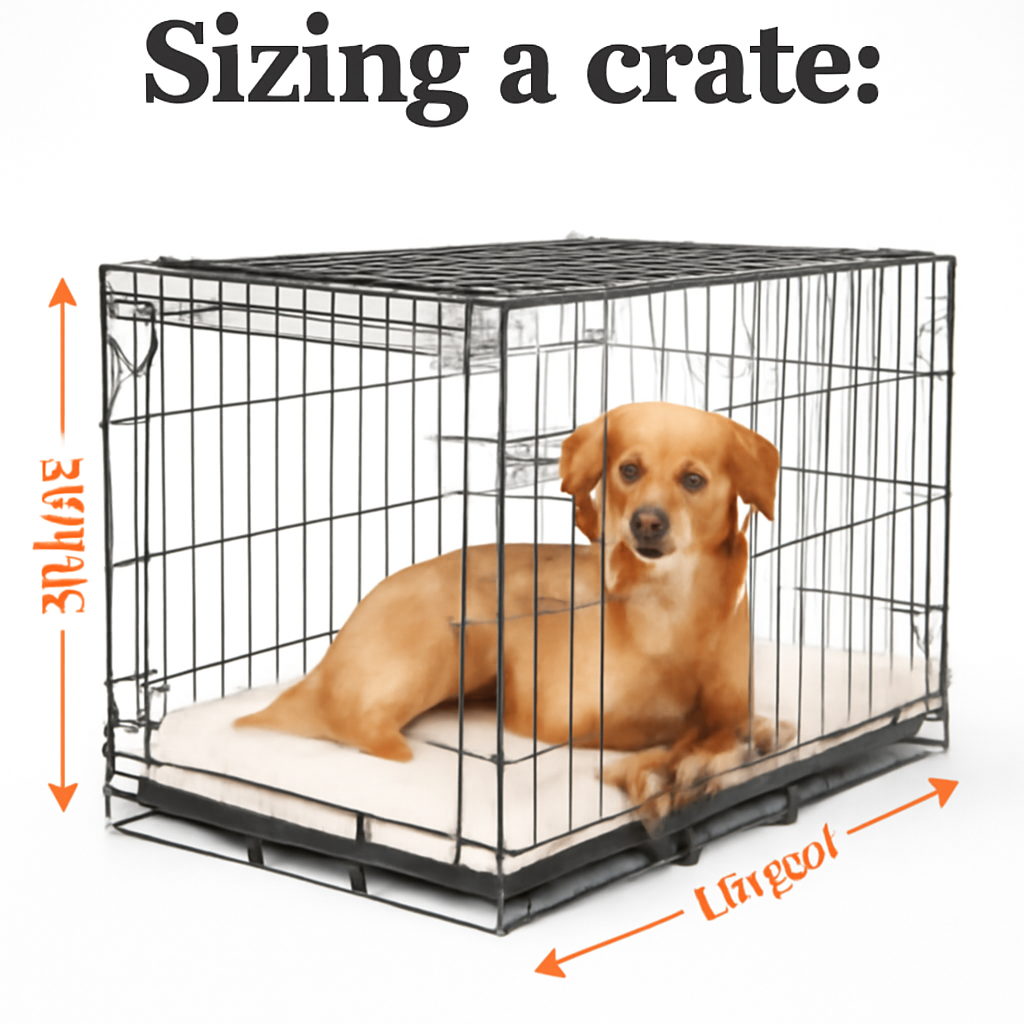
A dog crate is an enclosed, box-shaped container — typically wire, plastic, or reinforced aluminum — sized so your dog can stand up, turn around, and lie down comfortably, but not much more. That snugness is a feature, not a limitation. Dogs are den animals, and a properly sized crate taps into the instinct to keep their sleeping space clean, which is what makes crates the gold standard for house-training.
Crates also travel well. A crate-trained dog has a familiar, portable safe space whether you’re at a hotel, a friend’s house, or the vet. For air travel, an airline-approved crate isn’t optional — it’s required.
Pros:
– Best tool available for house-training
– Creates a secure, calming den for anxious dogs
– Required for air travel and useful at the vet
– Contains destructive chewing when you’re away
– Easy to move room to room
Cons:
– Too much confinement time is unfair and can cause stress
– No room to play or move around
– Puppies can’t be crated for long stretches (they can’t hold their bladder)
– Some dogs resist it if introduced too fast or used as punishment
One rule that matters: never use a crate as punishment. It should be a positive, rewarding space — feed meals in it, add a comfy bed, and let your dog choose to nap there.
What Is a Dog Pen (Playpen)? Pros and Cons
A dog pen — also called an exercise pen, playpen, or “ex-pen” — is a set of connected panels that form an enclosed area, usually with an open top. Think of it as a portable fence you can set up indoors or outside. It gives your dog a defined space to move, play, and relax without free run of the whole house.
Pens shine for daytime containment. If you work from home and need your puppy safely contained but not crated for hours, a pen lets them move around, access water, and use a potty pad in one corner. They’re also great for introducing a new puppy to a home gradually, or for keeping a recovering dog restricted without full confinement.
Pros:
– Much more space to move and play
– Great for long daytime stretches when crating would be cruel
– Flexible shape — expand, reshape, or fold flat
– Works indoors and outdoors
– Can enclose a crate, bed, water, and potty area together
Cons:
– Open tops mean climbers and jumpers can escape
– Determined dogs can tip or push lightweight pens
– Doesn’t provide the den-like security of a crate
– Not accepted for travel or airline use
– Takes up significant floor space
Which One Is Better for Your Situation?
The right pick depends less on the product and more on your dog and your day.
For a New Puppy
Puppies need both containment and the ability to move, since they can’t hold their bladder long. A pen with a potty pad in one corner and a bed in another is ideal for daytime. Add a crate for nighttime sleeping and short training sessions. Winner: Pen for daytime, crate for night.
For House-Training
Nothing beats a crate here. The snug space discourages your dog from soiling where they sleep, which teaches bladder control fast. Winner: Crate.

For Travel
Airlines and most vets require a proper crate. A pen won’t fly — literally. A crate-trained dog is also far less stressed in unfamiliar places. Winner: Crate.
For Working From Home / Long Days
Crating a dog for eight hours isn’t fair. A pen gives them room to move, plus space for water and a potty area. Winner: Pen.
For Multiple Dogs or Older Dogs
A pen can hold two smaller dogs or give a senior dog a comfortable, low-confinement space. Winner: Pen.
Sizing, Material, and Safety Features to Compare
Getting this right matters more than the brand you pick.
Sizing a crate: Measure your dog from nose to tail base, then add 2–4 inches. Your dog should stand, turn, and lie down — no more. Too big, and puppies will potty in one corner and sleep in the other, defeating house-training. Many crates include a divider panel so the crate can grow with a puppy.
Sizing a pen: Check panel height against your dog’s jumping ability. Small dogs may only need 24–30 inches; athletic medium and large dogs can clear 36 inches easily. When unsure, size up.
Materials:
– Wire — ventilated, collapsible, easy to clean. The most versatile crate type.
– Plastic — den-like and cozy; often the airline-approved option.
– Metal panel pens — durable and chew-resistant.
– Fabric/soft-sided — lightweight and travel-friendly, but only for calm, trained dogs (chewers destroy them).
Safety features to look for:
– Secure, dog-proof latches (some dogs learn to nose open cheap slide bolts)
– Rounded edges and no sharp wire tips
– A leak-proof, removable tray for easy cleanup
– Non-slip feet or floor protection
– Stable, tip-resistant construction for pens
Top Dog Crate and Pen Picks for 2026
Here are specific, widely available products worth considering. Always confirm current pricing before buying.
| Product | Best For | Price Range |
| MidWest Homes iCrate Double-Door ** | Budget house-training & everyday use | |
| Diggs Revol Dog Crate ** | Design-focused, safety-first owners | |
| Frisco Wire Dog Crate ** | Value all-rounder | |
| IRIS USA Exercise Pen ** | Indoor puppy playpen | |
| Carlson Pet Products Exercise Pen ** | Durable metal pen for larger dogs |
MidWest Homes iCrate (Double-Door Wire Crate) **
The default recommendation for most first-time owners. It’s a folding wire crate with a divider panel so it grows with your puppy, plus a removable plastic tray for cleanup.
Pros:
– Includes a divider for house-training as your puppy grows
– Double doors for flexible placement
– Folds flat for storage and travel
Cons:
– Plain, utilitarian look
– Strong chewers may bend thinner wire over time
Diggs Revol Dog Crate **
A premium, modern crate built with safety in mind — rounded corners, a diamond-mesh design that reduces snagging, and a collapsible frame that sets up without tools.
Pros:
– Thoughtful safety details and a genuinely nice look
– Tool-free, one-motion collapse
– Removable tray and multiple access points
Cons:
– Sits at the higher end of the price range
– Heavier than a basic wire crate
IRIS USA Exercise Pen **
A popular indoor plastic-panel pen that’s easy to reconfigure into different shapes. Great for containing puppies and small dogs during the day.
Pros:
– Reshape and expand with add-on panels
– Lightweight and simple to move
– Includes a door panel for easy entry
Cons:
– Not tall or heavy enough for large, athletic dogs
– Lightweight build can be pushed by strong dogs
Can You Use Both? Combining a Crate and Pen
Yes — and honestly, this is what most experienced owners end up doing. The classic setup is a crate placed inside a pen, or a crate with its door tied open leading into a penned area. The crate becomes the dog’s bed and den; the pen provides room to move, plus space for a water bowl and a potty pad.
This combo gives you the best of both: the house-training and security benefits of a crate, plus the freedom and longer-containment benefits of a pen. It’s ideal for puppies, for people who work from home, and for gradually giving a new dog more freedom as they earn your trust. A product like the MidWest iCrate * paired with an IRIS USA Exercise Pen * covers nearly every scenario a new owner will hit in the first year.
FAQ: Dog Crate vs Pen
Is a crate or pen better for a puppy?
Both, used together. Use a pen for daytime containment so your puppy can move and access a potty pad, and a crate for nighttime sleep and house-training.
Can a dog stay in a pen all day?
A pen is far more humane than a crate for long stretches, but dogs still need regular potty breaks, exercise, and human interaction. A pen is a containment tool, not a substitute for time out of it.
Are pens safe to leave a dog in unsupervised?
For calm, trained dogs, yes. Climbers and jumpers can escape open-top pens, and some dogs tip lightweight panels — so match the pen’s height and weight to your dog and supervise until you trust the setup.
Do I need a crate if I already have a pen?
If you plan to travel, fly, or need serious house-training help, yes. Pens aren’t accepted by airlines and don’t provide the den-like security a crate does.
What size crate should I get?
Measure nose to tail base and add 2–4 inches. Your dog should stand, turn around, and lie down — nothing more. Get one with a divider so it grows with a puppy.
Our Verdict
If you can only buy one thing right now, let your situation decide: buy a crate if house-training, travel, or a secure sleeping den is your priority — the MidWest Homes iCrate * is the safe, affordable default, and the Diggs Revol is worth the upgrade if safety and looks matter to you. Buy a pen if your main challenge is safely containing an active dog during long days — the IRIS USA Exercise Pen handles most indoor needs, with the Carlson metal pen * for bigger, stronger dogs.
But the real answer for most owners in 2026 is both. A crate inside a pen gives you house-training power, travel readiness, and humane daytime containment in one setup — and it grows with your dog from that chaotic puppy stage all the way to a trusted, well-adjusted adult.