Quick Answer: If your dog turns every walk into a tug-of-war, a no-pull leash system can change your life in a matter of days. Our top overall pick for 2026 is the PetSafe Easy Walk Leash & Harness System for its gentle, no-choke steering. For strong pullers, the 2 Hounds Design Freedom No-Pull Harness is hard to beat, and for hiking or active dogs, the Ruffwear Front Range is our favorite. Below, we break down how these systems work, what to look for, and how to actually train the pulling out of your dog for good.
If you’ve ever come home from a walk with a sore shoulder and a dog that’s still gasping against its collar, you already know the problem. Pulling isn’t just annoying — it’s uncomfortable for you and potentially dangerous for your dog’s neck and trachea. The good news: the right gear plus a little consistency solves it. Let’s get into it.
—
What Is a No Pull Dog Leash and How Does It Work?
A “no pull dog leash” is a bit of a catch-all term. In practice, it usually refers to one of two things: a leash with a special design (like a double-ended or shock-absorbing leash) or, more commonly, a leash-and-harness system that changes where the leash connects to your dog.
The magic is in the physics. A standard collar-and-leash setup lets your dog use the full power of its chest and shoulders to lean into the pressure — the same way a sled dog pulls a sled. No-pull systems interrupt that leverage in one of a few ways:
– Front-clip (chest) attachment: The leash connects at the center of your dog’s chest instead of the back. When your dog pulls forward, the connection point gently redirects them back toward you sideways, so pulling becomes self-correcting rather than rewarding.
– Head halters: These loop around the muzzle (not the mouth — your dog can still pant, drink, and bark). Where the head goes, the body follows, so steering becomes effortless.
– Martingale or tightening loops: Some harnesses apply light, even chest pressure when the dog pulls, then release the instant they stop — a clear “that direction isn’t working” signal.
Importantly, a good no-pull system is about communication, not punishment. It doesn’t hurt your dog. It just removes the reward (forward motion) that pulling normally delivers.
—
Key Features to Look for in 2026
Not all no-pull gear is created equal. Here’s what actually matters when you’re shopping this year.
Attachment Points
The single most important feature. Look for a front (chest) D-ring at minimum. The best systems in 2026 offer dual attachment — a front ring for training and pull control, plus a back ring for relaxed walks once your dog improves. A double-ended leash lets you clip both at once for maximum steering.
Padding and Fit
Cheap harnesses dig into armpits and cause chafing. Look for padded chest and belly straps, breathable mesh, and — critically — at least four points of adjustment. A harness that fits poorly will slip, rub, or let your dog wriggle free.
Material and Hardware
You want the leash and hardware to survive a determined puller. Aluminum or welded steel D-rings beat cheap stamped metal. Nylon webbing should feel dense, not flimsy. For the leash itself, a padded handle saves your palms, and a shock-absorbing bungee section is a nice 2026 upgrade for reducing jolts.
Reflectivity and Visibility
Reflective stitching is standard now and genuinely matters for early-morning or evening walks. Don’t skip it.
Ease of On/Off
If a harness is a wrestling match to put on, you’ll stop using it. Step-in and over-the-head designs with quick-release buckles win in real life.
—
No Pull Leash vs. No Pull Harness: Which Is Right for Your Dog?
This is the question I get most, so let’s settle it.
A no-pull leash on its own (like a double-ended or bungee leash clipped to a flat collar) can help mild pullers and gives you better control. But it doesn’t change the underlying leverage — a strong dog can still lean into a collar and choke itself.
A no-pull harness system changes the mechanics entirely by moving the attachment point to the chest or head. This is what actually stops most pulling.
| Situation | Best Choice |
| Small dog, mild pulling | No-pull leash + flat collar or simple front-clip harness |
| Medium/large dog, moderate pulling | Front-clip harness + standard leash |
| Very strong puller or reactive dog | Front-clip harness or head halter + double-ended leash |
| Brachycephalic breeds (pugs, bulldogs) | Harness only — never a collar or head halter |
| Hiking / long adventures | Padded multi-point harness (e.g., Ruffwear Front Range) |
Bottom line: For nearly every dog, a front-clip harness paired with a good leash is the winning combination. Reserve head halters for the toughest cases, and always transition to them gradually so your dog accepts the muzzle loop.
—
Top No Pull Dog Leashes Reviewed
Here are our top picks for 2026, tested across breeds from beagles to boisterous labs.
Top Picks at a Glance
| Product | Best For | Price Range |
| PetSafe Easy Walk Leash & Harness System | Best overall / everyday walks | |
| 2 Hounds Design Freedom No-Pull Harness | Strong pullers | |
| Ruffwear Front Range | Active dogs & hiking | |
| Halti No Pull Harness / Headcollar | Reactive dogs & precise steering | |
| Kurgo Quantum Double-Ended Leash | Best leash for dual-clip control |
—
1. PetSafe Easy Walk — Best Overall
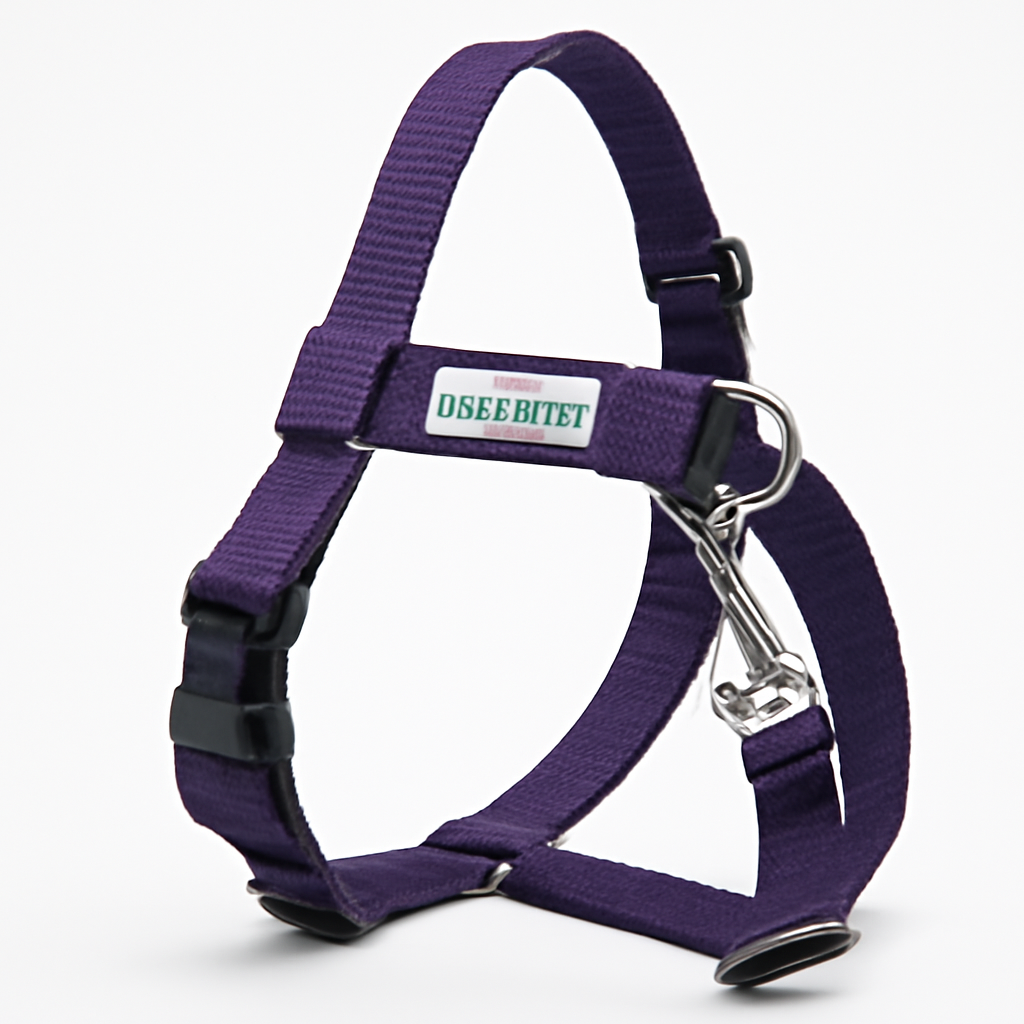
The PetSafe Easy Walk is the gateway product that has converted more frustrated owners than almost anything else. Its front-chest clip is beautifully simple: when your dog surges ahead, the harness steers them back toward you. No choking, no fuss. It’s affordable, widely available, and easy to fit.
Pros:
– Genuinely effective on the first walk for most dogs
– Gentle, no-choke design
– Budget-friendly and easy to find
– Simple to put on
Cons:
– Only a front clip (no back-ring option)
– The chest strap can rotate or rub on very active dogs
– Not ideal for extended hiking
Best for: Everyday neighborhood walks and owners who want fast results without overthinking it.
—
2. 2 Hounds Design Freedom No-Pull Harness — Best for Strong Pullers
If your dog is a freight train, the 2 Hounds Design Freedom No-Pull Harness is the upgrade. It features both a front and a back attachment point, plus a patented martingale loop on the back that gently tightens across the chest (not the throat) when your dog pulls, then releases immediately. Pair it with a double-ended leash and you get precision steering that even determined pullers respect.
Pros:
– Dual attachment points for versatile control
– Velvet-lined straps reduce chafing
– Excellent build quality and hardware
– Great for big, powerful dogs
Cons:
– More expensive than basic options
– Slightly more complex to fit correctly the first time
– Works best with a matching double-ended leash (added cost)
Best for: Large breeds and serious pullers where a basic front-clip isn’t enough.
—
3. Ruffwear Front Range — Best for Active Dogs & Hiking
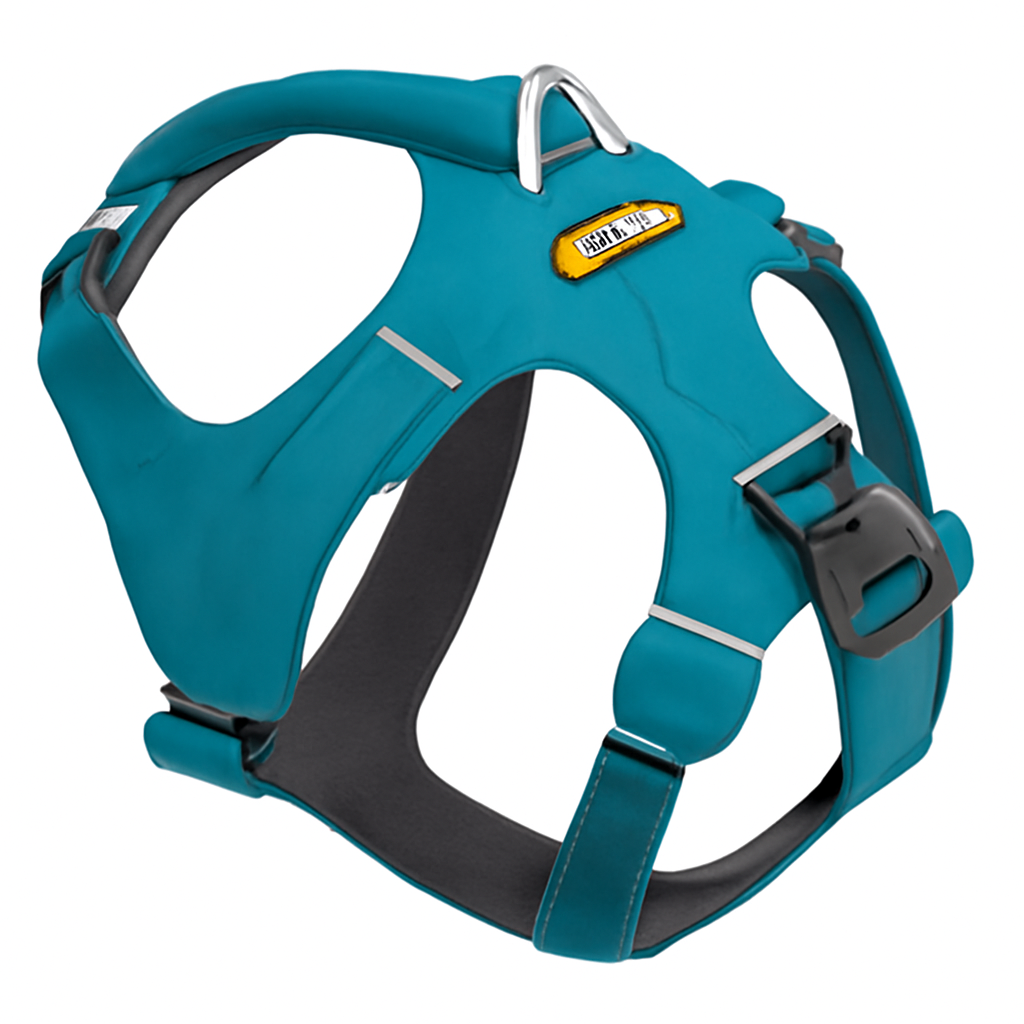
The Ruffwear Front Range is the harness for dogs who do more than stroll around the block. It’s got a padded, wrap-around design that distributes pressure comfortably, dual clips (front for pull control, back for relaxed trail time), and rugged, weatherproof materials. It’s not the cheapest, but it’s built to last for years of adventures.
Pros:
– Extremely comfortable padding for long outings
– Two attachment points
– Durable, weather-resistant construction
– Reflective trim and an ID pocket
Cons:
– Premium price
– Front-clip control is good but slightly less “corrective” than the Freedom for hardcore pullers
Best for: Hikers, runners, and active dogs who need all-day comfort.
—
4. Halti No Pull Harness / Headcollar — Best for Reactive Dogs
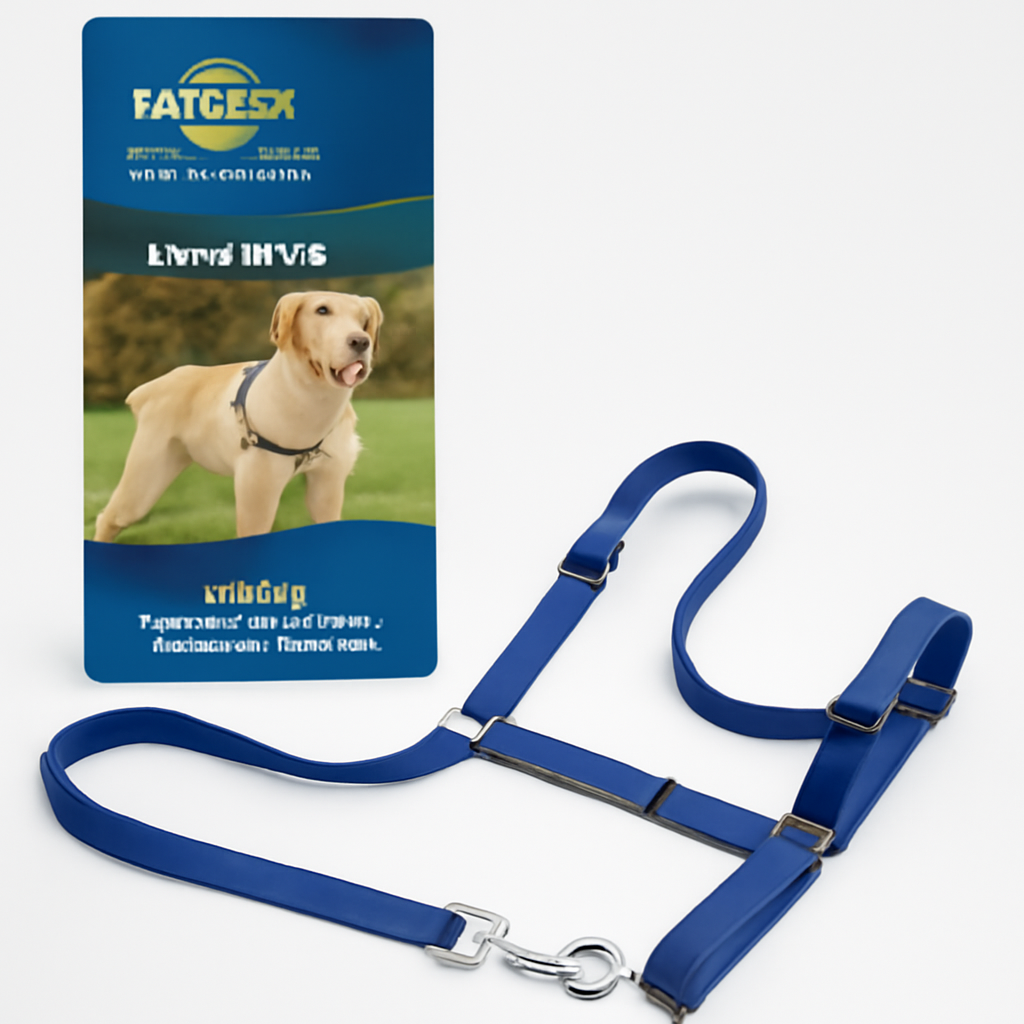
For the toughest cases — strong, reactive, or lunging dogs — the Halti line offers both a front-clip no-pull harness and a head halter for maximum steering. The headcollar gives you gentle control of your dog’s direction of attention, which is invaluable for reactive dogs. It requires a patient introduction so your dog accepts the muzzle loop, but the payoff in control is significant.
Best for: Reactive dogs, precise steering, and owners who’ve tried everything else.
—
5. Kurgo Quantum Double-Ended Leash — Best Leash
Gear is only half the equation — the leash matters too. The Kurgo Quantum is a versatile double-ended leash that can clip to both the front and back of a harness at once for two-point steering, or convert to a hands-free waist leash, a traffic-handle short lead, and more. It’s the ideal companion to any of the harnesses above.
Best for: Anyone using a dual-clip harness who wants one leash that does it all.
—
How to Choose the Right Size and Material
Even the best harness fails if it doesn’t fit. Here’s how to get it right.
Measuring Your Dog
You’ll almost always need two measurements:
– Girth: The circumference of your dog’s chest at the widest point, just behind the front legs. This is the most important number.
– Neck: The base of the neck where a collar would sit.
Measure with a soft tape and check the specific brand’s size chart — ** listings often include exact dimensions, and sizing varies between brands. When your dog is between sizes, size up and tighten the adjusters.
The Two-Finger Rule
A properly fitted harness lets you slide two fingers flat under any strap — snug enough that it won’t slip or let your dog back out, loose enough that it doesn’t dig in or restrict shoulder movement.
Material Guide
– Nylon webbing: Durable, affordable, quick-drying. The workhorse standard.
– Padded neoprene or velvet lining: Best for preventing chafing on sensitive or short-haired dogs.
– Mesh panels: Great for breathability in hot climates, but check that the mesh is reinforced.
– Reflective stitching: Non-negotiable for low-light walks.
Avoid thin, unpadded straps for medium and large dogs — they concentrate pressure and cause rubbing.
—
Training Tips to Stop Leash Pulling for Good
Gear buys you control, but training makes the change permanent. Here’s the approach that works.
1. Reward the Slack
The core lesson: a loose leash makes us move forward; a tight leash makes us stop. The moment your dog pulls, stop walking. Stand still. The instant the leash goes slack, praise and continue. Dogs are efficient — they quickly learn that pulling gets them nowhere.
2. Be a Tree, Then Reverse
For persistent pullers, when they hit the end of the leash, simply turn and walk the other way. This teaches them to pay attention to you rather than charging ahead on autopilot.
3. Reward Position, Not Just Behavior
Keep high-value treats in a pouch and reward your dog generously whenever they walk near your side with a loose leash. You’re building a habit of checking in with you.
4. Use the Front Clip During Training
Clip to the front attachment point while you’re actively teaching. Once your dog reliably walks on a loose leash, you can transition to the back clip for relaxed walks.
5. Keep Sessions Short and Positive
Five to ten focused minutes beats a frustrating hour. End on a win. Consistency across every walk — not intensity — is what locks the behavior in.
6. Drain Energy First
A dog that’s been cooped up all day will pull from sheer excitement. A little fetch or play before a training walk makes the lesson stick faster.
—
Frequently Asked Questions
Do no-pull harnesses hurt dogs?
No — quality front-clip harnesses are designed to be gentle. They redirect your dog rather than choke or pinch. Just ensure a proper fit so straps don’t rub. Avoid thin, cheap harnesses that concentrate pressure in the armpits.
Are no-pull harnesses better than collars for pulling?
For pulling, yes. Collars let dogs lean into pressure and can strain the neck and trachea. A front-clip harness removes that leverage and is much safer for dogs that pull.
Will a no-pull harness stop pulling permanently?
The harness manages pulling immediately, but permanent change comes from pairing it with consistent loose-leash training. Think of the gear as a tool that makes training easier, not a substitute for it.
Can puppies use a no-pull harness?
Yes, and starting early is ideal. Choose an adjustable harness that can grow with your puppy, and introduce loose-leash habits from day one.
What about head halters like the Halti — are they safe?
Yes, when introduced gradually and fitted correctly. Never jerk a head halter, and let your dog acclimate to the muzzle loop with treats over several sessions. They offer the most steering control for strong or reactive dogs.
Should I get a front-clip or back-clip harness?
Front-clip for pull control and training. Back-clip is more comfortable for relaxed walks with dogs that already walk politely. Dual-clip harnesses like the 2 Hounds Design Freedom and Ruffwear Front Range give you both.
—
Our Verdict
If you want one recommendation that works for the widest range of dogs, start with the PetSafe Easy Walk — it’s affordable, effective, and delivers results on the very first walk. It’s the easiest “yes” for most owners.
If your dog is a strong, determined puller, step up to the 2 Hounds Design Freedom No-Pull Harness, ideally paired with the Kurgo Quantum Double-Ended Leash for two-point steering. And if you and your dog live an active, outdoorsy life, the Ruffwear Front Range is worth every penny for its comfort and durability. For the toughest, most reactive dogs, the Halti head halter gives you control nothing else can match.
Whichever you choose, remember: the gear stops the pulling today, but a few minutes of consistent loose-leash training on every walk is what makes calm, enjoyable walks stick for good. Get the right tool, stay consistent, and you’ll both look forward to walk time again.
Prices change frequently — click through to check the latest pricing and availability before you buy.