Quick answer: The best dog car seat is one that’s crash-tested, correctly sized for your dog’s weight, and anchors to your vehicle’s seatbelt or LATCH system while tethering to your dog’s harness (never their collar). For small dogs under 25 lbs, a booster-style seat like the K&H Pet Products Bucket Booster offers elevation and comfort. For medium-to-large dogs, a crash-tested harness system like the Sleepypod Clickit Terrain provides the strongest real-world protection. Below, we break down every style, safety certification, and sizing rule so you can choose confidently.
—
Why Your Dog Needs a Dedicated Car Seat
If you’ve ever slammed the brakes with your dog loose in the back, you already know the problem. An unrestrained dog is a danger to itself and everyone in the car.
Here’s the physics: in a 30 mph crash, a 40-lb dog becomes a projectile carrying roughly 1,200 lbs of force. That’s enough to injure or kill passengers, and it’s almost always fatal for the pet. Even in minor fender-benders, a startled dog can bolt through an open door into traffic or interfere with the driver.
A dedicated dog car seat solves three problems at once:
– Crash protection — keeps your dog secured and cushioned during sudden stops or impacts
– Driver focus — prevents your dog from climbing into your lap or blocking your view
– Anxiety reduction — elevation and containment help nervous dogs settle down instead of pacing
Several U.S. states now issue distracted-driving citations for unrestrained pets, and many pet-travel insurance policies expect restraint. Beyond the legal angle, it’s simply the single most effective thing you can do to keep your dog safe on the road.
Types of Dog Car Seats: Booster, Bucket, and Harness Styles
Not all “dog car seats” work the same way. Understanding the three main styles helps you match the product to your dog’s size and temperament.
Booster Seats
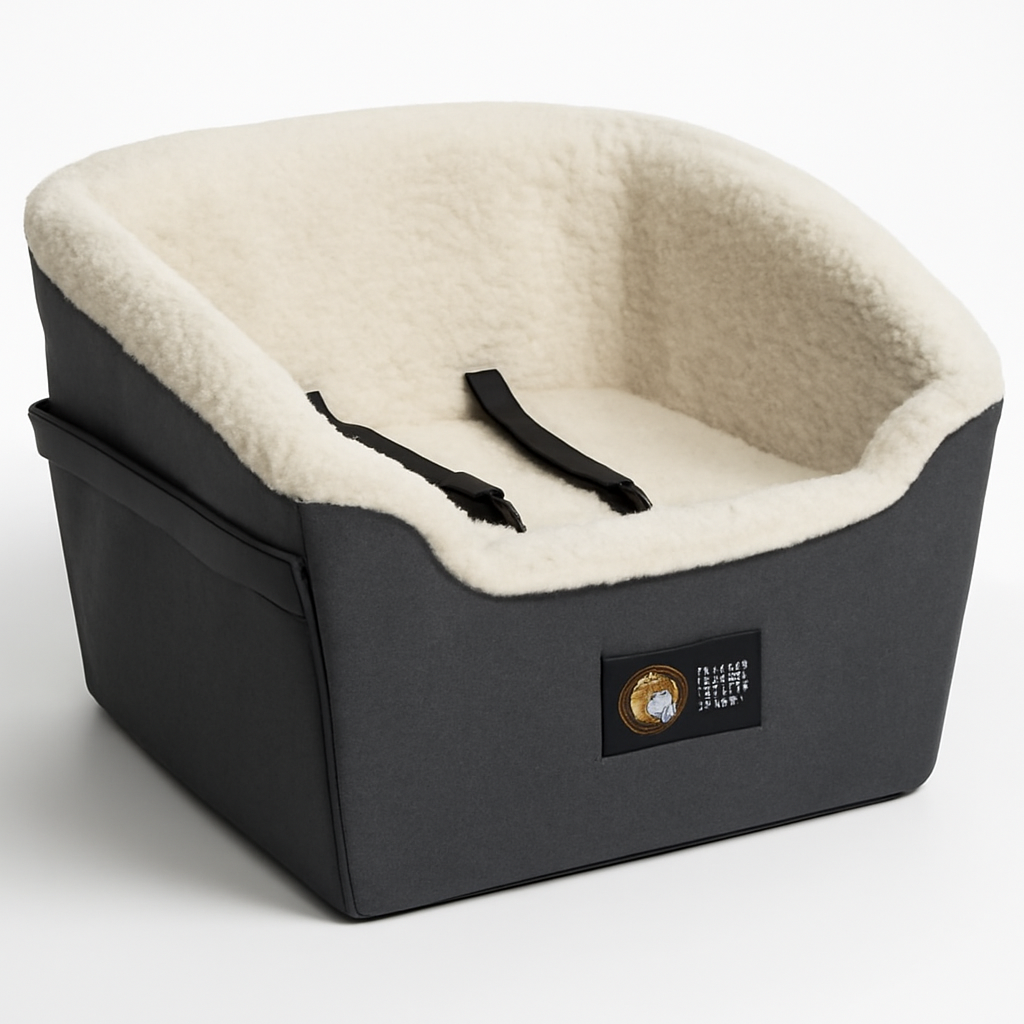
Booster seats are elevated platforms — usually a padded box that sits on your vehicle’s bench seat. They raise small dogs high enough to see out the window (which reduces motion sickness and anxiety) and include an internal tether that clips to a harness.
Best for: Small breeds under 20–25 lbs — Yorkies, Chihuahuas, dachshunds, small terriers.
Trade-off: Boosters are about comfort and containment, not maximum crash protection. The elevation that calms your dog also means less structural crash performance than a low-profile harness.
Bucket Seats
Bucket seats are deeper, semi-enclosed pods with high walls. They’re similar to boosters but offer more containment for dogs that like to burrow, and they contain messes and shedding better. Many convert between the front seat, back seat, and even a carry bag.
Best for: Small to medium dogs that like a cozy, enclosed space.
Harness Systems (Safety Restraints)
This is the style crash-test organizations recommend for larger dogs. Instead of a platform, your dog wears a structured, padded harness that connects directly to the seatbelt buckle or LATCH anchors. In a crash, the load spreads across the dog’s chest and shoulders rather than the neck.
Best for: Medium and large dogs — Labs, shepherds, boxers, retrievers, and anything over ~25 lbs.
Trade-off: Less “cozy nest” feeling; more like a seatbelt for dogs. But it’s the gold standard for crash safety.
Key Safety Features to Look For (Crash Testing & Certification)
This is where marketing gets slippery. Almost every product says “safe” — but very few are independently crash-tested. Here’s what actually matters.
Independent Crash Testing
Look for products tested by the Center for Pet Safety (CPS), an independent nonprofit that crash-tests pet restraints to a standard modeled on child-safety-seat testing. CPS “Certified” is the strongest signal available. Many popular seats have never been crash-tested at all — the manufacturer simply asserts safety.
Harness Attachment, Not Collar
The internal tether or restraint must clip to a body harness, never a neck collar. A collar attachment can cause severe neck injury in a sudden stop. The best products either include a crash-rated harness or are designed to work with one.
Strength-Rated Materials
Check for:
– Reinforced anchor straps that loop through the seatbelt or LATCH anchors
– Metal or crash-rated buckles, not lightweight plastic clips
– Wide, padded chest plates on harness systems to distribute force
Proper Anchoring
The seat should attach to the vehicle in two places when possible — the headrest posts and the seatbelt or LATCH. A seat that only rests on the cushion will slide or tip.
> Rule of thumb: If a product doesn’t mention crash testing anywhere, treat it as a comfort/containment product, not a safety device — and pair it with a separately crash-tested harness.
How to Choose the Right Size for Your Dog’s Weight and Breed
Sizing is where most buyers go wrong. A seat that’s too big won’t restrain your dog in a crash; one that’s too small is uncomfortable and may not close properly.
Start With Weight, Then Measure
Every reputable brand lists a weight limit — this is your first filter. Never exceed it. After weight, measure your dog:
– Girth (widest part of the ribcage, just behind the front legs) — critical for harness fit
– Neck circumference
– Length (base of neck to base of tail) — for booster/bucket footprint
Size Guide by Dog Weight
| Dog Weight | Recommended Style | Notes |
| Under 12 lbs | Booster or bucket | Elevation helps tiny dogs see out and reduces nausea |
| 12–25 lbs | Booster, bucket, or harness | Either works; harness for stronger crash protection |
| 25–50 lbs | Crash-tested harness | Boosters usually can’t contain this size safely |
| 50+ lbs | Crash-tested harness + cargo barrier | Consider a crate or cargo-area setup for very large breeds |
Match to Your Vehicle
A deep bucket seat may not fit a compact car’s back bench, and a large dog on a bench seat may do better with a harness plus a hammock-style cover. Check the product’s dimensions against your seat before buying, and confirm your vehicle has accessible LATCH anchors if the seat uses them.
Top Dog Car Seats Compared for 2026
Here are four well-established options covering every size and budget. Prices shift often, so we’ve left them bracketed — always confirm the current price before buying.
Top Picks at a Glance
| Product | Best For | Price Range |
| Sleepypod Clickit Terrain | Medium/large dogs, max crash safety | |
| K&H Pet Products Bucket Booster | Small dogs wanting a view | |
| PetSafe Happy Ride Booster | Budget-conscious small-dog owners | |
| Kurgo Skybox Booster Seat | Small/medium dogs, deep containment |
1. Sleepypod Clickit Terrain — Best Overall for Safety
The Sleepypod Clickit Terrain is a harness-style restraint that has performed well in independent crash testing. Instead of a platform, your dog wears a padded, structured vest that threads onto the vehicle’s seatbelt. The wide chest plate is engineered to spread crash forces across the sternum and shoulders.
Pros:
– Independently crash-tested with strong results
– Broad, padded chest plate distributes force away from the neck
– Doubles as a walking harness once you unclip from the belt
– Fits a wide range of medium and large breeds
Cons:
– Higher price than booster-style seats
– Requires careful measuring and fitting the first time
– No “cozy nest” feel — it’s a restraint, not a bed
2. K&H Pet Products Bucket Booster — Best for Small Dogs
The K&H Pet Products Bucket Booster is a comfortable, elevated pod for small dogs who want to see out the window. It anchors to the seat and includes an internal leash that clips to your dog’s harness. The removable, washable liner is a genuine day-to-day convenience.
Pros:
– Elevation reduces motion sickness and anxiety
– Washable, removable liner for easy cleanup
– Secure headrest-strap anchoring
– Cozy, contained feel small dogs tend to love
Cons:
– Comfort/containment focus rather than certified crash protection
– Weight limit rules it out for medium and large dogs
– Best paired with a separate crash-rated harness for maximum safety
3. Kurgo Skybox Booster Seat — Best for Deep Containment
The Kurgo Skybox Booster Seat has notably high, rigid sidewalls that keep burrowers and anxious dogs contained. It’s structured enough to hold its shape, includes a built-in tether, and the collapsible design stores flat when you’re not using it.
Pros:
– High, rigid walls for dogs that like to be tucked in
– Structured frame holds shape better than soft boosters
– Collapses flat for storage
– Built-in safety tether included
Cons:
– Bulkier footprint — check it against smaller back seats
– Comfort/containment device, not independently crash-certified
Also Worth Considering
The PetSafe Happy Ride Booster is a solid entry-level pick for small-dog owners who want secure containment without a premium price. It’s simpler than the K&H or Kurgo options but covers the fundamentals — headrest anchoring, an internal tether, and a washable design.
Installation and Getting Your Dog Comfortable
The safest seat in the world does nothing if it’s installed loosely or your dog refuses to use it. Here’s how to get both right.
Installing the Seat
1. Read the manual first. Anchoring methods differ — some use headrest straps, some LATCH anchors, some the seatbelt itself.
2. Anchor in two places when possible — headrest posts plus the seatbelt or LATCH — so the seat can’t slide or tip.
3. Pull every strap tight. A properly installed seat should barely move when you tug it firmly.
4. Place it in the back seat. Just like with children, an active front airbag can injure a dog in a crash.
5. Clip the tether to a harness, never the collar. Adjust the tether short enough to prevent launching but long enough for your dog to sit and lie down.
Helping Your Dog Adjust
Dogs don’t automatically love being restrained. Ease into it:
– Introduce it at home. Let your dog sniff and sit in the seat indoors with treats — no car involved yet.
– Start with short trips. A five-minute drive to somewhere fun (a park, not the vet) builds positive associations.
– Reward calm behavior. Treats and praise when your dog settles reinforce that the seat is a good place.
– Bring a familiar blanket or toy so the seat smells like home.
– Be patient. Anxious dogs may need a couple of weeks of gradual exposure. Don’t force it.
Frequently Asked Questions About Dog Car Seats
Are dog car seats actually safe in a crash?
It depends on the product. Independently crash-tested harness systems provide real protection. Many booster and bucket seats are comfort-and-containment devices that keep your dog from roaming but haven’t been crash-tested. For the best protection, choose a crash-tested option or pair a booster with a separately crash-rated harness.
Can I use a regular harness with a seatbelt instead?
A standard walking harness isn’t designed for crash forces and can fail or injure your dog in an impact. Use a harness specifically engineered and tested for vehicle restraint, like the Sleepypod Clickit Terrain.
Where should the dog car seat go — front or back?
Always the back seat. An active front-passenger airbag can seriously injure a dog in a collision, the same way it can a child.
What size dog car seat do I need?
Start with the manufacturer’s weight limit, then measure your dog’s girth, neck, and length. Booster and bucket seats generally suit dogs under ~25 lbs; larger dogs need a crash-tested harness system.
My dog gets carsick — will a seat help?
Often, yes. Elevated booster seats let small dogs see the horizon, which reduces the sensory mismatch that causes motion sickness. Combine that with short, gradual trips and, if needed, advice from your vet.
How much should I spend on a dog car seat?
Prices vary widely, so always check the current price before buying. In general, comfort-focused boosters cost less than crash-tested harness systems. Spending more on independent crash certification is worthwhile for medium and large dogs, where the safety difference is greatest.
Our Verdict
If you have a medium or large dog, prioritize crash protection: the Sleepypod Clickit Terrain is our top overall pick thanks to its independent crash testing and force-distributing chest plate. It’s the closest thing to a real seatbelt for your dog.
If you have a small dog, the K&H Pet Products Bucket Booster delivers the best mix of comfort, cleanability, and secure containment — and if your dog likes to burrow, the higher walls of the Kurgo Skybox Booster Seat are worth a look. On a tighter budget, the PetSafe Happy Ride Booster covers the essentials.
Whichever style you choose, remember the two non-negotiables: anchor the seat securely to your vehicle in two places, and clip the tether to a body harness, never a collar. Get those right, and every trip with your dog gets meaningfully safer in 2026.
Always confirm current pricing and check for the latest independent crash-test results before purchasing, as products and certifications are updated over time.