If you’ve ever had your shoulder nearly yanked out of its socket on a walk around the block, you already know: the right dog harness changes everything. A good harness stops pulling, protects your dog’s neck and throat, and makes walks something you actually look forward to — whether you’re strolling the Wellington waterfront or tackling a muddy trail in the Waitākeres.
Quick answer: For most Kiwi dog owners, the Ruffwear Front Range Harness is the best all-round pick — durable, comfortable, and available with both front and back clips for training out pulling. On a tighter budget, the Rabbitgoo No-Pull Harness delivers surprisingly good performance for the price. For strong pullers and big breeds, the Julius-K9 IDC Powerharness is the tank of the harness world.
Below, we break down all seven picks, how we tested them, and exactly how to choose the right one for your dog.
—
Our Top Picks: Best Dog Harnesses in NZ at a Glance
| Product | Best For | Price Range |
| Ruffwear Front Range Harness | Best overall / everyday walking | |
| Rabbitgoo No-Pull Harness | Best budget pick | |
| Julius-K9 IDC Powerharness | Strong pullers & large breeds | |
| EzyDog Chest Plate Harness | Car travel & active dogs | |
| Kurgo Tru-Fit Smart Harness | Crash-tested car safety | |
| Rogz Utility Fast-Fit Harness | Quick on/off, wriggly dogs | |
| Ruffwear Web Master Harness | Hiking, tramping & escape artists |
—
How We Tested and Reviewed Each Harness
We didn’t just read spec sheets. Each harness in this guide was evaluated against the same criteria over several weeks of real-world use with dogs ranging from a 6kg terrier cross to a 38kg German Shepherd:
– Fit and adjustability — How many adjustment points? Does it suit deep-chested breeds, barrel-chested breeds, and slim sighthound builds?
– Pull control — Does the front clip actually redirect a pulling dog, or does it just twist the harness sideways?
– Comfort and chafing — We checked armpit and chest areas after long walks for rubbing or hair loss.
– Escape resistance — Could a determined wriggler back out of it?
– Durability — Stitching, buckle quality, and how the materials held up to mud, sand, and saltwater (this is New Zealand — beach walks are non-negotiable).
– Ease of use — Can you get it on a excited, bouncing dog in under 30 seconds?
We also weighed up availability and after-sales support from NZ retailers, because a great harness you can’t easily buy or exchange here isn’t much use.
—
Detailed Reviews: The 7 Best Dog Harnesses for 2026
1. Ruffwear Front Range Harness — Best Overall
**
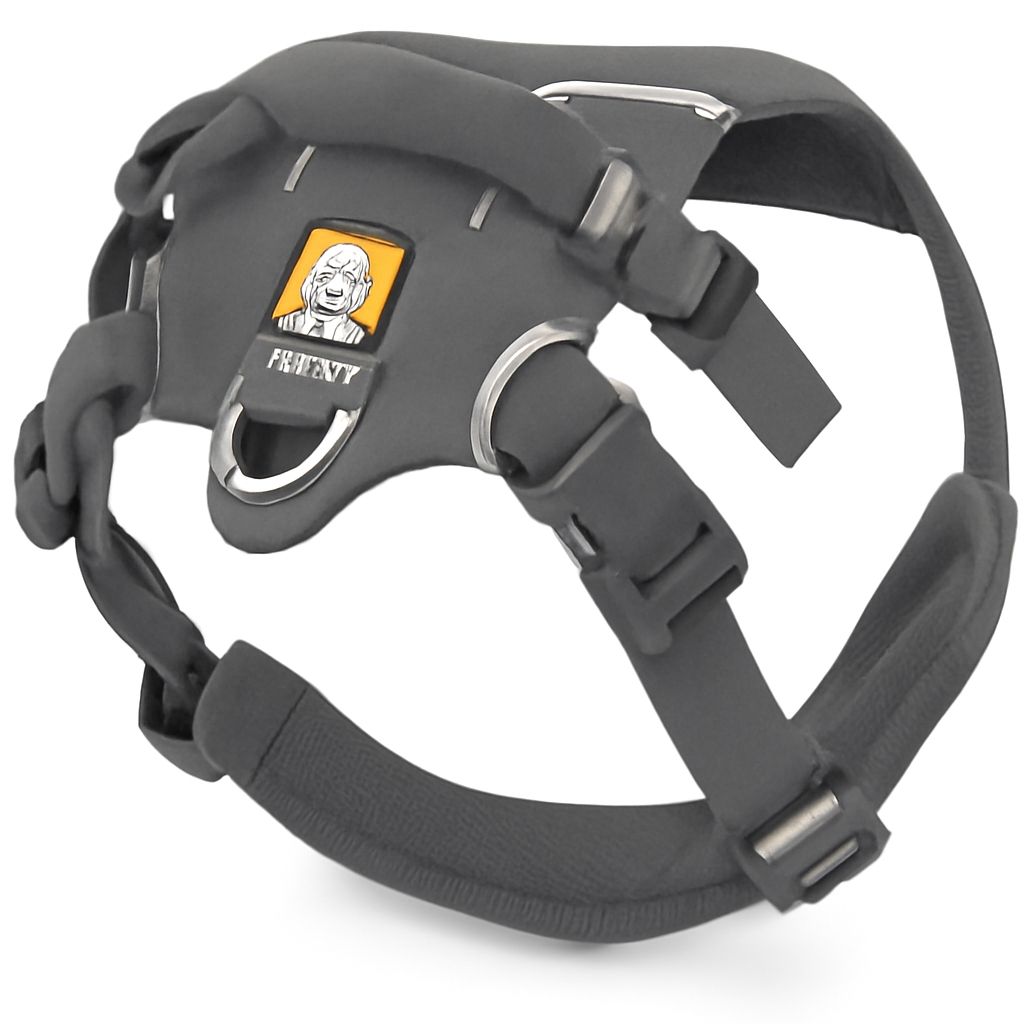
The Front Range has been the benchmark everyday harness for years, and the current version shows why. It has four adjustment points, a padded chest and belly panel, and — crucially — two leash attachment points: an aluminium V-ring on the back and a reinforced webbing loop on the chest for no-pull training.
In testing, it fit the widest range of body shapes of any harness here. The foam padding kept it comfortable on two-hour walks, and after weeks of beach use the stitching showed no wear. The ID pocket tucked into the back panel is a nice touch for storing tags.
Pros:
– Front and back clips for training flexibility
– Excellent padding with no chafing in testing
– Very durable — handles mud, sand, and saltwater
– Reflective trim for dawn/dusk walks
Cons:
– Pricier than budget options
– The over-the-head design bothers some head-shy dogs
– Light-coloured versions show dirt quickly
2. Rabbitgoo No-Pull Harness — Best Budget Pick
**
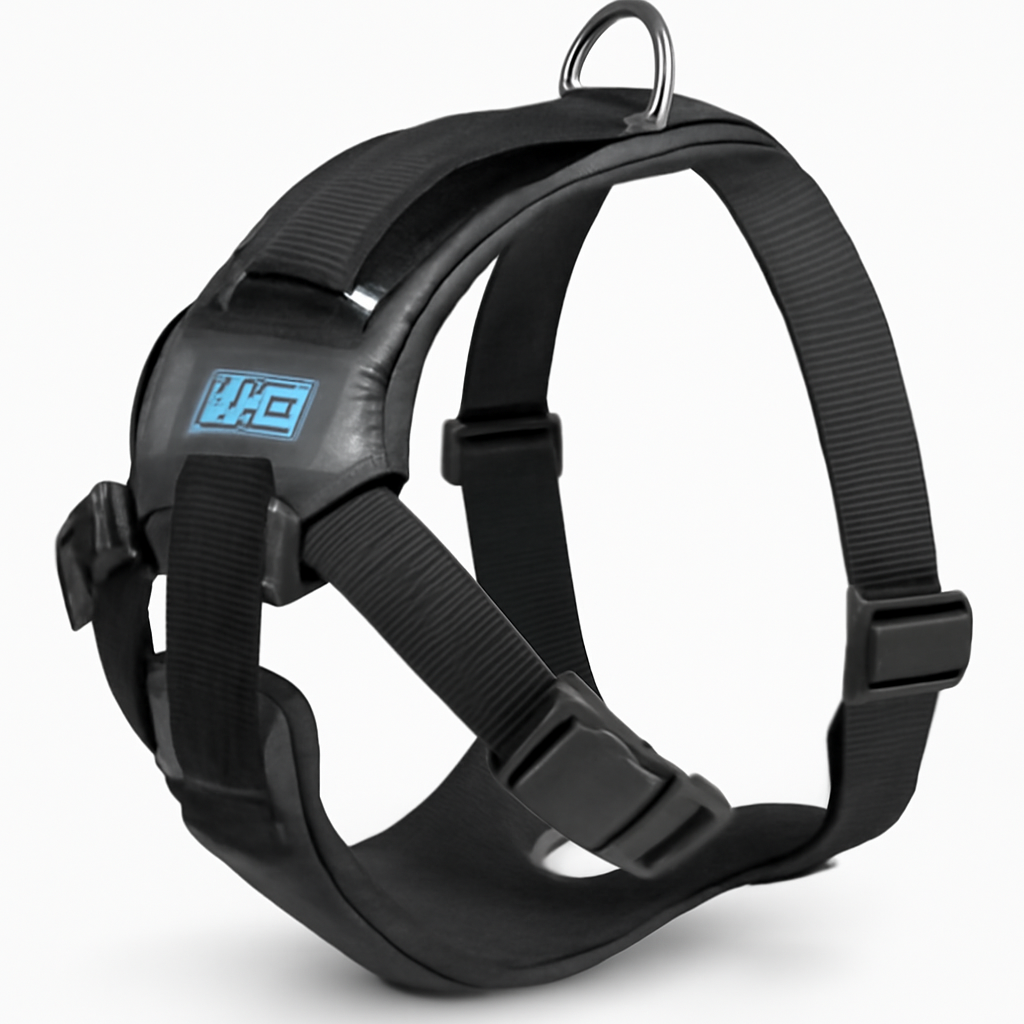
If you want 80% of the premium harness experience at a fraction of the cost, the Rabbitgoo is the one. It offers front and back leash clips, four adjustment straps, breathable mesh padding, and a sturdy top handle for grabbing your dog in a hurry.
The buckles and webbing aren’t quite Ruffwear-grade, and heavy pullers over 30kg will stress it over time, but for small-to-medium dogs and casual walkers it’s exceptional value. The step-in style with side buckles is also great for dogs who hate things going over their head.
Pros:
– Outstanding value for money
– Front clip genuinely reduces pulling
– Top handle is handy for control and car loading
– No over-the-head fitting required
Cons:
– Buckles feel less premium than dearer options
– Sizing runs slightly small — measure carefully
– Padding compresses over time with heavy use
3. Julius-K9 IDC Powerharness — Best for Strong Pullers & Large Breeds
**
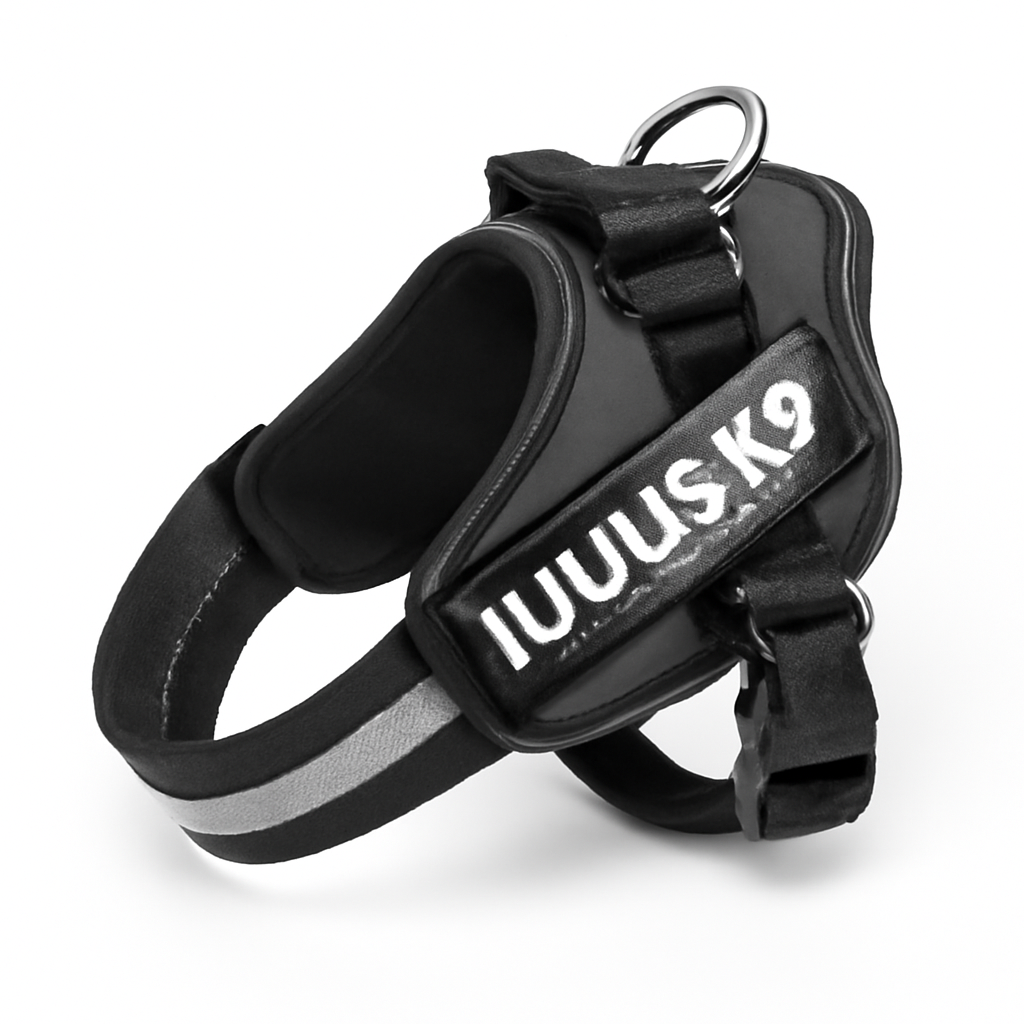
The Hungarian-made Julius-K9 is the harness you see on working dogs across Europe, and it’s built like it. The IDC Powerharness features a rigid chest strap, a heavy-duty buckle, a solid top handle, and interchangeable Velcro side patches (yes, you can get custom labels made).
For our 38kg Shepherd tester, nothing else came close for control — the handle alone is worth the price when you need to hold a big dog steady. It’s a back-clip design though, so it won’t train pulling out; it just gives you the strength to manage it.
Pros:
– Near-indestructible construction
– Excellent handle for physical control
– Fast on/off — one buckle
– Reflective chest strap and edges
Cons:
– Back-clip only; doesn’t discourage pulling
– Heavier and warmer than mesh harnesses — watch it in summer
– Overkill for small, calm dogs
4. EzyDog Chest Plate Harness — Best for Car Travel & Active Dogs
**
EzyDog is an Australasian brand, which means genuinely good local availability and sizing support in NZ. The Chest Plate Harness has a moulded EVA chest plate that spreads load across the sternum, stainless steel hardware that shrugs off saltwater, and it comes with a car restraint attachment for buckling your dog into the back seat.
It was the standout for dogs who swim — it dries fast and nothing corrodes. Fit is more breed-specific than the Ruffwear, so check the size guide closely.
5. Kurgo Tru-Fit Smart Harness — Best Crash-Tested Option
**
If your dog spends a lot of time in the car, the Kurgo Tru-Fit (Enhanced Strength version) is crash-tested with dogs up to around 34kg and includes a seatbelt tether in the box. It has five adjustment points, a front D-ring for no-pull walking, and doubles perfectly well as an everyday harness. It’s the sensible pick for road-trip regulars.
6. Rogz Utility Fast-Fit Harness — Best Quick On/Off
**
Rogz gear is widely stocked in NZ pet stores, and the Fast-Fit lives up to its name — one buckle, over the head, done in ten seconds. The reflective stitching is some of the brightest we tested, which matters for winter evening walks. It’s a simple back-clip design without fancy no-pull features, but for well-mannered walkers it’s light, affordable, and easy to live with.
7. Ruffwear Web Master Harness — Best for Hiking & Escape Artists
**
The Web Master adds a third belly strap, which makes it close to escape-proof — a lifesaver for nervous rescues and Houdini breeds like huskies. The padded handle is engineered for actually lifting your dog over fences, streams, or up steep tramping tracks. If you take your dog into the hills, or you’ve ever watched one reverse out of a standard harness at the worst possible moment, this is your pick.
—
How to Choose the Right Harness for Your Dog’s Size and Breed
Measure first, always
Grab a soft tape measure and take two measurements:
1. Chest girth — around the widest part of the ribcage, just behind the front legs
2. Neck girth — around the base of the neck, where a collar sits
Every brand sizes differently. A “Medium” in Rogz is not a “Medium” in Julius-K9. Always check the specific brand’s size chart against your measurements, not your dog’s weight alone.
Match the harness to the body type
– Deep-chested breeds (Greyhounds, Whippets, Vizslas): Look for harnesses with generous adjustability like the Ruffwear Front Range — off-the-shelf fits often gape at the belly.
– Barrel-chested breeds (Staffies, Bulldogs, Labs): Step-in or side-buckle designs like the Rabbitgoo avoid the struggle of forcing a wide head through a loop.
– Small breeds under 8kg: Prioritise light weight and soft mesh; heavy hardware is uncomfortable on tiny frames.
– Escape-prone dogs: A three-strap design like the Web Master is worth every dollar.
The two-finger rule
Once fitted, you should be able to slide two fingers flat under any strap. Tighter risks chafing; looser risks escape. Recheck fit monthly — dogs change shape with season and age.
—
No-Pull vs Step-In vs Back-Clip: Which Harness Type Is Best?
Back-clip harnesses
The leash attaches on the dog’s back. Best for: trained dogs who walk politely, small dogs, and dogs with neck sensitivities. The catch: for pullers, a back clip can actually make things worse — it triggers the opposition reflex, the same instinct that makes sled dogs pull.
Front-clip (no-pull) harnesses
The leash attaches at the chest. When the dog pulls, they get gently steered back toward you rather than gaining ground. Best for: pullers and leash training. The catch: the leash can tangle under the front legs with fast, erratic walkers, and a badly fitted front-clip harness can alter a dog’s gait — fit matters.
Step-in harnesses
The dog steps into two loops and it buckles over the back. Best for: head-shy dogs, dogs who hate things over their face, and quick daily walks. The catch: generally less secure for escape artists.
Our take: a dual-clip harness (Ruffwear Front Range, Rabbitgoo, Kurgo Tru-Fit) gives you both options in one product — front clip while you train, back clip once your dog walks nicely. That flexibility is why dual-clip designs dominate our top picks.
—
Where to Buy Dog Harnesses in New Zealand (and What to Expect to Pay)
You’ve got solid options both online and in-store:
– Animates and Pet.co.nz — the biggest NZ pet retailers, stocking Rogz, EzyDog, Kurgo and more. Good for trying sizes in person at Animates stores.
– Online specialists — NZ-based online pet stores often carry Ruffwear and Julius-K9 at competitive prices, with fit-exchange policies worth checking before you buy.
– International marketplaces — Amazon ships many harnesses (including Rabbitgoo and Kurgo) to NZ; watch shipping costs and return logistics.
What to expect to pay in NZ: budget harnesses like the Rabbitgoo typically sit at the entry level of the market, mid-range options like Rogz and EzyDog in the middle tier, and premium harnesses like Ruffwear and Julius-K9 at the top. A premium harness that lasts five years is usually cheaper per year than replacing a budget one annually — factor durability into the maths.
One NZ-specific tip: if your dog does beach walks, prioritise stainless steel or aluminium hardware (EzyDog and Ruffwear both use it). Cheap zinc-alloy buckles corrode fast in salt air.
—
Frequently Asked Questions About Dog Harnesses
Is a harness better than a collar?
For walking, yes — especially for pullers, puppies, and breeds prone to tracheal issues (Pugs, Frenchies, small terriers). A collar concentrates all pulling force on the throat. Keep a collar on for ID tags, but attach the leash to the harness.
Do no-pull harnesses actually work?
Front-clip harnesses reduce pulling for most dogs immediately, but they’re a management tool, not a magic fix. Pair one with basic loose-leash training for lasting results.
Should my dog wear a harness all day?
No. Take it off at home. All-day wear can cause chafing, matting, and skin irritation — and a harness left on an unsupervised dog is a snag hazard.
How do I know if a harness fits properly?
Two fingers under every strap, no gaping at the chest, no straps cutting into the armpits, and your dog moves with a normal gait. If the harness rotates sideways when the dog pulls, it’s too loose or the wrong shape for their body.
What size harness does a puppy need?
Buy for their current size, not their adult size — a loose harness is an escape risk. Expect to buy two or three harnesses as a large-breed puppy grows. The Rabbitgoo is a good low-cost choice for the growth phase; upgrade to a Ruffwear or Julius-K9 once they’ve stopped growing.
Can my dog escape a harness?
Some can — especially slim-necked breeds and panicky rescues. If that’s your dog, choose a three-strap design like the Ruffwear Web Master and always check fit before every walk.
—
Our Verdict
For most New Zealand dog owners in 2026, the Ruffwear Front Range Harness is the harness to buy. It fits the widest range of dogs, the dual clips cover both training and everyday walking, and it genuinely lasts — saltwater, mud, and all.
If budget is the priority, the Rabbitgoo No-Pull Harness punches far above its price and is the smart pick for puppies and casual walkers. Got a powerful dog that treats walks like a tractor pull? The Julius-K9 IDC Powerharness gives you the control and durability nothing else here matches. And if your dog rides in the car daily, spend the extra on the crash-tested Kurgo Tru-Fit Smart Harness — it’s the only pick here designed to protect your dog in an accident, not just on the footpath.
Whichever you choose: measure your dog first, check the brand’s size chart, and use the two-finger rule. The best harness is the one that actually fits.