If you share your home with a Great Dane, Mastiff, Saint Bernard, or any other gentle giant, you already know the frustration: you buy a “large” dog bed, and within three months it’s a flattened pancake your dog avoids in favor of the cold floor. Dogs over 100 pounds compress standard foam beds fast — and worse, a bed that bottoms out can actually contribute to joint pain in breeds already prone to hip dysplasia and arthritis.
Quick Answer: For most owners of 100+ pound dogs, the Big Barker 7″ Orthopedic Dog Bed is the best overall choice thanks to its therapeutic-grade foam and 10-year no-flatten warranty. If your dog is a chewer, look at the K9 Ballistics Tough Rip-Stop Orthopedic Bed. On a tighter budget, the PetFusion Ultimate Dog Lounge (XXL) delivers solid memory foam support for less.
Below, we’ll break down exactly what giant breeds need in a bed, our full list of top picks, and how to size a bed correctly so your dog actually uses it.
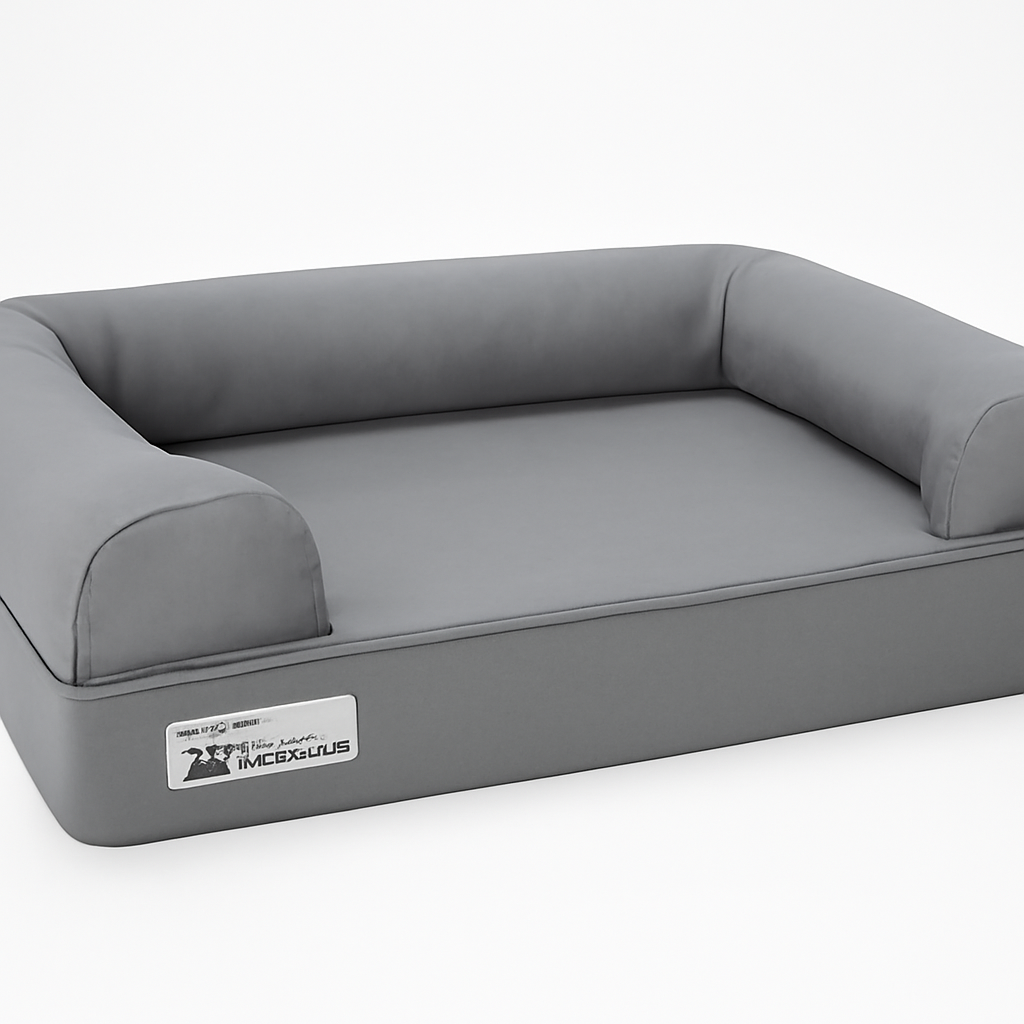
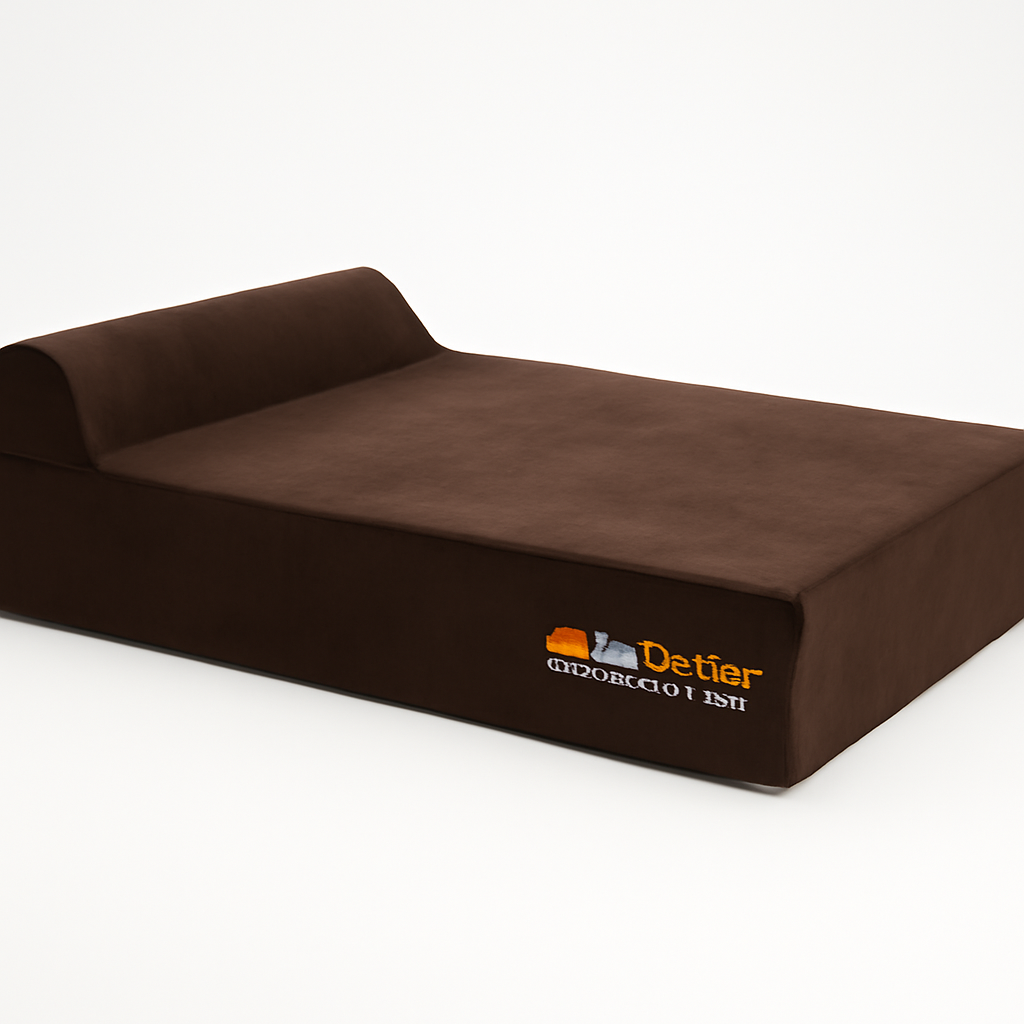
Why Dogs Over 100 Pounds Need a Specialized Bed
A dog bed isn’t just a cushion — it’s a pressure-distribution system. And physics is not kind to big dogs.
When a 110-pound Rottweiler lies down, their weight concentrates on contact points: hips, elbows, and shoulders. On cheap polyfill or low-density foam, those pressure points sink straight through to the floor within weeks. That means:
– Joint stress. Giant breeds have some of the highest rates of hip dysplasia, elbow dysplasia, and osteoarthritis of any dogs. A bottomed-out bed forces joints to bear weight against a hard surface all night.
– Pressure sores and calluses. Heavy dogs who sleep on inadequate padding often develop thick, hairless calluses on their elbows — and in older dogs, these can crack and become infected.
– Poor sleep quality. Dogs sleep 12–14 hours a day (more for seniors). A dog that constantly shifts, circles, and repositions isn’t getting restorative rest.
– Faster bed replacement. A standard bed might survive a 40-pound dog for years. Under 100+ pounds, most flatten in 2–6 months. Buying one properly engineered bed is usually cheaper than replacing three cheap ones.
The core issue is foam density. Most budget beds use foam in the 1.5–1.8 lb/cubic foot density range, which simply can’t rebound under sustained heavy weight. Beds built for giant breeds use higher-density therapeutic foam (often the same grade used in human mattresses) layered specifically to support 100–250 pounds without compressing flat.
What to Look For in a Giant Breed Dog Bed
Before we get to specific picks, here’s the checklist that separates a genuine big-dog bed from a regular bed with “XL” slapped on the label:
1. Foam Quality and Thickness
Look for beds at least 6–7 inches thick with high-density or therapeutic-grade foam. Thinner beds bottom out. Layered construction (a supportive base layer plus a softer comfort layer) is ideal. Certifications like CertiPUR-US indicate the foam meets standards for durability and is made without harmful chemicals.
2. A Real Warranty
This is the single best signal of quality. Companies that engineer their foam properly will warranty it against flattening — sometimes for 10 years or more. Companies selling foam that will pancake in six months won’t.
3. Size Beyond the Label
“XL” means nothing standardized. Check actual dimensions. A Great Dane sleeping stretched out on their side can easily need 50+ inches of length. More on measuring below.
4. Removable, Washable Cover
Big dogs mean big messes. A zippered, machine-washable cover is non-negotiable. A waterproof internal liner protecting the foam is a huge plus, especially for seniors with incontinence issues.
5. Durability of Materials
Ripstop nylon, ballistic fabrics, and heavy-duty microsuede survive nesting, digging, and casual chewing far better than fleece or plush fabrics.
6. Low, Accessible Profile — or Bolsters, Depending on Your Dog
Senior dogs with mobility issues need an easy-to-mount flat surface. Dogs who like resting their head on something benefit from a bolster/headrest design. Know your dog’s sleep style before you buy.
Our Top Picks: Best Dog Beds for 100+ Pound Dogs in 2026
Top Picks at a Glance
| Product | Best For | Price Range |
| Big Barker 7″ Orthopedic Dog Bed | Best overall / joint support | |
| K9 Ballistics Tough Rip-Stop Orthopedic Bed | Chewers and diggers | |
| PetFusion Ultimate Dog Lounge (XXL) | Best value memory foam | |
| Bully Beds Orthopedic Memory Foam Bed | Seniors and arthritic dogs | |
| Casper Dog Bed (Large) | Design-conscious homes | |
| FurHaven Chaise Lounge Orthopedic Bed (Jumbo Plus) | Budget pick | |
| Kuranda Chewproof Dog Bed (XXL) | Extreme chewers / outdoor use |
1. Big Barker 7″ Orthopedic Dog Bed — Best Overall
The Big Barker is the benchmark in this category, and it earned that position honestly. It’s purpose-built for dogs 50–250 pounds, with 7 inches of American-made therapeutic foam in a three-layer configuration: two supportive outer layers sandwiching a softer comfort core. A clinical study conducted at the University of Pennsylvania’s veterinary school found that large dogs with arthritis showed reduced joint stiffness and improved gait after switching to this bed — a rare case of a dog bed with actual published research behind it.
The company backs the foam with a 10-year warranty against flattening, which tells you everything about their confidence in the materials.
Pros:
– 7″ therapeutic foam engineered specifically for heavy dogs
– 10-year no-flatten warranty
– Clinical research supporting joint benefits
– Available in Large, XL, and Giant sizes with optional headrest
– Machine-washable microsuede cover
Cons:
– Premium price — this is an investment purchase
– Not chew-resistant; determined chewers can damage the cover
– No waterproof liner included by default
2. K9 Ballistics Tough Rip-Stop Orthopedic Bed — Best for Chewers
If your giant breed treats bedding as a demolition project, K9 Ballistics is where to look. Their Tough Rip-Stop Orthopedic line pairs supportive orthopedic foam with ballistic-grade ripstop fabric designed to resist digging, scratching, and light-to-moderate chewing. The company also offers a chew-damage replacement policy on many of their beds — check the current terms — which is nearly unheard of in this industry.
Pros:
– Ballistic ripstop cover stands up to diggers and nesters
– Orthopedic foam base suitable for heavy dogs
– Chew-damage coverage available (verify current policy)
– Waterproof liner protects the foam core
Cons:
– Fabric is utilitarian — less plush and cozy than microsuede options
– Extreme “power chewers” may still eventually defeat it (see the Kuranda below for those dogs)
3. PetFusion Ultimate Dog Lounge (XXL) — Best Value
The PetFusion Ultimate hits a sweet spot: solid memory foam (not shredded fill), a bolstered lounge design big dogs love for head support, and a water-resistant liner — at a price meaningfully below the premium tier. The XXL size accommodates most dogs over 100 pounds, though truly giant breeds (Danes, Mastiffs) may want to size-check carefully against the actual dimensions.
Pros:
– Solid memory foam base at a mid-range price
– Bolsters on three sides for dogs that like a headrest
– Water-resistant liner plus removable washable cover
– CertiPUR-US certified foam
Cons:
– Foam is thinner than Big Barker or Bully Beds — very heavy dogs (140+ lbs) may compress it over time
– Bolster design reduces usable flat sleeping area; measure your dog stretched out
4. Bully Beds Orthopedic Memory Foam Bed — Best for Seniors
Bully Beds specializes exclusively in big dogs, and it shows. Their orthopedic bed uses 7 inches of layered CertiPUR-US foam, comes with a 20-year warranty on the foam, and includes a waterproof internal cover — which makes it especially good for senior dogs dealing with incontinence alongside arthritis. The flat, low-ish profile is easy for stiff-jointed dogs to get on and off.
5. Casper Dog Bed — Best for Design-Conscious Homes
Yes, the mattress company. Casper’s dog bed brings genuine mattress engineering — supportive foam with a pressure-relieving top layer — in a bed that looks like furniture rather than pet gear. Excess fabric on top lets dogs “dig” and nest without damaging anything. The Large size fits many 100+ pound dogs, but stretched-out giant breeds should check dimensions first.
6. FurHaven Chaise Lounge Orthopedic Bed (Jumbo Plus) — Budget Pick
No budget bed truly matches premium foam under a 100+ pound dog long-term — but if you need an affordable option (a spare bed for the office, a crate bed, or a trial run before investing), FurHaven’s Jumbo Plus egg-crate orthopedic lounger is the most sensible cheap option. Just go in with realistic expectations about lifespan.
7. Kuranda Chewproof Dog Bed (XXL) — For Extreme Chewers
For dogs that destroy everything, skip foam entirely. The Kuranda is an elevated “cot-style” bed with a rigid frame and tough stretched fabric — the same style used in many kennels and shelters because it survives essentially anything. The elevated design also keeps dogs cool and off cold floors. Pair it with a cheap washable blanket for comfort. It’s not orthopedic foam, but a bed that stays intact beats a destroyed one.
Orthopedic vs. Standard Foam: Which Is Right for Your Big Dog?
Here’s the honest answer: for a dog over 100 pounds, “standard” foam is rarely worth buying at all. The question is really which grade of supportive foam you need.
| Standard Foam / Polyfill | True Orthopedic Foam | |
| Support under 100+ lbs | Flattens in weeks to months | Maintains loft for years |
| Joint benefit | Minimal | Distributes pressure off hips/elbows |
| Lifespan | 2–6 months typically | 5–10+ years (warrantied) |
| Upfront cost | Low | Higher |
| Cost per year | Often higher (replacements) | Usually lower |
Choose true orthopedic foam if: your dog is over 100 pounds (that’s you, reading this article), is over 5 years old, is a breed prone to dysplasia (Danes, Mastiffs, Rottweilers, German Shepherds, Newfoundlands, Saint Bernards), or shows any stiffness getting up.
Standard foam is acceptable only for: temporary use, travel beds, or as a topper on carpet for a young, healthy dog — and even then, expect to replace it.
One more distinction worth knowing: memory foam vs. high-density support foam. Memory foam contours and cradles (great for pressure relief), but very soft memory foam alone can make it harder for weak senior dogs to stand up. The best giant-breed beds layer a firmer support foam underneath a softer comfort layer — you get the pressure relief without the “quicksand” effect.
Sizing Guide: How to Measure Your Dog for the Perfect Fit
Most owners buy beds one size too small. Here’s how to get it right:
Step 1: Measure Your Dog Stretched Out
Wait until your dog is sleeping on their side, fully stretched — most big dogs do this when deeply asleep. Measure from nose to base of tail in that position. Don’t measure a curled-up dog; they won’t stay curled all night.
Step 2: Add 6–12 Inches
Your dog needs room to shift positions without limbs hanging off. For dogs over 100 pounds, add at least 8–12 inches to the stretched-out measurement.
Step 3: Compare Against Actual Bed Dimensions
Ignore the size label (“XL,” “Jumbo,” “Giant”) and check the listed length and width. As a rough guide for common giant breeds:
| Breed / Weight | Minimum Recommended Bed Length |
| Labrador/Rottweiler mix, 100–120 lbs | 48″ |
| German Shepherd, Newfoundland, 100–140 lbs | 50–52″ |
| Great Dane, Mastiff, Saint Bernard, 140+ lbs | 52–60″ |
Step 4: Account for Bolsters
On bolster/lounge-style beds, the interior sleeping surface is what matters — bolsters can eat 8–10 inches of the listed dimensions. If the listing shows 50″ overall with bolsters, your stretched-out sleeper effectively has about 40″.
When in doubt, size up. No dog has ever complained that a bed was too big.
Durability and Chew Resistance: Beds That Hold Up
A bed for a 100+ pound dog faces two separate durability challenges, and it’s worth understanding both:
Compression Durability
This is about the foam surviving your dog’s weight night after night. The signals to look for:
– Foam density specs published by the manufacturer (vague marketing language like “premium foam” with no numbers is a red flag)
– A multi-year no-flatten warranty — Big Barker’s 10-year and Bully Beds’ 20-year warranties are the strongest in the category
– Layered construction rather than a single foam slab
Physical Durability (Chewing, Digging, Nesting)
Big dogs bring big jaws. Rank your dog honestly:
– Non-destructive dogs: Any well-made cover works. Prioritize comfort — the Big Barker or Casper are great here.
– Diggers and nesters: You need ripstop or heavy microsuede with reinforced seams. The K9 Ballistics line is built exactly for this.
– Moderate chewers: K9 Ballistics again, ideally with their chew coverage. Keep the bed in view and redirect chewing early.
– Power chewers / destroyers: Stop buying foam beds; you’re just funding an expensive shredding hobby. Go with the Kuranda elevated bed, and reintroduce a foam bed later if the chewing phase passes (many dogs outgrow it by age 2–3).
Maintenance also matters for longevity: wash covers monthly, rotate the bed 180° every few weeks so weight distributes evenly, and keep nails trimmed — long nails are the #1 cause of cover punctures.
FAQ: Common Questions About Beds for Extra-Large Dogs
How thick should a bed be for a dog over 100 pounds?
At minimum 6 inches of quality foam; 7 inches is better. Anything under 4 inches will bottom out under a 100+ pound dog, no matter how good the foam is.
How long should a giant breed dog bed last?
A properly engineered orthopedic bed should last 5–10 years under a heavy dog — that’s why the best manufacturers offer warranties in that range. If a bed flattens in under a year, it wasn’t built for your dog’s weight.
Are elevated/cot beds better for big dogs?
They’re better for chewers, hot climates, and outdoor use since they promote airflow and can’t be flattened. But they don’t provide the pressure relief of orthopedic foam. For arthritic seniors, foam wins; for young destructive dogs, elevated wins.
My senior dog struggles to stand up from soft beds. What should I look for?
Choose a bed with a firm support layer rather than pure memory foam, and a lower profile (or a flat design with no bolsters blocking exit). Firmness gives their legs something to push against. The Bully Beds and Big Barker beds both use firm-enough foam for this; avoid ultra-plush “pillow” style beds.
Do orthopedic beds actually help with hip dysplasia and arthritis?
They don’t cure anything, but pressure redistribution demonstrably reduces discomfort — and in the Big Barker clinical study, arthritic large dogs showed measurable improvements in joint function and reduced pain behaviors. Think of it as management, alongside vet care, weight control, and joint supplements.
Should I get a waterproof bed?
If your dog is a senior, prone to accidents, drools heavily (looking at you, Mastiff owners), or comes in wet frequently — yes, a waterproof internal liner will dramatically extend the bed’s life. Bully Beds and K9 Ballistics include liners; for other beds, you can buy a waterproof liner separately.
Our Verdict
For most owners of dogs over 100 pounds, the Big Barker 7″ Orthopedic Dog Bed is the bed to buy. It’s the only option in this category with clinical research behind it, the 10-year no-flatten warranty removes the biggest risk in this purchase, and it’s sized for genuinely giant dogs. Yes, it costs more upfront — but replacing three or four collapsed budget beds costs more, and your dog’s joints pay the difference in the meantime.
If your dog is a digger or chewer, go with the K9 Ballistics Tough Rip-Stop Orthopedic Bed instead — it’s the best combination of orthopedic support and survivability. On a mid-range budget, the PetFusion Ultimate Dog Lounge gets you real memory foam and a smart bolster design for less. And for the true demolition artists, skip foam entirely and grab a Kuranda Chewproof Bed.
Whichever you choose, size up, check the actual dimensions against your dog stretched out, and insist on a real warranty. A 100+ pound dog spends half their life on this bed — it’s one of the highest-impact purchases you’ll make for their health.